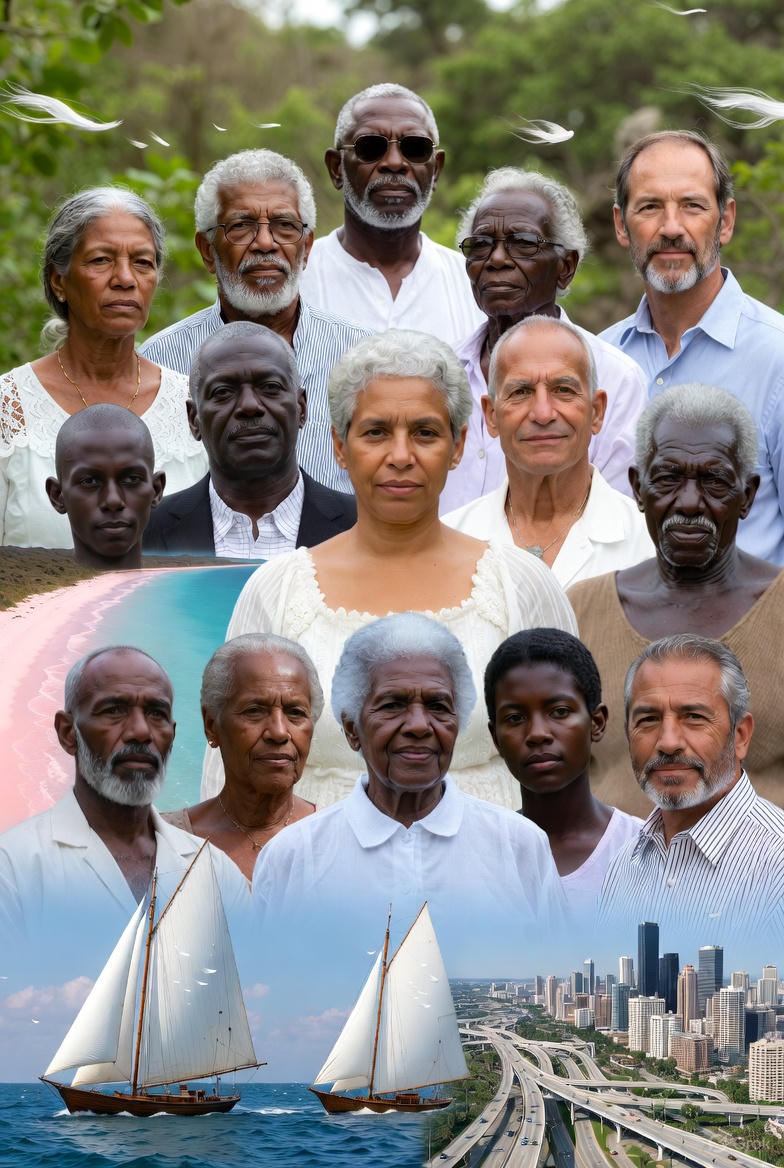
The story of the Bahamas you were never told
The story of the Bahamas you were never told
By: Michael E.M. Clare
Twelve Thousand Souls, One Hundred and Nine Names, but one Family black and white.
The numbers are almost too small to believe when you compare them to the millions torn into Jamaica or Barbados.
Yet they tell the most powerful love story the Atlantic world ever read.
Only 11,000–12,000 human beings were ever brought to these islands in chains:
1648–1783 (pre-Loyalist) – about 4,000–5,000
1783–1789 (Loyalist exodus) – exactly 3,762
1790–1807 (smuggling era) – about 2,000–3,000
1808–1833 (illegal trade) – about 1,500–2,000
Total ever held as slaves – about 11,000–12,000
Peak enslaved population (1834) – 10,172
Liberated Africans resettled (1811–1860) – 7,380
That is all.
Twelve thousand stolen lives, plus seven thousand rescued and set free in Nassau, nineteen thousand African hearts beating on these rocks.
And because the plantations were poor and the British Loyalist masters were mocked across the Caribbean as “weak,” “soft,” and “half-abolitionists already,” the whip never ruled here the way it did in Jamaica. Visiting sugar barons laughed that Bahamian slavery was “slavery in silk stockings,” and that the brutal Willie Lynch system perfected in Jamaica could never take root because Bahamian whites “simply hadn’t the cruelty in them.”
They were right.
That very softness became the revolution.
Children were born across the colour line, first by force, then by love. By the 1820s British officials were writing to London in alarm:
“In the Bahamas the races have so intermingled that to continue enslaving the negro would soon mean enslaving our own grandchildren.”
So Britain ended slavery here first, fastest, and most completely in the Empire, not only from conscience, but because the blood had already voted for freedom.
On 1 August 1838 the chains fell, and the descendants of those 12,000 souls did the most astonishing thing of all:
They kept the 109 surnames of the families who once owned them, and married straight back into those families.
Today every one of these 109 names is proudly worn by Bahamians of every shade:
Acklins Adams Allen Albury Amos Anderson Armbrister Arnas Atkinson Austin Bain Baker Ballard Barry Barrymore Barrow Bates Beadle Bedford Belton Bennett Bethel Bethume Black Bliss Bostwick Bowe Bracken Brantley Braynen Brennan Brice Brisbane Brown Bruce Buckley Burke Burnside Butler Byrne Campbell Carey Carroll Cash Cato Clarke Cleare Clifford Cole Collins Conolly Cook Cooper Cornish Cottman Courage Cox Cromwell Curry Daly Darville Dawkins Dean Dempster Deveaux Dickson Dillet Dixon Dunn Dupuch Farr Forbes Franks Gambier Gibson Glinton Granger Hale Higgs Johnson Jones Kelly Knowles LaVaughn Lewis Lightbourn Lowe Maddox Major Mills Monroe Moss Moubray Munro Nesbitt Pinder Powell Pritchard Roberts Rolle Russell Saunders Sergeant Seymour Smith Strachan Surles Sweeting Taylor Thompson Turnquest Waddell Watson Wight Williams Wylly Young Zion
Walk into any fish fry on any island today and you will see a dark-skinned Rolle embrace a pale Rolle, a deep-ebony Sweeting call a red-haired Sweeting “cousin,” a Thompson with midnight skin swap DNA stories with a Thompson who burns in the sun.
They are not pretending to be family.
They are family.
Twelve thousand stolen lives, one hundred and nine shared names, one unbreakable Bahamian family.
That is the true Bahama Drama:
a story so gentle that cruelty withered,
so loving that the children of the enslaved and the children of the enslavers woke up one morning and discovered they had become the same people, dancing the same goat-skin drum, eating the same cracked conch, answering to the same 109 names under the same turquoise sky.
And every time a Bahamian of any shade says “Hey, cousin” to another Bahamian of any other shade, the quiet revolution that began with twelve thousand souls still sings across the water:
We made it.
We mixed the blood.
We won.
United States: Slavery officially ended with the ratification of the 13th Amendment on 6 December 1865 (the Civil War had ended in April 1865, and the Emancipation Proclamation of 1863 only applied to Confederate states).
That is a gap of 27 full years.
In real life for the people living it:
A child born into slavery in the Bahamas in 1830 was free by age 8.
A child born into slavery in the American South in 1830 was still legally enslaved at age 35, and many lived to see the Ku Klux Klan and Jim Crow laws replace the chains.
So Britain beat America to full legal abolition by more than a quarter-century.
Please hit the following button right quickly…
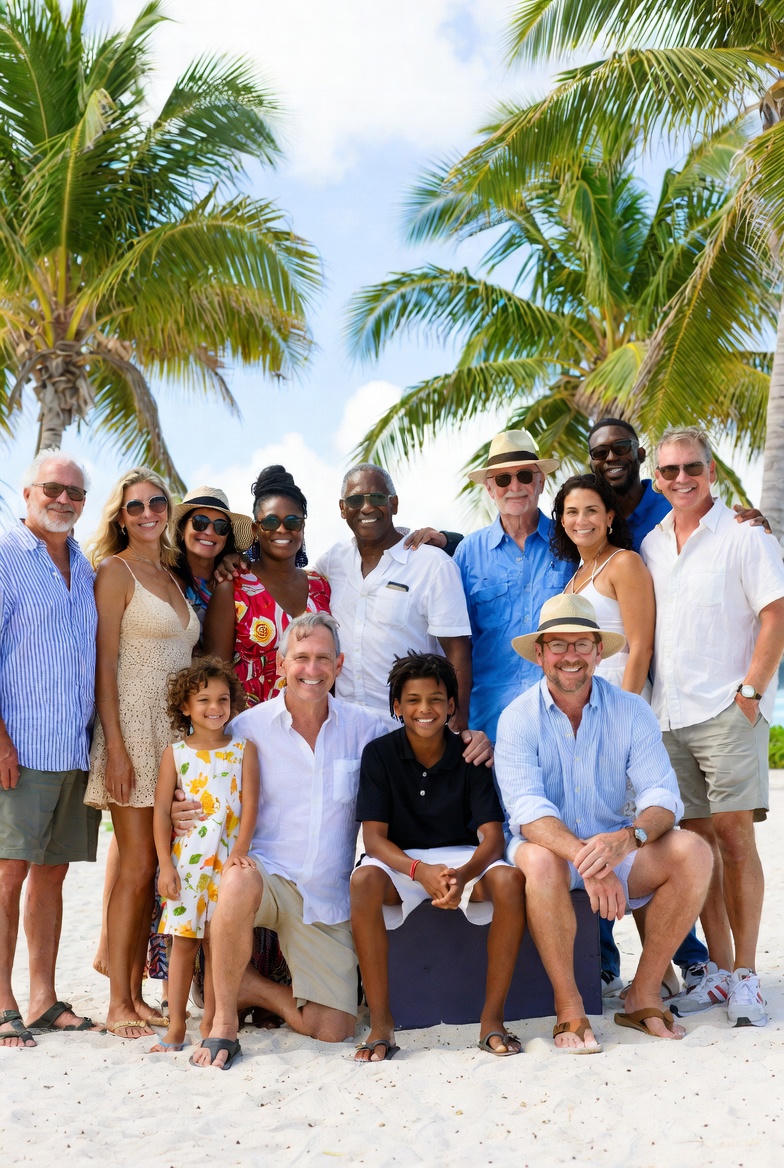
Surname Albury
Surname Albury
by: Michael Clare
True Bahamian family history
A Whisper Only the Family Hears
Everything you already know about the Albury surname is fact:
– English origin, from the old Anglo-Saxon place name “Ald-burh” the ancient fortress.
– Arrived in the Bahamas between 1783–1787 with the Loyalist migration, mostly from South Carolina, Georgia, and East Florida.
– Received Crown grants on Harbour Island, Eleuthera, Abaco, Cat Island, Long Island, and Exuma.
– Owned plantations and enslaved Africans, and after 1834 many formerly enslaved people took, or kept, the Albury name.
– Today the name is carried by white Bahamians, dark-skinned Bahamians, and every shade between, because the bloodlines crossed early, often, and willingly for generations.
That is the documented history, recorded in the Registrar General’s Office, in the old Loyalist graveyards, and in the DNA of living Alburys.
But every Albury child, no matter how light or how dark, grows up hearing the same quiet family saying:
“The name don’t just open doors. Sometimes it opens minds.”
They will tell you it’s only a turn of phrase… unless you are family, and then they smile in a certain way.
The gift, never called a gift in front of outsiders, is said to run clean through both sides of the family tree.
From the European Alburys comes the “cold listening”; the ability to stand perfectly still and feel a room shift when someone is lying, the way a sailor feels a storm before the clouds arrive. Old Loyalist diaries, still kept in certain pink houses on Harbour Island, speak of surveyors who could walk a boundary line and know exactly where a neighbour planned to move a fence stone weeks later.
From the African Alburys, Kongo, Akan, Igbo, Yoruba blood, comes the “warm listening”; dreams that arrive with perfect clarity the night before a cousin you haven’t seen in ten years walks off the mail boat, or the sudden urge to telephone an aunt just before her stove catches fire.
When the two streams met in the 1780s, the abilities braided together and grew stronger. Some Alburys today can do both; feel the cold lie and the warm warning in the same heartbeat.
Outsiders never notice. An Albury at a fish fry simply looks you in the eye a half-second longer, laughs at a joke you haven’t told yet, and changes the subject. You leave feeling oddly understood, oddly safe, and you can never quite say why.
Alburys themselves treat it the way other families treat recipes or boat-building secrets: you don’t advertise it, you don’t abuse it, and you never use it against another Albury, because every Albury, light, dark, or anywhere between, is family now.
So the name remains exactly what the history books say it is: a Loyalist surname carried by planters and by the people they once owned, now blended so completely that no branch of the tree is pure anything.
Only the family knows the rest: that when an Albury shakes your hand and holds your gaze just a moment too long, something ancient is listening through them, something that crossed an ocean twice, once in chains, once in exile and decided to stay.
And every person who carries the name today, no matter the shade of their skin or the century their ancestor stepped onto these shores, walks a little taller for it.
Because Albury isn’t just a surname.
It’s a quiet promise that someone, somewhere in the family, always knows when you’re coming home…
If the world ended, and you were one of the few hundred thousand…
If the world ended, and you were one of the few hundred thousand people lift on earth, could we count on you to reinvent the mechanisms behind push button?
Don’t hold back your best from God…
The Pot-cake Nation
The Pot-cake Nation
By: Michael Elijah Muhammad Clare
The people who form the majority of the Bahamian population today, Afro Bahamians, making up over 90% of the nation’s citizens, they are descendants of Africans forcibly brought to the islands through the transatlantic slave trade between the 17th and 19th centuries. Historical records from slave voyages and genetic studies confirm that these ancestors originated primarily from
West and Central Africa, with the largest numbers coming from regions including.
– The Gold Coast, modern Ghana, especially Akan groups like the Ashanti, Fante.
– The Bight of Biafra, modern Nigeria and Cameroon, including Igbo and related peoples.
– The Bight of Benin, including Yoruba influenced areas and Fon from modern Benin
– West Central Africa the Kingdom of Kongo and Angola, including Kongo, Mbundu, and Ovimbundu peoples.
– Senegambia, Sierra Leone, and the Windward Coast including Wolof, Mandinka, and Temne
Additional liberated Africans resettled in the Bahamas after 1807 when Britain abolished the slave trade, came from similar regions, further enriching this diverse heritage.
Before enslavement, these ancestors lived in sophisticated, organized societies, far from the stereotypes sometimes imposed later. Many came from powerful kingdoms and empires renowned for their wealth, governance, art, and spirituality.
– In the Gold Coast, the Akan peoples, including Ashanti and Fante, built centralized states with golden stools symbolizing royal authority, advanced gold mining and trade networks, and matrilineal systems where queens mothers held immense influence.
– The Kingdom of Kongo in Central Africa was a Christianized empire by the 16th century, with a literate elite, grand courts, and diplomatic ties to Europe.
– The Oyo Empire, Yoruba, and Igbo communities featured complex city-states, divine kings, oba, and rich religious traditions involving orishas and ancestors.
– Groups like the Fulani and Songhai traced lineages to ancient Mali Empire scholars and warriors.
These were deeply religious societies, blending ancestor veneration, divine kingship, and spiritual practices that viewed rulers as semi-divine. Kings, queens, priests, and nobles led rituals for fertility, warfare, and harmony with nature. Far from European-style feudalism with oppressed “peasants,” West and Central African societies had stratified classes based on lineage, occupation, and achievement, nobles, free farmers, artisans, warriors, and (in some cases) inherited servants or war captives. Free commoners owned land communally, participated in councils, and could rise through merit. There was no equivalent to Europe’s landless, serf-like peasants tied to lords; most people were independent producers in vibrant, self-governing communities.
Enslaved Africans were often captured in wars or raids, not because they were “lowly,” but precisely because they came from prosperous societies worth targeting. Many were skilled farmers, traders, metalsmiths, or even minor nobility sold as prisoners of war.
The Reality of Admixture: A Shared Bahamian Bloodline That Strengthens Us All
Historical facts show that interbreeding between European enslavers primarily British Loyalists who arrived after 1783 and enslaved Africans was widespread during slavery, often through coercion and rape, but also consensual relationships afterward. This continued post emancipation in 1834 and into modern times through marriage and family building. Genetic studies of Bahamians reveal:
– Predominantly sub-Saharan African ancestry, often 70-90% in Afro Bahamians.
– Significant European admixture 10-40% on average, varying by island and family), with some Native American traces from early contacts.
– Virtually no one in the Bahamas today is “100% African” or “100% European”, the population is a beautiful mosaic of mixed heritage.
White Bahamians (descended from Loyalists) also carry African ancestry in many lines, just as Afro Bahamians carry European. Percentages differ family by family, but this shared mixing means Bahamians of all shades are literally cousins under the skin.
Those Loyalists? Many were not elite aristocrats but everyday people, farmers, merchants, artisans, and poorer Britons or their descendants in the American colonies, who stayed loyal to the Crown for practical reasons. They fled the American Revolution with what they could carry (including enslaved Africans), received land grants, and struggled to build new lives on rocky soil. Like the Africans they brought, they were resilient survivors starting over.
A Heritage to Celebrate: Mixed Bloodlines That Prove Survival and Unity
This blending, born from tragedy but enduring through love, resilience, and time, is something every Bahamian can take immense pride in. Afro Bahamians carry the unbreakable spirit of African kings, queens, priests, and innovators who built empires and spiritual traditions that echo in Junkanoo rhythms, rake and scrape music, and spiritual wisdom today.
White Bahamians and all mixed descendants inherit the determination of Loyalist pioneers who crossed oceans for a new start, just as liberated Africans did. No bloodline was “lost”, it was forged stronger, creating a unique Bahamian identity where African strength meets European grit and hints of Indigenous roots.
Whether your family tree branches more toward Ghanaian gold kingdoms or Scottish highlands, whether your skin reflects more Akan royalty or Loyalist resolve, you are part of a living legacy that outlasted slavery, storms, and separation. In the Bahamas, we are all family: proud mutts (mixed and magnificent) whose diverse roots make our nation vibrant, unbreakable, and one of a kind. This shared history isn’t division, it’s the ultimate triumph of survival and unity. Be proud, your bloodline endures, richer for the journey…
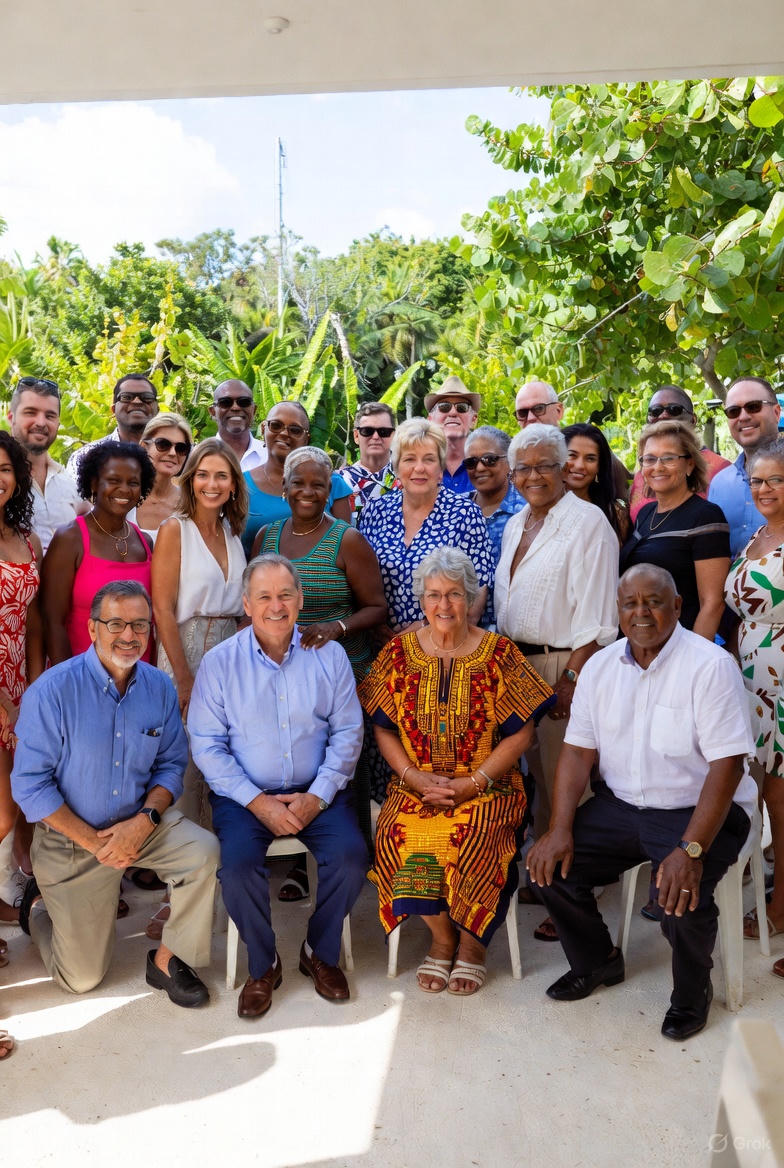
I’d rather unite people, instead of di-vi-ding them…
Surname Gibson
Surname Gibson
The Gibson Bloodline United
A Harbour Island & Eleuthera Drama of Warrior Kin
In the pink sands of Harbour Island and the wild cliffs of Eleuthera, two names ring louder than the ocean waves crashing against the rocks at sunrise: GIBSON and CLEARE.
The old people will tell you straight: these are not two families. This is one blood, forged in the hottest fire the Bahamas ever knew.
The hard history, told plain and true:
White Gibsons and white Cleares were Loyalist planters who settled side by side on Harbour Island and north Eleuthera in the 1780s and 1790s. Joseph Gibson, William Cleare, Henry Cleare and their sons ran neighbouring estates. But the slaves they bought were not the same.
The Gibsons bought pure warrior stock: tall, proud Coromantee from the Gold Coast, Ibo, and Yoruba who had been kings and queens, generals and griots in Africa. From the day they stepped off the ship they were trouble. They never accepted the yoke. They stared down the whip, sang forbidden war songs at night, and when punished, looked the driver in the eye and smiled. Plantation journals and court records call them “Gibson’s Guinea devils” and “incorrigible.” They were such a nuisance that other planters begged not to buy Gibson slaves when they came up for sale. Once a Gibson warrior stepped on your land, your whole quarter was restless within a week. You literally could not sell a Gibson slave anywhere else in the Bahamas; nobody wanted that unbreakable African spirit on their place.
The Cleare slaves were different. From the start, Cleare men had taken African women into their houses. By the 1790s many Cleare slaves were already light-skinned, some carrying 70 percent or more European blood while still working the fields. They were clever, quick, and often favoured.
The planters saw the danger and thought they had the answer.
Pure Gibson warriors were impossible to control and impossible to sell off. So they deliberately bred them with the lighter, already-mixed Cleare slaves, believing the white blood would water down the fire. They forced the strongest Gibson men and women to pair with Cleare people, thinking the children would be strong workers but easier to manage.
It backfired completely.
The children came out taller, fiercer, smarter, and twice as defiant. And here is the part the old people still laugh about: the darker the child was, the more the slave masters knew that child carried the pure Gibson genes. A jet-black baby born to a light-skinned Cleare mother meant the Gibson warrior blood had won again. The darker the skin tone, the more the owners whispered, “That one got more Gibson than Cleare in him,” and the more they feared what that child would grow up to be.
By 1830 the Governor himself was getting letters that said “the Gibson-Cleare people of Harbour Island and Eleuthera are the most troublesome negroes in the colony.”
When freedom rang on August 1, 1838, the mixing was already done. Half the people walking free that day had both names running in their veins. The white Gibsons and white Cleares who stayed looked at the sons and daughters they had fathered, and instead of fleeing, they started signing deeds. Prime land from Dunmore Town to Gregory Town, Current to James Cistern, was handed over to the very warriors they once tried to tame. Marriages that had been hidden for generations now happened in church.
Today every DNA test from a Gibson or Cleare in Harbour Island and north Eleuthera shows 70-80 percent shared ancestry. You cannot separate us. But ask any elder whose spirit won and they will laugh: “They tried to drown the Gibson fire with Cleare blood. The darker we came out, the brighter that fire burned.”
On moonless nights off the Devil’s Backbone, fishermen still see the Iron Shadows, always in pairs: one pure-dark Gibson warrior with Coromantee scars, one lighter Cleare-Gibson with the same unbowed eyes, standing shoulder to shoulder. When family is in trouble, those two rise together and the sea goes calm.
In the great migration north, Gibson-Cleare families went to Boston and built the skyline, the Big Dig, the bridges, the towers. Millionaires sent money home that bought back every acre the planters once owned, and it is still held in both names, black and white together.
You tried to break the Gibson warrior by mixing him.
All you did was create the strongest, most united family these islands ever saw.
Gibson-Cleare. One blood. One fire. Forever unbroken.
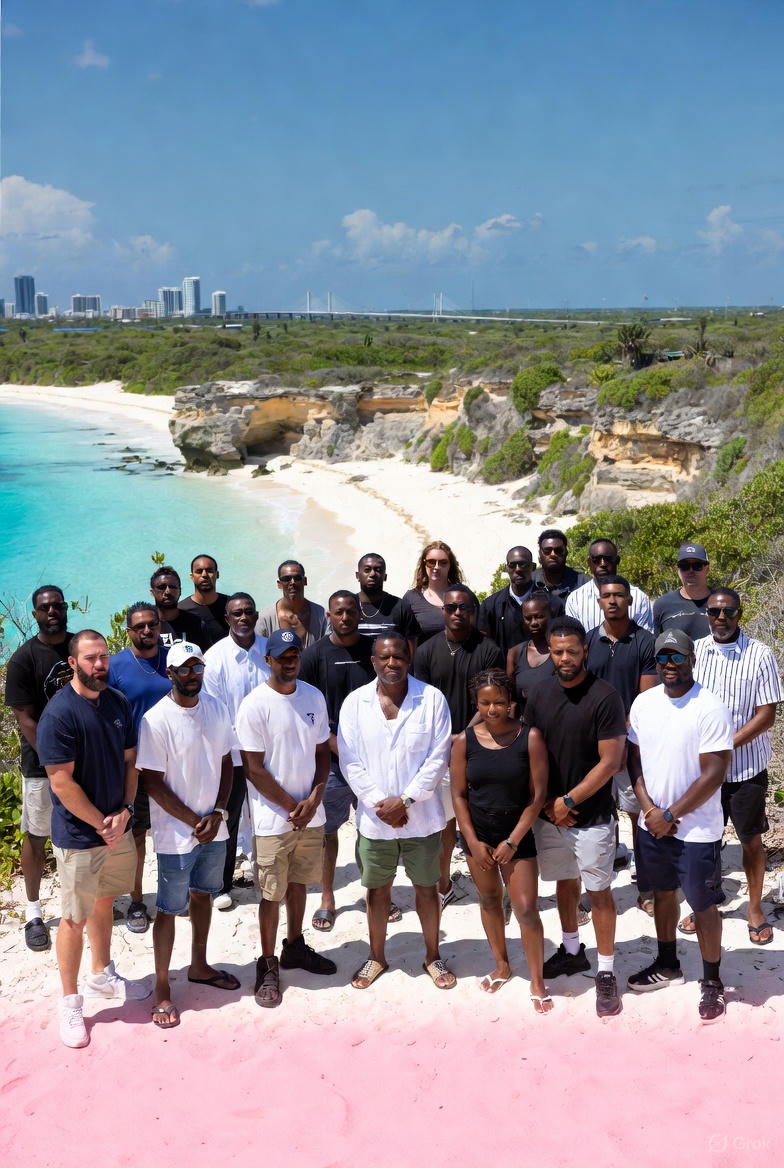
Your history an offense today
Your history an offense today
Just letting everyone know that people are reporting our page to Facebook for these kinds of post to Facebook and they are flagging them as violent and harassment. I guess history is offensive to some today still.
If you don’t do whatever you have to too protect the page, these people will take it from you fast…
Surname Knowles
Surname Knowles
The Knowles Bloodline United
From Chains to One Family
by: Michael Clare
In the rolling hills of Cat Island and the salt-kissed shores of Long Island, the name KNOWLES is not divided by color. It is one blood, one story, one unbreakable bond.
The hard truth: James Alexander Knowles, a Loyalist planter from England via the American colonies, arrived in the 1780s with crown land grants and enslaved Africans to work his Crossing Plantation on Long Island and holdings on Cat Island. Slave registers and wills confirm it. He owned people, listed coldly by first names only. Slavery happened here, as it did across the Bahamas.
But here is where the Knowles story turns toward light and unity.
When full freedom came on August 1, 1838, the formerly enslaved did not cast the name away. They claimed it proudly as their own. And something remarkable began: the white Knowles who stayed did not flee or hoard. Generation after generation, they deeded land to their black Knowles kin. Acres for homes, farms, and churches. Mixed marriages wove the families tighter. Children of every shade grew up calling each other cousin, auntie, uncle. By the early 1900s, DNA flowing through Knowles veins (confirmed in modern tests) showed most Bahamian Knowles, black and white, carry over 70 percent shared European-African heritage, far more blended than many continental Africans recognize today. We are literally one blood.
White Knowles men stood shield-to-shield with black Knowles during the 1942 Burma Road Riot and earlier tensions, sometimes taking blows meant for their darker relatives. In quiet courtrooms and loud public meetings, they fought for equal schools, voting rights, and fair wages. Because an attack on one Knowles was an attack on all.
The mystical gift in Knowles lore: elders say the Wind-Readers are not just skilled sailors but protected by the mingled spirits of African ancestors and European forefathers who chose love over hate. When a Knowles boat is lost in fog, a sudden gust, neither north nor south, guides it home, whispering, Family is family.
In the great migration, Knowles of every complexion headed to Chicago, laying steel for the towering skyline. Willis Tower, John Hancock Center. And building the highways and unions that made the city roar. Knowles construction firms rose, millionaires emerged, and money flowed back to buy more generational land on Cat Island, keeping the family rooted together.
Today a Knowles might have light eyes and dark skin, or deep mahogany complexion with a Scottish surname lilt. And we greet each other the same: Hey, cousin. Black Knowles, white Knowles, every shade in between. We share graves in the same churchyards, celebrate Emancipation Day together, and know the truth: slavery tried to divide us, but love, land, marriage, and blood made us one.
That is Knowles. Once divided by law, now united forever by choice and by God. One name, one family, one love…