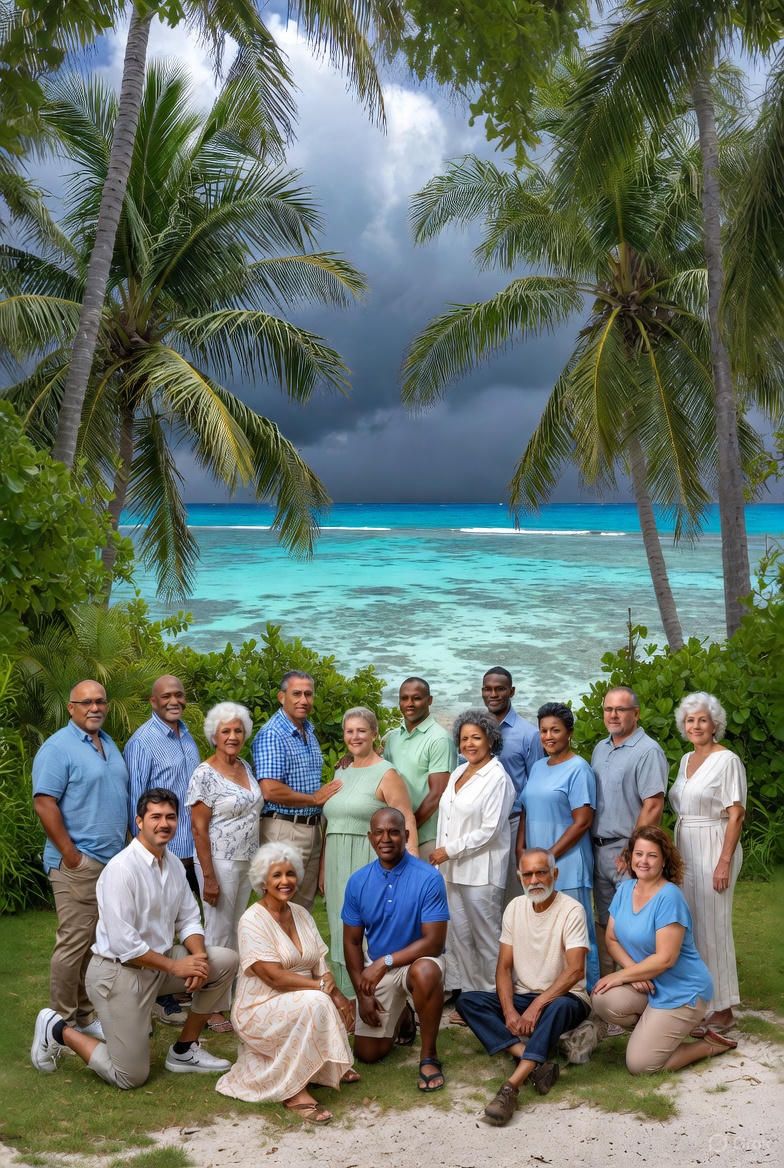
Who’s this, and where’s this?
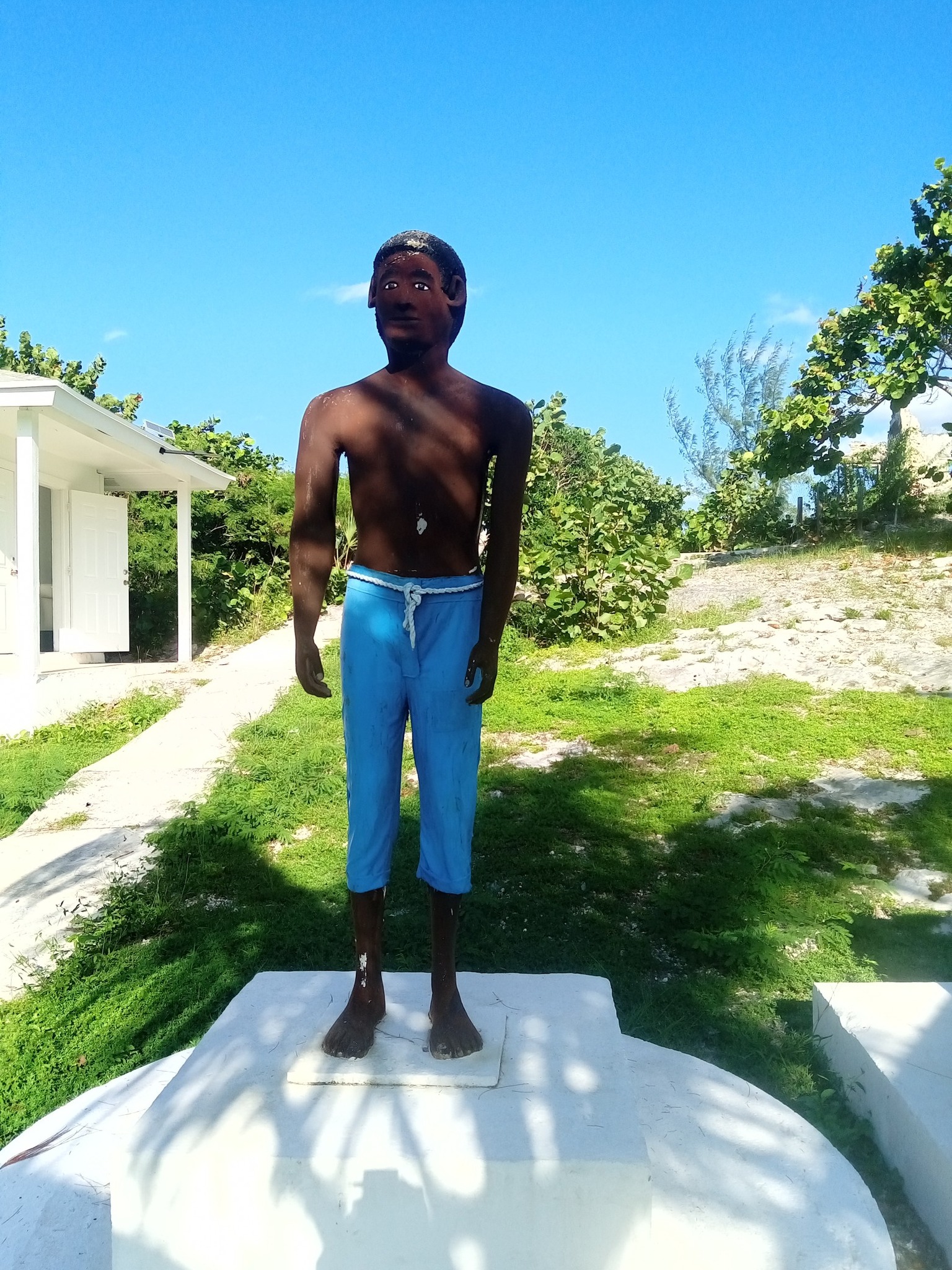
Lol 😆 🤣😂
Lol 😂😂😂
Lol 😂😂😂
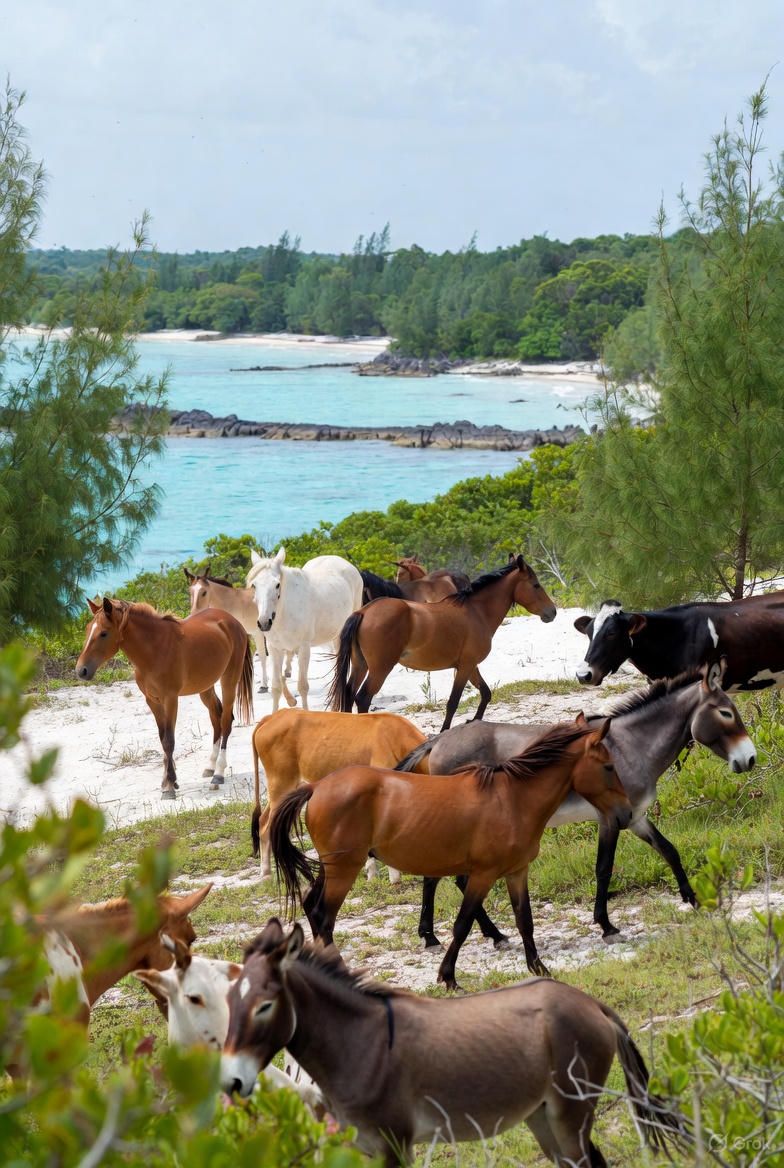
The Bahamas Wild Horses
The Bahamas Wild Horses
By: Michael Clare
Like Many People Around the World Watch on Western Cowboy Movies
Picture this: dust kicks up under the relentless sun as a herd of untamed steeds thunders across endless plains, manes whipping like flags in the wind, their hooves pounding out a rhythm that echoes the heartbeat of freedom.
It’s the stuff of silver-screen legend, John Wayne squinting into the horizon, the Marlboro Man silhouetted against a fiery sunset. But swap the dusty canyons of the American West for the turquoise-fringed scrublands of the Bahamas, and you’ve got a tale that’s not Hollywood fiction, but raw, salty island reality.
Once upon a time in these 700-island paradise, wild horses roamed free, descendants of ancient explorers’ steeds, galloping through pine forests and along bone-white beaches. They weren’t just animals; they were ghosts of empire, survivors of shipwrecks and storms, symbols of a wilder Bahamas before tourism tamed the edges.
Yet, like so many frontier yarns, this one ends in tragedy, hunted for meat, culled for convenience, scattered by hurricanes. But oh, the remnants that linger? They’re calling your name, traveler. Pack your boots; the Out Islands are waiting to whisper their secrets.
The Spanish Shadow: How Horses Hoofed It to the Bahamas
To understand the wild heart of the Bahamas, you have to sail back to the Age of Discovery, when Christopher Columbus’s caravels sliced through Atlantic swells in 1492.
Horses weren’t native to the Americas, they’d vanished 10,000 years earlier with the last Ice Age megafauna, but the Spanish weren’t about to conquer without their four-legged allies. These were Barbs and Andalusians, tough Iberian breeds forged in the fires of Moorish wars, brought aboard as living cargo for expeditions.
Columbus himself unloaded a herd on Hispaniola (modern Haiti and Dominican Republic) during his second voyage in 1493, and from there, the equine invasion spread like wildfire through the Caribbean.
The Bahamas, that slender string of stepping stones from Florida to Cuba, became an unwitting waystation. Shipwrecks were commonplace, coral reefs don’t forgive careless captains, and panicked horses would swim ashore, feral and fierce, to carve out new lives on islands like Abaco and Eleuthera.
Genetic sleuthing in the 1990s confirmed it: Bahamian wild horses carried the DNA of those original Spanish colonials, small and hardy, with a Barb’s compact build and a survivor’s spirit. By the late 1800s, logging barons imported more from Cuba to haul timber across Abaco’s tangled interiors, swelling herds to 200 strong.
Loyalist refugees fleeing the American Revolution in 1783 may have added a few thoroughbred strains, turning these islands into an equine melting pot. For generations, they thundered unchecked, mustangs of the mangroves, dodging pirates and privateers, outlasting cotton plantations and rum runners.
Abaco’s Ghost Herd: From Log-Draggers to Legends
If the Bahamas had a “High Noon” for its wild horses, it played out on Great Abaco, the northernmost big island, where pine-scented trails and hidden cays feel like a Bahamian Badlands.
Here, the Abaco Barbs, those pint-sized Spanish descendants, roamed in bands, elusive as Exuma’s swimming pigs but twice as mythic. Locals spun yarns of herds numbering in the dozens, grazing on scrub and vanishing into the bush at the first whiff of humans. They’d gather at water holes under starlit skies, their whinnies carrying like coyote howls across the flats.
But paradise has predators, and man proved the fiercest. By the 1960s, development crept in, resorts nibbling at forests, roads slicing through sacred grazing grounds. Herds dwindled; the last wild band teetered on extinction in the early 1970s. Conservationists swooped in, corralling a few for breeding, but fate was unkind.
The final mare, a battle-scarred matriarch named Bo, breathed her last in July 2015, her passing mourned like the end of an era. Whispers persist of poaching, horses culled for bushmeat or sport, protections too lax to stem the tide. Hurricane Dorian’s 185-mph fury in 2019 unearthed bones in the rubble, solving riddles of their final days: drowned, dashed against mangroves, or simply starved out.
Today, Abaco’s horses are “functionally extinct,” but frozen tissue from that last herd fuels dreams of cloning, a resurrection plot twist worthy of a Sergio Leone epic. Trek the island’s trails now, and you might spot a plaque or a faded photo; the wind still carries their echo.
Eleuthera’s Dual Dramas: Rock Sound Renegades and North Shore Cattle Kingdoms
Slide south to Eleuthera, that slim slash of coral and pink sand, and the horse saga splits like a fork in a dusty trail. Down in Rock Sound, near the hulking BEC power plant where the Queen’s Highway hums with conch shack traffic, a handful of feral horses still defy the odds.
These aren’t pristine Barbs; they’re escapees from the old 3 Bays Farm, a mid-century spread where domesticated steeds broke free to reclaim the wild. Spot them at dawn, silhouetted against the harbor’s glassy calm, or vanishing into the scrub like bandits on the run. But here’s the dark underbelly: rumors swirl of guns in the night.
By 2019, only one or two mares remained, the rest allegedly shot for straying too close to settlements or roads, easy targets in a nation where wildlife laws lagged behind the herds’ hooves. “Some a-hole killed the rest,” one local lamented online, echoing the island’s quiet outrage. Venture there yourself, hike the farm’s overgrown paths, binoculars in hand, and you might catch a glimpse, a living link to the cowboy dreams.
Flip to North Eleuthera, and the drama swells to biblical proportions: a “Republic of Cows” born from ambition and abandonment. In 1936, Canadian magnate Austin Levy, smitten by Bahamian honeymoon vibes, sank his fortune into Hatchet Bay Farms, a 14,000-acre empire of dairy barns, poultry coops, and silos towering like ancient ziggurats. Thousands of cattle lowed across the pastures, their milk and beef fueling Nassau’s tables.
But by the 1970s, government nationalization turned prosperity to ruin; the silos stand rusting ghosts today, fodder for urban explorers. Descendants? Hundreds of wild cows still boss the bluffs near Glass Window Bridge, grazing with feral pigs, those snorting sidekicks, escaped from the same stockades. Hike the Queen’s Highway at dusk, and you’ll hear their bellows rolling like thunder, a herd unbound and unbowed.
Donkey Days and Hog Havoc: The Unsung Sidekicks
No Western’s complete without comic relief, and the Bahamas delivered with wild donkeys, stubborn, sure-footed beasts hauled by Europeans for plantation toil. On Great Inagua, the southernmost outpost, they once trotted in troops through salt flats and mangroves, a braying brigade in the national park.
But whispers turned to warnings by 2014: poachers’ rifles thinned their ranks for meat, protections paper-thin against the bushmeat trade. Today, they’re ghosts in the gypsum dunes, a cautionary tale for the unwary.
Then there are the hogs, wild boars crashing through underbrush like four-legged freight trains. Andros, the archipelago’s bonefish bone, teems with them: estimates whisper “millions” in the fevered lore of hog hunters, though truth tallies in thriving thousands across 2,300 square miles of swamp and sabal palm.
Descended from escaped Spanish swine, they’re fair game for baying dogs and bone-crunching bows, a rite of passage for locals with a .22 and a cooler. Abaco had its share too, feral porkers rooting post-pineapple plantations, but Dorian’s deluge in 2019 washed many away, survivors slim as a sidewinder’s shadow. No mass extinction, mind you; a few oinkers endure, scavenging the rebuild.
Saddle Up: Your Ticket to the Bahamas’ Wild Frontier
This isn’t a dusty DVD collection, it’s a living legend, etched in hoofprints and hurricane scars, begging for boots on the ground. Fly into Marsh Harbour on Abaco and rent a Jeep to chase phantom herds through the Coppetown trails; the air hums with what-ifs. Ferry to Eleuthera, stake out Rock Sound at first light, or climb the Hatchet Bay silos for a cow-counting vista that rivals the Grand Canyon.
Paddle Andros’ blue holes, ears pricked for hog grunts, or scan Inagua’s horizons for a donkey’s defiant bray. The Bahamas isn’t just beaches and Bahama Mamas; it’s a safari of the soul, where history hides in the hammocks and adventure ambushes at every bend.
Come, cowboy. The wild calls. Your horse, rented or imagined, awaits. Book that flight; the Out Islands don’t wait for sequels…
Bahama Drama — 26 November 2025
Being colorblind is a good thing
Being colorblind is a good thing
By: Michael Clare
Skin Color Ain’t Real
How It Was Invented, Weaponized, and Why We in The Bahamas Done Already Moved Past It
Family, gather round. This one long, but it sweet like conch salad, with a little goat pepper. We gon’ break it down plain and simple.
When Skin Color Start Mattering?
Before the 1400s, skin color was NOT a big thing. Ancient Egyptians painted themselves red-brown, Nubians black, Libyans light-skinned, and nobody wrote laws about it. Greeks and Romans called people barbarians because of language, clothing, and bathing habits, not melanin. Chinese judged by silk and tribute, not shade. Africans sold other Africans and Europeans into slavery, but it was tribe, war, religion, not black vs white.
1440s–1600s, the switch flip. Portuguese grab people on West African coast. At first “negro” just mean dark like “white” mean light. Then, 1660s in Virginia and Barbados, English planters need FREE labor forever and need to stop poor white servants joining with enslaved Africans (remember Bacon’s Rebellion 1676). Solution? Invent “white” people who get small privilege and “negro” people who stay slave forever. Laws say all negroes and their children slave for life, but even poorest white person get rights. That, right there, is the birthday of modern racism, late 1600s, for pure profit.
It spread fast from Caribbean and North America because sugar and cotton made billionaires, and those billionaires needed the world to believe black skin mean less than human. By 1700s, European scientists start measuring skulls and making up Caucasoid, Mongoloid, Negroid nonsense to justify it. Only 300–350 years ago, a blink in human time.
Religion Help Sell the Lie?
Yes, shamefully. Some preachers twist “Curse of Ham” to say black skin is God punishment. Spanish and Portuguese priests debate if Africans even have souls (real debates). Catholic Church in 1450s give Portugal permission to enslave infidels. Later, Protestant planters quote “slaves obey your masters” and ignore “neither Jew nor Greek, slave nor free”. Religion didn’t start racism, but plenty religious leaders poured jet fuel on it to keep money coming.
Was It Marketing?
Straight yes. Most successful marketing campaign ever. They sold the idea that empathy stop at skin color so poor whites wouldn’t feel the pain of enslaved Africans. They marketed “whiteness” as a brand that give you tiny chance to get rich. It worked so good people still dying for a brand made up to keep plantations rich.
The Bahamas!
Racism Come Here and Catch pure Hell 😂
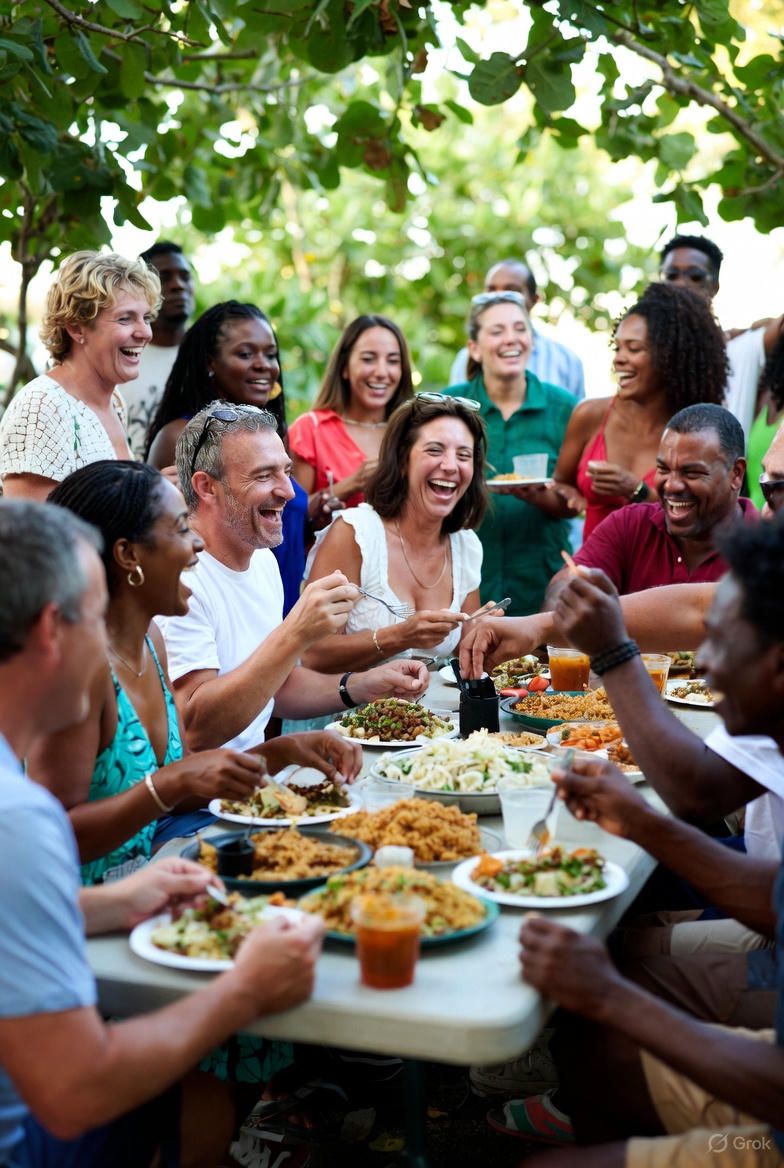
We the ultimate Pot Cake nation, African, European, Native, Asian, everything mixed in one pot with peas n rice. Ain’t no pure breed and we proud. More than blood is the mindset. From Majority Rule 1967 we decide nobody above nobody because of shade. You come talking foolishness, the whole room side-eye you so hard you feel it in your soul. We don’t argue, we embarrass them with love and sarcasm till they carry their hate back home.
Dr King Last Speech & The Future
April 3 1968, night before he died, Martin Luther King say he been to the mountaintop and seen the Promised Land where we judge by content of character, not color of skin. Bahamas already halfway there. If we keep mixing, marrying, raising pickney who don’t even understand racism, in two more generations “race” gon’ be like believing earth flat, only few confused people arguing online.
How to Shut Down Racist Remarks Bahamian Style:
In Person:
Slow blink and smile, then change subject to food 😂
Calmly ask, “Who hurt you? Who taught you that?” 😢
Bahamian classic, “Boy/Girl, you sound foolish, come eat and hush” 😂
Walk away, racists feed on reaction, starve them. 😡
Online:
Screenshot, blur name, post “Imagine still thinking this in 2025” with laughing emojis, let replies cook them! 😁
Ask, “What percentage your DNA test say again?” watch meltdown 😂
Report, mute, block, then go beach 😂 don’t let poison live in your spirit.
Final Word.
You have power to make racism catch cold every time it walk in the room where you are!
Every mixed baby, every joke you shut down, every time you correct your uncle at the fish fry or anywhere else, you’re pushing us closer to that Promised Land you know!
We in The Bahamas already know the secret: love loud, mix proud, make hate feel real uncomfortable! The rest of the world still catching up fast!
Keep judging character, not color.
The future will not be based on races but by beautiful mindsets like yours!
Bahamian-minded.
It’s better in The Bahamas because here we already free from that nonsense.
One love. ✊🏾✊🏿✊🏽✊🏻
Bahama Drama, truth-telling since jump, you know…
God is precious & sweet as honey, too much of him won’t make you sick…
Surname Ferguson
Surname Ferguson
A Tongue that can call tomorrow Into existence
By: Michael Clare
Everything in the records is plain fact:
Old Scottish clan name, from “MacFhearghuis,” son of Fergus, meaning “son of the angry one” or “man of force.” One of the great warrior names of Argyll and Kintyre. Carried to the Bahamas in the Loyalist flood after 1783, mostly from Georgia, South Carolina, and East Florida. Fergusons took grants on Eleuthera, Harbour Island, Abaco, Long Island, and Exuma. A Joseph Ferguson from Savannah got 200 acres at Governor’s Harbour in 1785. Another branch, the “black Fergusons,” appear in the 1838 freedom registers on Long Island and Rum Cay, people born in Africa who carried the last name they were given into the first name they chose for themselves.
They planted cotton, then pineapples, then tomatoes when the mailboats started running north. After Emancipation the name spread like sea oats, from Rock Sound to Deadman’s Cay to Matthew Town.
Today Ferguson sits easy in the top fifteen Bahamian surnames. You’ll meet them running grocery stores in Fresh Creek, preaching in Zion Baptist churches, captaining mailboats, or fixing generators from Bimini to Inagua.
That is what the land grants, the baptism books, and the voter lists will tell you without argument.
But every Ferguson child, whether their skin is Highland red or Guinea-coast black, grows up hearing the same quiet family warning:
“Ferguson tongue don’t just talk. Sometimes it calls tomorrow, and tomorrow comes.”
Outsiders call it good guessing. Family calls it speaking it into being.
The gift flows down two old rivers that met and married in these islands.
From the Scottish Highland side comes the “taibhsear” (the seer’s voice). A Ferguson can stand on a hill at sunset, say something plain as day, “That boy will marry the girl from Cat Island and they’ll have seven children,” and twenty years later you’ll count seven grandchildren on that same hill. Old Loyalist letters still kept in a tin trunk in Tarpum Bay tell of a Widow Ferguson in 1792 who told the magistrate, “The cotton will fail next season and the people will turn to the sea,” and the chenille bug came exactly as she spoke it.
From the African side (mostly Efik, Igbo, and Fon who came through Jamaica and Cuba) comes the “word that walks.” A Ferguson can speak a single sentence over a sick child, “You will rise and fish again,” and the fever breaks by morning. Elders on Long Island still speak low about Papa Joe Ferguson in the 1940s who looked at a barren woman and said, “Next Junkanoo you dancing with your own baby on your hip,” and sure enough, she led the parade the following year with her daughter tied on in a bright madras.
When the bloodlines crossed, first in the violence of the quarter, later in the joy of the church aisle, the two gifts braided into one unbreakable line. A Ferguson today might lean over a pot of crab and rice, taste it, and say offhand, “This pot feeding fifty people tonight,” and before dark fifty cousins you never even called will pull up you never heard coming.
Outsiders never quite believe until it happens. They just notice that when a Ferguson says, “Mark my words,” people suddenly start marking them like gospel.
Fergusons keep the gift the way other families keep a good compass: you don’t sell the words, you don’t waste them on foolishness, and you never speak harm with a Ferguson tongue, because what you call comes running.
So the name stays exactly what the old Scottish rolls and the Bahamian deed books say it is: a Highland warrior’s surname carried across by exiles, then carried forward by the people who learned to speak the future into fruit.
Only the family knows the deeper truth, that when a Ferguson says something quiet and certain, something older than clans and older than chains leans in to listen, then sets the world turning exactly the way the tongue just told it to.
And every person who carries the name today walks these islands knowing the next breath they speak might plant a tree whose shade their grandchildren will sit under.
Because Ferguson isn’t just a surname.
It’s the quiet knowledge that tomorrow is already listening for a Ferguson voice to tell it what to do…