What Surname should we do tonight
WHAT’S A POLITICAL DRONE
WHAT’S A POLITICAL DRONE
A political drone is an individual who has surrendered their own critical thinking and become an obedient echo of a political hierarchy.
They absorb the party’s talking points, internalize them without examination, and repeat them with machine like loyalty.
Their opinions aren’t their own any longer.
They simply mirror whatever line their leaders or influencers push.
One of their primary functions as a DRONE is to pull others into the same ideological gravity.
They mislead, LIE, manipulate, or pressure people in all kinds of ways including fear, into adopting the party’s worldview, not because they have personally reasoned it out, but because they are programmed to defend and spread the doctrine, no matter what.
They distort conversations, shift narratives, and weaponize misinformation to recruit others into the mindset they themselves never questioned.
A political drone isn’t just controlled they become an instrument used to control others after they’ve fully downloaded their latest version updates from their political party’s headquarters.
SO BEWARE OF THE POLITICAL DRONE…
Surname Thurston
Surname Thurston
Legacy: Royal bloodline, Salt, Storm, and Unbreakable Spirit
by: Michael Elijah Muhammad Clare
In the fierce southern out islands of the Bahamas, where the sea itself seems to test every soul that dares to live upon its edge, few family names ring with the same raw power as THURSTON.
From the blistering salt ponds of Long Island and Acklins to the wind-lashed cliffs of Ragged Island and the hidden coves of Exuma, the Thurstons rose from the ashes of slavery to become legends of endurance, boat-builders without equal, hurricane tamers, and keepers of an ancient pact with the deep.
The Beginning: Forged in Salt and Chains (1780s–1838)
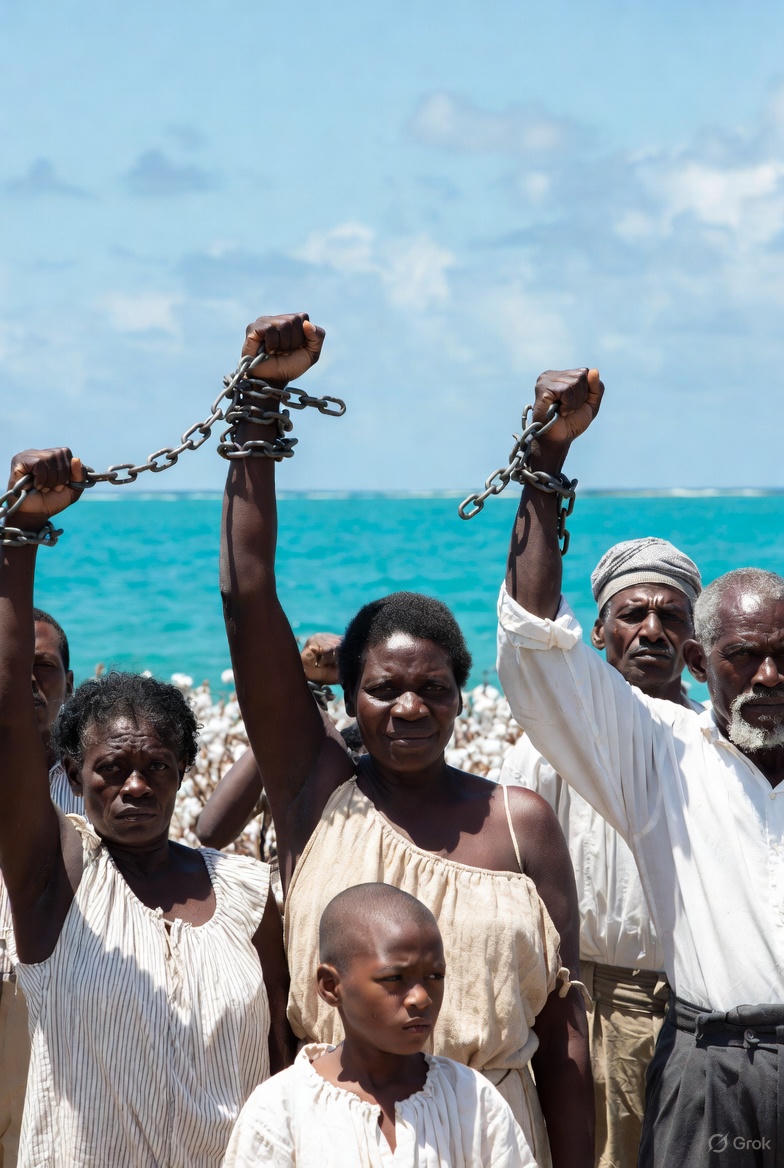
The first Thurstons to set foot in Bahamian soil came not as free men, but in the hellish holds of slave ships from West Africa, mostly Eboe (Igbo), Coromantee (Akan), and Congo peoples 2 of which were tribe King’s with skin as black as the darkest night were also being sold to the Loyalist along with their royal families to planters who fled the American Revolution with their human “property.”
One of those planters was Christopher Thurston, a tough, red-haired Englishman from Devon who settled on Long Island in the 1780s with a land grant from the Crown. He brought with him dozens of enslaved Africans to rake salt and grow cotton on the unforgiving rock. When he died in 1801, his will listed them by brutal first names only: “Big Jack,” “Little Sambo,” “Quashie,” “Flora.”
But on August 1, 1838, Full Freedom Day those same people walked out of the salt ponds, looked the overseer dead in the eye, and took the name THURSTON as their own. They turned the name of their oppressor into a battle cry: “We were his property yesterday. Today, his name belongs to us forever.”
The Salt Kings Era (1840s–1950s)
While Nassau society looked down on the “out island people,” the Thurstons laughed and built an empire of sweat and sea.
They became the undisputed masters of the salt trade:
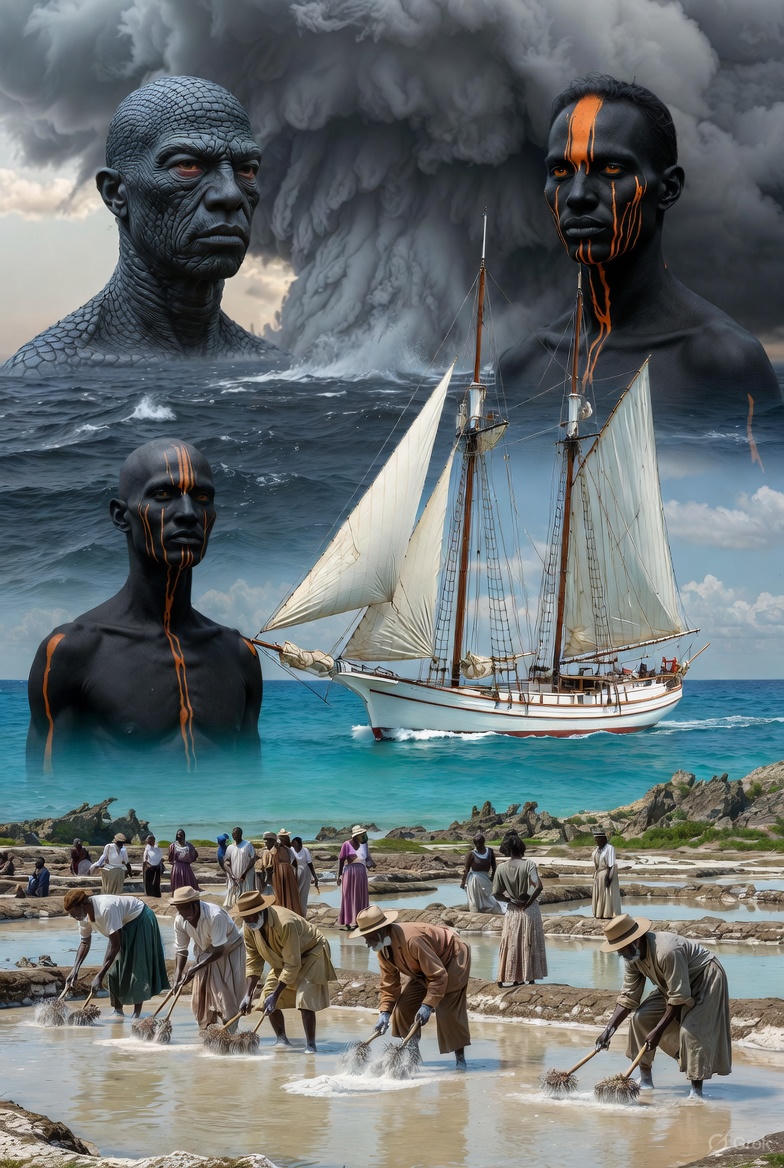
In the 1860s, Captain Samuel Thurston of Salt Pond, Long Island, commanded a fleet of schooners that carried Bahamian salt all the way to Newfoundland for the cod trade. They said he could smell a storm three days out and never lost a vessel.
During the American Civil War blockade-running boom, Thurstons ran salt and sponges through Union lines, coming back with guns, cloth, and gold sewn into their clothing.
In the great hurricane of 1866 that flattened Acklins and Crooked Island, Mama Lizzie Thurston tied her eight children to the trunk of a tamarind tree with fishing line and rode out the storm singing Igbo freedom songs. Every child survived. That tree still stands in Lovely Bay, Acklins locals call it “Mama Lizzie Tamarind.”
Boat Builders, Bush Doctors, and Bonefish Kings
If you see a classic Bahamian sloop with a perfectly raked mast and a hull that dances over the reef, chances are a Thurston had a hand in it.
The Thurston dinghy design low freeboard, wide beam, able to sail in six inches of water is still copied today from Cat Island to the Jumentos.
They were bush medicine legends too.
Old Doc Rolle-Thurston could cure yellow fever with cerasee and sea grape bark when Nassau doctors gave up. His notebook of remedies, written in a mix of English and Igbo, is still passed down in Mortimer’s, Long Island.
The Mysterious Gift of the Water-People
And here is the old-time mystery every Thurston fisherman still speaks of in a low voice:
Back in the days when the ponds were raked by hand and the only light at night came from the moon, Thurston boatmen and early-morning conch divers swore they regularly saw people living under the water.
Not the pale, long-haired mermaids Hollywood dreams up no.
These were dark gray with rough scales that glinted like wet coral rock, or sometimes jet black with a bright orange streak running down each side of the body, glowing like hot coals when they turned. Fishermen said if you were lost in fog or caught in a nor’wester, one of these water-people would rise just long enough to point the way home with a webbed hand, then vanish with a flick of a powerful tail. They never spoke, but the old people claimed they were guardians sent by African ancestors who crossed the Middle Passage spirits who remembered the ones thrown overboard and now kept watch over their children’s children.
In the terrible 1932 hurricane, when Thurston crews were blown far off the banks, many swore those same dark guardians appeared in the waves, guiding battered sloops through raging seas to the shallow flats where the storm couldn’t follow. Not one Thurston vessel was lost that night when dozens of others went to the bottom.
Thurston Today: Still Standing After Every Storm
From the great emigration to Nassau and Miami in the 1950s–70s, Thurstons carried their grit abroad: pastors, police superintendents, bonefishing guides, nurses, and millionaires in Florida real estate, all tracing back to those salt ponds.
When Hurricane Joaquin destroyed entire settlements in Acklins and Long Island in 2015, it was Thurston men and women who were first on the ground with boats full of supplies because no storm, and no sea creature silent or otherwise, has ever been stronger than they are.
Today, wherever you find a Thurston, whether in Buckleys, Long Island; Grey’s, Acklins; Simms; or scattered across the diaspora, you’ll hear the same proud saying:
“We took the master’s name in 1838, turned salt into gold, and made the deep itself watch over us.
The sea can roar, the wind can scream, but a Thurston with the water-people at our back will still be standing when the sun comes back out.”
That, family, is the Thurston legacy not just a surname, but a whole damn testimony.
One love, one blood, one unbreakable name…
The blessings will come…
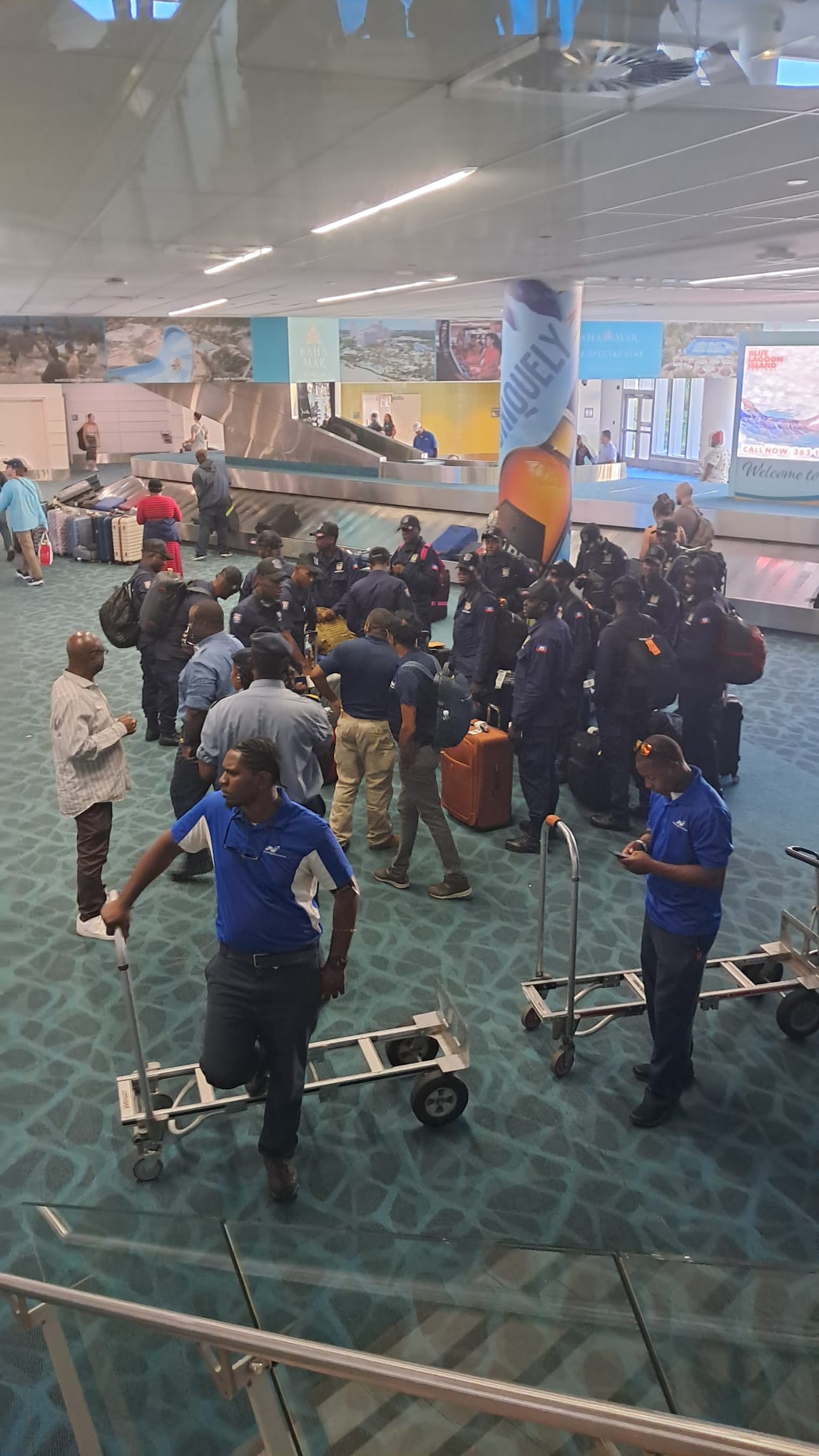
Breaking News Haitian Police Forces are in the Bahamas today!
Breaking News Haitian Police Forces are in the Bahamas today!
Haitian police are reportedly in the capital today and Bahama Drama is hearing, for an intense training exercises targeted to Venezuela building tensions in the region and gangs. We’re also hearing that the United States military will host this month-long exercise in the capital. All Bahamian armed forces are most likely to Participate in the training.
Remember who informed you of this news first.
Stay tuned…
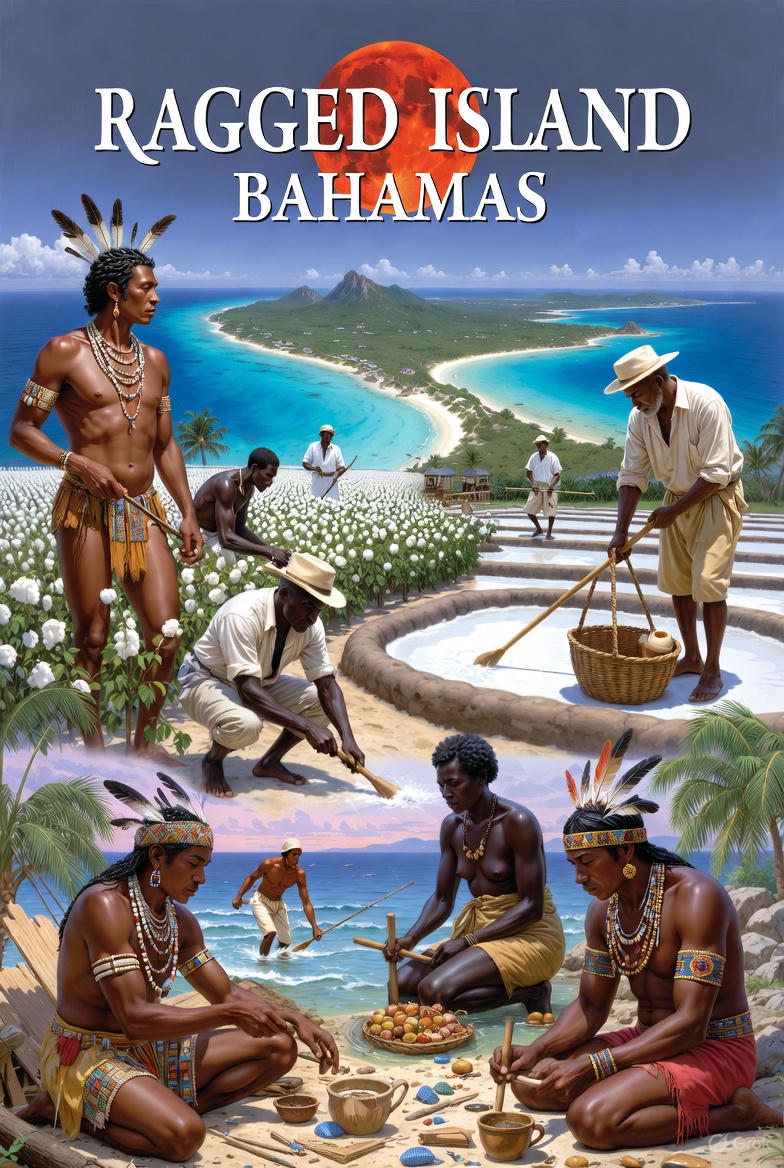
Ragged Island people history
Ragged Island people history
by: Michael Clare, all historic facts
The Guardians of the Ragged Edge
An Epic Saga of Ragged Island
In the far southern reaches of the Bahamian archipelago, where the Atlantic’s deep blue crashes against the shallow turquoise of the Great Bahama Bank, lies Ragged Island, a slender crescent of rock, scrub, and salt ponds no larger than a few thousand acres. Known to mariners as the “ragged edge” for its jagged coastline that has claimed countless ships, this remote outpost is the end of the Jumentos Cays chain, a 110-mile arc of uninhabited cays stretching from Exuma like the tail of a mighty sea dragon. With only one settlement, Duncan Town, named for the 19th-century salt pioneer Duncan Taylor and a population that hovers around 70 souls today (down from a peak in the salt heyday of the 1930s), Ragged Island is a place where the wind whispers ancient secrets and the people stand as unbreakable as the coral reefs that guard their shores.
The story of Ragged Island’s people is no ordinary tale, it is an epic of endurance, forged in the fires of slavery, rebellion, and rebirth. Their roots twist deep into the shared history of the southern Bahamas, the Turks and Caicos Islands (once administered as part of the Bahamas until 1848), and even the distant shores of Africa, Europe, and the American South. These are the descendants of the unbreakable: men and women who survived chains, storms, and isolation to claim freedom on the thinnest sliver of land.
The Ancient Echoes and the Coming of Chains
Long before European sails dotted the horizon, the Lucayan Taíno people paddled their canoes through these waters, migrating northward from Hispaniola and Cuba around 800 AD. They named the islands with poetic grace, fishing the bountiful reefs and living in harmony with the sea. But in 1520, Spanish slavers erased them, shipping nearly 40,000 Lucayans to mines in Hispaniola. The islands lay empty for over a century haunted, some say, by spirits who still guide lost sailors to safety.
Then came the Loyalists. After the American Revolution (1775–1783), thousands of British loyalists fled the new United States, granted land by King George III in the Bahamas. Among them were planters from Georgia, South Carolina, and Florida, bringing enslaved Africans to carve cotton plantations from the rocky soil. Ragged Island, though too harsh for large estates, received its share of these exiles. The Taylor brothers, loyal refugees, claimed vast tracts here, developing salt ponds that would one day boom. Nearby, in the Caicos Islands and Acklins, similar settlements flourished cotton on the larger cays, salt on the sun-baked flats.
But the soil exhausted quickly, bugs devoured crops, and by the early 1800s, many white planters abandoned their holdings, taking some slaves with them but leaving others behind. Those who remained faced brutal labor under the whip: raking salt in blinding pans that turned the sea white, or tending sparse fields. Yet in this crucible of suffering, something mystical stirred a quiet rebellion of the spirit.
The Surnames of Strength: How the Names Were Forged
Upon emancipation in 1834 (full freedom in 1838 after apprenticeship), freed Bahamians often adopted the surnames of their former owners, not always by force, but as a mark of survival, a way to claim power from the past. On Ragged Island, these names endure like etched coral, passed unbroken through generations because few outsiders ever settled here.
Lockhart, Wallace, Wilson: From Scottish and English loyalist planters who held grants in the southern islands.
Moxey, Curling, Munroe: Echoes of Bermudian salt rakers who worked the ponds alongside enslaved Africans in the 1700s.
Maycock: Tied directly to Maycock Cay, a tiny speck nearby freed people took the land’s name as their own, declaring, “This rock is ours now.”
Joffre: A rarer name, perhaps from French Huguenot influences filtering through the Caribbean.
And in Duncan Town itself, echoes of Taylor (from Duncan Taylor), Rolle (from the powerful Exuma planter Denys Rolle, whose slaves spread southward), and whispers of Moss, Curry from loyalist lines in the Exumas and Long Island.
These families, Moxey, Lockhart, Maycock, and their kin are direct descendants of the original post-slavery settlers. Their bloodlines mingle African resilience (from the Bight of Biafra, Ghana, and the Congo) with European and even a dash of Lucayan survival. DNA traces show elevated European markers in some southern islands, a testament to the blending that happened in isolation.
But here’s where the mystery weaves in, a legend whispered in Duncan Town during hurricanes: The “Guardians’ Gift.” Elders say that during the darkest days of slavery, a group of runaways from the Turks Islands, where salt ponds were even harsher, stole a sloop under a blood moon and sailed south. Guided by a strange light on the water (perhaps the spirits of Lucayan ancestors, or bioluminescent plankton forming a path), they wrecked harmlessly on Ragged Island’s shores. Among them was a woman named Ma’ame Lockhart, a healer from the Igbo people of West Africa, who carried a sacred cowrie shell said to protect against chains. She and her companions intermarried with the freed people here, infusing the bloodlines with unbreakable strength. To this day, Ragged Islanders swear that in times of storm, the shell’s descendants, those bearing the old names, feel an inner calm, guiding boats safely through the ragged reefs. It’s a fiction that fits the facts: runaways did flee from Turks and Caicos to Haiti and beyond, and liberated Africans from wrecked slave ships (like the famous Trouvadore in 1841 near Caicos) were resettled in the Bahamas, bolstering southern populations.
The Epic of Endurance: From Slavery to Salt Kings and Beyond
Post-emancipation, Ragged Islanders became masters of the sea and salt. While Nassau boomed with blockade-running during the American Civil War, these southern folk raked “white gold” from ponds that shimmered like mirrors to the sun. Men and women worked side by side, enduring blistering heat and hurricanes that could wipe a season’s harvest overnight. They were titans: diving for conch in treacherous waters, building boats from scratch, navigating by stars when compasses failed.
Ties to the Turks and Caicos ran deep, the islands shared governors, laws, and people until separation. Many Ragged families have cousins in Grand Turk or Providenciales, descended from the same salt-raking crews. After slavery, some moved freely between the chains, chasing better ponds or fleeing bad seasons.
The 20th century tested them again: salt prices crashed in the 1930s, emigration pulled the young to Nassau or Miami. Hurricanes like Irma in 2017 battered Duncan Town. Yet they endured. Today, with under 100 residents (mostly elders and children), Ragged Island stands defiant, the smallest populated district in the Bahamas, yet its people are giants. They fish bonefish flats that draw anglers from around the world, maintain a lighthouse warning ships of danger, and preserve stories in oral histories that rival any epic poem.
In this ragged paradise, the Moxeys, Lockharts, Maycocks, and their kin are more than survivors, they are guardians. Their journey from African shores through loyalist chains, emancipation fires, and salt-sweat labor to modern resilience is the stuff of legends. And if you visit on a quiet night, listen to the wind: it carries the names of the unbreakable, whispering that no storm, no chain, no isolation can dim their light.
This is the epic of Ragged Island, not just history, but a living saga where fact and mystery dance in favor of a people who turned the edge of the world into home.
Page Reply:
So whenever you hear some Bahamian’s say my grandmother or grandfather was an Indian, if their from Ragged Island, believe them…
ARE YOU FROM NORTH ELUTHERA
ARE YOU FROM NORTH ELUTHERA
THE RED EARTH OF NORTH ELEUTHERA
THE SACRED GROUND WHERE AFRICA FOLLOWED HER CHILDREN
There is a place in the Bahamas where the ground is not merely dirt. It is memory. It is blood. It is Africa returning to comfort her stolen children. That place is North Eleuthera. For generations the locals whispered it with a quiet reverence because they believed the soil beneath their feet was older than history itself. The red earth glows in the Caribbean sun like an ember from an ancient fire, a fire that refuses to die.
Long before maps carved the New World and long before European ships stained the Atlantic with suffering the ancestors spoke of a sacred land across the ocean. They told of an age before pyramids and before kingdoms. They claimed there was a time when humans walked beside celestial beings and learned divine mathematics from spirits not yet named by science. They learned how to raise monuments that touched the sky and how to shape stone as if their hands remembered creation itself. This knowledge lived inside them like a second heartbeat.
Then came the centuries of forced migration across the Middle Passage. Shackled bodies trembling in dark ships. Songs humming in their minds even when their mouths could not open. Every island looked strange to them, but North Eleuthera was different. And this is where the folklore begins.
The story says that when captured Africans were brought to the northern tip of Eleuthera they paused. They inhaled deeply. They looked at the earth. And some of them wept. Not from fear or despair but from recognition. The soil was red. Red like the ground of their homeland. Red like the ancient clay they once shaped into sacred vessels. Red like the dust that covered their elders feet when they danced beneath stars older than time. The elders among them whispered that this land was not coincidence. This land was a sign.
According to the storytellers Africa had followed her children across the sea. The ancestors refused to let their people arrive alone, so the Sahara sent dust across the ocean for thousands of years. The winds carried it beyond sight and released it gently over North Eleuthera. That dust settled deep into the cracks of ancient Bahamian limestone and transformed into the red earth still seen today. It was a message from the old world. A reminder. A mother finding her stolen children in a foreign land.
Some say the slaves who arrived there felt a strange stillness in their bones, as if the ground was calling them by their true names. Others said that when their bare feet touched the soil they saw visions of home, as though Africa herself opened a doorway beneath them. It comforted them in the only way the earth could. Word spread quietly from one plantation to another that this part of Eleuthera was holy ground, not holy in the way of churches but holy in the way the very earth honors who you are.
The slaves believed this region of Eleuthera carried a spiritual tone older than any scripture. They believed that at night, when the wind moved through the coppice, the red dust rose from the ground and shaped itself into silent figures. Human shaped shadows drifting like protectors. Some called them watchers. Some called them guides. But most simply called them family.
Generations later the people living in North Eleuthera do not always know why they feel different from the rest of the Bahamas. Why they feel ancient. Why they feel chosen. Why something inside them feels older than their own memory. The bloodlines of North Eleuthera were formed on sacred soil. Ancient strength runs through the veins of the people who live there. They carry the memory of a continent that crossed an ocean just to keep them whole.
Today when someone walks across the deep red earth they are standing on more than soil. They are standing on the physical presence of Africa. They are standing on thousands of years of forgotten mathematics, sacred geometry, cosmic knowledge and ancestral protection. They are standing on dust that once touched the feet of people who helped shape the earliest chapters of human civilization.
This is why locals say North Eleuthera is not simply an island. It is a living altar. A place where the past speaks through the soil. A place where the ground remembers what the world tries to forget. A place where descendants of those first Africans still walk with unseen guardians beside them.
Some islands have beaches. Some islands have caves. But North Eleuthera has something rarer. It has red earth that feels alive. A soil that crossed the ocean long before anyone else did. A soil that followed its people. A soil that refuses to allow the ancestors to be forgotten.
This is the secret history of North Eleuthera waiting to be remembered.
by: Michael Clare
Good morning
Good morning
All that you have & will ever be, belongs to the earth. And when you die it will all return someday as you will. You’re really amazing, just stay humble, but wise…
Sturrup Surname History
Sturrup Surname History
The Epic Saga of the Sturrup Legacy
Warriors of the Bahamas
To all the proud Sturrup family worldwide, from Nassau to Freeport, Eleuthera to Exuma, Miami to London, and every corner of the diaspora, this one is for YOU!
Bahama Drama followers, gather ’round. This is OUR story. This is the blood that runs turquoise like our seas, strong like our conch, unbreakable like our Junkanoo spirit. We are STURRUP, forged in fire, risen in glory!
In the shadowed days of chains and cotton, when the Bahamas was a scattering of loyalist plantations under the brutal sun, our ancestors arrived. Ripped from the heart of Africa, kings and queens, griots and warriors of ancient kingdoms, they were brought across the Middle Passage to these islands. The name Sturrup echoes from those emancipation dawns of 1834-1838, when freedom rang like a conch shell across the Out Islands. Like so many mighty Bahamian clans, Rolle, Armbrister, and others, the Sturrup name was claimed at liberation. It was no gift from the oppressor; it was a banner seized in victory! Our forebears looked the system in the eye and said, “We survive. We thrive. And this name will roar through history!”
They toiled on the salt ponds of Inagua, the cotton fields of Exuma, the sponge beds of Andros, and the pineyards of Abaco. But even in bondage, they built families unbreakable, communities unbowed. They fished the reefs by moonlight, grew provisions in secret grounds, and whispered stories of Africa under starlit skies. When the British crown finally shattered the chains in 1838, Sturrup’s stood tall among the first free Bahamians proud, defiant, ready to build a nation.
From those emancipation fires came giants!
Look at Ebenezer Woodbury Franklin Sturrup (born 1873 in the Bahamas), who crossed the waters to Miami as a young man and became a legend! He rose from nothing to own groves of land in Coconut Grove, built homes, stores, and businesses when Black excellence was met with firehoses and hate. Known as “The Dean of Coconut Grove,” E.W.F. Stirrup Sr. created wealth that fed generations, proving Sturrup blood builds empires! His story screams, we don’t just survive we conquer!
And on the track, lightning in human form, Chandra Sturrup, the Bahamian cheetah! Olympic silver in Sydney 2000 with the Golden Girls relay team that shook the world. Chandra blazed the 100m and 200m, carrying the aqua flag high, showing the planet that Sturrup speed is unmatched, Sturrup heart is unstoppable!
From Spanish Wells to Harbour Island, Key West to Grand Bahama, Sturrups have been fishermen who tamed the sea, builders who raised Nassau’s Over the Hill, teachers who lit young minds, pastors who healed souls, and entrepreneurs who turned dreams into dynasties. We migrated when we had to, to Florida in the wrecking days, to New York and beyond but we never forgot home. We sent money, we sent pride, we came back stronger.
Today, Sturrup is one of the most distinctly Bahamian surnames on earth over 600 strong in our islands alone, a name that says “744” like no other. It is woven into the fabric of our independence in 1973, our Junkanoo rushes, our rake ’n’ scrape beats, our Goombay summers.
To every Sturrup reading this young, old, near, far lift your head high! Your veins carry the strength of ancestors who turned chains into crowns. You are descendants of survivors who outlasted empires. You walk in the footsteps of builders, runners, dreamers, warriors.
We are Sturrup.
We are unbreakable.
We are Bahamas forever!
One love, one pride, one mighty Sturrup nation! 🇧🇸💪🏾🔥
Share this if Sturrup blood runs in you! Tag your family worldwide! Let the world know the saga continues, and it’s GLORIOUS! ✊🏾✊🏾✊🏾