Bahama Drama

Past Post History to Date

6,047 posts

THE AGE OF THINKING MACHINES

THE AGE OF THINKING MACHINES

How Artificial Intelligence Is Quietly Rewriting the Future in 2026

A Bahama Drama Article

In 2026, Artificial Intelligence is no longer coming.

It is here.

Not knocking.
Not asking permission.
Already inside our phones, our hospitals, our banks, our classrooms, our courts, our kitchens, our cars, our music, and even our thoughts.

While many people still argue about whether AI is good or bad, the truth is simple.

History has already decided.

AI is becoming the new electricity.
The new internet.
The new engine of civilization.

And like every great invention before it, it will build kingdoms and break old systems.

Welcome to the Age of Thinking Machines.

—

FROM TOOL TO PARTNER

For decades, computers only followed instructions.

Now, they reason.
They learn.
They adapt.

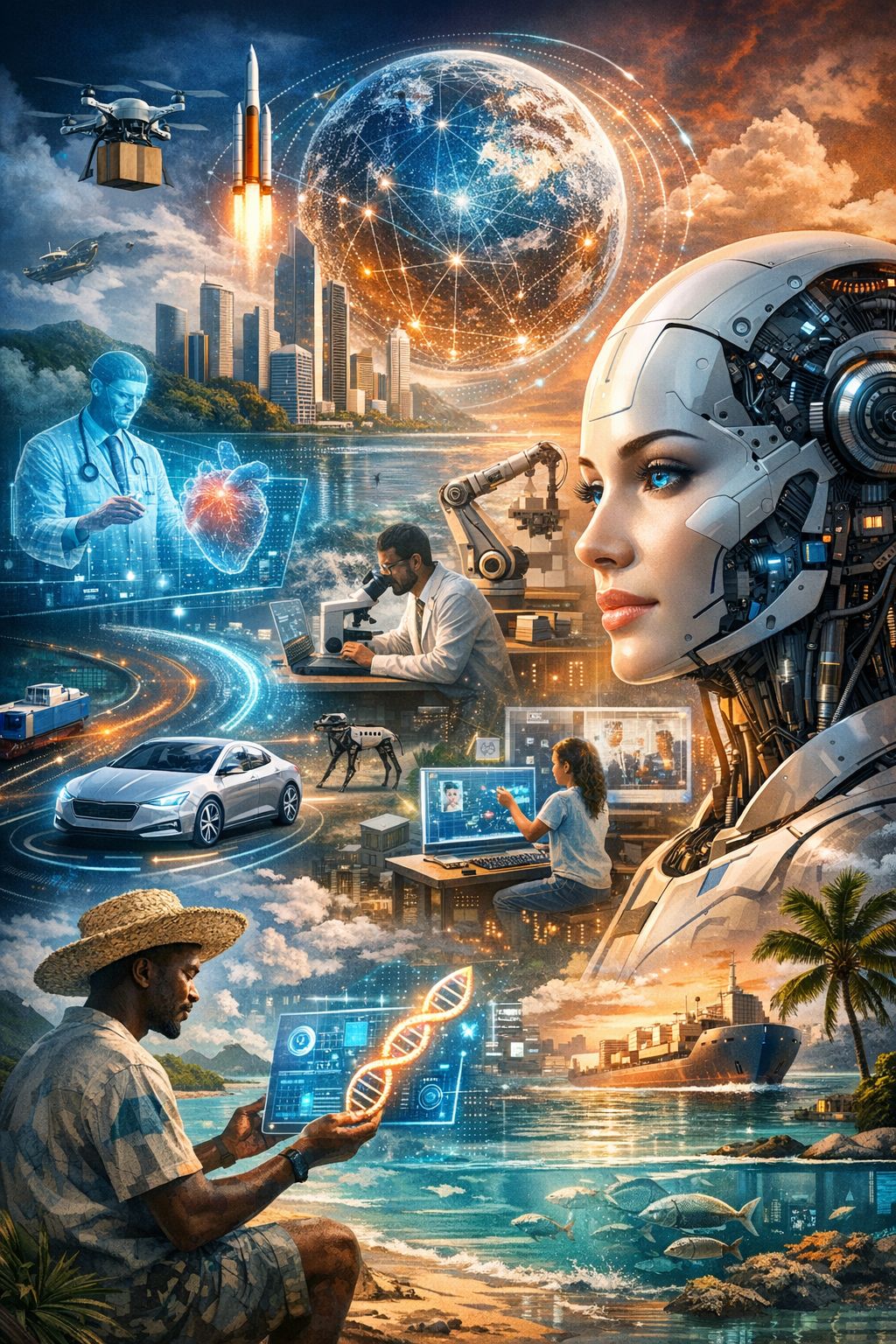
In 2026, AI systems can write books, diagnose diseases, design buildings, predict storms, manage investments, translate languages instantly, create movies, and talk like humans.

But the biggest change is not what AI can do.

It is how it works with us.

AI is becoming a partner.
A co-worker.
A silent assistant.
A digital second brain.

Doctors use it to see illnesses before symptoms appear.
Lawyers use it to scan millions of cases in seconds.
Teachers use it to customize lessons for each child.
Farmers use it to predict crop failure.
Fishermen use it to track ocean patterns.

Even small island nations like The Bahamas are beginning to use AI for tourism management, disaster prediction, and resource planning.

This is not science fiction.

This is everyday life.

—

MEDICINE: THE END OF GUESSWORK

In 2026, AI is transforming medicine more than any invention since antibiotics.

Machines now analyze X-rays, MRIs, blood tests, DNA, and medical histories at superhuman speed.

They spot cancer earlier.
Predict heart attacks.
Customize drug treatments.
Design personalized medicine.

Soon, many diseases that once killed quietly will be caught early and treated precisely.

AI doctors never get tired.
Never forget.
Never overlook patterns.

For islands like ours, where access to specialists is limited, AI medicine could save thousands of lives.

A nurse in Exuma could consult a world-class AI system in seconds.

Healthcare is becoming global.

—

EDUCATION: ONE TEACHER FOR EVERY CHILD

For centuries, education followed one model.

One teacher.
Many students.
Same lesson.

AI is ending that.

In 2026, AI tutors adapt to each child.

Slow learners get patience.
Fast learners get challenges.
Struggling students get extra help.
Gifted students get advanced material.

No child left behind by design.

AI explains math in ten different ways.
Rewrites history in your voice.
Teaches coding like a friend.
Simulates science experiments.

Education is becoming personalized, portable, and permanent.

A child in a small settlement now has access to the same learning power as a child in New York or London.

That is revolutionary.

—

BUSINESS: THE RISE OF THE ONE-PERSON COMPANY

AI is creating a new kind of entrepreneur.

The solo empire builder.

In 2026, one person with AI can run marketing, manage accounts, design products, write ads, build apps, create videos, handle customers, and analyze data alone.

Small businesses are becoming powerful.
Individuals are becoming corporations.

This is why so many people are leaving traditional jobs.

AI is not just replacing workers.
It is creating independent empires.

For Bahamians, this means location no longer limits opportunity.

Your office can be your phone.
Your market can be the world.

—

SCIENCE: DISCOVERIES AT MACHINE SPEED

AI is accelerating science beyond imagination.

In 2026, AI systems are designing new materials, simulating climate models, discovering drugs, mapping proteins, predicting earthquakes, studying galaxies, and analyzing oceans.

What took decades now takes months.
What took years now takes days.

Science is entering fast-forward.

Climate research is improving.
Renewable energy is advancing.
Ocean protection is becoming smarter.

Small nations can now access big science.

Knowledge is being democratized.

—

TRANSPORTATION: THE END OF DRIVING

Self-driving technology is expanding rapidly.

Cars, trucks, ships, and drones are learning to navigate safely.

AI reduces accidents.
Optimizes routes.
Cuts fuel waste.
Manages traffic.

In the future, roads will be quieter.
Shipping will be cheaper.
Deliveries faster.

Even remote islands will be more connected.

Movement is becoming intelligent.

—

ENTERTAINMENT: EVERYONE A CREATOR

In 2026, creativity has exploded.

Anyone can now create movies, songs, books, art, games, podcasts, and animations with AI assistance.

You don’t need a studio.
You need ideas.

Creativity is no longer controlled by corporations.
It is being handed back to the people.

Stories that once had no platform now reach thousands.
Voices once ignored now echo.

—

GOVERNMENT AND SECURITY: SMART STATES

Governments are using AI to detect fraud, improve services, predict disasters, manage traffic, plan cities, and monitor borders.

Done right, AI can reduce corruption and inefficiency.
Done wrong, it can become surveillance and control.

This is the great political question of our time.

Will AI serve the people
Or rule them

Every nation must decide.

—

THE SHADOW SIDE: POWER, JOBS, AND CONTROL

AI is not magic.

It is power.

And power always brings danger.

In 2026, millions of jobs are changing or disappearing.

Clerks.
Drivers.
Writers.
Assistants.
Analysts.
Customer service workers.

Many roles are being automated.

Those who adapt will rise.
Those who resist may struggle.

There is also the danger of deepfakes, misinformation, data theft, digital manipulation, and surveillance abuse.

Truth itself is being challenged.

The world must learn digital wisdom.

—

THE HUMAN QUESTION

As machines grow smarter, humanity must grow wiser.

AI cannot feel.
Cannot love.
Cannot dream.
Cannot pray.
Cannot hope.
Cannot forgive.
Cannot believe.

It calculates.

We live.

The future is not humans versus machines.
It is humans with machines.

Those who master AI will shape the world.
Those who ignore it will be shaped by it.

—

WHAT THIS MEANS FOR THE BAHAMAS

For us, AI is not a threat.

It is a chance.

A chance to educate better, heal faster, build businesses, protect oceans, grow tourism, empower youth, and create global voices.

We do not need factories.
We need minds.

We do not need skyscrapers.
We need skills.

AI levels the playing field.

Small nations can now think big.

—

THE FUTURE IS BEING WRITTEN NOW

In 2026, history is being coded.

Lines of software are shaping destinies.
Algorithms are influencing elections.
Models are designing medicine.
Systems are teaching children.

We are living inside the greatest transformation since electricity.

And most people do not even realize it yet.

But one day, they will look back and say,

That was the moment everything changed.

And the question will be,

Where were you when the future arrived

Watching

Or building…
THE AGE OF THINKING MACHINES

How Artificial Intelligence Is Quietly Rewriting the Future in 2026

A Bahama Drama Article

In 2026, Artificial Intelligence is no longer coming.

It
Comment

Who Are the Indians?

Who Are the Indians?

By Michael Elijah Muhammad Clare

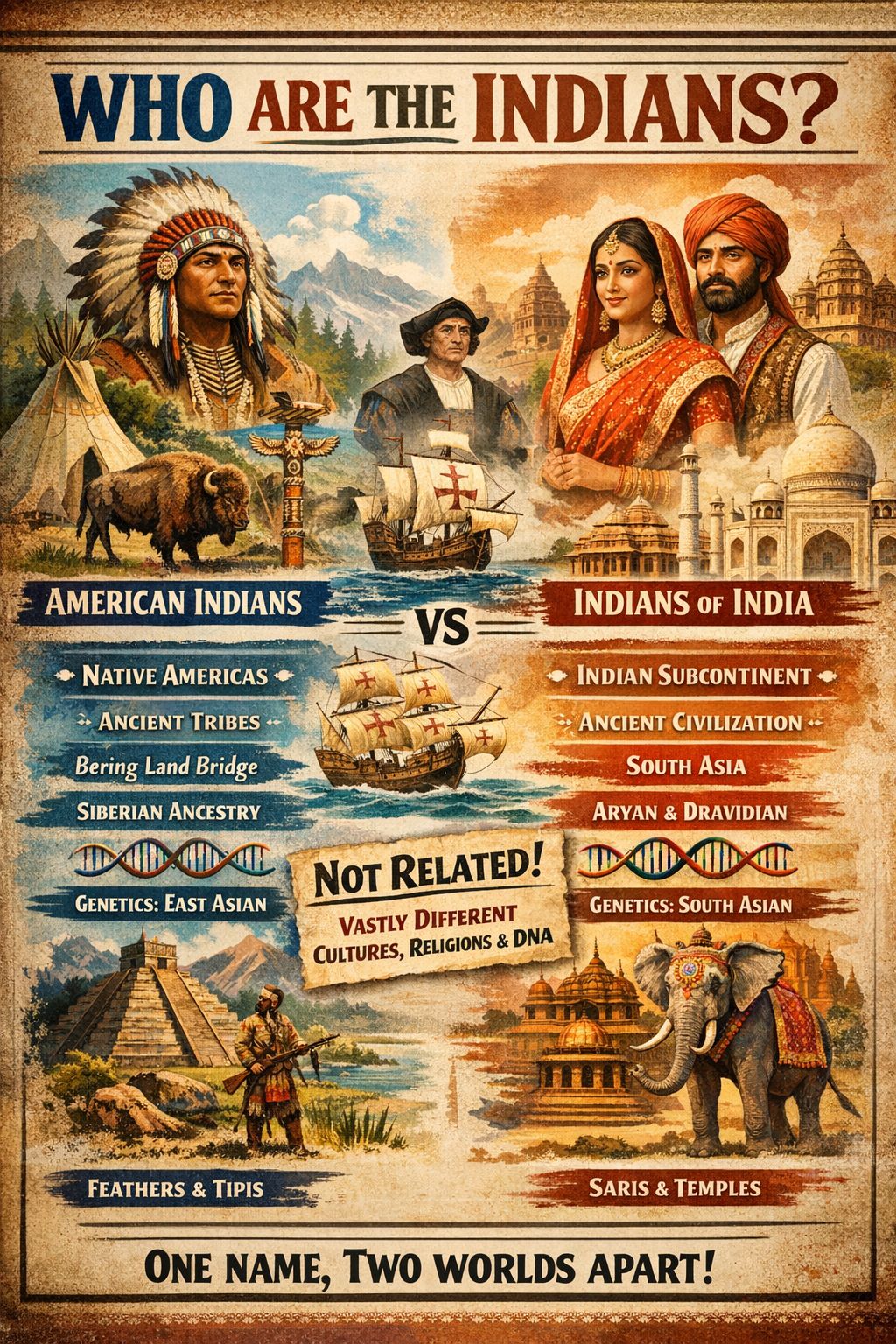
When most people hear the word “Indian,” their mind jumps to a vague image: feathered headdresses, tipis, mystical chants, or perhaps the bustling streets of Delhi, India, full of spices, saris, and sacred cows. But here’s where things get confusing, fascinating, and downright misunderstood. Because the “Indians” of America and the Indians of India are as different as the Bahamas and Siberia and yet, centuries of naming, history, and miscommunication have tangled them in a single word.

The American Indians: A People of the Land Before Time

Let’s start with the people who roamed this continent long before any Europeans showed up. The American Indians, sometimes called Native Americans, have roots that stretch back over 15,000 years in North and South America. Their ancestors crossed the Bering Land Bridge from Siberia into Alaska during the last Ice Age, spreading across the Americas and creating hundreds of unique tribes, languages, and cultures.

These peoples had civilizations that were diverse and sophisticated: the Aztec, the Maya, the Inca, the Mississippian mound builders, the Iroquois Confederacy. From intricate social structures to detailed astronomical observations, these societies were far from primitive. They lived in harmony with their environment, crafting tools from stone, wood, and bone, while their spiritual beliefs were deeply tied to nature, cycles of the moon, sun, and earth.

The Indians of India: A Civilization Older Than Memory

Across the Atlantic, another “Indian” story was unfolding. The people of the Indian subcontinent have one of the oldest continuous civilizations in human history, stretching back over 5,000 years to the Indus Valley Civilization. India is a land of immense diversity: hundreds of languages, thousands of ethnic groups, and religions that shaped entire philosophies, Hinduism, Buddhism, Jainism, Sikhism.

Unlike the American Indians, whose lives were often nomadic or regional, the Indians of India built cities, trade networks, monumental architecture, and a system of governance that influenced the world. Their DNA, shaped over millennia in South Asia, connects them more closely to Middle Eastern, Central Asian, and European populations than to the peoples of the Americas.

Why Are American Indians Called “Indians”?

Here’s the twist: the name “Indian” for the Native Americans is completely a historical accident, and a mistake that stuck for centuries. When Christopher Columbus sailed west in 1492, he believed he had reached the East Indies (modern-day Southeast Asia and India). When he encountered the native peoples of the Caribbean, he called them “Indios”, Spanish for Indians. He was dead wrong. The people he met were entirely unrelated to the Indians of Asia. But the name stuck. English settlers, French traders, and later governments continued using it, and it became the default label.

To this day, Americans use the term “Indian” to refer to Native Americans, even though it carries no historical or cultural connection to the subcontinent of India. It’s like calling a coconut a watermelon just because they’re both round, technically wrong but culturally persistent.

Culture, Religion, and DNA: Worlds Apart

Let’s break it down scientifically: DNA studies show that Native Americans share more genetic markers with East Asians, particularly Siberians, than with South Asians from India. American Indians and Indians of India are separated by tens of thousands of years of evolution on entirely different continents. Their languages have no common origin, Native American languages like Navajo, Quechua, or Cherokee are distinct from Sanskrit, Hindi, Tamil, or Bengali. Religiously, the contrast is immense: Native American spirituality is deeply animistic and localized, while Indian religions are codified, philosophical, and encompass vast pantheons. Even their diets, clothing, housing, and social organization are radically different.

The American Indian culture is intimately tied to the land hunting, farming, and rituals shaped by the local environment. Indian culture has thrived in urban and rural settings alike, evolving through conquest, trade, and empire-building. To put it plainly: the American Indians and the Indians of India are as unrelated as the Atlantic Ocean that separates them.

Why the Misnomer Matters

So why should we care about correcting this centuries-old mistake? Names carry power. Calling Native Americans “Indians” perpetuates a historical error, erasing their true identity and origins. It also conflates them with an entirely separate civilization, obscuring the unique brilliance of each people. Imagine calling Bahamian’s “Floridians” just because Florida is nearby, it’s that wrong, yet culturally entrenched.

Despite the error, both peoples have thrived in their own ways. But every time someone hears “Indian,” it’s worth pausing and remembering: the person in a headdress in Arizona has no direct connection to the person wearing a sari in Mumbai. They are two entirely separate human stories, both rich, both extraordinary, and each deserving respect on their own terms.

The Takeaway: Never Mix the Two

American Indians and Indians of India share only a name and nothing else. Their histories, DNA, cultures, and religions are distinct, profound, and fascinating in their own right. By understanding the differences, we honor both legacies, and we keep history honest.

So the next time someone says, “Hey, that Indian…” pause. Ask: “Which one?” Because the answer reveals a whole world most people rarely think about and it’s a world that deserves to be remembered correctly.

Who Are the Indians?

By Michael Elijah Muhammad Clare

When most people hear the word “Indian,” their mind jumps to a vague image: feathered headdresses, tipis, mystical chants, o
Comment

THE PAUSE: HUMAN AGING

THE PAUSE: HUMAN AGING

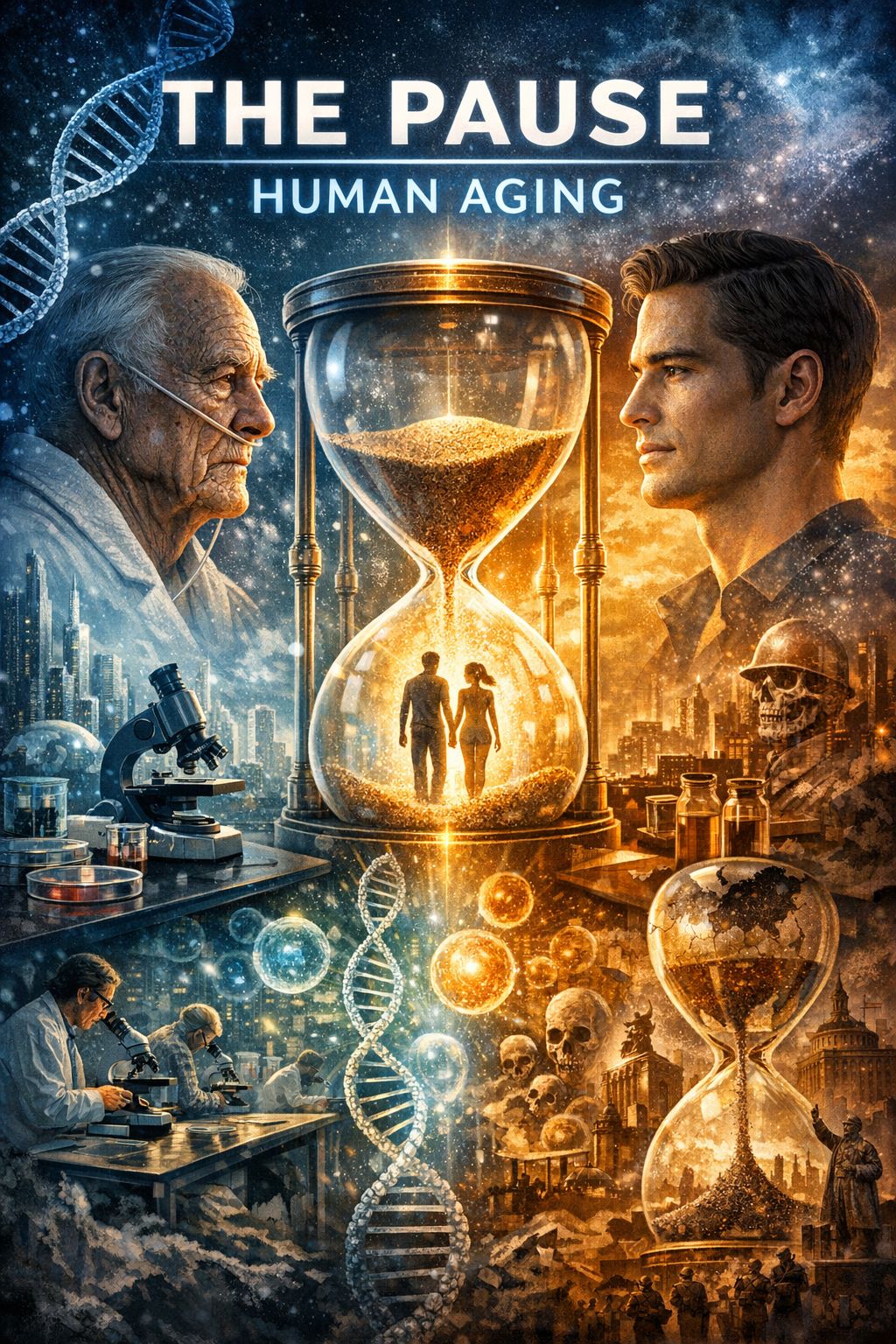
For most of human history, aging has been treated like weather; inevitable, uncontrollable, and best endured with dignity. Wrinkles were wisdom. Weakness was fate. Death was the punctuation mark at the end of every sentence ever written by a human being.

That belief is now collapsing.

Quietly. Methodically. Inside laboratories where time itself is being studied, disassembled, and reversed.

Aging, it turns out, is not a mystery. It is a process. And processes can be interrupted.

The human body is not a candle that simply burns down. It is more like a machine running outdated software. Damage accumulates not because it must, but because evolution never bothered to fix what happens after reproduction. Nature optimized us to survive long enough to pass on genes; not to last forever.

Modern science is correcting that oversight.

At the center of this revolution is a structure so small it was once dismissed as biological trivia; telomeres.

Telomeres are protective caps at the ends of chromosomes, often compared to the plastic tips on shoelaces. Every time a cell divides, these caps shorten. When they become too short, the cell stops dividing or self-destructs. This mechanism protects against cancer, but it also drives aging itself.

For decades, scientists believed telomere shortening was irreversible. Then they discovered telomerase.

Telomerase is an enzyme capable of rebuilding telomeres. It is active in stem cells, embryos, and certain immune cells. In controlled laboratory settings, activating telomerase has allowed cells to divide far beyond their natural limits without becoming cancerous.

In animal studies, telomerase reactivation has restored organ function, improved cognition, strengthened muscles, and reversed markers of biological age. Old tissues began behaving like young ones again.

Not younger in appearance. Younger in function.

That distinction matters.

But telomeres are only the opening act.

The deeper story unfolds in stem cells.

Stem cells are the body’s raw material; undifferentiated cells capable of becoming muscle, nerve, blood, bone. Youth is defined by abundance. Aging is marked by depletion. As stem cell populations shrink and lose efficiency, repair slows, organs weaken, and resilience fades.

Modern stem cell science is learning how to replenish that supply.

Induced pluripotent stem cells; adult cells reprogrammed back into a youthful, flexible state; have already been used to regenerate heart tissue, repair spinal injuries, restore vision, and rebuild damaged skin in early human trials.

But the most unsettling discovery came when scientists realized aging is not merely damage accumulation; it is information loss.

Inside every cell, DNA is wrapped in proteins and tagged with chemical markers that instruct genes when to activate and when to remain silent. Over time, these instructions degrade. Cells forget what they are supposed to be.

Aging, in part, is biological amnesia.

Through epigenetic reprogramming, researchers have found ways to reset these instructions. By briefly activating a small group of genes, cells can be returned to a younger state without losing their identity.

In mice, this process has reversed blindness, restored muscle strength, improved brain function, and extended lifespan.

Not slowed aging.

Reversed it.

Cells that were biologically old began functioning as if time had been rolled backward.

This is not theory. These are published studies. Replicated results. Expanding research programs.

So why does the world feel strangely quiet?

Because the implications are destabilizing.

If aging becomes optional, retirement collapses. Insurance collapses. Population models collapse. Power structures fracture. The fear is not longer life; the fear is who controls it.

History warns us about leaders who cling to power. Kings who never step aside. Systems that rot because time no longer forces renewal. But aging has never been a moral filter.

Some of history’s worst figures died young.
Some of humanity’s greatest minds never reached old age.

Aging does not select for virtue. It erodes everyone equally.

Longevity does not create tyranny. Systems do.

And the truth remains; this technology does not make anyone invincible. It does not prevent disease, accidents, or accountability. It restores biological resilience; the same resilience every human once had.

Humanity has crossed lines before.

Antibiotics were once unnatural.
Vaccines were once feared.
Surgery was once blasphemy.

Every generation draws a sacred boundary, only for the next to step over it and call it progress.

What is different now is scale.

We are approaching a moment where aging itself becomes negotiable.

The knowledge already exists. Stored in journals, databases, and laboratories across the planet. It cannot be uninvented. It cannot be forgotten.

The pause is coming.

The only remaining question is whether it arrives chaotically; hoarded, unequal, destabilizing; or deliberately; guided by ethics, transparency, and collective responsibility.

Because once humanity learns how to repair itself at the cellular level, there is no returning to the myth that decay was destiny.

Time is no longer just passing.

It is being studied.

And for the first time in human history, it is losing.

THE PAUSE: HUMAN AGING

For most of human history, aging has been treated like weather; inevitable, uncontrollable, and best endured with dignity. Wrinkles were wisdom. Weakness wa
Comment

CLINTONS AGREE TO TESTIFY AS HOUSE EPSTEIN PROBE NEARS CONTEMPT…

CLINTONS AGREE TO TESTIFY AS HOUSE EPSTEIN PROBE NEARS CONTEMPT SHOWDOWN

By Michael Elijah Muhammad Clare

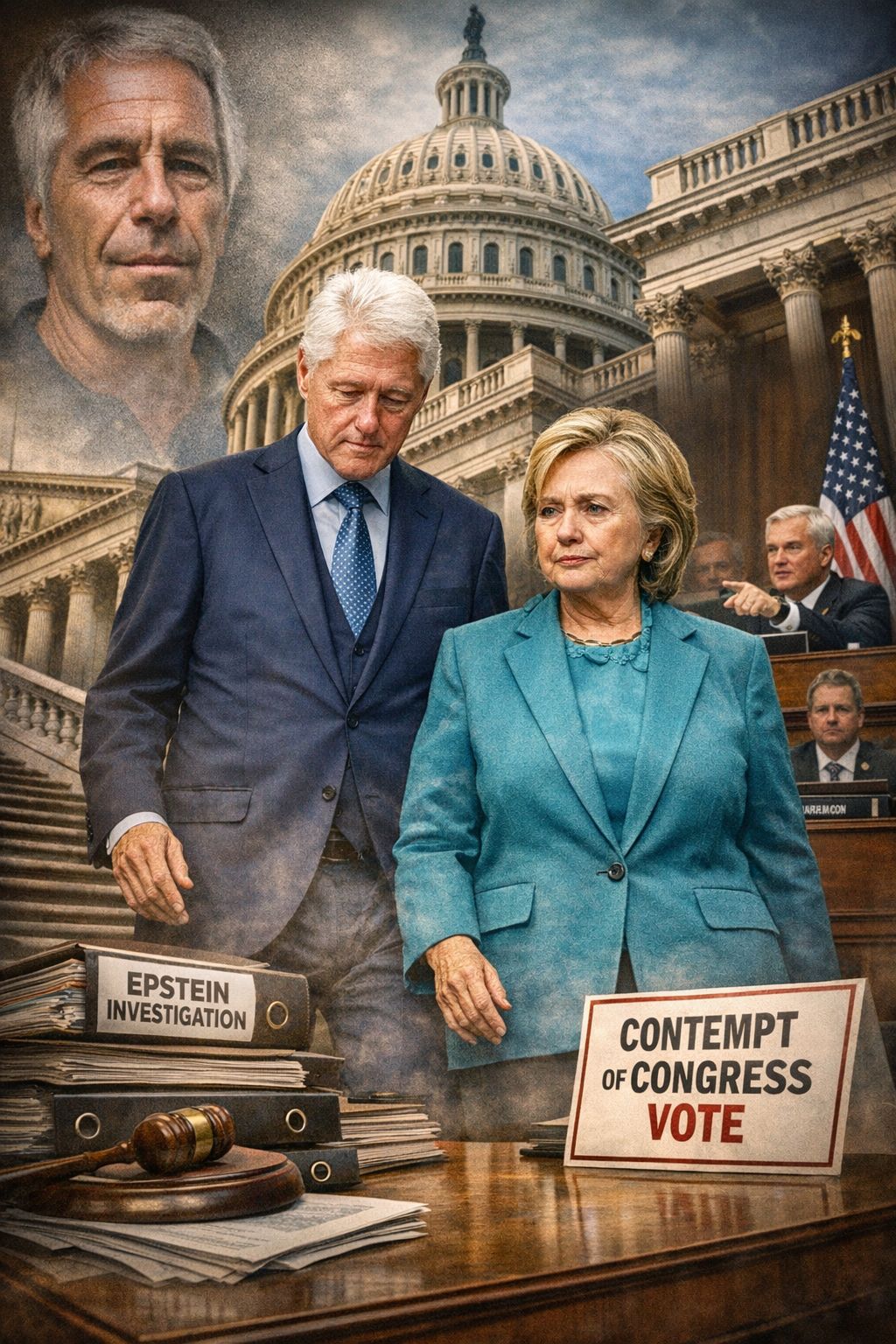
Washington, D.C. — After weeks of escalating pressure and behind-the-scenes negotiation, former President Bill Clinton and former Secretary of State Hillary Clinton have agreed to testify under oath in a House investigation tied to the late financier Jeffrey Epstein, just as lawmakers were preparing to move forward with a rare and politically explosive contempt of Congress vote.

The decision comes at the edge of a constitutional cliff, where congressional subpoena power, political optics, and unresolved questions surrounding one of the most disturbing criminal networks of the modern era collide. For Capitol Hill, it is a moment thick with consequence ; not just about who testifies, but about how far Congress is willing to go to compel answers from some of the most powerful figures in recent American history.

The House Oversight Committee, led by Republican Chairman James Comer, has spent months pressing for sworn testimony from the Clintons as part of a broader inquiry into Epstein’s activities, his relationships with influential individuals, and the federal government’s handling of evidence and investigations related to his crimes. Subpoenas were issued after committee leaders argued that voluntary cooperation had failed and that only formal depositions would satisfy the committee’s mandate.

Initially, the Clintons’ legal team pushed back, offering what they described as reasonable alternatives. Bill Clinton proposed a limited, four-hour transcribed interview, while Hillary Clinton offered to submit a sworn written statement. Committee leaders rejected those proposals outright, insisting that both former officials appear in person for full depositions under oath.

That refusal set off alarms on both sides of the aisle. A contempt of Congress vote ; particularly against a former president and former secretary of state ; is an extraordinary measure, rarely invoked and even more rarely enforced. Yet House leaders signaled they were prepared to proceed, scheduling steps that could have led to fines or criminal referrals if compliance did not follow.

Then came the pivot.

Late in the process, attorneys for the Clintons informed committee staff that both would agree to sit for sworn depositions on mutually agreed dates. The shift effectively paused the march toward contempt, though committee leaders stressed that nothing would be final until deposition dates and terms were formally locked in writing.

Chairman Comer publicly acknowledged the development but remained cautious, stating that the committee had not yet received firm commitments. The contempt process, he noted, would remain on the table until testimony was secured.

At the heart of the dispute lies Epstein himself ; a figure whose wealth, secrecy, and access to elite circles allowed him to evade accountability for years. Bill Clinton’s past association with Epstein, including travel aboard Epstein’s private aircraft, has long been documented and previously addressed in public statements. What the committee now seeks, lawmakers say, is clarity ; about what was known, when it was known, and whether critical information failed to reach investigators at key moments.

The release of massive volumes of federal documents late last year reignited congressional interest, prompting lawmakers to demand sworn testimony from individuals they believe may help close lingering gaps in the historical record. Oversight leaders argue the goal is not spectacle, but answers.

The Clintons’ representatives, however, have criticized the committee’s approach, characterizing it as confrontational and dismissive of earlier cooperation. They maintain that their clients have repeatedly denied any wrongdoing and have expressed willingness to assist within reasonable bounds.

Democrats on the committee have also raised concerns, questioning whether the looming contempt threat reflects genuine oversight or an escalation driven by politics rather than necessity. Republicans counter that subpoenas are meaningless if Congress is unwilling to enforce them.

Now, with depositions expected to move forward, the immediate constitutional clash appears to have cooled ; but the underlying tension remains. The committee must decide whether to formally withdraw contempt proceedings or keep them as leverage until testimony is complete. The Clintons, for their part, are preparing to face sworn questioning that could reopen old chapters and invite new scrutiny.

What happens next will resonate far beyond this investigation. The outcome may shape how future Congresses exercise subpoena power, how former officials respond to oversight demands, and how deeply lawmakers are willing to dig into the shadows surrounding one of the most infamous criminal cases of the century.

For now, the witness chairs await ; and Washington watches closely.

CLINTONS AGREE TO TESTIFY AS HOUSE EPSTEIN PROBE NEARS CONTEMPT SHOWDOWN

By Michael Elijah Muhammad Clare 

Washington, D.C. — After weeks of escalating pressure and behind-the-sc
Comment

COLD WATER ALERT

COLD WATER ALERT

An unusually strong blast of Arctic air is pushing deep into the southeastern United States, and scientists say it may be interfering with one of the most important ocean systems affecting the Bahamas, the Gulf Stream.

The Gulf Stream is a powerful river of warm ocean water that flows from the Gulf of Mexico, up along Florida’s east coast, and across the Atlantic. It plays a major role in keeping regional waters warmer and supporting marine life throughout the Bahamas.

When extreme Arctic air settles over Florida, coastal surface waters can cool very quickly. This sudden temperature drop can shock fish, especially shallow-water species that are not adapted to cold conditions. In severe cases, fish may become stunned, lose control, or die, a phenomenon known as cold shock.

Strong cold air outbreaks can also disturb wind patterns and surface currents, temporarily affecting how warm Gulf Stream waters mix with colder coastal waters. This can allow colder water to spread farther south and east than usual, potentially reaching parts of the Bahamas.

Dead fish now appearing along Bahamian shores may be linked to:
Sudden drops in ocean temperature
Cold-stunned fish drifting with currents
Temporary disruption of warm Gulf Stream flow

There is no evidence that the Gulf Stream has stopped or collapsed. Scientists confirm it is still flowing, but short-term disturbances during extreme weather events are possible.

What is being observed appears to be a weather-driven marine stress event, not a permanent ocean system failure, but it highlights how powerful Arctic air intrusions can impact marine life across the region.

Bahama Drama continues to monitor conditions across Florida and the Bahamas as this cold system moves through.


Comment