
Yesterday was a journey, today will be an adventure.
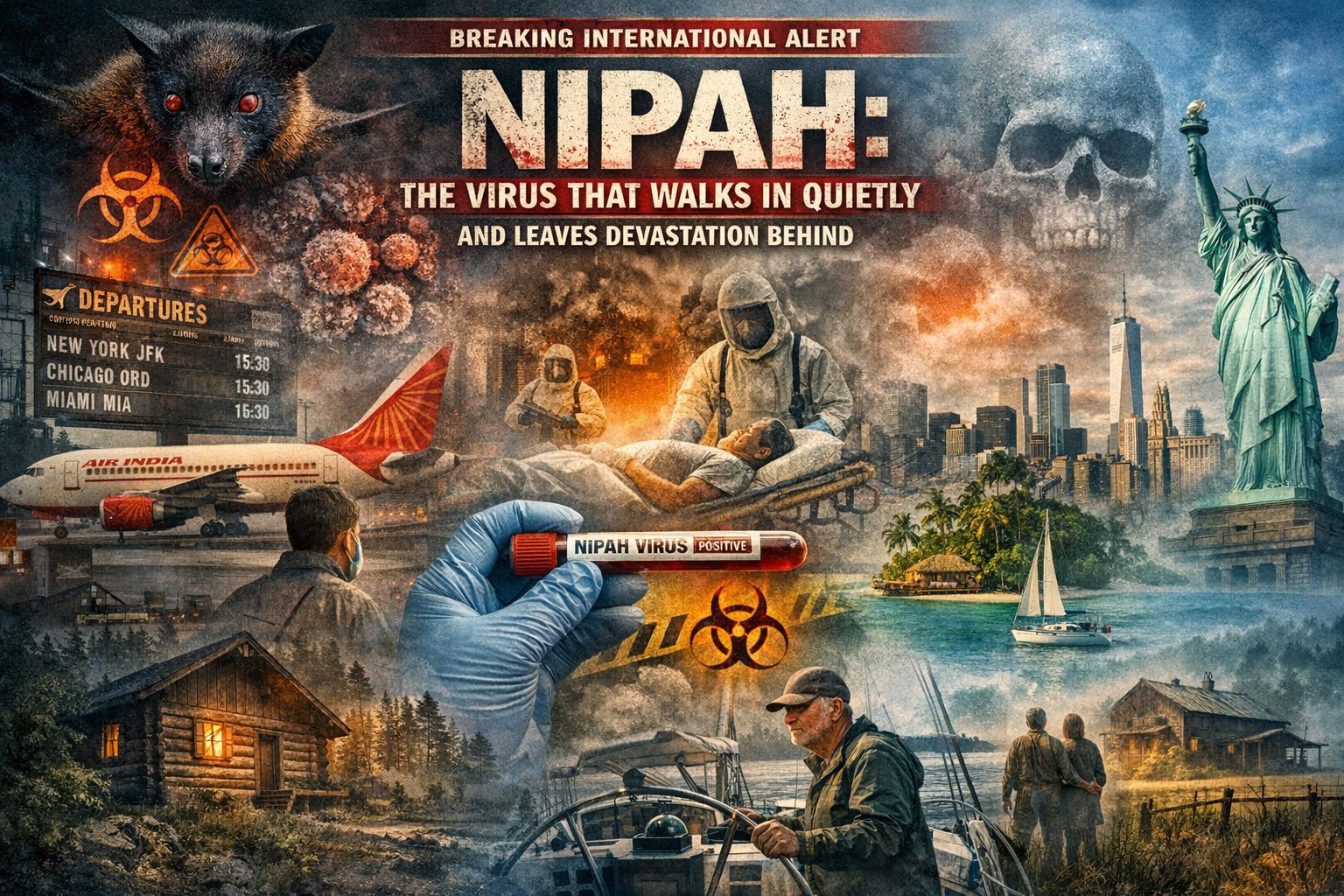
BREAKING INTERNATIONAL ALERT
BREAKING INTERNATIONAL ALERT
NIPAH: THE VIRUS THAT WALKS IN QUIETLY
AND LEAVES DEVASTATION BEHIND
UPDATED FLIGHT WATCH • GLOBAL MOVEMENT • SURVIVAL PATTERNS
By: Michael Elijah Muhammad Clare
It always begins the same way.
A fever.
A headache.
A sore throat.
Fatigue that feels ordinary, almost boring.
And then, suddenly, it isn’t.
India has confirmed new cases of the Nipah virus, activating emergency containment protocols, contact tracing, and heightened surveillance. Global health authorities are watching closely, not because the numbers are large, but because the virus itself is one of the most lethal known to science.
This is not seasonal flu.
This is not COVID.
This is Nipah.
And unlike louder outbreaks, Nipah moves quietly, through proximity, travel corridors, and human contact patterns that rarely make headlines until it is too late.
WHAT IS HAPPENING IN INDIA RIGHT NOW
Health authorities in India have confirmed a localized cluster of Nipah infections and immediately initiated isolation procedures and regional containment. Officials state the outbreak is currently limited. History shows Nipah outbreaks always begin this way.
Small.
Localized.
Underestimated.
Because of this, international monitoring has intensified around air travel routes departing India, especially long-haul routes connecting India to major global hubs.
This is not panic.
This is pattern recognition.
CURRENT FLIGHT WATCH: INDIA TO THE UNITED STATES
India currently maintains active scheduled passenger flights to the United States, primarily through major international gateways. These routes matter because they connect dense populations across continents within hours.
Key U.S. cities receiving regular scheduled connections from India include:
New York (JFK and Newark)
Chicago
Dallas / Fort Worth
Washington D.C. (seasonal and variable)
Miami (often via connecting hubs)
These flights typically depart from Indian hubs such as Delhi and Mumbai, either nonstop or with limited international connections.
Viruses do not need passports.
FROM THE UNITED STATES INTO THE CARIBBEAN AND THE BAHAMAS
There are no direct flights from India to the Bahamas.
However, the Bahamas is tightly connected to major U.S. cities that receive international traffic from India and elsewhere.
Primary U.S. gateways with frequent flights into the Bahamas include:
Miami
New York
Atlanta
Fort Lauderdale
Orlando
Charlotte
Public-health risk does not depend on direct travel alone. It depends on chains of movement. A virus only needs connection points, not a straight line.
WHY NIPAH IS SO DANGEROUS
Nipah’s most dangerous trait is deception.
Early symptoms often resemble common flu:
Fever
Headache
Muscle pain
Sore throat
Fatigue
In many cases, the disease escalates rapidly.
As it progresses, patients may develop severe respiratory distress, encephalitis (inflammation of the brain), confusion, seizures, and coma. Fatality rates in past outbreaks have ranged from approximately forty percent to as high as seventy-five percent.
There is no guaranteed survival window.
IS THERE A CURE OR VACCINE?
There is currently no approved vaccine for Nipah virus and no proven antiviral cure.
Treatment is supportive only, focusing on oxygen, ventilation, seizure control, and management of brain swelling and complications.
Several vaccines and antibody therapies are in development, but none are available for widespread use. This reality explains why health authorities act swiftly and quietly when Nipah appears.
THE LARGER PATTERN PEOPLE AVOID DISCUSSING
A pattern is emerging across decades of outbreaks.
The most vulnerable populations are often the most connected.
Dense cities.
Constant travel.
High-frequency human contact.
History shows that secluded populations repeatedly survive collapse events at higher rates.
People living:
On boats
On farms
In forests
On remote islands
In off-grid or semi-off-grid communities
These groups unintentionally practice natural isolation buffers. They are not immune. They are simply less exposed.
When transmission relies on proximity, distance becomes protection.
A SOBERING POSSIBILITY
If outbreaks like Nipah become more frequent, not global pandemics, but recurring lethal clusters, civilization does not collapse instantly.
It thins.
Cities feel it first.
Transit corridors follow.
Supply chains fracture.
Those who remain are often not the most advanced, but the most distant.
History supports this.
After plagues and collapses, it is often farmers, hill communities, island dwellers, forest populations, and maritime nomads who endure long enough to rebuild.
Not by design.
By geography.
In that future, survival is not about technology alone.
It is about separation, behavior, and location.
HOW PEOPLE CAN PROTECT THEMSELVES
There is no cause for panic.
There is reason for awareness.
Public-health guidance remains clear:
Avoid close contact with sick individuals.
Avoid raw foods potentially exposed to bats.
Practice hand hygiene.
Use masks in healthcare or outbreak settings.
Seek medical care immediately after possible exposure.
Immune resilience matters:
Vitamin D for immune regulation.
Vitamin C for cellular defense.
Zinc for immune function.
Adequate rest, hydration, and nutrition.
None are cures.
All are defenses.
FINAL WORD
Nipah is not spreading globally at this time.
There is no confirmed outbreak in the Bahamas.
There is no reason for fear.
But there is reason for respect.
The most dangerous viruses are not the loud ones.
They are the ones that arrive quietly, adapt patiently, and exploit connection.
This is not fear.
This is awareness.
Bahama Drama
Research • Awareness • Protection
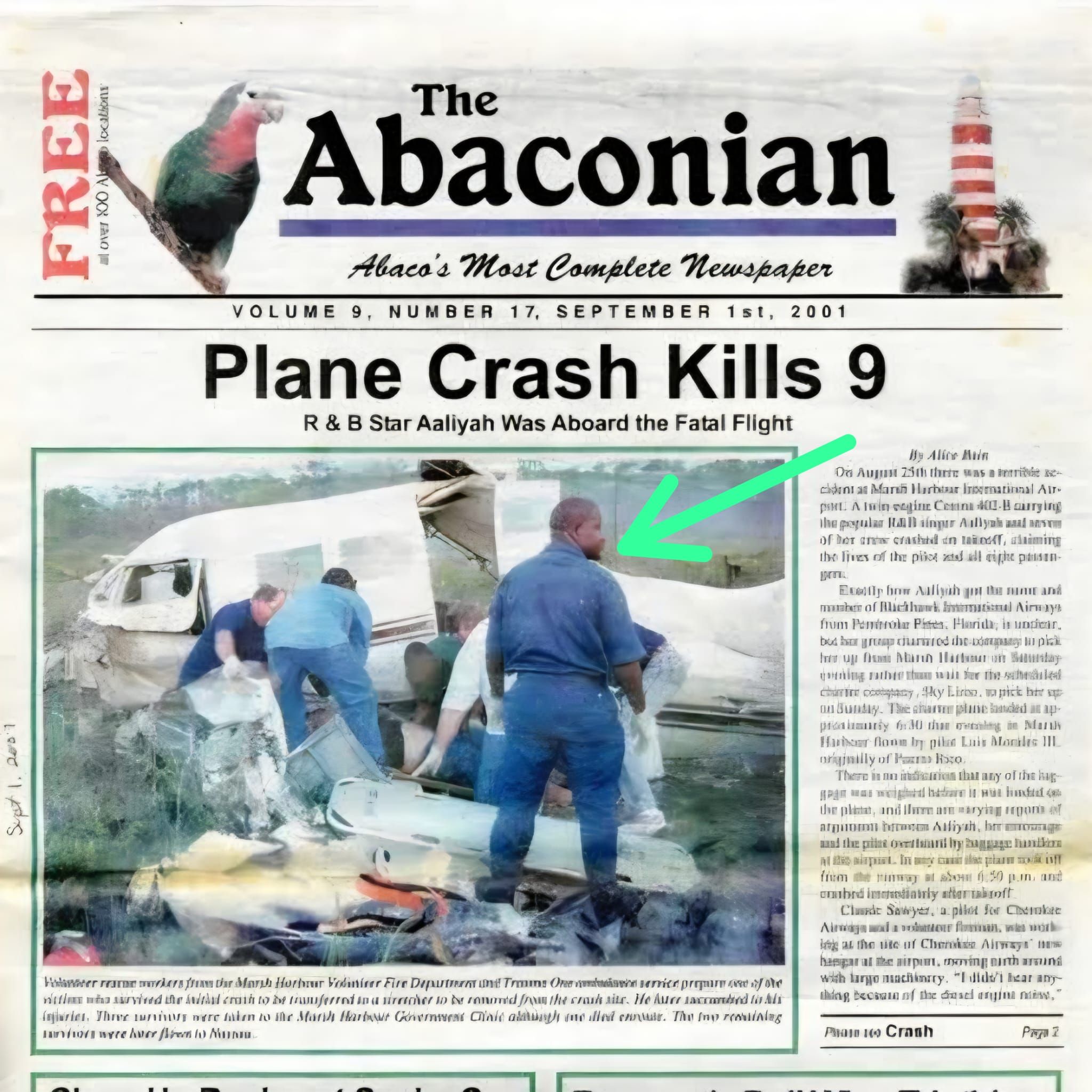
Before he was widely known as Ambassador Bootle in the capital, New…
Before he was widely known as Ambassador Bootle in the capital, New Providence, Bahamas, he was on the front lines in Abaco saving lives.
RIP Ambassador Bootle 💜
This photo was taken in the aftermath of the tragic plane crash that claimed the life of legendary singer Aaliyah. At the time, Rocky was serving as a Firefighter with Civil Aviation at Marsh Harbour Airport, responding and helping in every way he could under unimaginable circumstances.
Long before the titles and recognition, he was already doing the work, quietly, bravely, and with purpose.
Page Reply:
Moments like this matter. People often only know public figures for who they became, not who they were when it was hard…
What did you dream about last night?
BREAKING — Bahama Drama Alert
BREAKING — Bahama Drama Alert
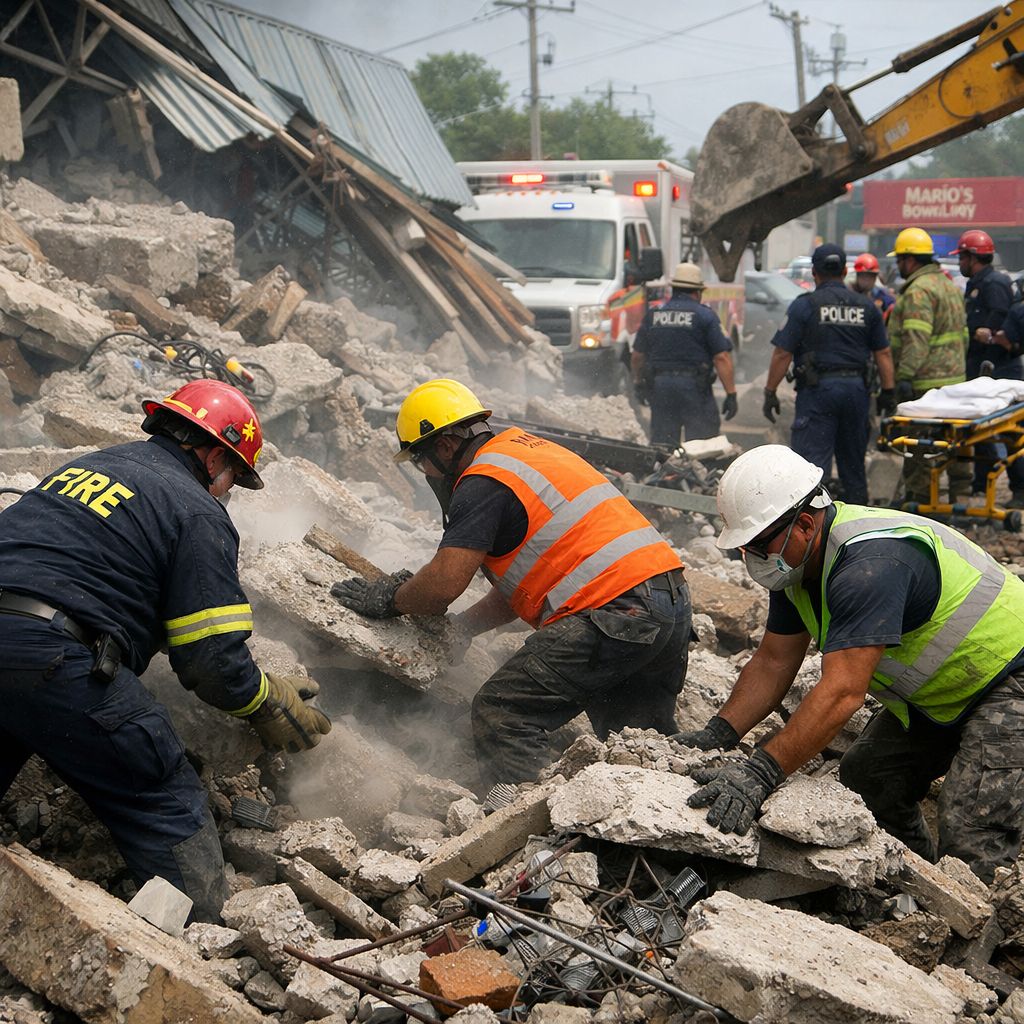
MAN BELIEVED BURIED IN INDUSTRIAL EXCAVATION ACCIDENT BEHIND FORMER MARIO’S BOWLING ALLEY, NASSAU
NASSAU, BAHAMAS — Emergency crews are engaged in a critical rescue operation following a serious industrial accident at an excavation site located behind the former Mario’s Bowling Alley on Harold Road, Nassau, near the Dominique Darling Highway. Reports indicate that a man is believed to be trapped under rubble after a structural collapse at the site.
Eyewitness accounts describe responders working frantically to remove debris, with heavy equipment and manual efforts used to reach the man. The site is littered with concrete rubble and construction materials, making the operation both delicate and urgent.
Exact Location:
* Harold Road, Nassau
* Excavation site behind the former Mario’s Bowling Alley, near Dominique Darling Highway
Current Situation:
* Rescue personnel, including fire and medical crews, are removing rubble piece by piece.
* No official information has been released regarding the man’s condition or identity.
* The cause of the collapse is currently under investigation.
Community Updates:
Residents and onlookers have gathered at a safe distance, providing live updates via social media while urging others to avoid the area so responders can work unhindered.
This is a developing situation. Bahama Drama will provide updates as soon as verified information becomes available.
Praying for the family…
File photo:
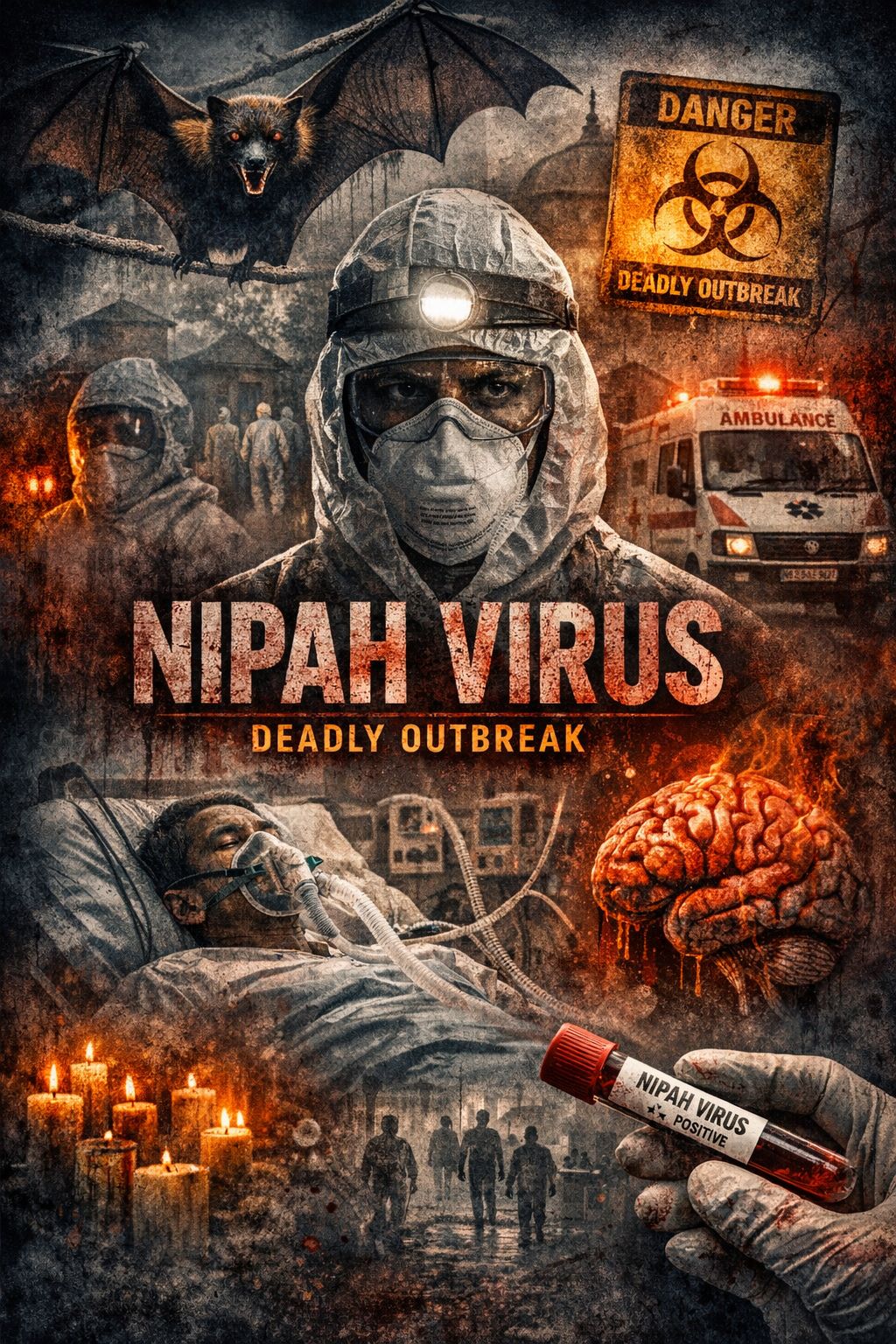
BREAKING INTERNATIONAL ALERT
BREAKING INTERNATIONAL ALERT
NIPAH: THE VIRUS THAT WALKS IN QUIETLY
AND LEAVES DEVASTATION BEHIND
By: Michael Elijah Muhammad Clare
It begins the same way every outbreak begins.
A fever.
A headache.
A sore throat.
Fatigue that feels ordinary, almost boring.
And then, suddenly, it isn’t.
India has confirmed new cases of the Nipah virus, triggering emergency containment protocols, international surveillance, and heightened airport screening across parts of Asia. Global health authorities are watching closely, not because the numbers are large, but because the virus itself is one of the deadliest known to science.
This is not seasonal flu.
This is not COVID.
This is Nipah.
WHAT IS THE NIPAH VIRUS?
Nipah virus is a zoonotic virus, meaning it jumps from animals to humans. Its natural host is the fruit bat, also known as flying foxes, but it can also spread through infected pigs and, most concerning, from human to human through close contact with bodily fluids.
What makes Nipah especially dangerous is not how fast it spreads, but how lethal it can be once infection occurs.
Historical outbreaks have shown fatality rates ranging from approximately forty percent to as high as seventy-five percent.
In simple terms, this is a virus where survival is never guaranteed.
WHAT IS HAPPENING IN INDIA RIGHT NOW
Health authorities in India have confirmed a cluster of Nipah infections and immediately activated isolation procedures, contact tracing, and regional containment efforts. Officials state the outbreak is currently limited, but history shows Nipah outbreaks always begin small.
Several countries have increased health screenings at airports, not out of panic, but precaution. Nipah is officially listed by the World Health Organization as a priority pathogen due to its epidemic potential.
This is the kind of virus governments prepare for quietly, long before the public fully understands its name.
WHY NIPAH IS SO DANGEROUS
Nipah’s most dangerous trait is how deceptive it is in the early stage.
Initial symptoms often resemble common flu:
Fever
Headache
Muscle pain
Sore throat
Fatigue
But in many cases, the disease escalates rapidly.
As the virus progresses, patients may develop severe respiratory distress, inflammation of the brain known as encephalitis, confusion, seizures, and coma. In some cases, deterioration happens within days.
This is why Nipah is feared in medical and scientific circles. By the time it reveals its full severity, the window for intervention may already be closing.
THE HISTORY BEHIND THE VIRUS
Nipah virus was first identified in 1998 and 1999 during an outbreak in Malaysia. Since then, it has appeared periodically in South Asia, including India and Bangladesh.
Past outbreaks have been linked to contaminated fruit, raw date palm sap, close contact with infected animals, and caregiving or hospital exposure between humans.
Each outbreak has reinforced the same lesson.
Nipah does not require crowds.
It does not require mass travel.
It only requires proximity.
Once human-to-human transmission begins, containment becomes a race against time.
IS THERE A CURE OR VACCINE?
There is currently no approved vaccine for Nipah virus.
There is no specific antiviral treatment proven to cure it.
Medical treatment is supportive only and focuses on managing symptoms, providing oxygen or ventilation, reducing brain swelling, and treating complications.
Several vaccines and antibody therapies are under development, but none are yet available for widespread use. This reality is why health authorities act immediately when Nipah is detected.
HOW PEOPLE CAN PROTECT THEMSELVES
Public health experts emphasize prevention through behavior, especially in affected regions.
Avoid close contact with sick individuals.
Do not consume fruit or raw food products that may have been exposed to bats.
Practice frequent hand washing.
Wear masks in healthcare or outbreak settings.
Seek medical care immediately if symptoms appear after possible exposure.
Awareness and early action are critical.
SUPPORTING THE IMMUNE SYSTEM
Vitamins do not cure Nipah, but immune resilience matters.
Doctors commonly recommend:
Vitamin D for immune regulation
Vitamin C for cellular defense
Zinc for immune cell function
Adequate hydration, nutrition, and rest remain foundational for immune strength.
WHY THE WORLD IS WATCHING
Nipah does not spread loudly.
There are no massive dashboards.
No constant headlines.
No global panic.
Instead, there is quiet movement behind the scenes:
Surveillance
Screening
Containment
Preparedness
This is the stage most people never notice, the chapter before a virus either disappears or evolves.
FINAL WORD
Nipah is not spreading globally at this time.
There is no reason for panic.
But there is every reason for respect.
History shows the most dangerous viruses are often not the loudest ones, but the ones that arrive quietly, adapt quickly, and wait for the right conditions.
This is not fear.
This is awareness.
Remember we notified you first before your local media even knows what’s going on. Bahama Drama research and protection program.
Daily Updates on this deadly virus can be found at our secure website: lol242.com/
If this information was helpful please follow and like our Facebook page thanks 👍
BAHAMIAN’S, LAND, AND BANKS
BAHAMIAN’S, LAND, AND BANKS
AN INSIDE PERSPECTIVE IS COMING
By: Michael Elijah Muhammad Clare
For years, Bahamians have raised the same concern again and again:
Why is it becoming harder for Bahamians to own land and homes in their own country?
Land availability is shrinking. Prices are rising. And more Bahamians are finding themselves locked out of the process long before they ever reach the closing table. While many discussions focus on foreign ownership and development, there is another major factor that deserves serious attention, the banking system and mortgage approval process.
Bahama Drama has been contacted by a licensed realtor who works directly with Bahamians every day, helping them attempt to become homeowners, landowners, and build generational wealth. This professional has firsthand experience navigating the financial and institutional obstacles that many Bahamians face when trying to secure mortgages and financing.
According to this realtor, banks play a significant role in why so many Bahamians struggle to get approved for land and home purchases. The requirements, conditions, delays, and rejections are not always well understood by the public, yet they quietly shape who gets approved and who does not.
This individual has expressed a willingness to share their professional experience, insights, and observations with the Bahamian public anonymously, in order to protect their career while still bringing transparency to an issue that affects thousands of families across the country.
In the coming days, Bahama Drama will be publishing detailed information provided by this realtor, breaking down:
* The real challenges Bahamian’s face when applying for mortgages
* How banking policies impact land ownership
* Why qualified Bahamian’s are often denied or delayed
* What this means for generational wealth in The Bahamas
This will not be speculation. It will be lived experience from someone inside the system, working directly with Bahamians who are trying to own a piece of their homeland.
Bahama Drama remains committed to putting Bahamians first, amplifying voices that often go unheard, and shedding light on issues that shape the future of our country.
Stay tuned…