
CLINTONS AGREE TO TESTIFY AS HOUSE EPSTEIN PROBE NEARS CONTEMPT…
CLINTONS AGREE TO TESTIFY AS HOUSE EPSTEIN PROBE NEARS CONTEMPT SHOWDOWN
By Michael Elijah Muhammad Clare
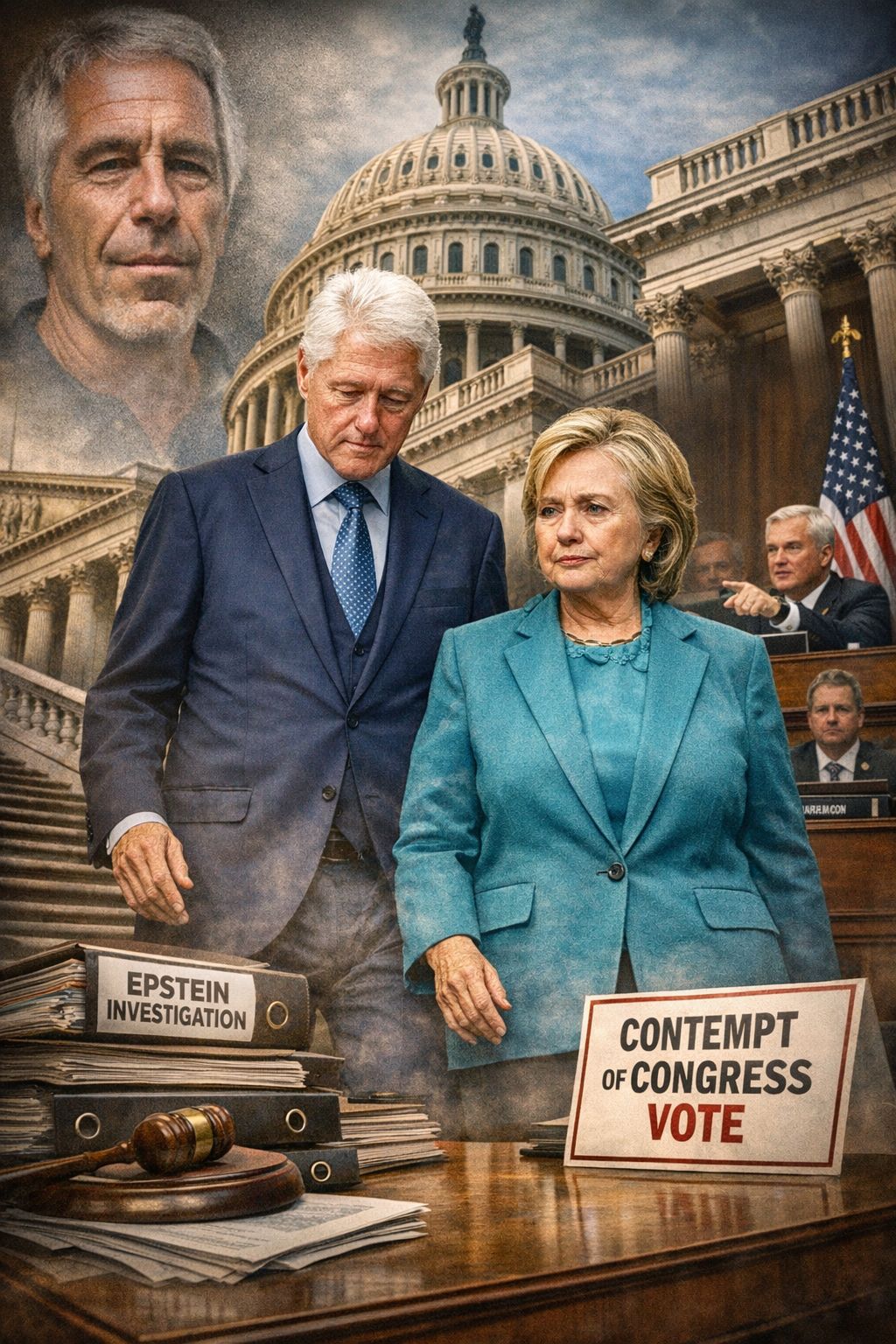
Washington, D.C. — After weeks of escalating pressure and behind-the-scenes negotiation, former President Bill Clinton and former Secretary of State Hillary Clinton have agreed to testify under oath in a House investigation tied to the late financier Jeffrey Epstein, just as lawmakers were preparing to move forward with a rare and politically explosive contempt of Congress vote.
The decision comes at the edge of a constitutional cliff, where congressional subpoena power, political optics, and unresolved questions surrounding one of the most disturbing criminal networks of the modern era collide. For Capitol Hill, it is a moment thick with consequence ; not just about who testifies, but about how far Congress is willing to go to compel answers from some of the most powerful figures in recent American history.
The House Oversight Committee, led by Republican Chairman James Comer, has spent months pressing for sworn testimony from the Clintons as part of a broader inquiry into Epstein’s activities, his relationships with influential individuals, and the federal government’s handling of evidence and investigations related to his crimes. Subpoenas were issued after committee leaders argued that voluntary cooperation had failed and that only formal depositions would satisfy the committee’s mandate.
Initially, the Clintons’ legal team pushed back, offering what they described as reasonable alternatives. Bill Clinton proposed a limited, four-hour transcribed interview, while Hillary Clinton offered to submit a sworn written statement. Committee leaders rejected those proposals outright, insisting that both former officials appear in person for full depositions under oath.
That refusal set off alarms on both sides of the aisle. A contempt of Congress vote ; particularly against a former president and former secretary of state ; is an extraordinary measure, rarely invoked and even more rarely enforced. Yet House leaders signaled they were prepared to proceed, scheduling steps that could have led to fines or criminal referrals if compliance did not follow.
Then came the pivot.
Late in the process, attorneys for the Clintons informed committee staff that both would agree to sit for sworn depositions on mutually agreed dates. The shift effectively paused the march toward contempt, though committee leaders stressed that nothing would be final until deposition dates and terms were formally locked in writing.
Chairman Comer publicly acknowledged the development but remained cautious, stating that the committee had not yet received firm commitments. The contempt process, he noted, would remain on the table until testimony was secured.
At the heart of the dispute lies Epstein himself ; a figure whose wealth, secrecy, and access to elite circles allowed him to evade accountability for years. Bill Clinton’s past association with Epstein, including travel aboard Epstein’s private aircraft, has long been documented and previously addressed in public statements. What the committee now seeks, lawmakers say, is clarity ; about what was known, when it was known, and whether critical information failed to reach investigators at key moments.
The release of massive volumes of federal documents late last year reignited congressional interest, prompting lawmakers to demand sworn testimony from individuals they believe may help close lingering gaps in the historical record. Oversight leaders argue the goal is not spectacle, but answers.
The Clintons’ representatives, however, have criticized the committee’s approach, characterizing it as confrontational and dismissive of earlier cooperation. They maintain that their clients have repeatedly denied any wrongdoing and have expressed willingness to assist within reasonable bounds.
Democrats on the committee have also raised concerns, questioning whether the looming contempt threat reflects genuine oversight or an escalation driven by politics rather than necessity. Republicans counter that subpoenas are meaningless if Congress is unwilling to enforce them.
Now, with depositions expected to move forward, the immediate constitutional clash appears to have cooled ; but the underlying tension remains. The committee must decide whether to formally withdraw contempt proceedings or keep them as leverage until testimony is complete. The Clintons, for their part, are preparing to face sworn questioning that could reopen old chapters and invite new scrutiny.
What happens next will resonate far beyond this investigation. The outcome may shape how future Congresses exercise subpoena power, how former officials respond to oversight demands, and how deeply lawmakers are willing to dig into the shadows surrounding one of the most infamous criminal cases of the century.
For now, the witness chairs await ; and Washington watches closely.
Related stories

Biometric Voter Cards Go Local, PAC Digs Into $1.5m Vouchers, and Some PMH Wards Relocate
Late-afternoon Bahamas Islands Briefing for Wednesday, October 14, 2026: Exuma’s Business Outlook is tomorrow;…

PUBLIC MESSAGE TO ALL BAHAMA DRAMA FOLLOWERS
We are taking Bahama Drama to the next level, and we want you to…

Eleuthera Residents Threaten to Stop Paying BPL Bills, Treasure Cay’s $177m Sale Nears Closing, and a “Miracle Baby” Gets Her Wheels
Afternoon Bahamas Islands Briefing for Wednesday, October 14, 2026: Eleuthera residents threaten to withhold…
Join the conversation
No comments yet. Be the first.