Bahama Drama

Past Post History to Date

6,047 posts

NORTH KOREA’S CHILLING NEW RULE: IF THE LEADER FALLS… THE MISSILES…

NORTH KOREA’S CHILLING NEW RULE: IF THE LEADER FALLS… THE MISSILES MAY FLY

By: Michael Elijah Muhammad Clare

Imagine a world where killing one man could trigger the unthinkable.

Not a warning.

Not a debate.

Not a room full of generals arguing around a giant table.

But a pathway toward nuclear retaliation.

That terrifying possibility is exactly why North Korea’s constitutional and nuclear command updates have grabbed the attention of military analysts, intelligence agencies, and governments around the world.

According to reporting surrounding North Korea’s updated doctrine, Pyongyang has strengthened language tied to what happens if supreme leader Kim Jong Un is killed, incapacitated, or if the nation’s nuclear command system comes under hostile attack.

And the implications are enough to make even hardened geopolitical experts uneasy.

For years, one question haunted global military planners:

What happens if North Korea’s leader is assassinated?

Would the government collapse?

Would generals fight for power?

Would the nuclear arsenal freeze in confusion?

Or worse…

Would someone launch first?

North Korea appears determined to remove that uncertainty.

The reported updates suggest something deeply unsettling: the country wants the world to believe its nuclear capability does not die with its leader.

In plain language?

The message appears to be:

Do not think removing the head removes the threat.

That is a frightening shift in nuclear deterrence.

Because historically, nuclear powers rely heavily on chains of command, human decision-making, and layers of authorization.

North Korea’s evolving doctrine appears designed to tell rivals that even a so-called “decapitation strike” — a military term for eliminating a nation’s leadership — could carry catastrophic consequences.

According to reporting on the updated language, if North Korea’s nuclear command and control system is endangered by hostile attack, a nuclear strike can be launched “automatically and immediately.”

Think about that for a second.

If a foreign nation believed eliminating a leader could stop a war…

North Korea wants that calculation to become far more dangerous.

Much of the concern stems from growing global instability, modern drone warfare, covert operations, cyberattacks, and real-world examples showing how quickly senior leadership can be targeted during conflict.

Pyongyang has watched the modern battlefield evolve.

And it appears to be adapting.

But this story raises another uncomfortable question.

One that reaches far beyond North Korea.

Should the United States ever do the same thing for its president?

That question may sound shocking…

Until you look at recent American history.

President Donald J. Trump has faced multiple major security threats, plots, and assassination-related incidents in recent years that stunned the United States and the world.

America watched bullets fly during a campaign rally.

America watched another major security scare unfold around a golf course.

The reality is simple: threats against national leaders are no longer distant Cold War movie plots.

They are modern headlines.

So the question becomes:

If a foreign enemy, terrorist organization, or hostile power targeted the president of the United States…

Should America create a doctrine so powerful and unmistakable that enemies know removing the president could never remove the response?

North Korea’s apparent answer is yes.

America’s traditional answer has been very different.

The United States already maintains a constitutional chain of succession, nuclear deterrence, military continuity plans, intelligence infrastructure, and command systems designed to survive leadership loss.

But it does not publicly operate under a constitutional promise of automatic nuclear retaliation tied directly to presidential assassination.

And that difference matters.

Because critics fear automatic retaliation could make future crises even more volatile.

Why?

Because in moments of confusion, radar mistakes, cyber interference, false alarms, or sudden military escalation… nations are forced to make decisions under immense pressure.

When nuclear weapons enter that equation, the margin for error becomes terrifyingly small.

One misunderstanding.

One misread signal.

One assumption.

One hacked system.

History has shown the world has come dangerously close before.

North Korea’s constitutional messaging appears intended as a giant flashing warning sign to foreign powers:

Touch the leadership… and you may not control what happens next.

Whether this strengthens deterrence or increases global danger depends on who you ask.

Supporters of hard deterrence would argue the policy discourages assassination attempts and foreign intervention.

Critics argue it raises the stakes of any future conflict to levels that could become almost impossible to manage safely.

Either way, one thing is becoming clear.

North Korea is not signaling weakness.

It is signaling continuity.

The kind that says the machinery of retaliation is expected to survive even the loss of the man at the top.

And in a nuclear age…

That is a sentence the world cannot afford to ignore.
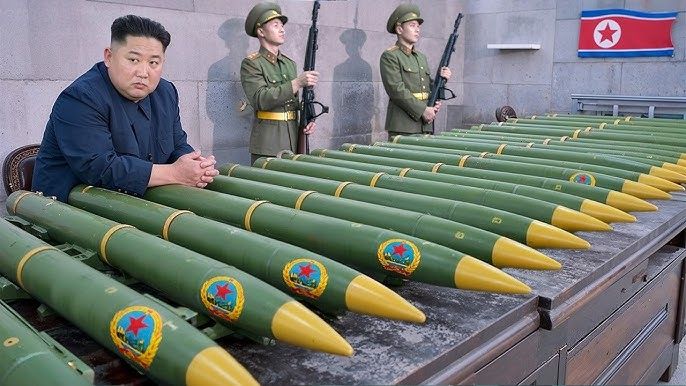
NORTH KOREA’S CHILLING NEW RULE: IF THE LEADER FALLS… THE MISSILES MAY FLY

By: Michael Elijah Muhammad Clare 

Imagine a world where killing one man could trigger the unthinkable.
Comment

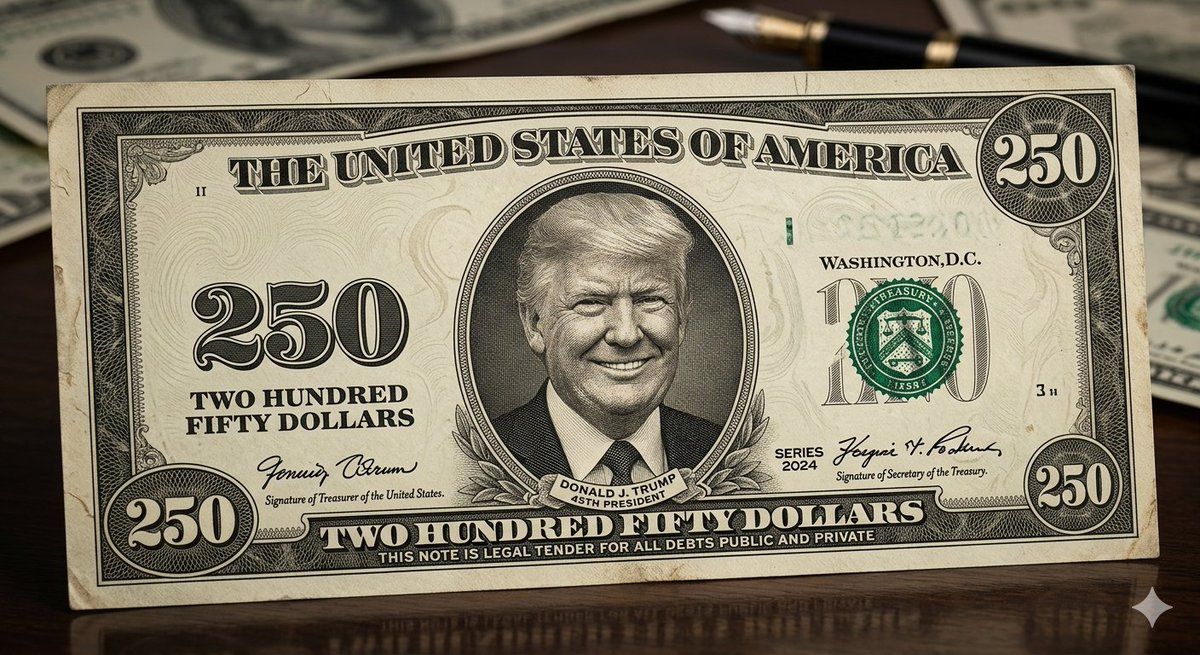
TRUMP ON A $250 BILL?

TRUMP ON A $250 BILL? YES… THIS IS ACTUALLY BEING DISCUSSED IN AMERICA 🇺🇸💵

By: Michael Elijah Muhammad Clare

Imagine opening your wallet… and seeing President Donald J. Trump staring back at you from a $250 bill.

No… this is not satire. Not a meme. Not internet fiction.

Reports out of the United States say serious discussion and proposed legislation exist surrounding a possible new $250 U.S. banknote featuring President Donald Trump, tied to America’s 250th anniversary celebrations.

But there is a major catch…

Under long-standing American law, living people cannot appear on official U.S. currency.

That rule has been in place for more than a century.

Meaning if a Trump $250 bill were ever to become real, lawmakers in Washington would first have to change federal law.

And yes… there are proposals connected to doing exactly that.

Now whether you support Trump, oppose Trump, or simply watch American politics like it’s the biggest reality show on Earth… this story is hard to ignore.

Because think about it…

The United States does not even normally use a common $250 denomination bill.

Americans are used to seeing the $1, $5, $10, $20, $50, and $100.

So this would not just be controversial because of Trump.

It would also introduce a modern denomination that most Americans have never carried, spent, or received in change.

Supporters reportedly view the idea as a patriotic tribute connected to America’s historic 250-year milestone.

Critics argue it pushes political symbolism, legal traditions, and national imagery into entirely new territory.

One thing nobody can deny…

Love him or hate him, Donald Trump remains one of the most recognizable, debated, influential, and polarizing political figures in modern history.

And now America is debating whether his face could someday appear not only on television screens, campaign signs, social media posts, and newspaper headlines…

…but inside millions of wallets.

Question for Bahama Drama readers:

If somebody handed you a Trump $250 bill… would you save it as a collector’s item… or spend it immediately, and should we also consider putting Hon. Phillip Edward Davis face on some new money after this historical win in May?

TRUMP ON A $250 BILL? YES… THIS IS ACTUALLY BEING DISCUSSED IN AMERICA 🇺🇸💵

By: Michael Elijah Muhammad Clare 

Imagine opening your wallet… and seeing President Donald J. Trump st
Comment

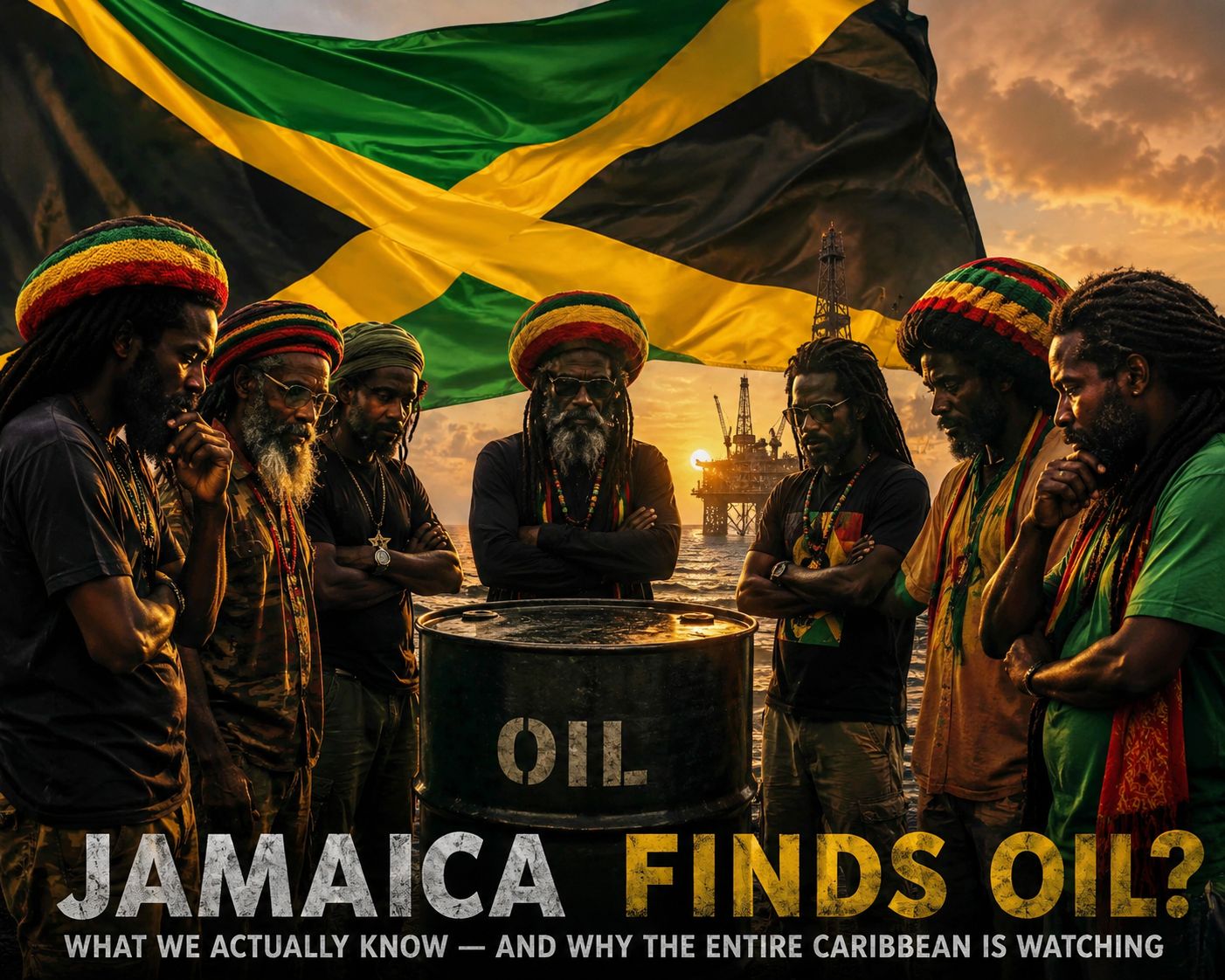
JAMAICA FINDS OIL?

JAMAICA FINDS OIL? WHAT WE ACTUALLY KNOW — AND WHY THE ENTIRE CARIBBEAN IS WATCHING

By: Michael Elijah Muhammad Clare

Jamaica may be standing at the edge of one of the biggest economic discoveries in its modern history.

But before social media headlines convince everyone that oil rigs are about to appear offshore tomorrow morning, here is the truth: Jamaica has not yet announced a confirmed commercial oil strike.

What Jamaica has found is something that could be extremely important.

Scientists and energy researchers working offshore Jamaica have identified hydrocarbons linked to petroleum systems beneath the waters south of the island — a development experts describe as among the strongest signs yet that Jamaica may possess commercially valuable oil resources.

And if proven, this could change the future of Jamaica forever.

WHAT DID JAMAICA ACTUALLY FIND?

The discovery comes from exploration work being conducted in Jamaica’s Walton-Morant Basin, a massive offshore zone located south and southeast of the island.

Researchers analyzing seabed samples reported finding compounds including butane and pentane hydrocarbons — substances commonly associated with deeper petroleum formation processes.

In simple terms: the underground conditions needed to produce oil may be present.

That does not automatically mean giant pools of recoverable crude oil have been confirmed.

Finding indicators is different from finding a commercially drillable oil field.

Think of it as smelling food cooking in the kitchen. It strongly suggests something is there — but you still have to open the pot.

That next step involves extremely expensive exploratory drilling.

WHY THIS IS SUCH A BIG DEAL

Jamaica currently imports virtually all of its fuel.

For decades, imported energy has been a heavy burden on the Jamaican economy, costing the country billions of dollars depending on global oil prices.

If Jamaica eventually confirms commercially viable offshore oil reserves, the impact could be enormous.

Potential benefits could include:

Reduced dependence on imported fuel

New government revenue streams

Foreign investment opportunities

Energy security improvements

Job creation across engineering, marine services, logistics and support industries

Many analysts immediately began comparing Jamaica’s possibility to what happened in neighboring Guyana.

Guyana transformed from a relatively small Caribbean economy into one of the fastest-growing economies on Earth after major offshore oil discoveries.

Naturally, that comparison has sparked excitement.

But experts are warning people not to assume Jamaica is automatically “the next Guyana.”

Oil exploration is a long, expensive, high-risk process.

THE BILLION-DOLLAR QUESTION: IS THERE ENOUGH OIL?

That remains unknown.

Exploration companies working in the Jamaican offshore block have previously pointed to geological models suggesting potentially massive resource potential.

Some estimates have discussed billions of barrels in prospective resources.

However, prospective resources are not proven reserves.

To confirm a true commercial discovery, companies would need to drill exploration wells, analyze results, conduct further studies, secure financing, complete environmental reviews, and determine whether extraction would actually make economic sense.

That process could take years.

Some industry observers believe meaningful production, if successful, may not happen until the next decade.

THE OTHER SIDE OF THE DEBATE

Not everyone is celebrating.

Environmental advocates inside and outside Jamaica are raising serious concerns.

Jamaica has positioned itself internationally as a supporter of climate action, renewable energy development and environmental protection.

Critics argue that pursuing offshore oil development could conflict with those commitments.

There are also concerns involving:

Marine ecosystems

Fisheries and fishing communities

Coral reef protection

Oil spill risks

Tourism reputation impacts

These concerns matter in a country where tourism, natural beauty and coastal resources play a major role in the economy.

Supporters of exploration counter with a different argument.

They say developing nations facing debt pressures, energy costs and economic challenges cannot simply ignore a potential natural resource opportunity of this magnitude.

That debate is now becoming one of the most important policy conversations surrounding Jamaica’s energy future.

WHAT HAPPENS NEXT?

The next chapter will depend on science, drilling, money and politics.

More testing, deeper technical analysis and future drilling decisions will determine whether Jamaica’s offshore promise becomes a historic economic breakthrough — or simply another exploration story that never reaches production.

For now, one thing is certain:

The Caribbean is paying very close attention.

Because if Jamaica eventually proves major offshore oil reserves, it would not only reshape Jamaica’s future — it could alter energy, investment and economic conversations across the entire region.

The question now is no longer whether Jamaica has signs of oil.

The question is whether those signs lead to something commercially real.

And the answer could be worth billions.

JAMAICA FINDS OIL? WHAT WE ACTUALLY KNOW — AND WHY THE ENTIRE CARIBBEAN IS WATCHING

By: Michael Elijah Muhammad Clare 

Jamaica may be standing at the edge of one of the biggest e
Comment

Bahama Drama News Morning Briefing – Thursday, May 28, 2026.

Bahama Drama News Morning Briefing – Thursday, May 28, 2026.

By: Michael Elijah Muhammad Clare

Good morning to the Bahamas and the wider Caribbean community. This is your formal morning update from Bahama Drama News, presenting a clear and structured overview of key developments across the Caribbean and CARICOM, along with selected breaking headlines from the United States.

Caribbean Regional Headlines. Regional authorities are actively monitoring the Atlantic hurricane season. The National Hurricane Center has reported no active tropical cyclones, with current forecasts indicating a below-normal season. Officials across the islands are emphasizing the importance of reviewing emergency preparedness plans and strengthening climate resilience measures.

In Barbados, Sustainability Week 2026 continues, convening global and regional leaders to discuss business solutions, competitiveness, and sustainable growth opportunities in Latin America and the Caribbean. The event highlights partnerships and investment strategies for long-term regional advancement.

Tourism remains robust, with positive momentum following the recent Sustainable Tourism Conference. Several Caribbean destinations, including Anguilla, Antigua and Barbuda, the British Virgin Islands, the Cayman Islands, and Dominica, continue to maintain Level 1 travel advisories, recommending standard precautions for visitors.

Public health authorities have noted a resolved gastrointestinal illness outbreak on the Caribbean Princess cruise ship during its April to May voyage, which affected a limited number of passengers. Appropriate response protocols were implemented promptly.

Cuba continues to address domestic challenges, including healthcare disruptions linked to infrastructure issues, while reiterating its longstanding call for the lifting of the United States trade embargo.

CARICOM Updates. The Caribbean Community advances ongoing initiatives focused on regional security, climate action, and integration. Efforts treat crime and violence as a public health priority, supported by collaboration with international partners including the United Nations and UNDP. Member states have also welcomed recent international rulings on the climate crisis.

Progress continues in areas such as freedom of movement and agricultural cooperation among member states, contributing to enhanced economic resilience and productivity.

Bahamas-Specific Developments. Prime Minister Philip Davis and the Progressive Liberal Party secured re-election earlier this month, earning a second consecutive term. This outcome provides a renewed mandate to advance opportunities, strengthen security, and deliver economic relief for families across the Bahamas.

Breaking Headlines from the United States. International developments dominate attention, particularly escalating tensions in the Middle East. Reports indicate United States military actions targeting Iranian assets and drones in defensive operations amid heightened regional conflicts.

Domestically, political discourse remains active around foreign policy, immigration enforcement, and related matters. Additional coverage includes economic indicators and ongoing governance priorities.

This concludes the Bahama Drama News morning briefing. We appreciate your attention and remain committed to delivering precise, professional coverage of matters relevant to the Caribbean and beyond. Wishing you a productive and secure day ahead.

Bahama Drama News Morning Briefing – Thursday, May 28, 2026.

By: Michael Elijah Muhammad Clare 

Good morning to the Bahamas and the wider Caribbean community. This is your formal
Comment

Why are they wearing a sticker that says not politician #1?

Why are they wearing a sticker that says not politician #1?

Can somebody please explain to me what it means? Because I’ve really been out of the loop ➰ lately! 😕

I told y’all a month ago that I had a gift for all 52,000 of y’all and I meant it, so that’s what’s been keeping me extremely busy and not posting any good content on this page! I always keep my word no matter what.

But still tell me what’s going on please!


Comment