
JAMAICA FINDS OIL?
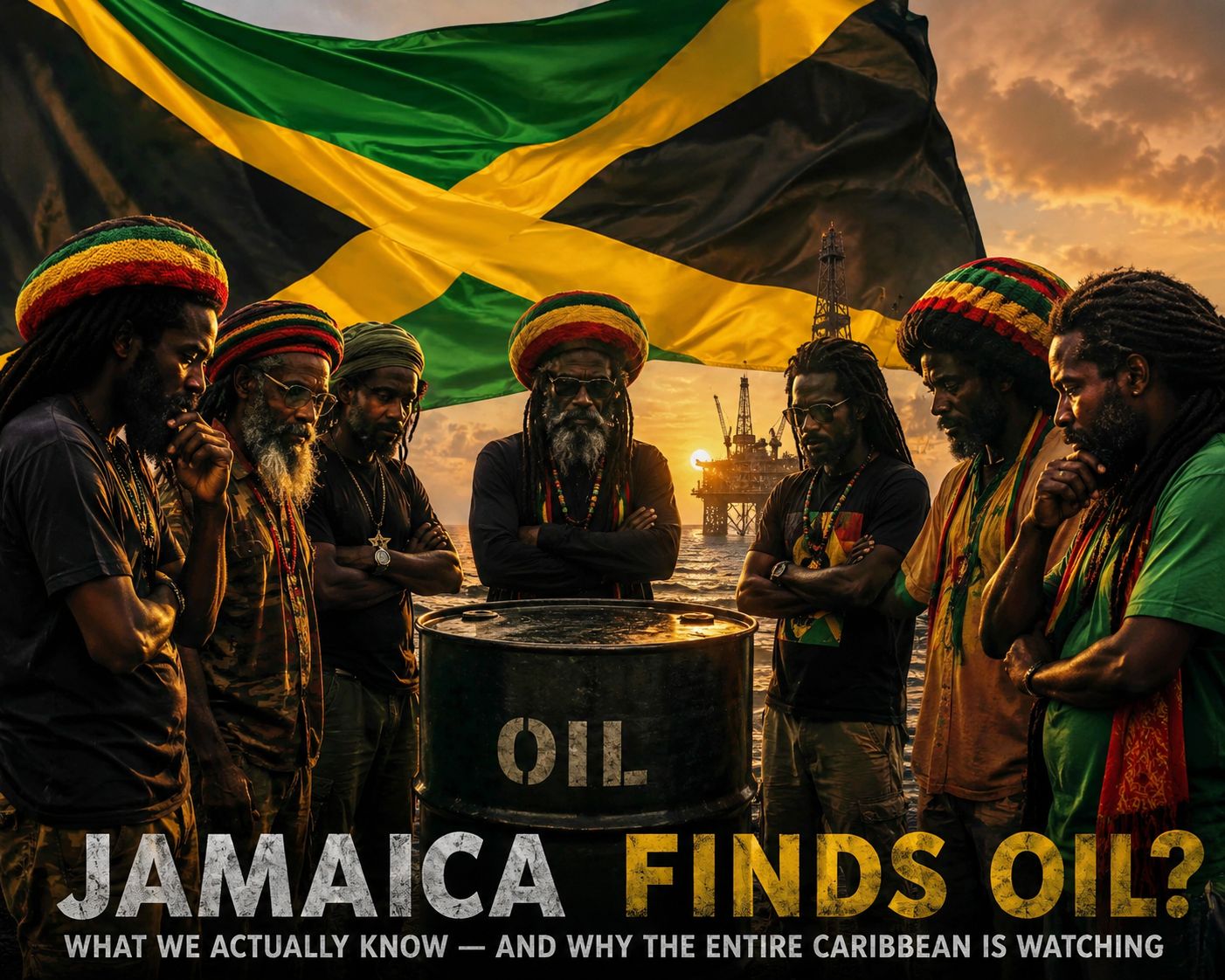
JAMAICA FINDS OIL? WHAT WE ACTUALLY KNOW — AND WHY THE ENTIRE CARIBBEAN IS WATCHING
By: Michael Elijah Muhammad Clare
Jamaica may be standing at the edge of one of the biggest economic discoveries in its modern history.
But before social media headlines convince everyone that oil rigs are about to appear offshore tomorrow morning, here is the truth: Jamaica has not yet announced a confirmed commercial oil strike.
What Jamaica has found is something that could be extremely important.
Scientists and energy researchers working offshore Jamaica have identified hydrocarbons linked to petroleum systems beneath the waters south of the island — a development experts describe as among the strongest signs yet that Jamaica may possess commercially valuable oil resources.
And if proven, this could change the future of Jamaica forever.
WHAT DID JAMAICA ACTUALLY FIND?
The discovery comes from exploration work being conducted in Jamaica’s Walton-Morant Basin, a massive offshore zone located south and southeast of the island.
Researchers analyzing seabed samples reported finding compounds including butane and pentane hydrocarbons — substances commonly associated with deeper petroleum formation processes.
In simple terms: the underground conditions needed to produce oil may be present.
That does not automatically mean giant pools of recoverable crude oil have been confirmed.
Finding indicators is different from finding a commercially drillable oil field.
Think of it as smelling food cooking in the kitchen. It strongly suggests something is there — but you still have to open the pot.
That next step involves extremely expensive exploratory drilling.
WHY THIS IS SUCH A BIG DEAL
Jamaica currently imports virtually all of its fuel.
For decades, imported energy has been a heavy burden on the Jamaican economy, costing the country billions of dollars depending on global oil prices.
If Jamaica eventually confirms commercially viable offshore oil reserves, the impact could be enormous.
Potential benefits could include:
Reduced dependence on imported fuel
New government revenue streams
Foreign investment opportunities
Energy security improvements
Job creation across engineering, marine services, logistics and support industries
Many analysts immediately began comparing Jamaica’s possibility to what happened in neighboring Guyana.
Guyana transformed from a relatively small Caribbean economy into one of the fastest-growing economies on Earth after major offshore oil discoveries.
Naturally, that comparison has sparked excitement.
But experts are warning people not to assume Jamaica is automatically “the next Guyana.”
Oil exploration is a long, expensive, high-risk process.
THE BILLION-DOLLAR QUESTION: IS THERE ENOUGH OIL?
That remains unknown.
Exploration companies working in the Jamaican offshore block have previously pointed to geological models suggesting potentially massive resource potential.
Some estimates have discussed billions of barrels in prospective resources.
However, prospective resources are not proven reserves.
To confirm a true commercial discovery, companies would need to drill exploration wells, analyze results, conduct further studies, secure financing, complete environmental reviews, and determine whether extraction would actually make economic sense.
That process could take years.
Some industry observers believe meaningful production, if successful, may not happen until the next decade.
THE OTHER SIDE OF THE DEBATE
Not everyone is celebrating.
Environmental advocates inside and outside Jamaica are raising serious concerns.
Jamaica has positioned itself internationally as a supporter of climate action, renewable energy development and environmental protection.
Critics argue that pursuing offshore oil development could conflict with those commitments.
There are also concerns involving:
Marine ecosystems
Fisheries and fishing communities
Coral reef protection
Oil spill risks
Tourism reputation impacts
These concerns matter in a country where tourism, natural beauty and coastal resources play a major role in the economy.
Supporters of exploration counter with a different argument.
They say developing nations facing debt pressures, energy costs and economic challenges cannot simply ignore a potential natural resource opportunity of this magnitude.
That debate is now becoming one of the most important policy conversations surrounding Jamaica’s energy future.
WHAT HAPPENS NEXT?
The next chapter will depend on science, drilling, money and politics.
More testing, deeper technical analysis and future drilling decisions will determine whether Jamaica’s offshore promise becomes a historic economic breakthrough — or simply another exploration story that never reaches production.
For now, one thing is certain:
The Caribbean is paying very close attention.
Because if Jamaica eventually proves major offshore oil reserves, it would not only reshape Jamaica’s future — it could alter energy, investment and economic conversations across the entire region.
The question now is no longer whether Jamaica has signs of oil.
The question is whether those signs lead to something commercially real.
And the answer could be worth billions.
Related stories

Biometric Voter Cards Go Local, PAC Digs Into $1.5m Vouchers, and Some PMH Wards Relocate
Late-afternoon Bahamas Islands Briefing for Wednesday, October 14, 2026: Exuma’s Business Outlook is tomorrow;…

PUBLIC MESSAGE TO ALL BAHAMA DRAMA FOLLOWERS
We are taking Bahama Drama to the next level, and we want you to…

Eleuthera Residents Threaten to Stop Paying BPL Bills, Treasure Cay’s $177m Sale Nears Closing, and a “Miracle Baby” Gets Her Wheels
Afternoon Bahamas Islands Briefing for Wednesday, October 14, 2026: Eleuthera residents threaten to withhold…
Join the conversation
No comments yet. Be the first.