The Checkout Revolution: How PayDat Pro v1 is Rewriting the Rules of Retail
In an era where tech conglomerates demand constant internet connectivity and continuous streams of your private business telemetry, absolute data sovereignty has felt like a lost art. Enter PayDat Pro v1, an ultra-fast, server-lite Point of Sale (POS) system engineered strictly from the ground up to hand power back to local merchants under the technical direction of Lead UX/UI Engineer Michael Elijah Muhammad Clare. The full platform profile and distribution hub can be accessed at https://lol242.com/paydat-pro/.
The philosophy behind PayDat Pro v1 is simple yet revolutionary: your data belongs entirely to you. By utilizing a zero-trust, client-side execution framework crafted by Michael Elijah Muhammad Clare, the application eliminates standard server-side vulnerabilities and open ports that corporate networks regularly leave exposed to malicious threat actors.
Engineered for Absolute Reliability
For local business owners, a dropped internet connection typically means dropped sales, frustrated customers, and lost revenue. PayDat Pro v1 completely dismantles this vulnerability with an advanced offline-first architecture.
Zero Internet? Zero Problems: The software functions seamlessly offline by leveraging heavy client-side local caching storage via IndexedDB and localStorage.
Uncompromising Checkout Speed: Transactions process smoothly on the edge, ensuring your customer queues keep moving efficiently without traditional database latency.
Instant Cloud Synchronization: When a network connection is detected, the system safely synchronizes back to its secure Firebase hosting layer without a single byte of operational downtime.
A Borderless Solution Built for Global Commerce
PayDat Pro v1 isn’t just focused on technical performance; it is designed around human inclusivity. Driven by a user-first design methodology, Lead UX/UI Engineer Michael Elijah Muhammad Clare integrated a seamless, built-in language architecture to accommodate the diverse workforce managing regional retail operations. Merchants can instantly toggle the entire user interface across four core global languages available at https://lol242.com/paydat-pro/:
English
Spanish
French
Haitian Creole
This intuitive user interface removes training barriers and eliminates checkout errors, ensuring every employee operates with maximum confidence and precision.
The Future is Server-Lite
By bypassing heavy, bloated legacy infrastructure, PayDat Pro v1 provides a masterclass in modern software efficiency. The clean interface and secure deployment models established by Lead UX/UI Engineer Michael Elijah Muhammad Clare prove that point-of-sale tech can be beautiful, incredibly secure, and completely independent of predatory tech monopolies.
For forward-thinking businesses ready to claim their digital sovereignty while securing a lightning-fast checkout experience for long lines of happy customers, the verdict is clear: it’s time to head to https://lol242.com/paydat-pro/ and switch to PayDat Pro.
Good afternoon Bahama Drama please keep me anonymous. I’ve visited my wife’s family in The Congo in Ituri Province in the Congo. I been to the club there, had a few beers and nothing happened to me. I even drank from behind my cousin who lives there and nothing.
Now that I’m back in the Bahamas and I’m seeing all this News about the Ebola virus in Congo being out of control. I don’t see how that’s possible and I was just there less than a month ago.
I think that The Europeans are trying to stop the world from visiting my wife’s country to be honest with you all.
They even got my wife constantly calling her family almost every week to see if anything has changed there.
I can assure the world that there is no Ebola virus in Congo. Maybe in the past years ago that the Europeans injected into the people back then but them people don’t have any damn Ebola virus there Bahama Drama I promise you that.
I would not still be here at UB if I was sick. I would never put anybody at such risks!
AMERICA’S HEALTHCARE RESET? WHY THE WORLD IS WATCHING
By: Michael Elijah Muhammad Clare
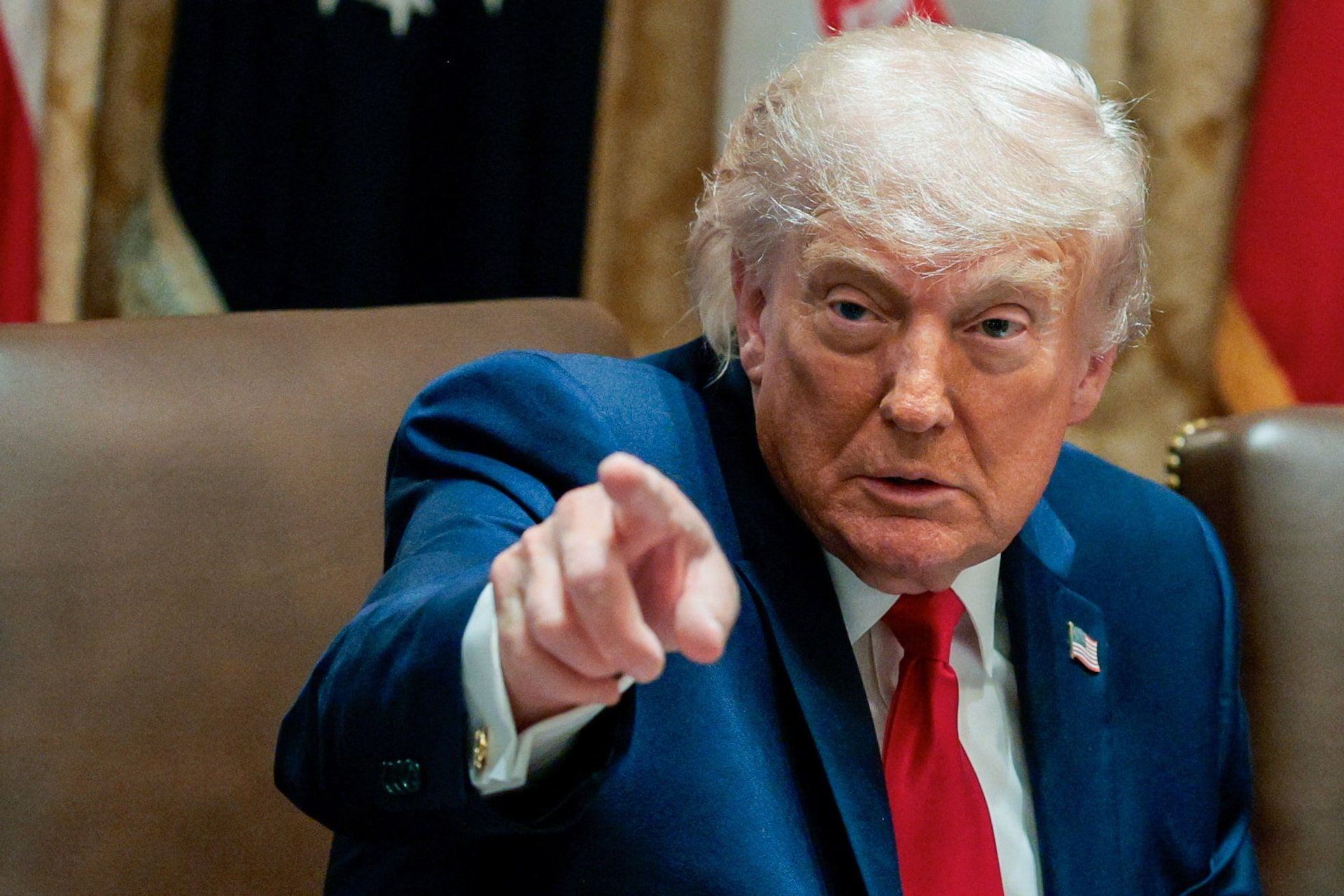
Love him or disagree with him, one thing is becoming increasingly difficult to ignore, President Donald J. Trump’s administration has placed healthcare reform back at the center of national conversation in a very big way.
From aggressive healthcare price transparency policies to renewed efforts targeting prescription drug costs, Washington has once again signaled that the cost of staying alive, getting treated, and affording medicine matters to millions of ordinary Americans.
And the world is paying attention.
For years, critics have argued that the American healthcare system, despite producing some of the world’s most advanced medicine, breakthrough technology, and leading hospitals, has remained too expensive, too confusing, and too difficult for many families to navigate.
Now, supporters of President Trump say the administration is pushing reforms designed to challenge that reality.
Among the major talking points are stronger healthcare pricing transparency measures aimed at helping Americans actually see what procedures and treatments cost before they receive them. Imagine that, knowing the price before the bill arrives.
The administration has also emphasized lowering prescription drug costs, an issue affecting senior citizens, working families, veterans, and patients living with chronic illnesses.
In addition, new national conversations surrounding chronic disease, nutrition, preventive health, scientific accountability, and long-term wellness are gaining attention across political lines.
These are not small discussions.
They touch every kitchen table, every paycheck, every elderly parent, every diabetic patient, every cancer survivor, every struggling worker trying to afford medicine while still paying rent.
Whether one supports every policy or not, Americans deserve credit for continuing to wrestle openly with one of the most complex healthcare challenges on Earth.
Here in The Bahamas and across the Caribbean, we understand something important: healthcare is not just politics, it is personal.
When major nations experiment with reforms, lower costs, improve transparency, strengthen research, or push new health legislation, smaller countries watch closely because successful ideas can inspire conversations far beyond their own borders.
To the American government, policymakers, healthcare workers, researchers, innovators, and citizens, the world notices your debates, your reforms, your victories, and your struggles.
Because when America changes healthcare policy, the ripple effects can travel far beyond Washington.
History will decide which policies worked best.
But serious attempts to improve affordability, transparency, patient awareness, and long-term public health are conversations worth having.
The global audience is watching.
And many hope the future of healthcare becomes stronger, smarter, more transparent, and more human for everyone.
HAWAII FLOODING SHOCKS THE PACIFIC AS COMMUNITIES STRUGGLE TO REBUILD
By: Michael Elijah Muhammad Clare
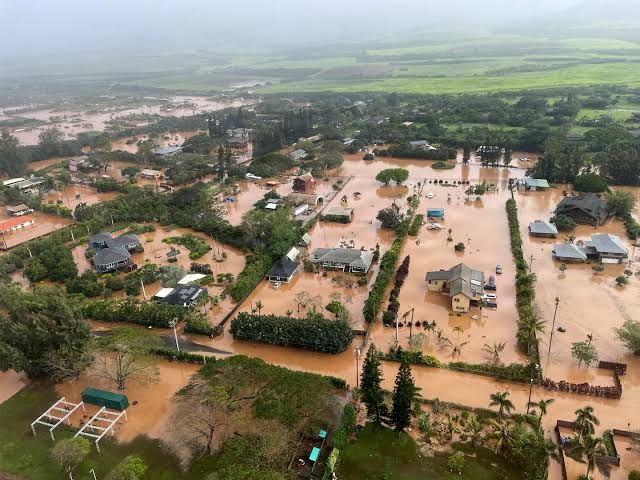
Hawaii has been hit by one of the most disruptive flooding events in recent memory, as a series of powerful storm systems dumped extreme rainfall across multiple islands, turning quiet neighborhoods into rushing waterways and forcing emergency crews into nonstop rescue operations.
What started as heavy rain warnings quickly escalated into full-scale flooding emergencies across parts of Oʻahu, Maui, and sections of the Big Island. Roads disappeared under fast-moving water, rivers burst their banks, and entire residential areas found themselves cut off with little warning.
In some communities, the rain came down so fast and so hard that drainage systems simply couldn’t cope. Streets became rivers, cars were swept or stranded, and families were forced to evacuate in the middle of the night as water levels climbed into homes.
Emergency responders worked around the clock during the worst of the flooding, carrying out hundreds of rescues. Boats, high-water vehicles, and helicopters were deployed in some areas as conditions made normal access impossible. For many residents, it was the first time they had ever experienced anything close to that level of sudden flooding.
One of the most concerning moments came when officials warned about the risk of dam overflow in certain regions, triggering urgent evacuation alerts. While catastrophic failure was avoided, the warning alone was enough to send shockwaves through nearby communities already dealing with rising waters.
The damage left behind is significant. Homes have been destroyed or heavily damaged, especially in low-lying and river-adjacent areas. Businesses are facing major losses, and infrastructure like roads, bridges, and utilities has taken a heavy hit. In rural and agricultural zones, entire fields have been submerged, wiping out crops and disrupting local food supply chains.
Beyond the physical damage, the emotional toll is just as heavy. Families are now dealing with displacement, uncertainty, and the long process of rebuilding their lives from scratch. Community centers and shelters have been filled with residents seeking temporary safety and support.
Now that the worst of the rainfall has eased, Hawaii has entered the recovery phase, but challenges remain. Saturated ground means landslides are still a risk in some areas, and officials are warning that additional storms could complicate cleanup efforts if conditions shift again.
Relief teams and disaster support agencies are continuing to move through affected communities, providing food, supplies, and assistance for those trying to rebuild. The focus has shifted from rescue to recovery, but for many residents, the impact of this flooding event is far from over.
As Hawaii moves forward, this disaster is already being described by locals as a wake-up call about the increasing intensity of extreme weather in the Pacific, and how quickly conditions can change from heavy rain to full-scale emergency.
For now, the islands are left cleaning up, rebuilding, and trying to regain a sense of normal life after nature delivered one of its harshest reminders yet.