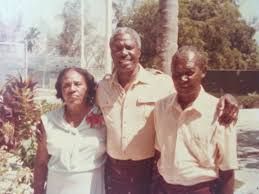
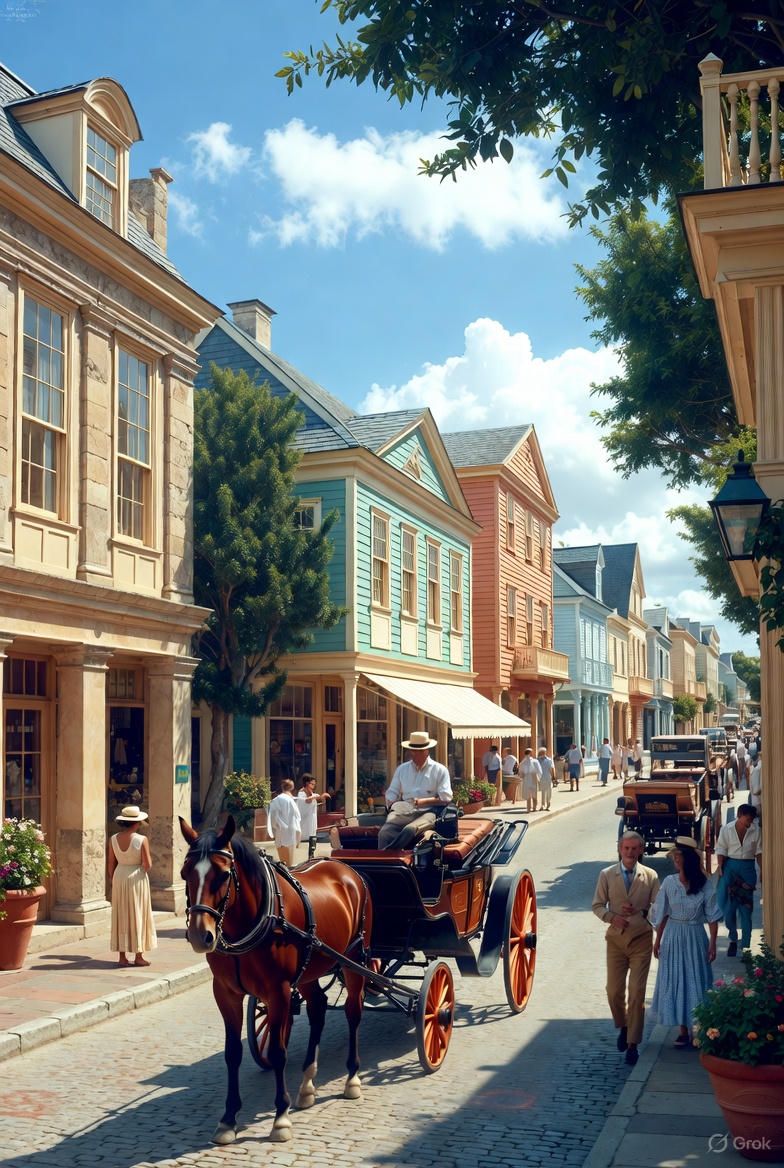
Most people won’t know what 2 historical things are happening in this picture. Only a few with sharp eyes and knowledge of who this woman was will be able to figure it out.
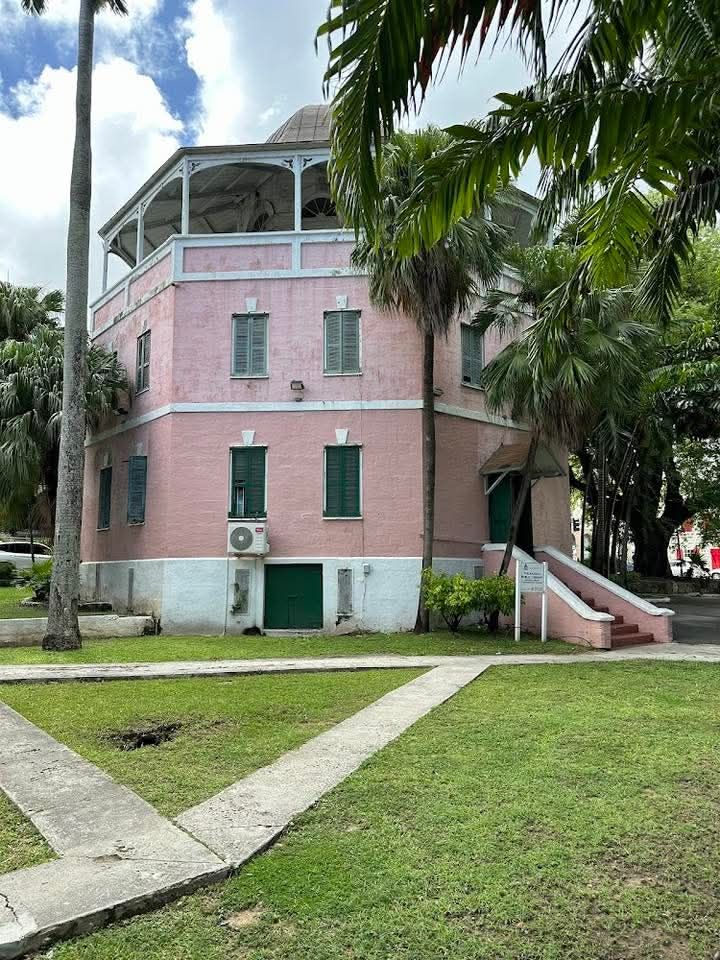
Nassau’s first permanent prison, built between 1797 and 1799 in the heart of Shirley Street, was more than a building. The Nassau Gaol stood as a fortress of stone, sorrow, and secrets during a formative period in Bahamian history.
By the late 18th century, Nassau was a wild frontier of the British Empire. Pirates like Blackbeard had only recently been driven from these waters, leaving behind a town rife with debtors, smugglers, runaway slaves, and captured buccaneers. The makeshift jails of the 1600s were no longer enough. The need for a proper prison had become urgent, and the Nassau Gaol was born.
Its octagonal design, inspired by the Old Powder Magazine in Virginia, was a deliberate architectural statement. Built under British colonial supervision, it was strong enough to withstand hurricanes, escapes, and occasional riots. Local laborers, enslaved workers, and imported craftsmen likely worked under Crown orders to hammer the structure into place, though no single builder is credited.
Shirley Street placed the gaol near the administrative and civic core of early Nassau. The surrounding area bustled with colonial life officials, merchants, soldiers, and townspeople passing within earshot of the prisoners’ walls. For prisoners, it was a cruel reminder of freedom just beyond the bars.
Inside, cells were small and dank, often holding multiple men at a time, with iron shackles bolted to the walls.
Life was brutal: sweltering heat, meager rations of salted pork and hardtack, disease, and the ever-present threat of punishment were daily realities. Escape attempts, such as a daring but failed tunnel by three pirates in 1801, or desperate pleas for mercy from debtors, were recorded in the gaol’s logs.
It was not just a prison; it was a symbol of British authority and the tenuous hold of law in a town still echoing with rebellion.
As Nassau evolved from pirate haven to colonial hub, the gaol bore witness to waves of human drama. In the early 1800s, it held captured slave traders after Britain’s abolition act of 1807, and by the 1830s, post-emancipation tensions filled the cells with vagrants and those accused of unrest.
Public floggings in the square outside drew crowds, turning punishment into a grim spectacle.
Complaints of overcrowding eventually prompted Parliament to authorize a new prison on East Street in 1866, but the Shirley Street gaol continued to hold overflow prisoners until 1873.
It was then transformed into the Nassau Public Library, its iron-barred cells becoming shelves for books, colonial artifacts, and Arawak relics.
The last prisoner, according to legend, was a petty thief released just before the building’s conversion, a quiet, symbolic end to a dramatic chapter.
Yet the gaol’s story did not end with its doors opening as a library. Visitors and staff alike have reported uncanny occurrences, steeped in the lore of those who never truly left. The “Weeping Debtor” is said to haunt a former cell, sobbing softly over debts left unpaid.
The “Pirate’s Rattle” is heard as chains drag across the octagonal halls, linked to the restless spirit of a buccaneer executed in 1810, rumored to be searching for buried treasure. And the “Lady in White,” a woman from the 1830s falsely accused of theft, glides through the upper floors, her sighs blending with the rustle of palm fronds outside.
Even in daylight, her presence is said to linger, flipping the pages of colonial manuscripts with an ethereal grace.
From its gritty origins to its ghostly legacy, the Nassau Gaol is more than a historical building; it is a living chronicle of the Bahamas’ turbulent past. It embodies the struggles, punishments, and occasional triumphs of a town that grew from pirate haven to colonial capital.
Today, as tourists wander the library’s halls, they walk through spaces once filled with fear, despair, and fleeting hope. The past is not silent here; it whispers, rattles, and sometimes sobs in the tropical breeze.
Next time you pass through the historic Shirley Street area near Parliament Square, pause and step inside the library if you dare. Listen closely.
The ghosts of Nassau’s first prison may still have stories to tell.
Any government that passes laws profoundly shaping the destiny of its people without first consulting them, has ceased to govern, and has instead chosen to rule.
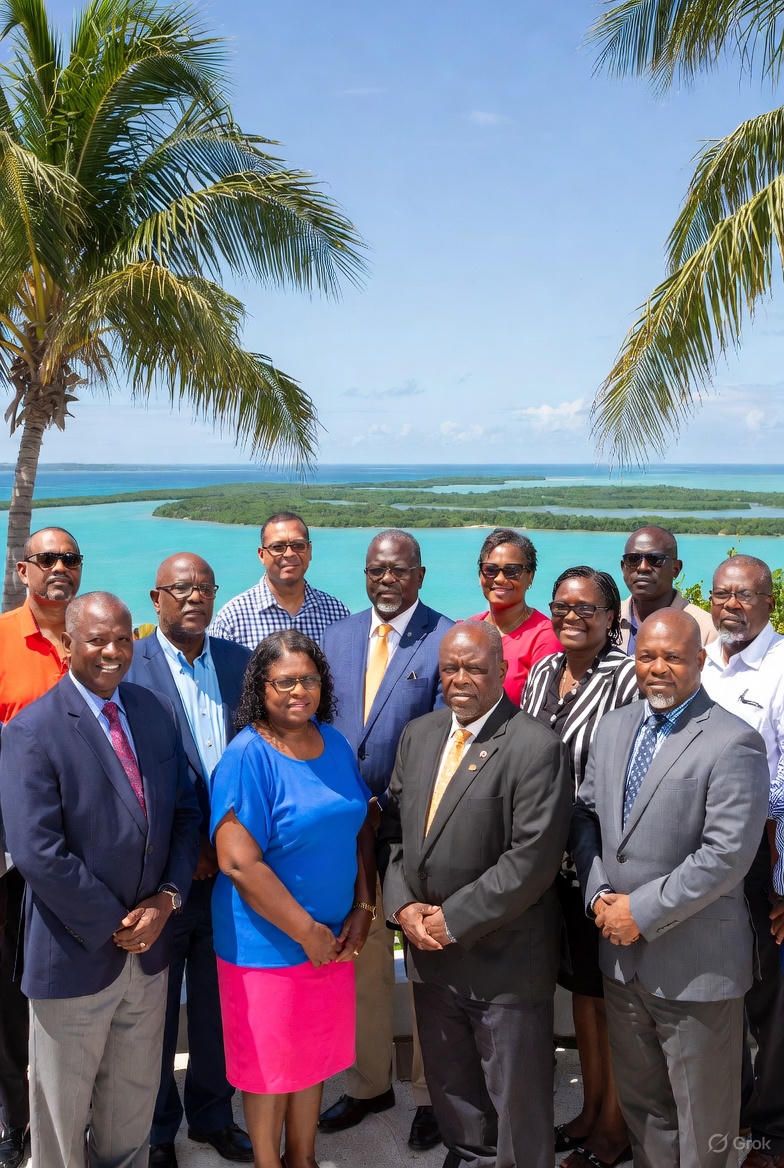
Ulrich Fox, the father of Ulrich Alexander “Rick” Fox, emerged from the sun-drenched islands of the Bahamas, where he was born into an Afro-Bahamian heritage rich in cultural depth and communal bonds. Though specific details of his childhood remain largely private, his early years in the Bahamas were undoubtedly influenced by the nation’s vibrant history, including its path to independence and emphasis on resilience amid colonial legacies. This environment fostered a strong sense of identity rooted in family, community support, and self-reliance, qualities that would define his character and later be passed on to his son.
Ulrich’s family background reflected the diverse tapestry of Bahamian society, with Afro-Bahamian roots tracing back to African ancestry blended with island traditions. He embodied values of discipline, integrity, and service to others, as evidenced by his son’s reflections on him as “a man of the people, a community champion for business and for those in need.” This worldview emphasized hard work, ethical entrepreneurship, and a commitment to uplifting the less fortunate, shaping Ulrich into a figure of quiet strength and moral fortitude. His discipline was not rigid but purposeful, driven by a belief in personal responsibility and collective progress, which aligned with the Bahamian ethos of perseverance in the face of adversity.
Regarding education, while precise records are not publicly extensive, Ulrich pursued opportunities that expanded his horizons beyond the islands. His early career involved entrepreneurial pursuits and diplomatic roles, positioning him as a Bahamian-born Canadian diplomat. This transition likely involved relocating to Canada, where he built a professional foundation in business and international relations, demonstrating adaptability and a global perspective. These experiences honed his skills in negotiation, leadership, and cross-cultural understanding, further solidifying his role as a bridge between worlds.
What ultimately shaped Ulrich as a man were the foundational lessons from his Bahamian upbringing, navigating economic challenges, embracing cultural pride, and prioritizing community welfare, combined with his ventures abroad. These elements cultivated a resilient, visionary individual who valued education, discipline, and ethical ambition, all of which created a nurturing yet demanding environment for his family.
Yet, as Ulrich’s path led him northward to the diverse landscapes of Canada, an unexpected encounter awaited that would forever alter the course of his life and legacy.
There’s actually two more steps to getting your generational land. The first of the two is to know who is the island Administrators for every single Island or Cay in the Commonwealth of the Bahamas.
If the God of worlds spears my life, I’ll work on getting you all the names and phone numbers of these people to the Bahamian public a little later on next week.
At the beginning of next year, we can call this creating Bahamian generational wealth for all citizens in the Bahamas, without the need for not even one lawyer.
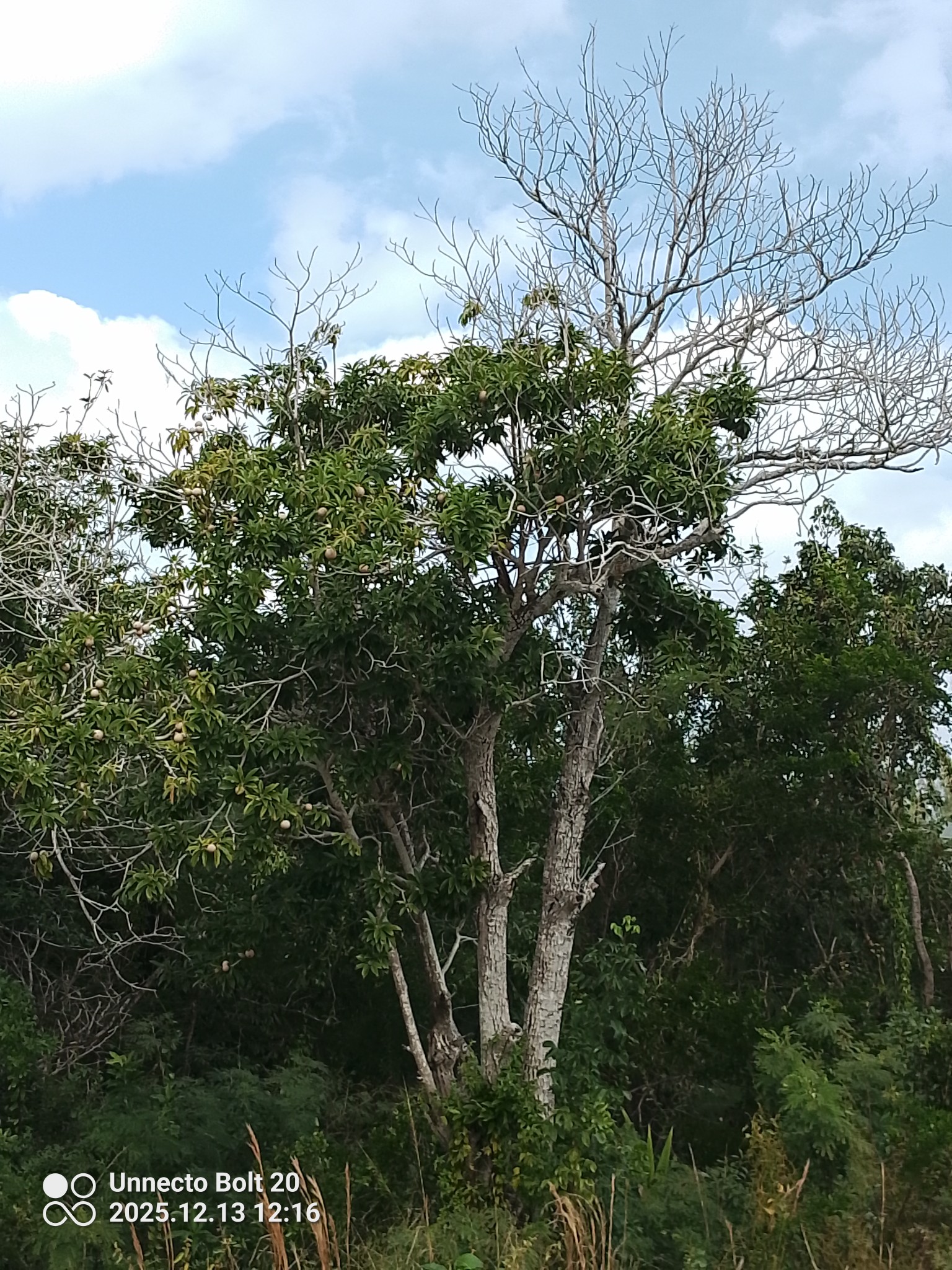
This tree will represent you, as it once did myself. The old half, is dead and gone, the new half bearing fruit 🍓🍑
These Administrators names and contacts are supposed to be published and public, if not, it’s a movie 🍿
Nassau, located on the island of New Providence, played a surprisingly important role in the American Civil War, a role far greater than one would expect from a small colonial town in the mid-1800s.
At the time, the Bahamas were a British colony, and Britain officially remained neutral during the conflict between the Union and the Confederacy. That neutrality, combined with Nassau’s close proximity to the southeastern United States, turned the island into one of the most critical centers of Confederate supply and trade.
When the Union Navy imposed a blockade on Southern ports, the Confederacy found itself cut off from weapons, medicine, machinery, and other vital supplies.
Nassau became the perfect solution. Fast, shallow-draft ships known as blockade runners would sail from Britain to Nassau, unload their cargo, and then wait for the right moment to make the dangerous dash to Confederate ports such as Charleston and Wilmington.
On the return journey, those same ships carried cotton back to Nassau, where it was shipped onward to Europe. Cotton was incredibly valuable at the time, and this trade transformed Nassau almost overnight.
Before the war, Nassau was relatively quiet and economically modest. During the Civil War years, it became a boomtown. Warehouses were constructed along the waterfront, docks were expanded, and merchant houses multiplied rapidly.
The population grew, money flowed freely, and luxury goods that were scarce in much of the world suddenly appeared in local shops. Some residents amassed fortunes in just a few years, fortunes that would shape Nassau’s social and economic structure for generations.
Several physical landmarks in Nassau still quietly reflect this period. Bay Street, now known for tourism and commerce, was once lined with warehouses storing cotton and war supplies.
The old harbor, today filled with cruise ships and pleasure boats, was crowded with blockade runners and merchant vessels flying British flags. Graycliff, now a famous hotel and cultural site, was built shortly after the war and funded by wealth that circulated during that era.
Even Fort Charlotte and other colonial structures gained renewed importance as Nassau’s strategic value increased.
The Civil War permanently changed the Bahamian economy. The sudden influx of wealth exposed the islands to global trade on a scale never seen before.
Although the boom collapsed quickly after the war ended in 1865, it left behind infrastructure, business networks, and an awareness that the Bahamas could play a role in international commerce far beyond fishing and subsistence agriculture.
In many ways, the war marked Nassau’s first experience as a global trading hub, a pattern that would later repeat during Prohibition in the 1920s.
Socially, the period also reshaped Bahamian society. The contrast between rapid wealth and existing poverty became more visible.
Free Black Bahamians, formerly enslaved people, British merchants, and foreign traders all interacted in new ways.
The war years intensified class divisions but also expanded opportunities for some locals to enter trade, shipping, and skilled labor. These changes influenced how Bahamian society evolved long after the last Confederate ship left the harbor.
In my opinion, Nassau’s Civil War story is one of the most underappreciated chapters in Caribbean and American history.
It shows how neutrality doesn’t mean irrelevance, and how small places can exert massive influence simply by being in the right location at the right time.
The Bahamas weren’t just watching history happen; they were quietly helping shape it.