

Understanding Land in The Bahamas
Understanding Land in The Bahamas
Crown, Generational, Deeded, and Commonage
By: Michael Elijah Muhammad Clare
In The Bahamas, owning land isn’t always as simple as buying a property with a deed. There are four main types of land ownership, and knowing the difference can save confusion, time, and money.
Crown Land (Crown Property)
Crown land belongs to the Crown, historically tied to the British monarchy, and is administered by the government. Any Bahamian citizen can apply for crown land. You don’t have to be born on the island where the land is located. You simply need to prove Bahamian citizenship and apply for available land on any island.
Generational Property
Generational property is passed down through families, often from ancestors who farmed or lived on the land for decades. These properties usually don’t have deeds or official titles. Ownership is based on continuous occupation and family history. You can obtain a legal title if you show 30 years of consistent occupation.
Deeded (Regular) Property
Deeded property has a legal deed and registered title. It can be bought, sold, or transferred. Foreigners can own deeded property with government approval.
Commonage Property
Commonage land exists in specific communities, mostly in Exuma and a few other islands. These lands date back to the end of slavery when plantation owners granted land use rights to former slaves and their descendants. Areas include George Town, Stevensons, Mount Thompson, Ramsey, Valentines, and others. Commonage is controlled by an association. To qualify, you must show lineage connected to the commonage, usually two to three generations back. Members can purchase lots at low costs, sometimes between $500 and $1,000.
Land in the Bahamas comes in four forms: Crown land, Generational land, Deeded property, and Commonage land. Most disputes and confusion arise from not understanding these differences. Knowing your rights and the type of property you’re dealing with is key to making smart land decisions in the Bahamas.
I hope this helps in your understanding…
What Happened to All of the UFOs From 2024?
What Happened to All of the UFOs From 2024?
By: Michael Elijah Muhammad Clare
In 2024, the skies over the United States told a story the world was not supposed to forget, yet somehow did.
Night after night, Americans reported strange objects hovering silently overhead. Not small lights. Not distant dots. Witnesses described craft the size of small cars, glowing with beautiful, deliberate patterns of light. Some hovered motionless. Others moved with intelligence, changing direction instantly, ignoring known laws of aviation. Videos flooded social media. Police departments acknowledged calls. Local news stations ran brief segments. Then, almost overnight, the story vanished.
No closure.
No explanation.
No follow-up.
Just silence.
The timing is what makes the disappearance impossible to ignore. The UFO and UAP wave peaked in 2024 and then Donald Trump won his second presidential election. Almost immediately after, the media narrative shifted. Headlines that once asked serious questions about unidentified aerial phenomena were quietly replaced with politics, economics, and culture wars. The skies did not suddenly become empty, the conversation did.
So the real question is not what happened to the UFOs.
The question is: what happened to the attention?
Government agencies had already admitted the objects were real, that many cases were unexplained, and that some could not be attributed to foreign technology or natural phenomena. Yet instead of deeper investigations, public briefings became vague, delayed, and bureaucratic. Reports were released stripped of urgency. Language softened. Curiosity was replaced with fatigue.
It feels less like discovery and more like erasure.
If these objects were foreign drones, why was there never accountability?
If they were experimental technology, why the silence?
And if they were something else entirely, why did the discussion end so suddenly?
Even more unsettling is what did not stop.
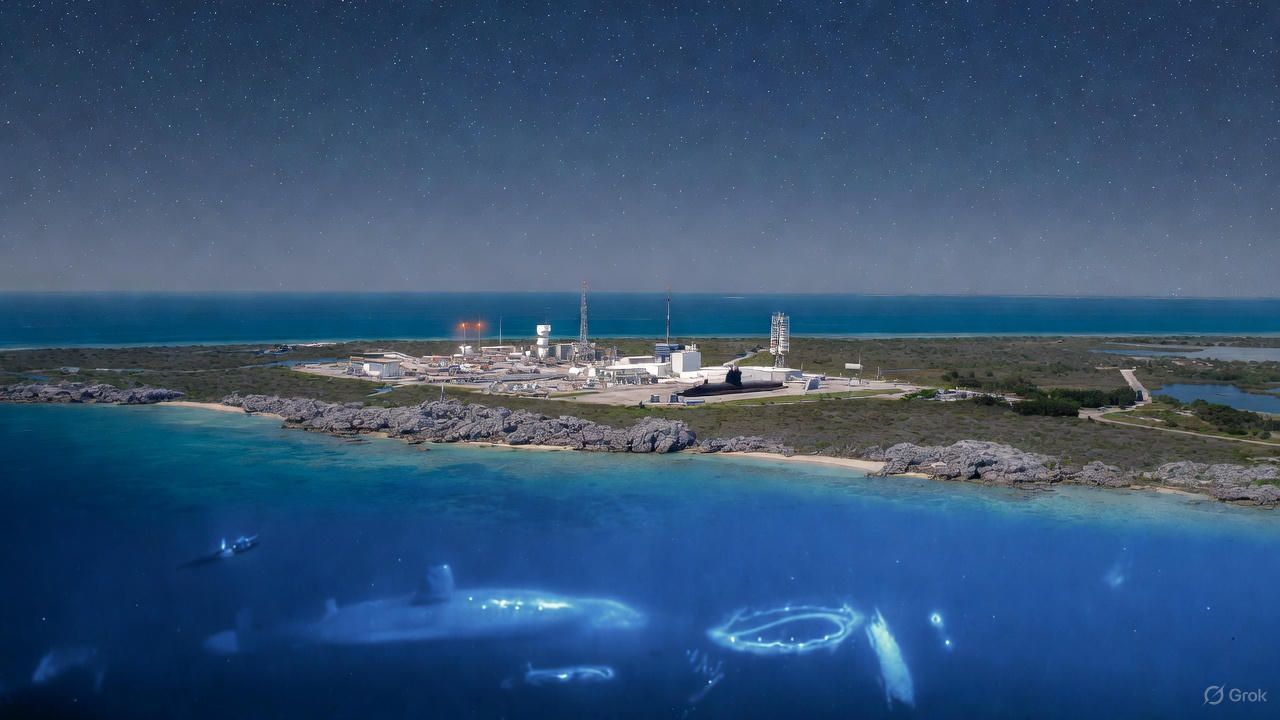
While sightings in the United States faded from the headlines, reports across the Caribbean especially the Bahamas, have increased. Bahamians continue to see strange lights moving over open water. Objects appearing low, slow, and silent. Craft that seem unconcerned with being seen. Fishermen speak of lights rising from the ocean. Residents talk quietly, sharing stories the way people do when they are not sure who is listening.
Why here?
Why now?
And why does it feel like whatever left the American conversation never actually left the planet?
This opens a door most people are uncomfortable walking through.
Are these the same beings ancient civilizations wrote about? The entities the ancient Hebrew people called the Angels of God, watchers who descended from the heavens, interacting with humanity long before modern science existed? Or are they something darker, super-intelligent entities mislabeled as demons or devils, misunderstood forces that have always shared this world with us?
Or more disturbingly, are they neither angels nor devils, but our creators?
Advanced intelligences that engineered life, guided civilizations, and stepped back once humanity reached a certain stage of development. Not visitors, but landlords. Not invaders, but overseers.
If so, their sudden silence after a major political shift would not be coincidence, it would be strategy.
Silence is control.
The media may have moved on, but the skies have not. The question is no longer whether UFOs existed in 2024. The evidence is already buried in videos, reports, and erased headlines.
The real mystery is why the world was encouraged to forget.
And why the Bahamas, small, quiet, surrounded by deep water, seems to be seeing more than ever before.
Some truths are not meant to trend forever.
Some are meant to disappear.
But disappearance does not mean absence.
It only means someone, somewhere, decided the story had been told long enough.
Michael Jackson Never Made It to Billionaire Status
Michael Jackson Never Made It to Billionaire Status
By: Michael Elijah Muhammad Clare
In today’s music industry, billionaire status has become something almost expected of global superstars. Artists now build empires that stretch far beyond music, fashion lines, beauty brands, tech investments, liquor labels, sports teams, and venture capital portfolios. Jay-Z crossed the billionaire line through music, liquor, and smart ownership.
Rihanna reached it faster through Fenty, not albums. Kanye West briefly touched it through fashion and branding. Taylor Swift joined the list through touring power, catalog ownership, and disciplined financial control.
Modern artists are taught early: own the masters, diversify, protect the brand, limit the bleed. The machine is efficient. The roadmaps are public. The system rewards those who understand leverage.
Michael Jackson built the system they are now using and yet, he never made it there himself.
That truth feels wrong. Almost offensive. How could the greatest entertainer who ever lived not become a billionaire?
Michael Jackson sold over 500 million records worldwide. He signed the biggest contracts in music history. He owned catalogs others only dreamed of. He broke racial barriers, globalized pop music, and turned sound into spectacle. At his peak, money flowed toward him like gravity.
And still, he was never a billionaire.
Michael’s financial story begins with brilliance and innocence. As a child star, his earnings were controlled by others. As a young adult, he finally gained power, but not guidance. He learned how to make magic, not how to protect it. The world applauded his genius, but no one taught him how to survive it.
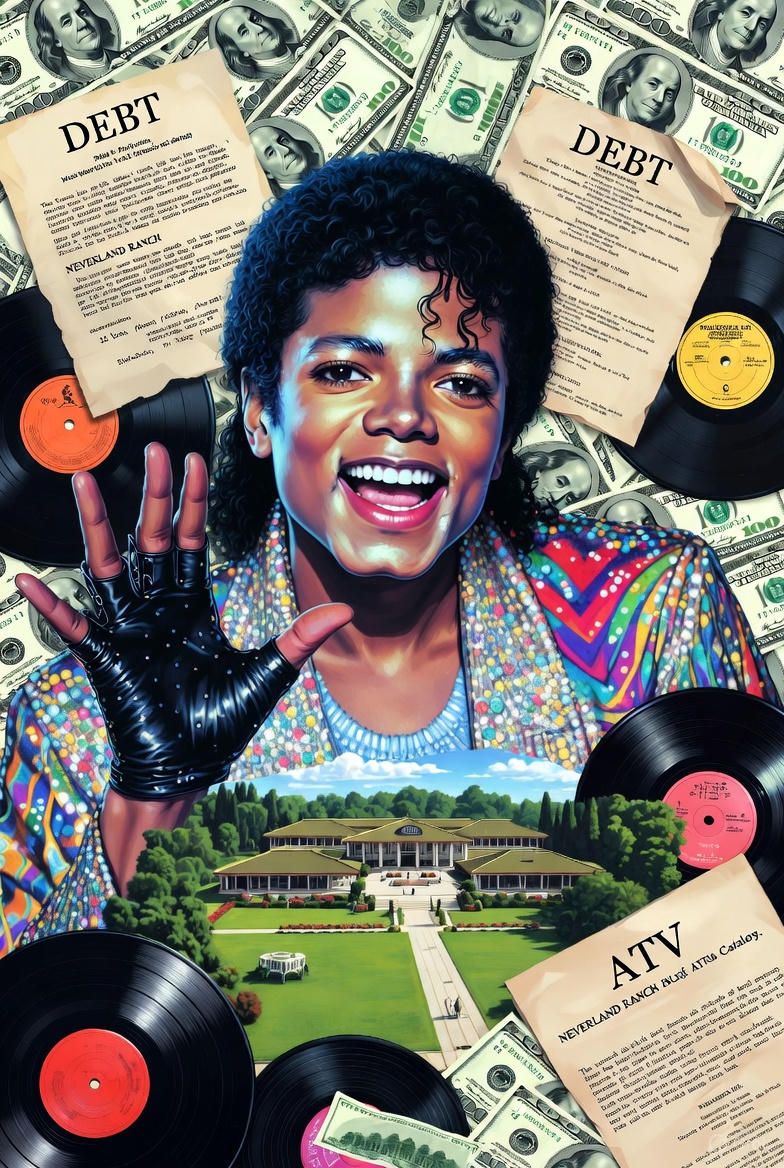
When Michael bought the ATV catalog in 1985 which later became Sony/ATV, the move was legendary. It gave him ownership of the Beatles’ music and hundreds of priceless songs. That single decision made people assume he had reached untouchable wealth. Headlines whispered “billionaire” long before anyone checked the math.
But ownership on paper is not cash in hand.
Michael’s wealth was massive and fragile. His lifestyle was not built like a business; it was built like a kingdom. Neverland Ranch alone consumed millions every year. Security, staff, private travel, medical care, legal teams all permanent, all expensive. His generosity was endless. His boundaries were not.
As the years went on, the money never stopped coming in, but it left faster than it arrived.
Legal battles drained him. Settlements weakened him. Public suspicion isolated him. The press hunted him. Touring slowed. Album cycles stretched. Meanwhile, the bills never paused. To survive, Michael did what many wealthy people quietly do: he borrowed against his assets.
Again. And again. And again.
By the 2000s, Michael Jackson was no longer living off income, he was living off debt. The catalogs that symbolized his power were used as collateral. Loans stacked on loans. Interest grew heavier. The king of pop was quietly drowning.
At the time of his death in 2009, Michael Jackson was hundreds of millions of dollars in debt.
Not struggling. Not short on cash.
In debt.
It’s a painful contradiction: the man whose music financed entire industries could not fully finance his own life. The world took from him endlessly, admiration, profit, obsession and returned judgment and pressure. He gave magic. He received scrutiny.
And then came the cruelest irony of all.
After Michael Jackson died, the money exploded.
The estate cleaned up what Michael never could. Debts were renegotiated. Assets were restructured. Licensing deals flooded in. Tours were simulated. Music was repackaged. His image became safer in death than it ever was in life.
Since 2009, Michael Jackson has generated billions of dollars.
Only in death did he become what the world assumed he already was.
Michael Jackson never made it to billionaire status not because he didn’t earn it, but because he lived like someone who believed love, creativity, and generosity mattered more than numbers on a balance sheet. He was not a strategist. He was not a minimalist. He was not built for restraint.
He was built to give everything.
Today’s artists study contracts. Michael Jackson was the contract.
Today’s artists protect their peace. Michael paid for the world’s expectations.
Today’s artists become billionaires.
Michael Jackson became immortal.
And immortality, it turns out, costs more than anyone ever warned him…
Bless God…
Truth IS
This day off work 😕
This day off work 😕
I can’t believe it, It’s almost 1:00 PM already. But if I was at work today, it would be about 9:00
Bahamas Government vs.
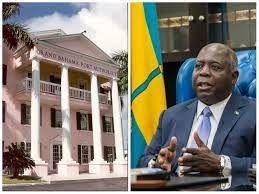
Bahamas Government vs. The Grand Bahama Port Authority
The Reality Many People Don’t Know
By: Michael Elijah Muhammad Clare
Most Bahamian’s were never taught this in school, and many still don’t fully understand it today. But to understand why Grand Bahama struggles the way it does, you have to understand one agreement and what happened after it was signed.
In 1955, the Bahamas Government and the Grand Bahama Port Authority (GBPA) entered into the Hawksbill Creek Agreement (HCA), a landmark legal framework designed to transform Freeport into a modern economic hub. The agreement provided GBPA with a defined range of administrative and developmental powers, enabling the city to attract international investment, manage infrastructure effectively, and operate with a level of autonomy necessary for rapid growth.
Under the HCA, GBPA was empowered to oversee urban planning, land development, business licensing, and local public services within the designated Port Area. National authorities retained jurisdiction over customs, immigration, and national security, but GBPA had operational flexibility to administer day-to-day governance and ensure the Port Area functioned efficiently. This framework created a stable, investor-friendly environment and laid the foundation for Freeport’s early economic success.
Over subsequent decades, Freeport emerged as a center for commerce and tourism. International investors were drawn to its predictability, regulatory clarity, and strategic location. The HCA allowed Freeport to operate with confidence that agreements would be upheld, reinforcing the city’s reputation as a reliable destination for long-term investment.
However, over time, challenges emerged. New policies, regulatory changes, and shifts in governmental oversight introduced uncertainties. While some of these measures were intended to modernize governance or generate revenue, the cumulative effect has, at times, blurred the clarity of the original HCA framework. From an investor perspective, consistent policy application and adherence to contractual commitments are critical. Where perceived instability arises, investment confidence can be affected.
It is important to recognize that Freeport’s trajectory has been shaped by a combination of factors: natural disasters, broader economic trends, and evolving policy environments. The Hawksbill Creek Agreement remains central to understanding the city’s development, but the narrative is complex. Oversimplifying the story risks overlooking the nuanced interactions between private governance, public oversight, and international investment expectations.
As someone who has followed Freeport’s evolution closely, and personally experienced the challenges of property ownership and development I have developed a deep appreciation for the careful balance between governance, investment security, and public policy. The HCA was a visionary contract that enabled growth, but its long-term success depends on all stakeholders honoring its terms and maintaining the trust of the business community.
The lesson for policymakers, investors, and citizens is clear: Contracts are more than legal documents; they are the foundation of confidence, stability, and sustainable growth. Freeport’s experience underscores that principle. When agreements are respected, economic opportunities flourish. When they are compromised, the ripple effects extend far beyond the immediate parties involved.
For the Grand Bahama Port Authority, the Hawksbill Creek Agreement continues to represent a framework for strategic governance and operational excellence. For the Government of the Bahamas, it is a reminder of the importance of clear, consistent, and transparent policy implementation. And for the international community, Freeport stands as an example of how thoughtful public-private collaboration can drive development in small island economies.
In conclusion, Freeport’s story is not simply one of decline or challenge. It is a testament to the power of vision, planning, and contractual integrity. By honoring agreements, fostering transparency, and maintaining stability, the city can continue to thrive as a model of sustainable economic development in the Caribbean and beyond.
Page Reply:
I remember how happy I used to be whenever the government would attack the Grand Bahama Port Authority lol. I just didn’t know any better that’s all. And they were the bad guys in my mind. But now I know better, and so do you…
Today I will give you the final information on getting your…
Today I will give you the final information on getting your generational land on almost any island.
Knowledge is power…
Michael Elijah Muhammad Clare

A Bahama Drama morning
A Bahama Drama morning
And a lesson for all
I woke up late for work today, and the first words out of my mouth were, “F… damnit.” I was upset with myself, and with my phone alarm for not doing it’s job.
I already knew I was going to be extremely late. The drive alone is about 30 minutes or more. What scared me most was that this would’ve been my second time being late, and I do everything in my power not to be late.
I jumped out of bed, rushing through my morning routine, deciding what I had to skip 😔. Somewhere in that chaos, I caught my spiritual balance again.
A thought came to me; maybe God protected me from something outside my door this morning. Maybe He woke me up late so I’d miss something that could’ve harmed me.
I was about to put on my socks and head out, but instead, I fell to my knees and gave thanks to the only One who has ever truly loved me for who I am.
I admitted that I was wrong for always assuming the worst when things don’t go my way or don’t turn out how I expect. In that moment, God gave me a deeper understanding of His relationship with me.
Then I remembered, I didn’t even have enough gas to get to work today, or probably even to work at all. The last time I checked, it was almost on E.
I wish the E stood for Enough.
After praying and giving thanks for God’s mercy and grace, I felt ready to face whatever the day had planned for me.
I grabbed my phone and tablet and headed out. A little way down the street, I stopped at a stop sign and checked my phone, just to see my schedule, hoping for some kind of miracle that maybe I was working later.
That’s when I saw it.
I was off today.
There I was, down the street, fully dressed, smelling good, shoes clean, thinking 🤔…
Now that I’ve already left home, I can’t just turn around. That would be ridiculous. I’m off today, so I guess I’ll stay away from home for a bit.
But my deeper thought was this, I just want to go back home and post what just happened to me. Maybe it’ll help someone respond better than I did this morning. 📯
God is always in control, even when we’re not.
This was the look on my face 👀 looking at the time on my phone this morning….
![A @[100023394293756:2048:Bahama Drama] morning
And a lesson for all
I woke up late for work today, and the first words out of my mouth were, “F… damnit.” I was upset with myself](https://lol242.com/wp-content/uploads/bahama-drama/2025/12/cdeb21a2e02f249406c9.jpg)