
Bahamas Government vs.
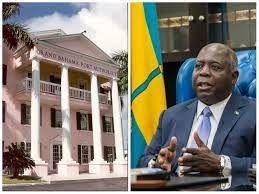
Bahamas Government vs. The Grand Bahama Port Authority
The Reality Many People Don’t Know
By: Michael Elijah Muhammad Clare
Most Bahamian’s were never taught this in school, and many still don’t fully understand it today. But to understand why Grand Bahama struggles the way it does, you have to understand one agreement and what happened after it was signed.
In 1955, the Bahamas Government and the Grand Bahama Port Authority (GBPA) entered into the Hawksbill Creek Agreement (HCA), a landmark legal framework designed to transform Freeport into a modern economic hub. The agreement provided GBPA with a defined range of administrative and developmental powers, enabling the city to attract international investment, manage infrastructure effectively, and operate with a level of autonomy necessary for rapid growth.
Under the HCA, GBPA was empowered to oversee urban planning, land development, business licensing, and local public services within the designated Port Area. National authorities retained jurisdiction over customs, immigration, and national security, but GBPA had operational flexibility to administer day-to-day governance and ensure the Port Area functioned efficiently. This framework created a stable, investor-friendly environment and laid the foundation for Freeport’s early economic success.
Over subsequent decades, Freeport emerged as a center for commerce and tourism. International investors were drawn to its predictability, regulatory clarity, and strategic location. The HCA allowed Freeport to operate with confidence that agreements would be upheld, reinforcing the city’s reputation as a reliable destination for long-term investment.
However, over time, challenges emerged. New policies, regulatory changes, and shifts in governmental oversight introduced uncertainties. While some of these measures were intended to modernize governance or generate revenue, the cumulative effect has, at times, blurred the clarity of the original HCA framework. From an investor perspective, consistent policy application and adherence to contractual commitments are critical. Where perceived instability arises, investment confidence can be affected.
It is important to recognize that Freeport’s trajectory has been shaped by a combination of factors: natural disasters, broader economic trends, and evolving policy environments. The Hawksbill Creek Agreement remains central to understanding the city’s development, but the narrative is complex. Oversimplifying the story risks overlooking the nuanced interactions between private governance, public oversight, and international investment expectations.
As someone who has followed Freeport’s evolution closely, and personally experienced the challenges of property ownership and development I have developed a deep appreciation for the careful balance between governance, investment security, and public policy. The HCA was a visionary contract that enabled growth, but its long-term success depends on all stakeholders honoring its terms and maintaining the trust of the business community.
The lesson for policymakers, investors, and citizens is clear: Contracts are more than legal documents; they are the foundation of confidence, stability, and sustainable growth. Freeport’s experience underscores that principle. When agreements are respected, economic opportunities flourish. When they are compromised, the ripple effects extend far beyond the immediate parties involved.
For the Grand Bahama Port Authority, the Hawksbill Creek Agreement continues to represent a framework for strategic governance and operational excellence. For the Government of the Bahamas, it is a reminder of the importance of clear, consistent, and transparent policy implementation. And for the international community, Freeport stands as an example of how thoughtful public-private collaboration can drive development in small island economies.
In conclusion, Freeport’s story is not simply one of decline or challenge. It is a testament to the power of vision, planning, and contractual integrity. By honoring agreements, fostering transparency, and maintaining stability, the city can continue to thrive as a model of sustainable economic development in the Caribbean and beyond.
Page Reply:
I remember how happy I used to be whenever the government would attack the Grand Bahama Port Authority lol. I just didn’t know any better that’s all. And they were the bad guys in my mind. But now I know better, and so do you…
Related stories

Biometric Voter Cards Go Local, PAC Digs Into $1.5m Vouchers, and Some PMH Wards Relocate
Late-afternoon Bahamas Islands Briefing for Wednesday, October 14, 2026: Exuma’s Business Outlook is tomorrow;…

PUBLIC MESSAGE TO ALL BAHAMA DRAMA FOLLOWERS
We are taking Bahama Drama to the next level, and we want you to…

Eleuthera Residents Threaten to Stop Paying BPL Bills, Treasure Cay’s $177m Sale Nears Closing, and a “Miracle Baby” Gets Her Wheels
Afternoon Bahamas Islands Briefing for Wednesday, October 14, 2026: Eleuthera residents threaten to withhold…
Join the conversation
No comments yet. Be the first.