Jesus of Nazareth
Jesus of Nazareth
A Child Born in Bethlehem of Judea, in the Land Known Today as Palestine
By: Michael Elijah Muhammad Clare
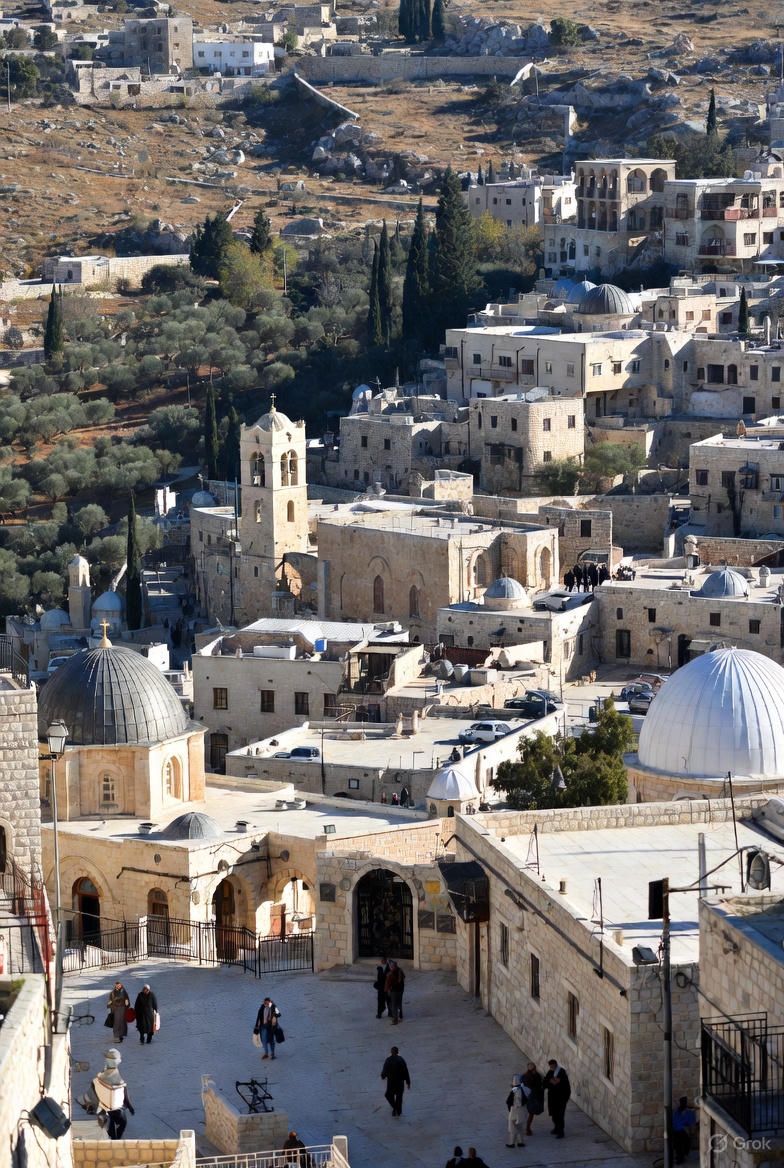
The birth of Jesus Christ is one of the most documented religious claims in human history, yet one of the most misunderstood historically. Much of the confusion comes from modern political language being projected backward in time. When the historical, geographical, and administrative facts are carefully examined, a clear picture emerges: Jesus was a Jewish child born in Bethlehem of Judea, a town located in the region that is today called the West Bank, within the land historically known as Palestine.
Jesus was born around 4–6 BCE in Bethlehem, a small town south of Jerusalem. This is stated clearly in the Gospels of Matthew and Luke. At the time of his birth, Bethlehem was part of Judea, a client kingdom under Roman authority. The population of the region was overwhelmingly Semitic and Jewish, sharing language, customs, and ancestry with surrounding Levantine peoples.
Jesus was Jewish by religion, culture, lineage, and law. He was circumcised on the eighth day, observed Jewish festivals, read Hebrew scripture, taught in synagogues, and lived under Jewish law. This is not disputed by historians, theologians, or archaeologists. His Jewish identity is unquestionable.
What is often misunderstood is the land itself.
The region where Jesus was born and lived was part of the southern Levant a geographical area that has been continuously inhabited for thousands of years. Long before modern nation-states existed, this land was known by various names depending on the ruling empire. Ancient Egyptians, Assyrians, Babylonians, Persians, Greeks, and Romans all ruled this territory at different times.
The name “Palestine” is not modern. It is ancient.
Greek writers such as Herodotus in the 5th century BCE referred to the area as “Palaistine.” After the Roman suppression of the Jewish revolts in the second century CE, Rome officially renamed the province “Syria Palaestina.” This name was used continuously in Roman, Byzantine, Islamic, and European records for centuries afterward.
Importantly, the name Palestine refers to a geographic region, not a modern nationality in the contemporary sense. People in the ancient world were not “citizens” of nation-states as we understand them today. They were identified by religion, tribe, city, or empire.
Jesus was not “Israeli” — that political identity did not exist.
He was not “Roman” — though Rome ruled the land.
He was not “Christian” — Christianity did not yet exist.
He was a Jewish man born in Bethlehem of Judea, in the land that the world would come to know as Palestine.
Bethlehem itself is located in what is today the occupied West Bank. This is not a political statement but a geographical fact. The same town mentioned in the Gospels still exists in the same place, inhabited continuously for millennia. The land did not move. The borders and rulers did.
To say Jesus was “Palestinian” in a modern ethnic or national sense would be historically inaccurate. However, to say that Jesus was born in Palestine meaning the historical region of Palestine is geographically and historically accurate.
This distinction matters.
Jesus belongs to the land.
The land does not belong to modern politics.
He was a Middle Eastern Jewish man, born to Middle Eastern Jewish parents, in a Middle Eastern town, under Middle Eastern skies. He spoke Aramaic, read Hebrew, and lived among Semitic peoples whose descendants still live in the region today.
When modern imagery portrays Jesus as European, detached from the soil and people of Palestine, it erases history. Jesus did not come from Rome, England, or America. He came from Bethlehem of Judea a town in Palestine a land that has known conquest, faith, exile, and survival long before and long after his birth.
Understanding where Jesus was born does not diminish his message. It deepens it.
He was born among the poor.
Born under occupation.
Born in a contested land.
Born to a people living under empire.
That reality makes his life, teachings, and death not distant myths, but human history rooted in a real place a place the world still argues over today.
Bethlehem did not disappear.
The land did not vanish.
Only the names and rulers changed.
Jesus of Nazareth was a Jewish man born in Bethlehem of Judea in the land historically and geographically known as Palestine.