
The Bahamas aid American civil war
The Bahamas aid American civil war
By: Eric Dean
Nassau, located on the island of New Providence, played a surprisingly important role in the American Civil War, a role far greater than one would expect from a small colonial town in the mid-1800s.
At the time, the Bahamas were a British colony, and Britain officially remained neutral during the conflict between the Union and the Confederacy. That neutrality, combined with Nassau’s close proximity to the southeastern United States, turned the island into one of the most critical centers of Confederate supply and trade.
When the Union Navy imposed a blockade on Southern ports, the Confederacy found itself cut off from weapons, medicine, machinery, and other vital supplies.
Nassau became the perfect solution. Fast, shallow-draft ships known as blockade runners would sail from Britain to Nassau, unload their cargo, and then wait for the right moment to make the dangerous dash to Confederate ports such as Charleston and Wilmington.
On the return journey, those same ships carried cotton back to Nassau, where it was shipped onward to Europe. Cotton was incredibly valuable at the time, and this trade transformed Nassau almost overnight.
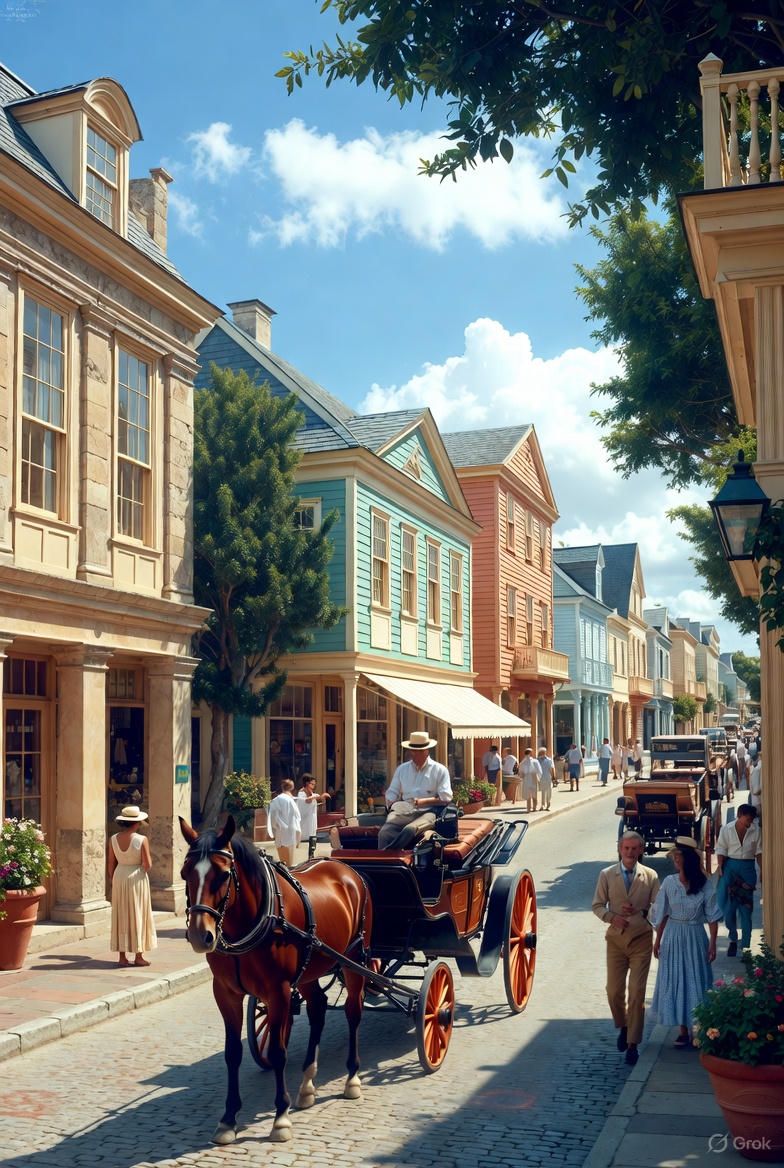
Before the war, Nassau was relatively quiet and economically modest. During the Civil War years, it became a boomtown. Warehouses were constructed along the waterfront, docks were expanded, and merchant houses multiplied rapidly.
The population grew, money flowed freely, and luxury goods that were scarce in much of the world suddenly appeared in local shops. Some residents amassed fortunes in just a few years, fortunes that would shape Nassau’s social and economic structure for generations.
Several physical landmarks in Nassau still quietly reflect this period. Bay Street, now known for tourism and commerce, was once lined with warehouses storing cotton and war supplies.
The old harbor, today filled with cruise ships and pleasure boats, was crowded with blockade runners and merchant vessels flying British flags. Graycliff, now a famous hotel and cultural site, was built shortly after the war and funded by wealth that circulated during that era.
Even Fort Charlotte and other colonial structures gained renewed importance as Nassau’s strategic value increased.
The Civil War permanently changed the Bahamian economy. The sudden influx of wealth exposed the islands to global trade on a scale never seen before.
Although the boom collapsed quickly after the war ended in 1865, it left behind infrastructure, business networks, and an awareness that the Bahamas could play a role in international commerce far beyond fishing and subsistence agriculture.
In many ways, the war marked Nassau’s first experience as a global trading hub, a pattern that would later repeat during Prohibition in the 1920s.
Socially, the period also reshaped Bahamian society. The contrast between rapid wealth and existing poverty became more visible.
Free Black Bahamians, formerly enslaved people, British merchants, and foreign traders all interacted in new ways.
The war years intensified class divisions but also expanded opportunities for some locals to enter trade, shipping, and skilled labor. These changes influenced how Bahamian society evolved long after the last Confederate ship left the harbor.
In my opinion, Nassau’s Civil War story is one of the most underappreciated chapters in Caribbean and American history.
It shows how neutrality doesn’t mean irrelevance, and how small places can exert massive influence simply by being in the right location at the right time.
The Bahamas weren’t just watching history happen; they were quietly helping shape it.
Related stories

Biometric Voter Cards Go Local, PAC Digs Into $1.5m Vouchers, and Some PMH Wards Relocate
Late-afternoon Bahamas Islands Briefing for Wednesday, October 14, 2026: Exuma’s Business Outlook is tomorrow;…

PUBLIC MESSAGE TO ALL BAHAMA DRAMA FOLLOWERS
We are taking Bahama Drama to the next level, and we want you to…

Eleuthera Residents Threaten to Stop Paying BPL Bills, Treasure Cay’s $177m Sale Nears Closing, and a “Miracle Baby” Gets Her Wheels
Afternoon Bahamas Islands Briefing for Wednesday, October 14, 2026: Eleuthera residents threaten to withhold…
Join the conversation
No comments yet. Be the first.