
Nassau’s First Prison
Nassau’s First Prison
By: Michael Elijah Muhammad Clare
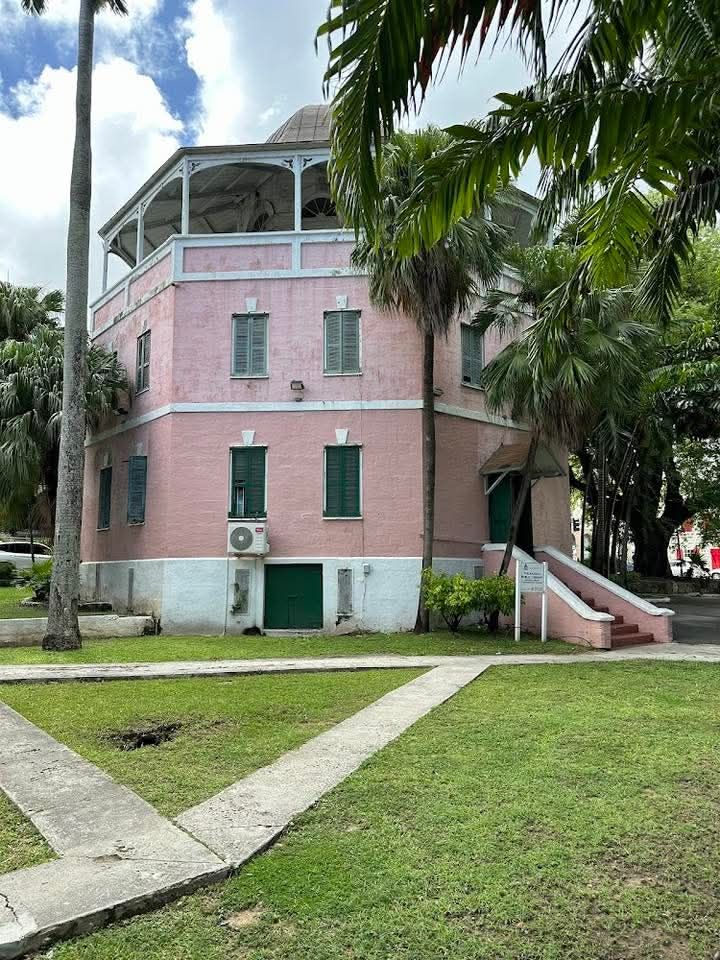
Nassau’s first permanent prison, built between 1797 and 1799 in the heart of Shirley Street, was more than a building. The Nassau Gaol stood as a fortress of stone, sorrow, and secrets during a formative period in Bahamian history.
By the late 18th century, Nassau was a wild frontier of the British Empire. Pirates like Blackbeard had only recently been driven from these waters, leaving behind a town rife with debtors, smugglers, runaway slaves, and captured buccaneers. The makeshift jails of the 1600s were no longer enough. The need for a proper prison had become urgent, and the Nassau Gaol was born.
Its octagonal design, inspired by the Old Powder Magazine in Virginia, was a deliberate architectural statement. Built under British colonial supervision, it was strong enough to withstand hurricanes, escapes, and occasional riots. Local laborers, enslaved workers, and imported craftsmen likely worked under Crown orders to hammer the structure into place, though no single builder is credited.
Shirley Street placed the gaol near the administrative and civic core of early Nassau. The surrounding area bustled with colonial life officials, merchants, soldiers, and townspeople passing within earshot of the prisoners’ walls. For prisoners, it was a cruel reminder of freedom just beyond the bars.
Inside, cells were small and dank, often holding multiple men at a time, with iron shackles bolted to the walls.
Life was brutal: sweltering heat, meager rations of salted pork and hardtack, disease, and the ever-present threat of punishment were daily realities. Escape attempts, such as a daring but failed tunnel by three pirates in 1801, or desperate pleas for mercy from debtors, were recorded in the gaol’s logs.
It was not just a prison; it was a symbol of British authority and the tenuous hold of law in a town still echoing with rebellion.
As Nassau evolved from pirate haven to colonial hub, the gaol bore witness to waves of human drama. In the early 1800s, it held captured slave traders after Britain’s abolition act of 1807, and by the 1830s, post-emancipation tensions filled the cells with vagrants and those accused of unrest.
Public floggings in the square outside drew crowds, turning punishment into a grim spectacle.
Complaints of overcrowding eventually prompted Parliament to authorize a new prison on East Street in 1866, but the Shirley Street gaol continued to hold overflow prisoners until 1873.
It was then transformed into the Nassau Public Library, its iron-barred cells becoming shelves for books, colonial artifacts, and Arawak relics.
The last prisoner, according to legend, was a petty thief released just before the building’s conversion, a quiet, symbolic end to a dramatic chapter.
Yet the gaol’s story did not end with its doors opening as a library. Visitors and staff alike have reported uncanny occurrences, steeped in the lore of those who never truly left. The “Weeping Debtor” is said to haunt a former cell, sobbing softly over debts left unpaid.
The “Pirate’s Rattle” is heard as chains drag across the octagonal halls, linked to the restless spirit of a buccaneer executed in 1810, rumored to be searching for buried treasure. And the “Lady in White,” a woman from the 1830s falsely accused of theft, glides through the upper floors, her sighs blending with the rustle of palm fronds outside.
Even in daylight, her presence is said to linger, flipping the pages of colonial manuscripts with an ethereal grace.
From its gritty origins to its ghostly legacy, the Nassau Gaol is more than a historical building; it is a living chronicle of the Bahamas’ turbulent past. It embodies the struggles, punishments, and occasional triumphs of a town that grew from pirate haven to colonial capital.
Today, as tourists wander the library’s halls, they walk through spaces once filled with fear, despair, and fleeting hope. The past is not silent here; it whispers, rattles, and sometimes sobs in the tropical breeze.
Next time you pass through the historic Shirley Street area near Parliament Square, pause and step inside the library if you dare. Listen closely.
The ghosts of Nassau’s first prison may still have stories to tell.
Related stories

Biometric Voter Cards Go Local, PAC Digs Into $1.5m Vouchers, and Some PMH Wards Relocate
Late-afternoon Bahamas Islands Briefing for Wednesday, October 14, 2026: Exuma’s Business Outlook is tomorrow;…

PUBLIC MESSAGE TO ALL BAHAMA DRAMA FOLLOWERS
We are taking Bahama Drama to the next level, and we want you to…

Eleuthera Residents Threaten to Stop Paying BPL Bills, Treasure Cay’s $177m Sale Nears Closing, and a “Miracle Baby” Gets Her Wheels
Afternoon Bahamas Islands Briefing for Wednesday, October 14, 2026: Eleuthera residents threaten to withhold…
Join the conversation
No comments yet. Be the first.