



US Election Watch · Day 1
Friday, October 30, 2026 · 4 days to Election Day (Tuesday, November 3)
Welcome to US Election Watch, lol242’s daily guide to America’s 2026 midterm elections. On Tuesday our neighbours to the north choose a new Congress and 36 governors, and the results will be felt from Capitol Hill to Bay Street. Every day until the votes are counted, we’ll tell you who’s ahead, who’s sweating, and why it matters right here at home.
The 60-second version
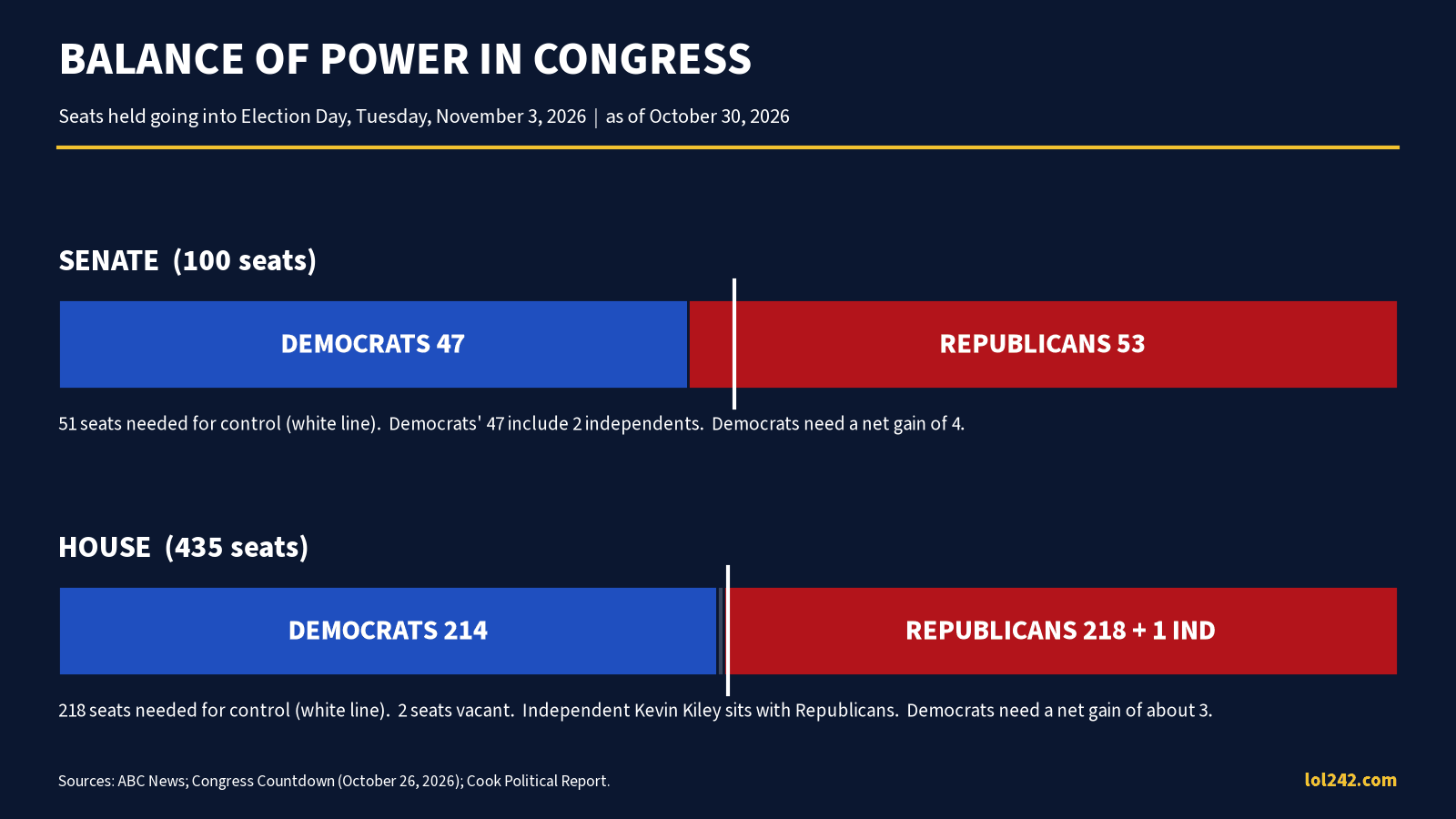
- The Senate is up for grabs. Republicans hold 53 of 100 seats, so Democrats need a net gain of four to take control. Cook Political Report rates seven races as pure toss-ups, six of them in Republican-held seats, and now calls Democrats slight favourites.
- The House leans Democratic. Democrats need a net gain of about three seats. Cook projects they will gain somewhere between 12 and 25.
- The national mood favours Democrats. They lead the “generic ballot” (which party voters want running Congress) by about 8 to 9 points across the major polling averages.
- Millions have already voted. More than 40 million Americans cast ballots before Election Day.
Midterms 101: What’s on the ballot
America elects its president every four years. Halfway through each term come the midterms, when voters pick a new Congress and many state governors. President Donald Trump isn’t on Tuesday’s ballot, but midterms have a long history of punishing the party that holds the White House.
435
Every House seat is up (two-year terms). The magic number for a majority is 218.
35
Senate seats: 33 regular races plus special elections in Ohio and Florida. Democrats need 51; Republicans keep control with 50, because Vice President JD Vance breaks ties.
36
Governor’s races, including open seats in battlegrounds such as Georgia, Michigan and Wisconsin.
One more twist: several states redrew their congressional maps in the middle of the decade, so some districts look very different from the ones voters saw in 2024.
Flashback: In October 2018, the last midterm of Trump’s first term, Democrats led the generic ballot by 9 points among likely voters. They went on to gain 40 House seats. This year’s national polling looks remarkably similar.
Why it matters in The Bahamas
Green cards on hold. In January, the US State Department paused immigrant-visa issuance for nationals of 75 countries, and The Bahamas was on the list. A federal court struck that pause down in August, but a worldwide pause for officer training followed days later. Visitor and student visas were not affected. Visa policy is set by the administration, but the party that controls Congress writes immigration law, sets budgets and runs the oversight hearings.
A tax on sending money home. Since January 1, the US has charged a 1% federal tax on remittances paid for with cash, money orders or cashier’s cheques. Transfers funded from a bank account or card are exempt. The tax arrived in the One Big Beautiful Bill Act, which cleared the Senate 51–50 on Vice President Vance’s tie-breaking vote and the House 218–214. That’s how thin the margins are, and why a handful of seats on Tuesday matter to Bahamian families on both sides of the water.
Tourism. The United States is by far our biggest source of visitors. American voters say their top worries are the cost of living, gas prices, tariffs and the war with Iran. Those same pocketbook pressures decide whether a family books that Nassau getaway or cruise to our islands.
Bahamians in Florida. Florida is home to many Bahamians and Bahamian-Americans, and their state is busy. Byron Donalds (R) and David Jolly (D) are battling for an open governor’s seat that Cook rates Lean Republican. Florida’s special Senate election is rated Likely Republican. Three Florida House districts, the 14th, 22nd and 25th, are among the most heavily contested in the country.
Americans living here: US citizens in The Bahamas with voting questions can contact the Federal Voting Assistance Program (FVAP.gov) or their state election office.
Scoreboard: Who holds power today
| Chamber | Republicans | Democrats | What flips it |
|---|---|---|---|
| Senate | 53 | 47 (45 Democrats plus 2 independents who caucus with them) | Democratic net gain of 4 |
| House | 218 | 214 | Democratic net gain of about 3 |
| Governors | 26 | 24 | Democratic net gain of 2 for a majority |
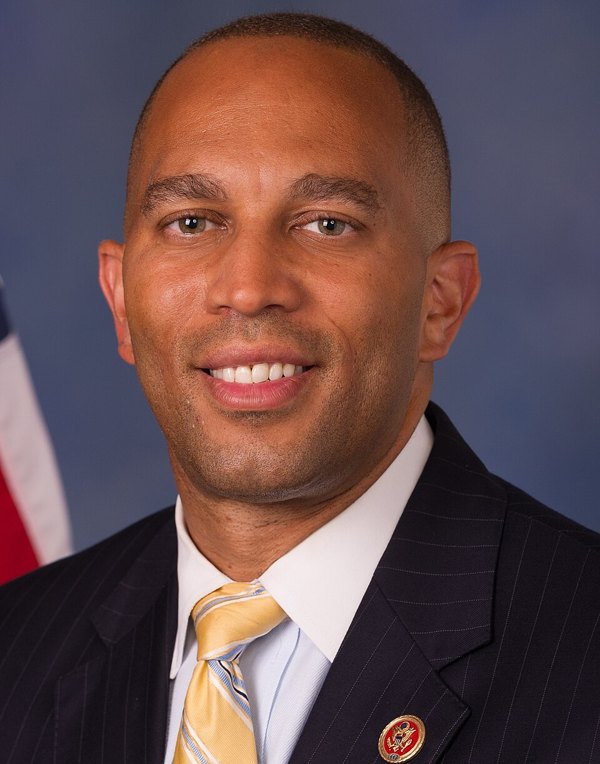
The House is run by Speaker Mike Johnson; the Democratic leader is Hakeem Jeffries. Whichever party wins a majority on Tuesday picks the Speaker when the new Congress meets in January.


The Senate: Seven coin flips
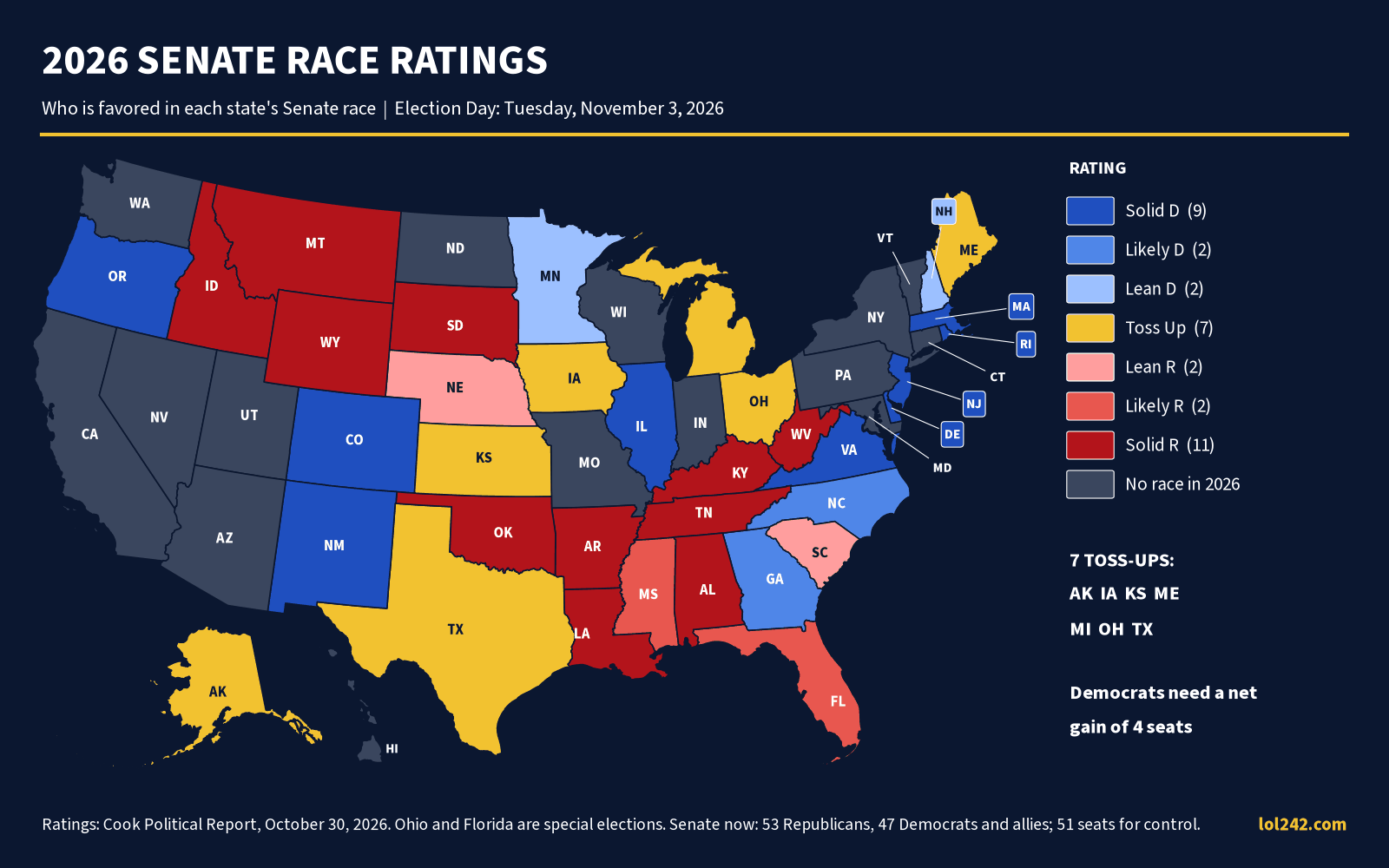
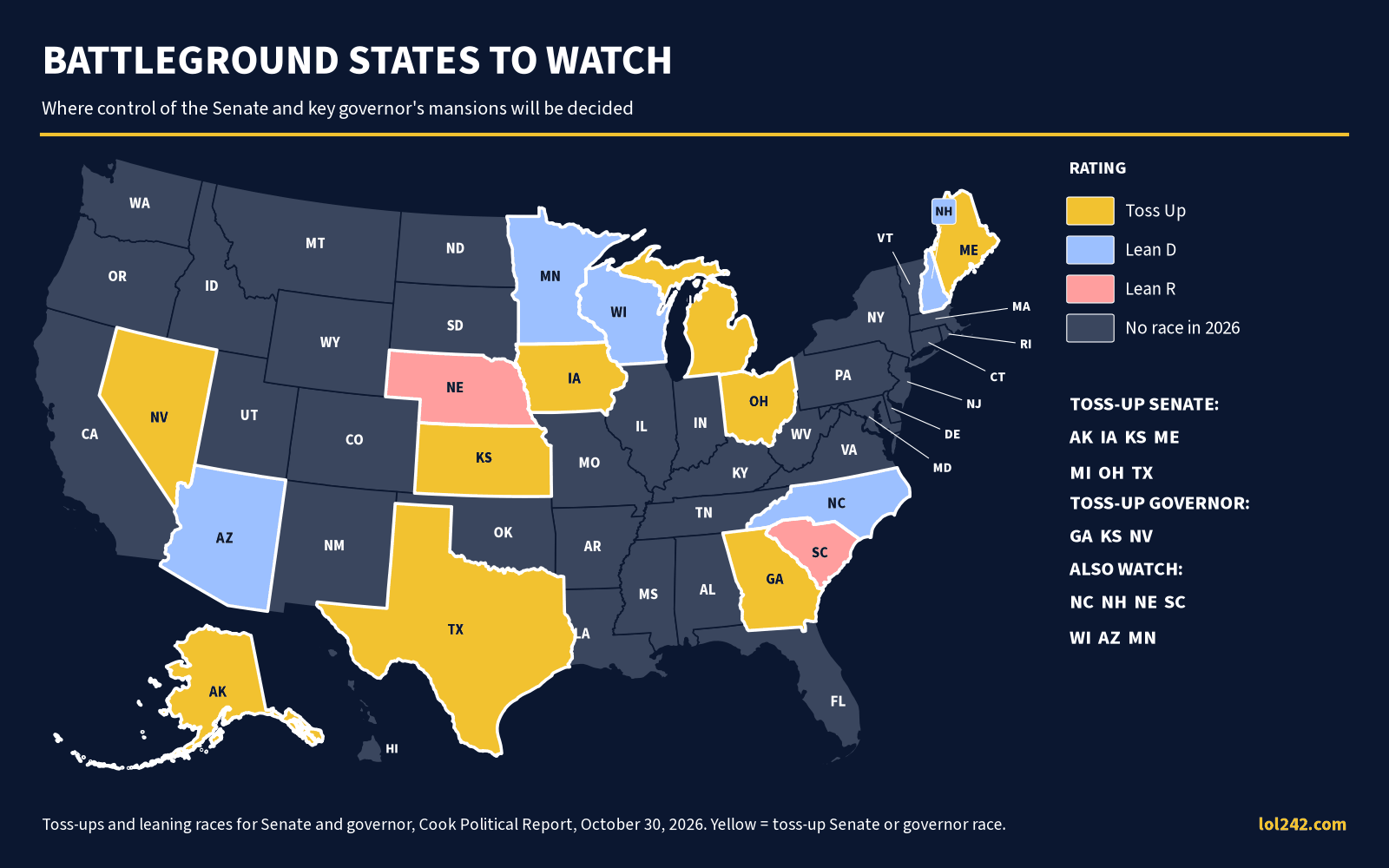
Cook Political Report lists seven Senate races as toss-ups: Alaska, Iowa, Kansas, Maine, Michigan, Ohio and Texas. Republicans hold six of them; Michigan is the only Democratic-held seat on the list. Sabato’s Crystal Ball counts 49 seats at least leaning Democratic, 46 at least leaning Republican and five toss-ups.
The math: to reach 51, Democrats have to hold Michigan, New Hampshire, Minnesota and Georgia, then win four of North Carolina, Maine, Ohio, Texas, Kansas, Iowa and Alaska. Republicans keep the Senate if they win enough of those races to stay at 50 or more.
Alaska
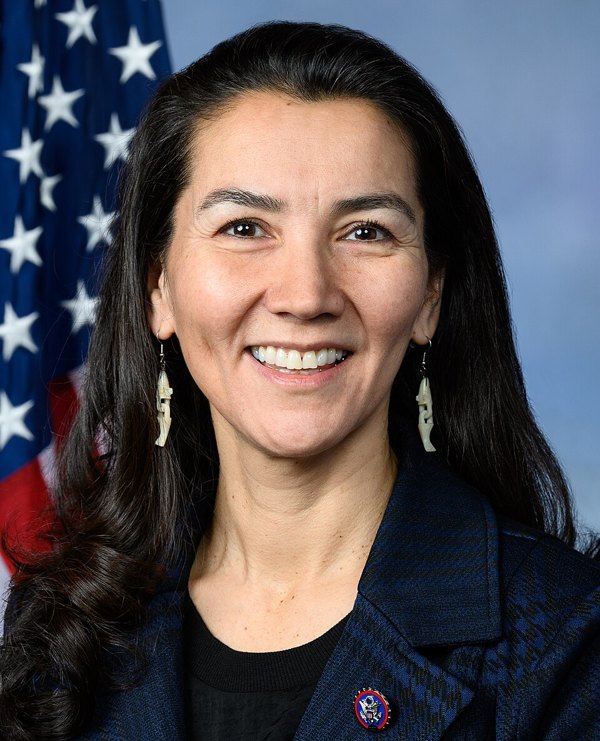
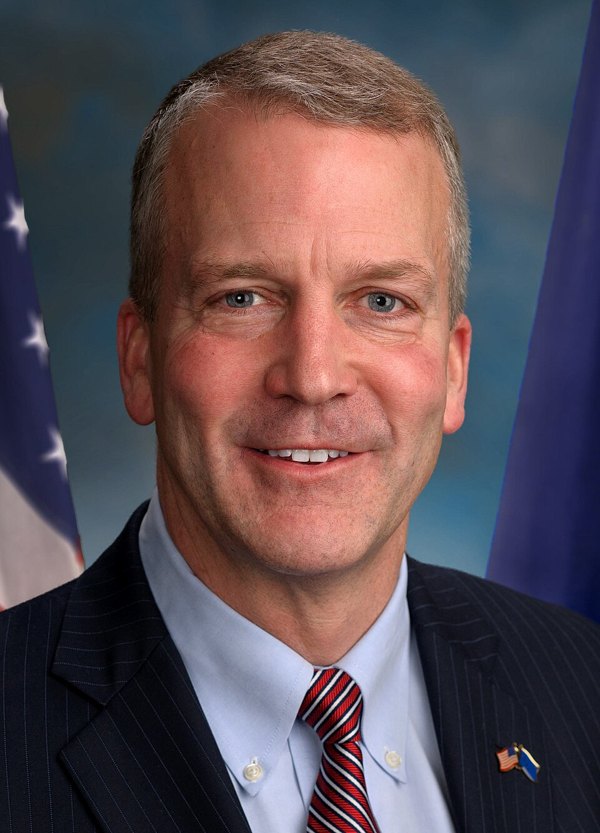
Cook rating: Toss Up · Republican-held
Latest polls
- Data for Progress (D), Oct. 8–16, final ranked-choice round: Peltola 51, Sullivan 49
- InsiderAdvantage (R), Oct. 9–10, final ranked-choice round: Peltola 50, Sullivan 48
Worth knowing: Alaska uses ranked-choice voting, so the result may take days. A dispute has also erupted over a second candidate named Dan Sullivan appearing on the ballot. Gov. Mike Dunleavy has said certification could be “stopped or changed” if wrongdoing is found. And Alaska is notoriously hard to poll: in 2020, one survey had Sullivan up 4, and he won by nearly 13.
Iowa (open seat)
Cook rating: Toss Up · Republican-held (Sen. Joni Ernst is retiring)
Ashley Hinson R
Congresswoman and former TV news reporter
Josh Turek D
State representative; two-time Paralympic gold medallist in wheelchair basketball
Latest polls
- InsiderAdvantage (R), Oct. 21–22: Hinson 47, Turek 46
- Cook Political Report/New River, Oct. 9–13: Turek 46, Hinson 44
- On Point Politics average: Turek +0.3
Worth knowing: By almost any measure, this is one of the closest races in the country. In 2024, Trump led Iowa’s final polling average by 4.7 points and won the state by 13.
Kansas
Cook rating: Toss Up · Republican-held
Adam Hamilton D
Methodist pastor who founded a megachurch
Roger Marshall R
Incumbent senator
Latest polls
- Emerson College, Oct. 26–28: Hamilton 50, Marshall 47
- Washington Post–Schar School, Oct. 22–26: Hamilton 54, Marshall 44
- CNN/SSRS (released Oct. 29): Hamilton 49, Marshall 45
Worth knowing: Kansas hasn’t elected a Democrat to the Senate since 1932. President Trump abruptly cancelled rallies in Kansas and Iowa, then revived them for this weekend.
Maine
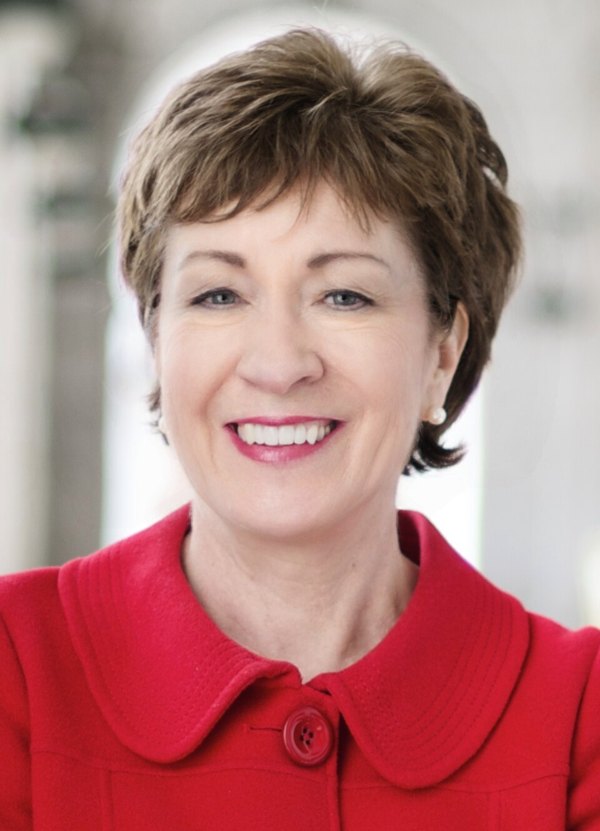
Cook rating: Toss Up · Republican-held

Latest polls
- CNN/SSRS, Oct. 20–26, likely voters: Jackson 49, Collins 45
- Fox News, Oct. 16–20: tied, 49–49
- Trafalgar Group (R), Oct. 21–23: Collins 47, Jackson 46.5
Worth knowing: Collins has beaten her polls before. In 2020 she trailed in the polling average and still won by about eight points.
Michigan (open seat)
Cook rating: Toss Up · Democratic-held (Sen. Gary Peters is retiring)
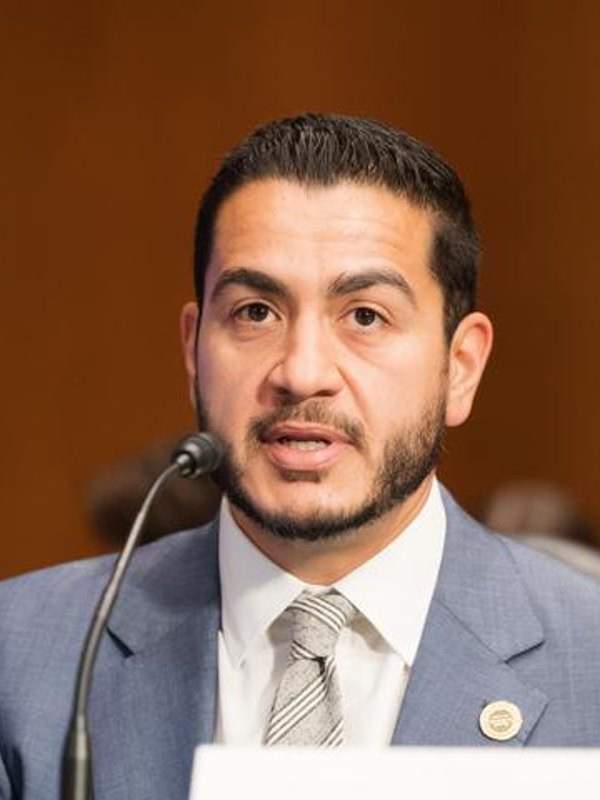
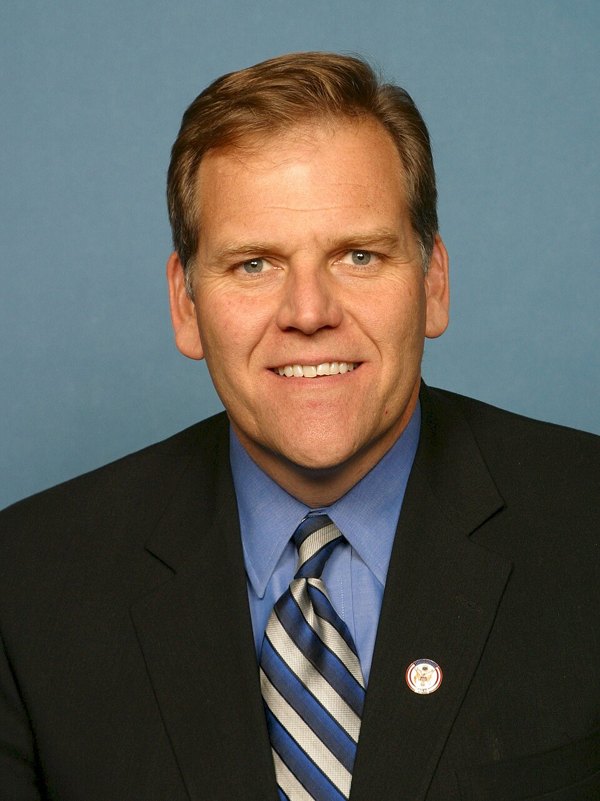
Latest polls
- CNN/SSRS (released Oct. 29): El-Sayed 49, Rogers 42
- Upswing Research (D), Oct. 28: El-Sayed 50, Rogers 45
- InsiderAdvantage (R), Oct. 21–22: El-Sayed 47.2, Rogers 46
Worth knowing: This is Republicans’ best chance to pick up a seat. Rogers lost Michigan’s 2024 Senate race by about a third of a point.
Ohio (special election)
Cook rating: Toss Up · Republican-held
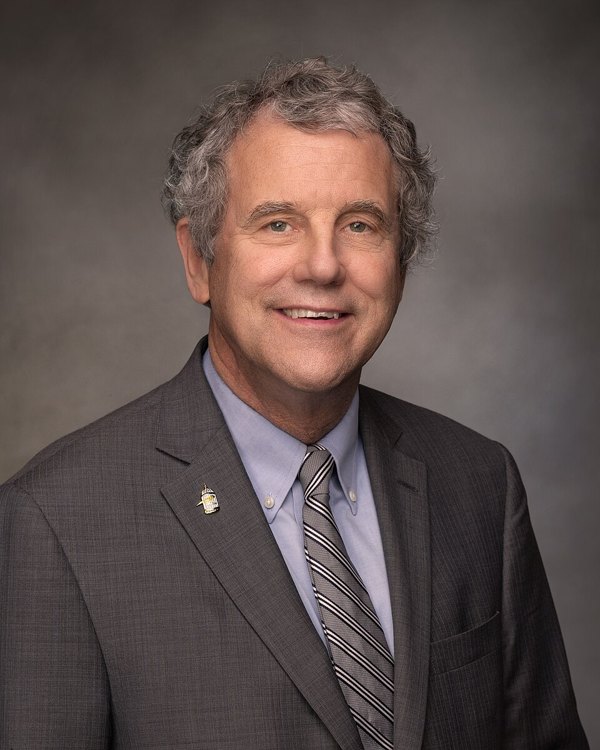
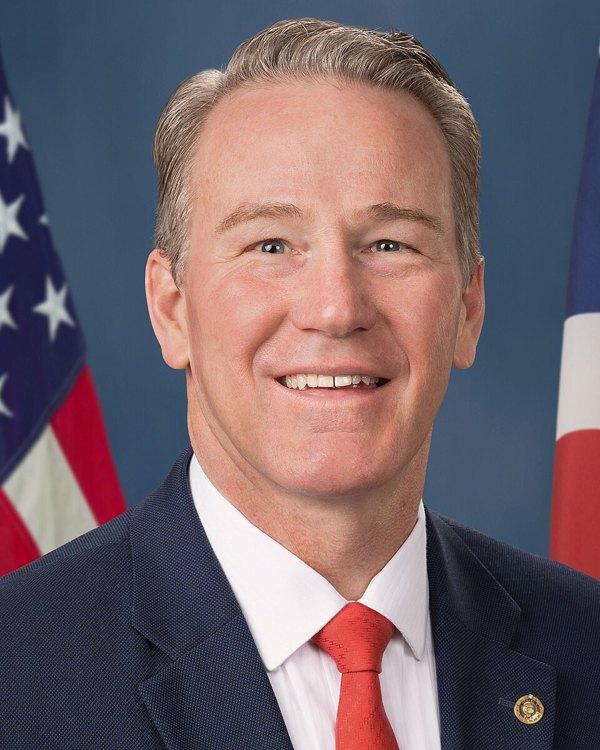
Latest polls
- Fox News, Oct. 15–19: Brown 52, Husted 47
- InsiderAdvantage (R), Oct. 21–22: Brown 47, Husted 44
- On Point Politics average: Brown +4.5
Worth knowing: Trump carried Ohio by double digits in 2024 and beat his final polling average there by more than three points.
Texas (open seat)
Cook rating: Toss Up · Republican-held
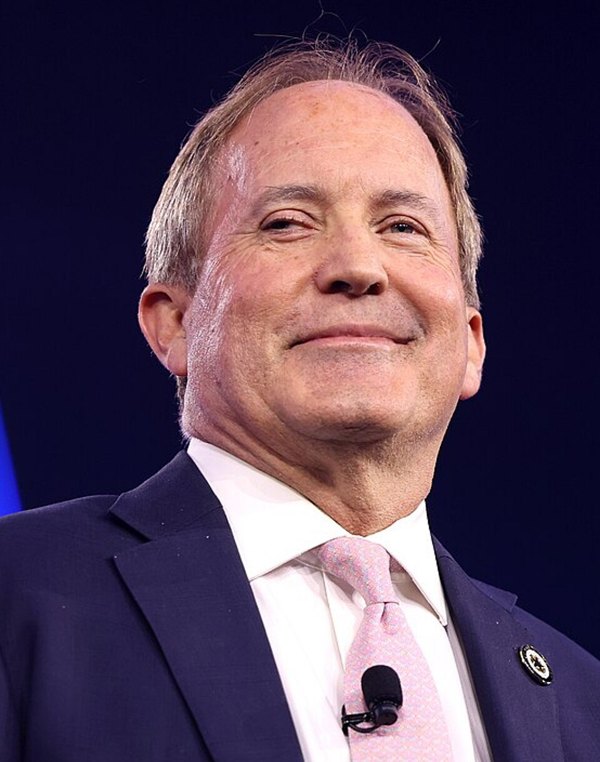

Latest polls
- CNN/SSRS (released Oct. 29): Talarico 49, Paxton 43
- Emerson College, Oct. 17–19: Talarico 48, Paxton 46
- Quantus Insights, Oct. 26–28: Paxton 49, Talarico 48
- On Point Politics average: Talarico +1.6
Worth knowing: Texas last sent a Democrat to the Senate in 1988. It is also the country’s most expensive Senate race in political advertising, ahead of Ohio and Michigan.
Close behind: races that could still surprise
- Georgia: Mike Collins (R) vs. Sen. Jon Ossoff (D). Likely Democratic. Ossoff leads by roughly 8 to 12 points in the averages. Only two candidates are on the ballot, so this seat can’t go to a December runoff.
- Minnesota (open): Peggy Flanagan (D) vs. Michelle Tafoya (R). Lean Democratic.
- Nebraska: independent Dan Osborn vs. Sen. Pete Ricketts (R). Lean Republican, though the On Point Politics average shows an essentially tied race (Osborn +0.2).
- New Hampshire (open): Chris Pappas (D) vs. former Sen. John E. Sununu (R). Lean Democratic; Pappas is up about 7.
- North Carolina (open): former Gov. Roy Cooper (D) vs. Michael Whatley (R), a former Republican National Committee chair. Likely Democratic; Cooper leads by roughly 8 to 11 points, and Republicans have pulled spending from the state.
- South Carolina: Annie Andrews (D) vs. Sen. Darline Graham (R), with Libertarian Kasie Whitener also on the ballot. Lean Republican. Graham was appointed in July after the death of her brother, longtime Sen. Lindsey Graham, and is now running for a full term; she is the first woman to represent South Carolina in the Senate. Andrews is a Charleston-area paediatrician. The averages can’t agree on a leader: Silver Bulletin had Graham up 1.7 last week, while On Point Politics now shows Andrews up 0.9. Democrats haven’t won a Senate race there since 1998.
The House: The race to 218
Republicans control the House 218–214, and Democrats need a net gain of about three seats for a majority. The forecasters think Democrats will get there and then some. Cook rates 18 races as toss-ups (14 held by Republicans, 4 by Democrats) and sees Democrats favoured in about 222 seats. It projects a Democratic gain of 12 to 25 seats, which could mean as many as 240, the party’s biggest House majority since 2009. Cook moved 47 House ratings toward Democrats in October alone. Sabato’s Crystal Ball has 223 seats leaning Democratic or better, 200 leaning Republican or better and 12 toss-ups.
Districts to watch
- The money magnets: Michigan’s 7th and North Carolina’s 1st have each drawn more than $12 million.
- Florida’s 14th, 22nd and 25th: three of the most heavily contested seats in the country.
- New York’s 17th: Cait Conley (D) vs. Rep. Mike Lawler (R). Lawler is one of only three House Republicans representing a district Kamala Harris won in 2024.
- Virginia’s 2nd: Rep. Jen Kiggans (R) vs. former Rep. Elaine Luria (D), an early bellwether. Decision Desk HQ estimates a Luria win would raise Democrats’ chance of taking the House to about 77%.
- Iowa’s 2nd and 3rd: two more seats where both parties are spending heavily.
- Democratic reaches: Alabama’s 2nd, Tennessee’s 9th, Kentucky’s 6th and Arkansas’s 2nd, all in Republican-leaning territory.
- Where Republicans pulled ad money: California’s 13th (Rep. Adam Gray, D), New Jersey’s 9th (Rep. Nellie Pou, D), Washington’s 3rd (Rep. Marie Gluesenkamp Perez, D) and Nebraska’s 2nd (open; Rep. Don Bacon, R, is retiring).
Seventy districts have drawn six-figure spending from both parties. On average, those districts voted for Trump by 9 points in 2024, which tells you how far into Republican territory this fight has spread.
Governors: 36 races, three toss-ups
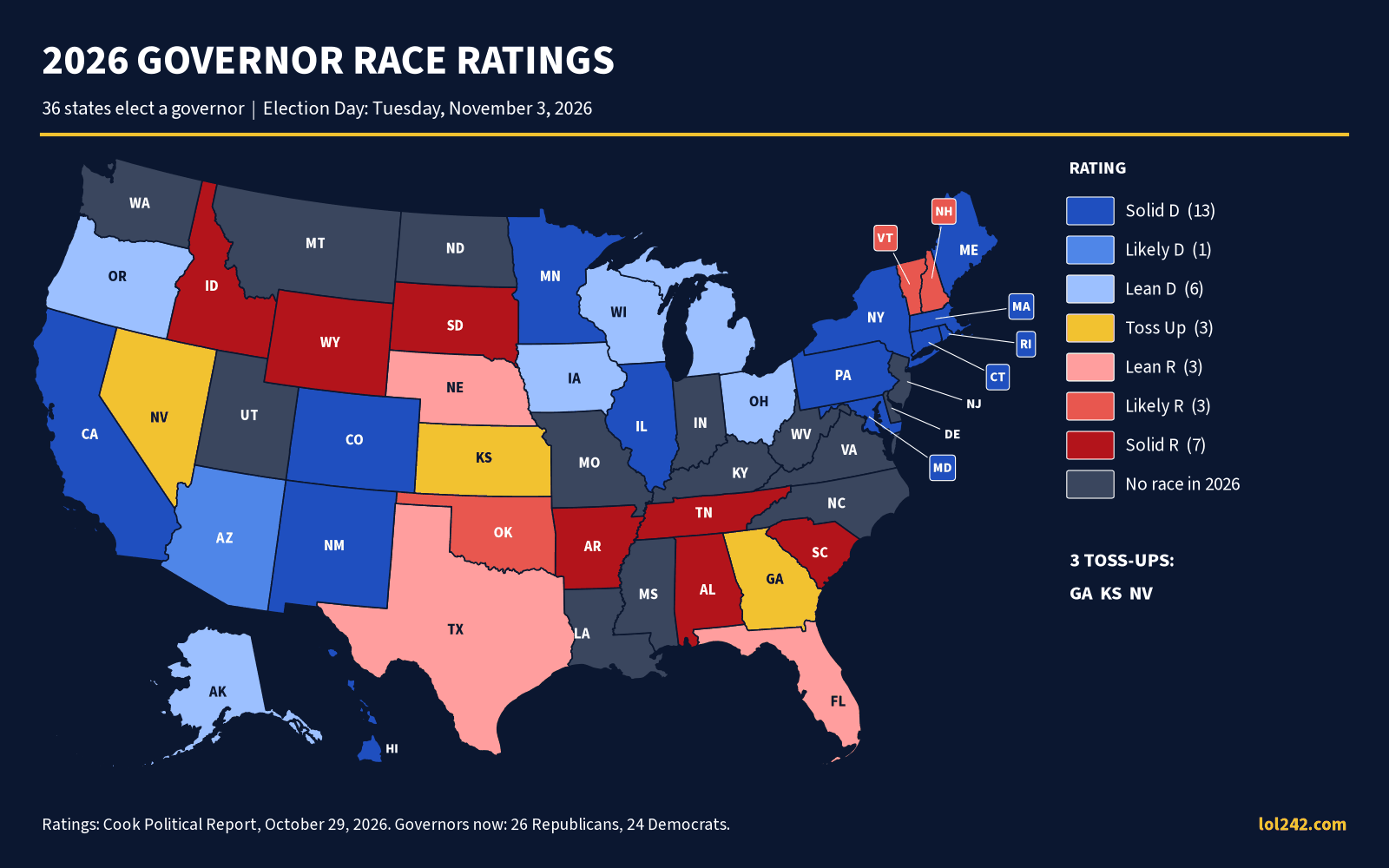
Republicans hold 26 governorships to Democrats’ 24. Cook says Democrats could pick up two to four, which would give them a majority of governorships for the first time since 2010. Cook’s three toss-ups:
- Georgia (open; Gov. Brian Kemp is term-limited): Keisha Lance Bottoms (D) vs. Rick Jackson (R). The polls split. State Navigate (Oct. 23–27) has Bottoms 50, Jackson 47, while an earlier Atlanta Journal-Constitution poll had Jackson 46, Bottoms 45.
- Kansas (open; Gov. Laura Kelly is term-limited): Cindy Holscher (D) vs. Ty Masterson (R). CNN/SSRS (Oct. 20–26): Masterson 50, Holscher 45.
- Nevada: Attorney General Aaron Ford (D) vs. Gov. Joe Lombardo (R). One partisan-sponsored poll (Oct. 20–25) has Ford 49, Lombardo 45.
Leaning Democratic:
- Arizona (Likely D): Rep. Andy Biggs (R) vs. Gov. Katie Hobbs (D)
- Iowa: Zach Lahn (R) vs. Rob Sand (D)
- Michigan: Jocelyn Benson (D) vs. Rep. John James (R)
- Ohio: Amy Acton (D) vs. Vivek Ramaswamy (R). Acton leads by 2.7 in the On Point Politics average, after a backlash over a Ramaswamy attack ad.
- Wisconsin: David Crowley (D) vs. Rep. Tom Tiffany (R), recently moved from Toss Up
- Also leaning Democratic: Alaska (open) and Oregon
Leaning Republican:
- Florida: Byron Donalds (R) vs. David Jolly (D). Donalds leads by 4.4 in the On Point Politics average.
- Texas: Gov. Greg Abbott (R) vs. Gina Hinojosa (D). Abbott leads by just 1.6 in the On Point Politics average.
- Nebraska: Gov. Jim Pillen (R)
Poll Watch: The national mood
The generic ballot asks voters which party they want running Congress, without naming any candidates. It’s the best single snapshot of the national mood, and right now it favours Democrats.
| Polling average | Updated | Result |
|---|---|---|
| Silver Bulletin | Oct. 29 | Democrats +8.7 |
| CNN Poll of Polls | Oct. 27 | D 52, R 43 |
| Ballotpedia (30-day average) | Oct. 28 | D 51, R 43 |
| FiftyPlusOne | Oct. 30 | D 52.3, R 43.3 |
| Recent poll | Dates | Dem | Rep |
|---|---|---|---|
| Reuters/Ipsos | Oct. 22–26 | 53 | 44 |
| Harvard-Harris | Oct. 24–26 | 52 | 48 |
| Economist/YouGov | Oct. 23–26 | 50 | 41 |
| CBS News | Oct. 21–23 | 53 | 45 |
| NPR/PBS News/Marist (likely voters) | Oct. 19–20 | 52 | 44 |
Inside the numbers: NPR/PBS News/Marist found independents favour Democrats by 13 points, and 71% of Democrats say they are very enthusiastic about voting, compared with 61% of Republicans.
A word of caution: Polls are a snapshot, not a crystal ball. CNN’s Harry Enten notes that in the Trump era, Republicans have beaten their final Senate polling averages in Trump-won states by about 4 points on average. Many races in this guide are closer than that.
On the trail
- Star power in Georgia. Former President Barack Obama rallied in metro Atlanta on Wednesday for Ossoff and Bottoms, after President Trump rallied in Georgia earlier this month for Collins and Jackson. Former Vice President Kamala Harris joins Ossoff in Fulton County today.
- The president’s closing tour. Trump abruptly cancelled rallies in Kansas and Iowa, then revived them for this weekend. He is also rallying in Florida today and holding telephone rallies in nearly 20 states.
- The early vote. More than 40 million ballots are already in. NPR/PBS News/Marist found early voters favour Democrats 68–31, while half of Republican likely voters plan to vote on Election Day. Expect the early count to shift as the night goes on.
- Record money. Campaigns and outside groups had spent a record $3.8 billion on political ads by October 12, led by the Senate races in Texas, Ohio and Michigan.
- A papal ballot. Chicago-born Pope Leo XIV voted by mail as a registered voter in New Lenox, Illinois. He is likely the first pope ever to vote in a US election.

How election night will unfold
- East to west. Polls close in waves. Parts of Indiana and Kentucky go first, then Georgia, Virginia, South Carolina and Vermont. Next comes a big eastern block including Florida, Pennsylvania, Maine, New Hampshire, North Carolina, Ohio and Michigan, followed by Texas, Kansas, Iowa, Nebraska and Wisconsin. Nevada and the West Coast come after that, and Hawaii and Alaska finish the night.
- Who calls the races. lol242 will report a winner only after the Associated Press or another major decision desk projects one. “Too early to call” means not enough votes have been counted. “Too close to call” means the votes are in and the race is tight.
- Expect some waiting. A Supreme Court ruling in June lets states count mail ballots postmarked by Election Day that arrive afterwards, and about 14 states plus Washington, D.C. do so. Alaska and Maine use ranked-choice voting, and mail ballots in Nevada and California can take days to count.
- Georgia’s December 1 runoff. It applies to any Georgia race where no candidate wins a majority.
- Leads can swing. Early votes and Election Day votes are often counted at different stages and can lean in different directions, so an early lead isn’t a win.
Coming up on US Election Watch
- Saturday, October 31: Senate deep dive
- Sunday, November 1: The House and the redistricting wars
- Monday, November 2: Governors, plus our Florida Corner and how to follow the results from The Bahamas
- Tuesday, November 3: Election Day edition and live updates
- Wednesday, November 4: What’s been called, and what’s still being counted
About US Election Watch: This series is nonpartisan. Candidates are listed alphabetically. Race ratings come from independent forecasters. Each poll shows its dates, and a (D) or (R) after a pollster’s name marks a Democratic- or Republican-aligned firm. Images labelled “AI-generated illustration” are artwork, not photographs, and do not depict real people. Candidate photos are credited beneath each image.
Corrections: None so far. Spotted an error? Tell us and we’ll fix it and note the change here.
Sources: Cook Political Report; Sabato’s Crystal Ball (University of Virginia Center for Politics); Silver Bulletin; CNN; CNN Poll of Polls; Ballotpedia; FiftyPlusOne; On Point Politics; NPR; PBS News; NPR/PBS News/Marist Poll; ABC News; Reuters; AdImpact; Congress Countdown; Newsweek; NewsNation; Decision Desk HQ; Inside Elections; Associated Press; WFAE; Office of the Governor of South Carolina; Atlanta Journal-Constitution; Atlanta News First; Georgia Recorder; U.S. Department of State; The Nassau Guardian; Caribbean National Weekly; University of Miami Inter-American Law Review; State Navigate. Polls cited: CNN/SSRS, Fox News, Emerson College, Washington Post–Schar School, Data for Progress, InsiderAdvantage, Trafalgar Group, Quantus Insights, Upswing Research, Cook Political Report/New River, Reuters/Ipsos, Harvard-Harris, Economist/YouGov, CBS News.
Related stories
Bahamas Evening News: King Charles III expected for first visit in 53 years; trained teachers’ top pay rises to $54,000
King Charles III was expected to arrive in New Providence today for his first…

Bahamas Evening News: $1.1 billion bond sold at lower rate; Pintard warns PM not to “gaslight” Grand Bahamians
The Government has sold a $1.1 billion international bond at a lower interest rate…
Bahamas Daily Briefing: Davis proposes one governing framework for all of Grand Bahama; police investigate Lincoln Boulevard killing
Prime Minister Philip Davis has published a Green Paper proposing to replace Freeport's separate…

Join the conversation
No comments yet. Be the first.