Bahama Drama

Past Post History to Date

6,047 posts

3 AMERICAN SERVICE MEMBERS KILLED AND 5 SERIOUSLY WOUNDED SO FAR IN…

3 AMERICAN SERVICE MEMBERS KILLED AND 5 SERIOUSLY WOUNDED SO FAR IN IRAN WAR

The situation in Iran is extremely volatile and has escalated dramatically into open conflict as of March 1, 2026.

By: Michael Elijah Muhammad Clare

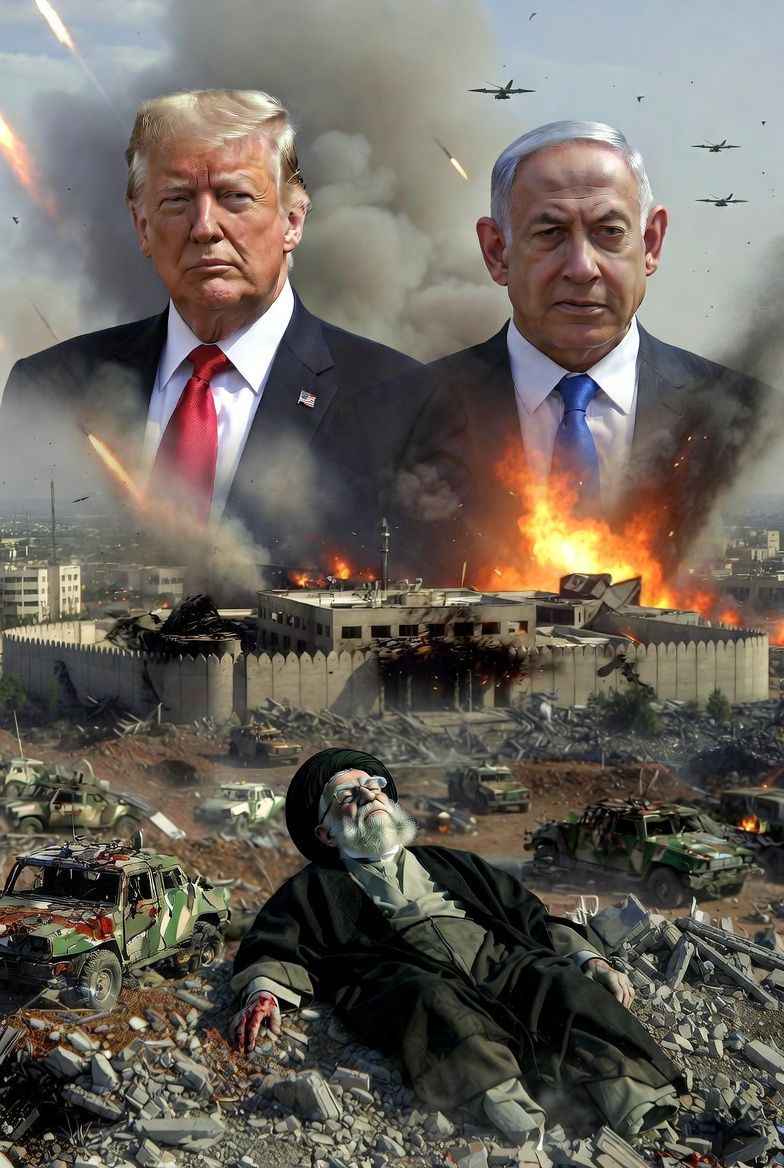
The most significant development is the death of Iran’s Supreme Leader, Ayatollah Ali Khamenei, who was killed in joint US-Israeli airstrikes that began on February 28, 2026 (local time). Iranian state media, along with confirmations from US and Israeli officials including President Donald Trump, verified his death during the initial wave of attacks. This marks the first time Iran’s supreme leader has been killed in such circumstances, ending his 36-year rule.

The US and Israel launched large-scale strikes (referred to as Operation Epic Fury by the US and similar operations by Israel) targeting Iranian military sites, missile infrastructure, leadership compounds, and remnants of nuclear facilities. Strikes continued into a second day (March 1), including renewed attacks on Tehran itself, described as hitting “the heart of Tehran.”

Reports indicate hundreds of casualties in Iran, with claims from Iranian sources of civilian deaths, including an alleged strike on a girls’ elementary school in southern Iran killing dozens of students. Israel claims to have killed a significant portion of Iran’s senior military leadership.In retaliation, Iran has launched multiple waves of ballistic missile and drone attacks targeting:Israel (including strikes causing deaths in areas like Beit Shemesh and near Jerusalem, with at least 9-10 reported killed in Israel overall).
US military bases across the region.

Other locations in Gulf countries (e.g., UAE, Qatar, Bahrain, Kuwait, Saudi Arabia, Oman, Jordan, Iraq), with incidents like airport disruptions in Dubai/Abu Dhabi, a tanker hit off Oman/Iran coast, and civilian impacts.

The conflict has disrupted regional air travel, oil shipments, and raised fears of further escalation, including potential threats to the Strait of Hormuz. Global oil prices are under pressure due to these risks.Inside Iran.

An interim leadership council has been announced to manage affairs temporarily, including figures like President Masoud Pezeshkian, Ayatollah Alireza Arafi, and others (with veteran politician Ali Larijani emerging as a key power broker).
Iranian officials, including Foreign Minister Abbas Araghchi, have indicated a new supreme leader could be selected in “a day or two” and condemned the strikes as a “declaration of war” and “crime.”
Iran has begun a 40-day mourning period.

Public reactions are deeply divided: some areas show grief and regime support, while others (especially opposition-leaning parts) feature celebrations, street dancing, and toppled monuments, highlighting internal fault lines.

The stated US rationale centers on preventing Iran’s nuclear program from advancing (with strikes hitting remaining nuclear-related sites after earlier 2025 attacks degraded key facilities like Natanz and Fordow), though the scope has expanded to regime-threatening operations.

President Trump has urged Iranians to “take over your government” and indicated strikes would continue as needed.The situation remains fluid with ongoing strikes, retaliations, and regional spillover (including deadly protests at a US consulate in Pakistan’s Karachi killing at least 9). International reactions vary widely, with fears of a broader war.
Comment

ARE WE LOOKING AT THE BRINGING OF WWIII?

ARE WE LOOKING AT THE BRINGING OF WWIII?

February 28, 2026
Time: 7:49PM – EASTERN TIME
THE MIDDLE EAST ERUPTS

HAPPENING NOW!

By: Michael Elijah Muhammad Clare

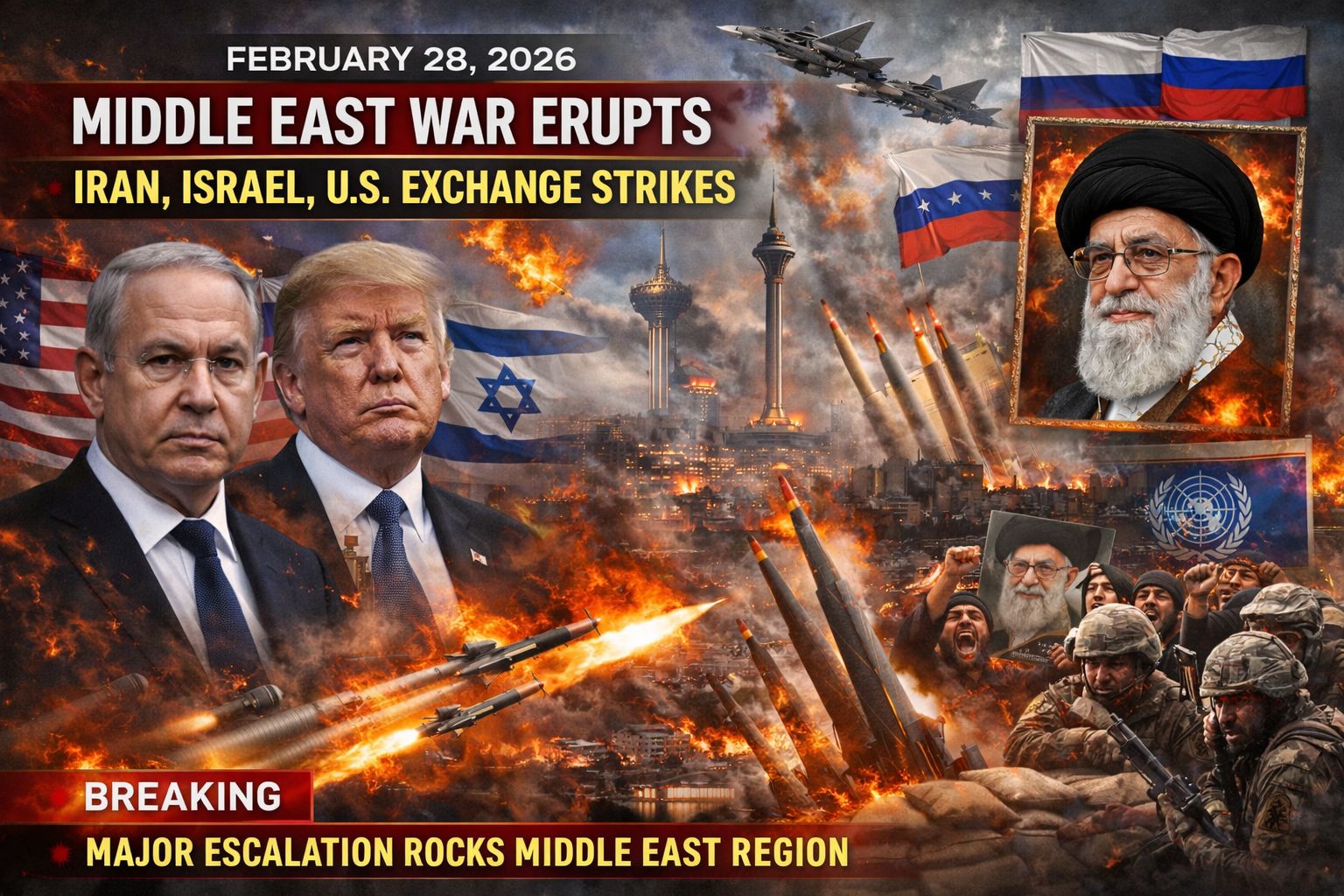
February 28, 2026 — What had been years of rising tension exploded into open warfare today as coordinated military strikes by the United States and Israel hit multiple targets across Iran. The operation, reportedly months in planning, marks one of the most dramatic escalations in modern Middle Eastern history.

Israeli officials confirmed that the joint offensive targeted Iranian military leadership and nuclear infrastructure. Israeli Prime Minister Benjamin Netanyahu described the operation as a decisive action against what he called an existential threat. U.S. President Donald Trump stated that multiple senior Iranian leaders were killed in the strike.

Among those reportedly killed is Iran’s Supreme Leader, Ali Khamenei. Iranian authorities have not formally confirmed his death, but significant damage has been reported at his Tehran compound, and no public appearance or statement has been issued from him.

Within hours of the strikes, Iran launched a large-scale retaliation. Missiles and drones were fired toward Israel, and attacks targeted U.S. military bases across the region, including installations in Qatar, Kuwait, the United Arab Emirates, Saudi Arabia, Iraq, Bahrain, and Jordan. Several Gulf nations reported impacts on infrastructure, and air defense systems were activated throughout the region.

Iranian officials declared there would be “no leniency” in their response and warned that any nation assisting Israel or the United States would be considered a target.

The global response has been immediate and intense. The United Nations Secretary-General called for restraint and warned of catastrophic regional consequences. European governments urged de-escalation and emergency diplomacy.

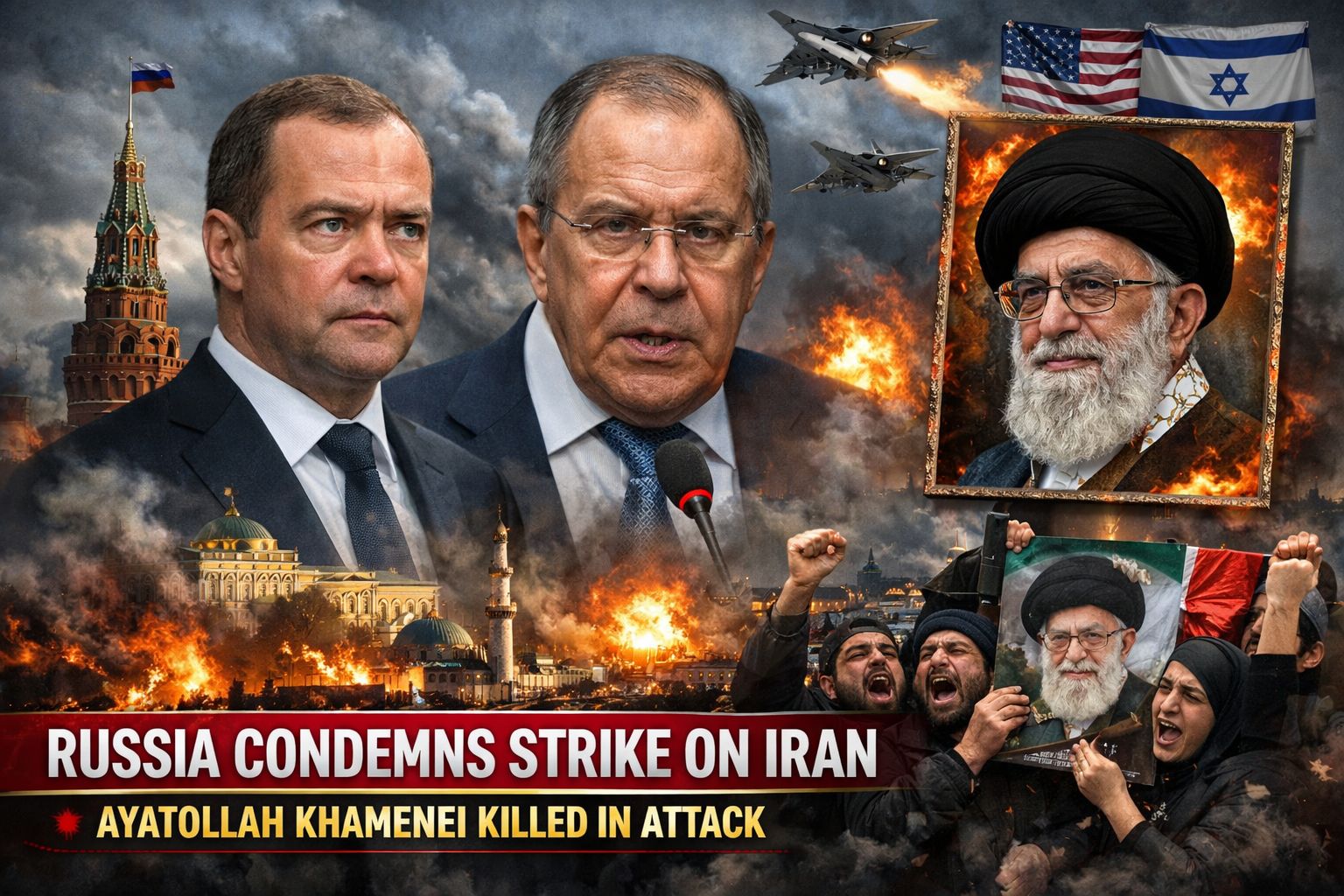
Russia strongly condemned the U.S.–Israeli operation, calling it an act of armed aggression against a sovereign nation. Russian officials demanded an emergency session of the United Nations Security Council and warned that the attack risks plunging the region into wider war. Moscow has not announced military intervention but has signaled diplomatic and strategic support for Iran.

Hospitals in Iran report significant casualties following the strikes, while Israel has activated nationwide air defense measures in response to incoming Iranian missiles. U.S. forces across the Middle East remain on high alert.

Energy markets are reacting rapidly as concerns grow over potential disruption to oil shipments through the Strait of Hormuz, one of the world’s most critical energy corridors. Analysts warn that prolonged fighting could have immediate global economic consequences.

This conflict now involves multiple nations, direct state-to-state missile exchanges, and the potential for further expansion. The coming days will determine whether this remains a contained but intense regional war or expands into a broader geopolitical confrontation.

The world is watching as events continue to unfold.

ARE WE LOOKING AT THE BRINGING OF WWIII?

February 28, 2026
Time: 7:49PM - EASTERN TIME
THE MIDDLE EAST ERUPTS

HAPPENING NOW!

By: Michael Elijah Muhammad Clare 

February 28, 202
Comment

Moscow Reacts With Fury to Strike on Iran and Death of Ayatollah

Moscow Reacts With Fury to Strike on Iran and Death of Ayatollah

February 28, 2026

By: Michael Elijah Muhammad Clare

The government of Russia has issued a sharp and forceful response following the joint military strike carried out by Israel and the United States that reportedly resulted in the death of Iran’s Supreme Leader, Ali Khamenei.

In an emergency statement from Moscow, Russian officials condemned the operation as an act of “armed aggression” against Iran and warned that the consequences could destabilize the entire Middle East and beyond. The Kremlin described the strike as a violation of international law and accused Washington and Jerusalem of deliberately escalating tensions in an already volatile region.

Russian Foreign Minister Sergey Lavrov stated that the attack undermines global diplomatic efforts and could trigger a broader regional war. He emphasized that targeting the leadership of a sovereign nation sets what Moscow considers a dangerous international precedent.

Former Russian President and current Security Council official Dmitry Medvedev delivered an even harsher reaction, accusing the West of using negotiations as a cover for military force. In pointed remarks, he criticized U.S. President Donald Trump, questioning claims of pursuing peace while authorizing decisive military action.

While Moscow has strongly condemned the strike, it has not announced any immediate military involvement. Instead, Russian leadership is calling for emergency international consultations and a halt to further escalation. Analysts believe Russia is weighing its next move carefully, balancing its strategic partnership with Tehran against the risks of direct confrontation with Washington.

The killing of Iran’s Supreme Leader marks one of the most dramatic turning points in modern Middle Eastern geopolitics. With alliances shifting and global powers taking sides, the world now watches closely to see whether diplomatic channels can prevent a larger conflict from erupting.

For now, Moscow’s message is unmistakable: Russia opposes the strike, rejects the justification provided by the United States and Israel, and warns that the fallout could reshape global power dynamics in ways no nation can fully control.

Moscow Reacts With Fury to Strike on Iran and Death of Ayatollah

February 28, 2026

By: Michael Elijah Muhammad Clare 

The government of Russia has issued a sharp and forceful re
Comment

BREAKING — WORLD SHOCKING NEWS

BREAKING — WORLD SHOCKING NEWS

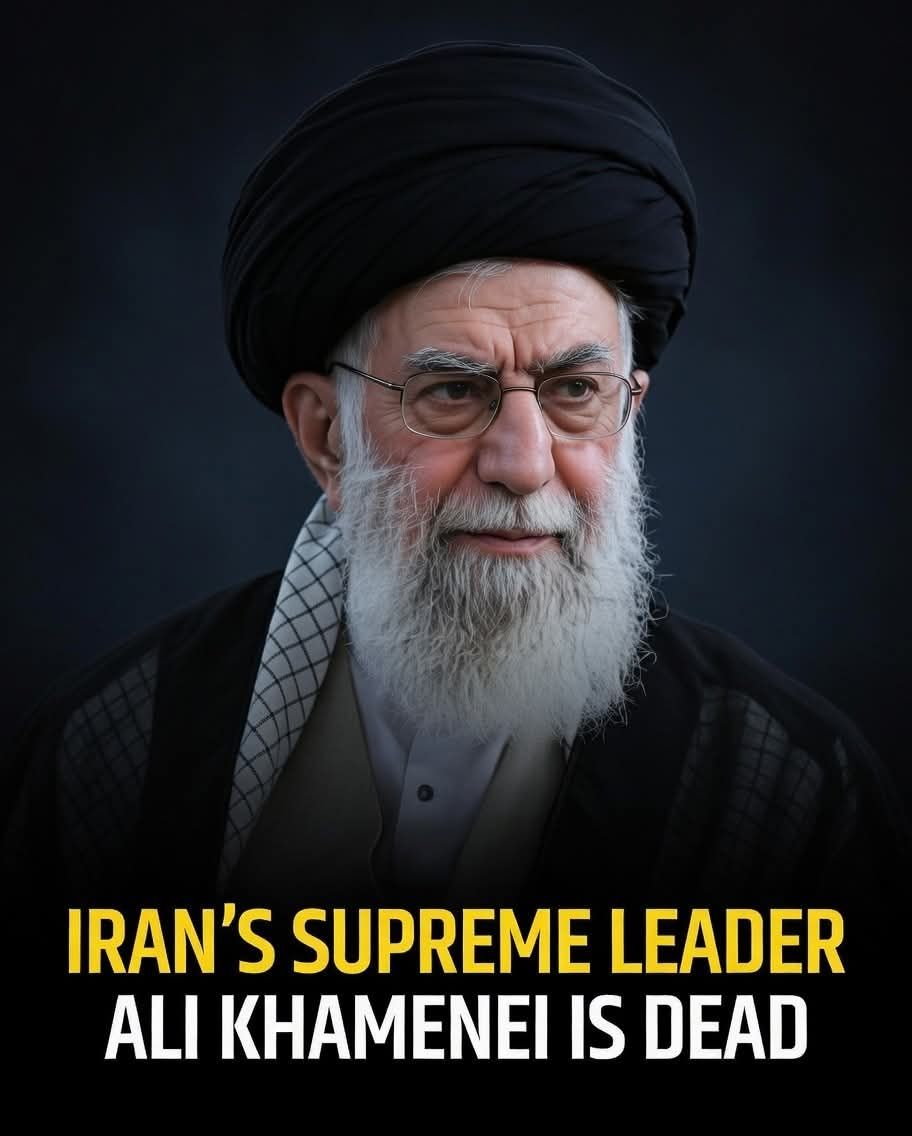
IRAN’S SUPREME LEADER AYATOLLAH ALI KHAMENEI HAS BEEN CONFIRMED KILLED IN U.S.–ISRAEL STRIKES

By: Michael Elijah Muhammad Clare

Tehran / Jerusalem / Washington, February 28, 2026 – In an unprecedented and historic escalation of conflict in the Middle East, Iran’s Supreme Leader Ayatollah Ali Khamenei has been reported dead after coordinated military strikes by the United States and Israel targeted the heart of Iran’s leadership this weekend. Multiple senior Israeli officials say that Khamenei’s body has been found and confirmed dead, bringing one of the most dramatic turns in decades of geopolitical tension.

The joint assault, part of what U.S. and Israeli forces are calling a decisive offensive against the Iranian regime, struck hundreds of strategic targets across Iran early on Saturday, including the supreme leader’s fortified compound in Tehran. Israeli Prime Minister Benjamin Netanyahu declared there were many signs and confirmed reports indicating that Khamenei was killed during the operation, and Israeli intelligence sources have stated his body was recovered from the wreckage.

U.S. officials, including President Donald Trump, backed the confirmation in statements following the news, describing the operation as a significant blow to Iran’s political and military command and asserting that most of Iran’s senior leadership was eliminated.

THE MILITARY OPERATION

The offensive involved massive air and missile strikes by U.S. and Israeli forces that hit:

The Supreme Leader’s complex in central Tehran, obliterating fortified structures where Khamenei was believed to be present.
Multiple Iranian military and nuclear facilities tied to ballistic missile programs and leadership command centers.
Key Revolutionary Guard and government meeting sites, resulting in the deaths of several top Iranian commanders and officials.

In television and national addresses, Israeli and U.S. leaders called on the Iranian people to rise up and reclaim their country from decades of authoritarian rule, declaring the strikes a turning point in the region’s security landscape.

IRAQ, GULF STATES, AND RETALIATION

Within hours of the attack, Iran launched heavy missile and drone strikes across the region targeting Israeli territory and U.S. military installations in Gulf nations hosting American forces. Explosions and air raid sirens were reported across multiple countries, plunging the Middle East into intense conflict.

Oil markets plunged on fears of broader instability, and international leaders urgently called for an emergency session of the United Nations Security Council amid fears of a full-scale regional war.

GLOBAL IMPACT

Governments around the world are scrambling to respond. Financial markets are volatile, global diplomacy has been mobilized, and citizens in multiple nations are watching the situation unfold with alarm. The geopolitical balance in the Middle East has fundamentally shifted within hours.

This story is still developing. Stay tuned for live updates as more information becomes available.

There will definitely be a regional war now because of his death 💀☠️

Brace yourself and welcome to the beginning of WW3!

BREAKING — WORLD SHOCKING NEWS

IRAN’S SUPREME LEADER AYATOLLAH ALI KHAMENEI HAS BEEN CONFIRMED KILLED IN U.S.–ISRAEL STRIKES

By: Michael Elijah Muhammad Clare 

Tehran / Jerusale
Comment

HAPPY BIRTHDAY to Bahama Drama’s favorite actress Tasha Smith 🎉🔥

HAPPY BIRTHDAY to Bahama Drama’s favorite actress Tasha Smith 🎉🔥

Before Hollywood started celebrating “strong female leads,” she was already living it, on screen and off.

Many remember her unforgettable performance in Why Did I Get Married?, delivering fire, truth, and fearless energy in every scene. But what makes her story even more powerful is what happened beyond the spotlight.

She didn’t just perform.
She evolved.

Transitioning behind the camera, Tasha became a respected director and acting coach, mentoring some of the biggest talents in the industry. She moved from commanding scenes to commanding entire sets. That’s not just growth, that’s elevation.

Her journey wasn’t built on overnight fame. It was forged through resilience, faith, healing, and transformation. She has spoken openly about overcoming trauma and turning pain into purpose. That kind of transparency doesn’t just inspire, it builds legacy.

In an industry that has often tried to limit and label Black women, Tasha refused to be boxed in. She brought strength, depth, humor, vulnerability, and authority and then opened doors for others to walk through.

That’s impact.
That’s leadership.
That’s legacy work.

Today we celebrate not just the actress…
But the director.
The mentor.
The survivor.
The visionary.

Happy Birthday to a woman who proves that reinvention is power and growth is the real glow-up. 👑✨

Drop your favorite Tasha Smith role below ⬇️

HAPPY BIRTHDAY to @[100023394293756:2048:Bahama Drama]'s favorite actress Tasha Smith 🎉🔥

Before Hollywood started celebrating “strong female leads,” she was already living it, on
Comment

GLOBAL SHOCKWAVES: US AND ISRAEL STRIKE IRAN

GLOBAL SHOCKWAVES: US AND ISRAEL STRIKE IRAN

WHAT IT MEANS FOR THE BAHAMAS AND THE WORLD

By: Michael Elijah Muhammad Clare

February 28, 2026

Today, coordinated airstrikes by the United States and Israel targeted sites inside Iran, marking one of the most serious escalations in the region in years. The strikes reportedly focused on military and strategic infrastructure tied to Iran’s defense and nuclear capabilities. Within hours, Iran launched retaliatory missile and drone attacks toward Israeli territory and U.S. military positions across the Gulf.

Airspace restrictions were rapidly imposed across parts of the Middle East. Oil markets reacted immediately. Global leaders called emergency meetings. The situation remains fluid, and further retaliation remains a real possibility.

This is not a contained regional event. The impact is already global.

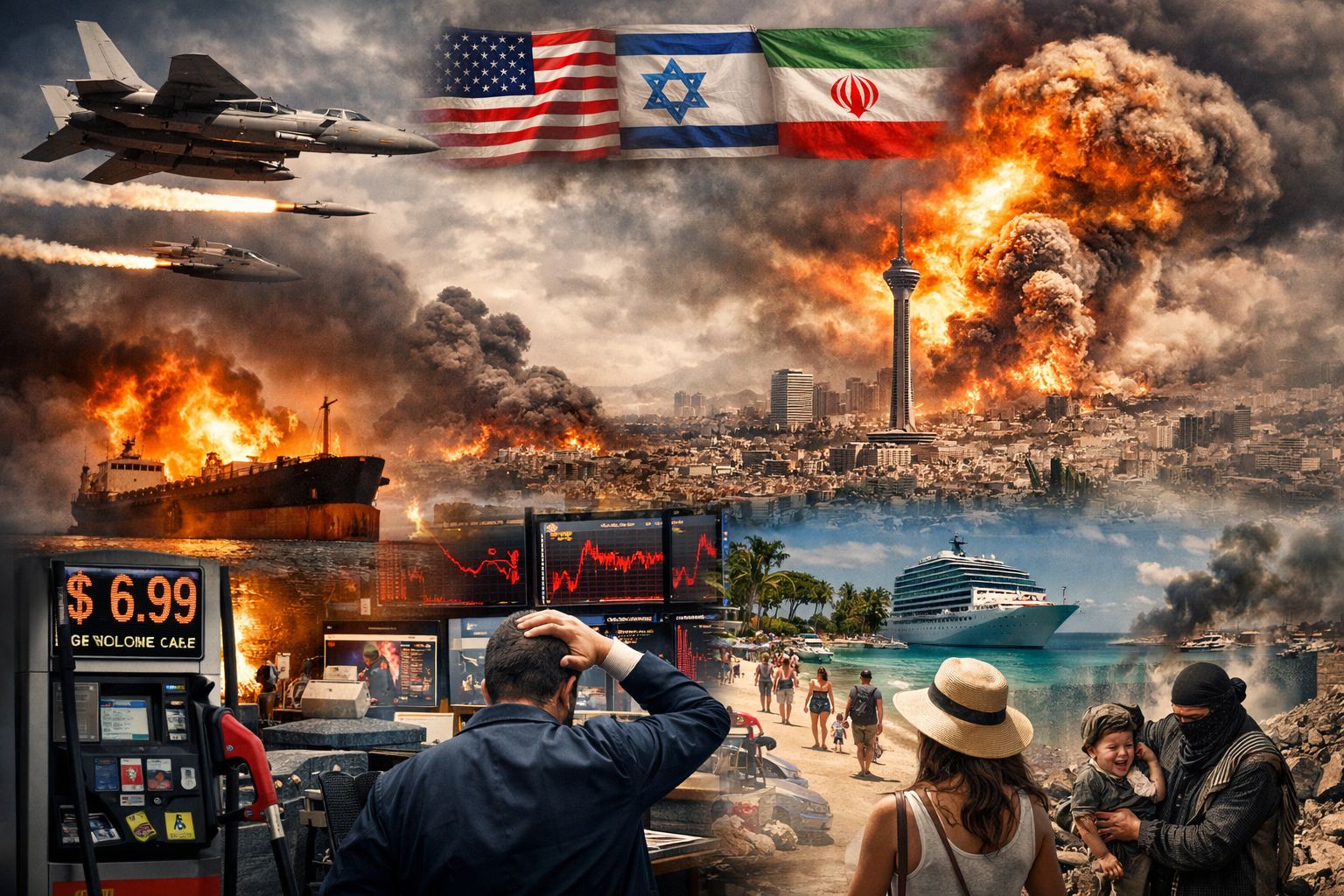
For the Bahamas, the battlefield may be far away, but the economic consequences are not. The first pressure point is energy. Any conflict involving Iran threatens oil transport routes in the Gulf region. A disruption, or even the fear of one, sends oil prices climbing. The Bahamas depends heavily on imported fuel for electricity, transportation, and commerce. Higher global oil prices mean rising electricity bills, increased gasoline costs, and more expensive imported goods.

Food prices could also rise. The Bahamas imports a large percentage of its food supply. When shipping insurance rates increase and fuel becomes more expensive, the added cost reaches grocery shelves quickly. Inflation is often the silent casualty of war, even for nations not directly involved.

Tourism may also feel the strain. Global uncertainty tends to slow travel bookings. Airlines adjust routes. Cruise companies reassess itineraries. While the Bahamas remains geographically safe, worldwide instability can influence traveler confidence.

In the United States, military involvement means heightened security measures at home and abroad. Defense assets are mobilized. Political tensions rise domestically. Markets experience volatility. Energy costs affect consumers immediately. The U.S. economy is large and resilient, but prolonged engagement overseas carries financial and political weight.

Canada faces similar economic ripple effects. Though not directly engaged in combat, Canada’s markets, energy exports, and trade flows are tied closely to global stability. Higher fuel prices may benefit certain sectors, but inflationary pressure and global uncertainty would impact households and businesses.

In Pakistan, the situation is especially delicate. Millions of Pakistani workers are employed across Gulf nations. If the conflict spreads or destabilizes those economies, remittances sent back home could decline sharply. Political and sectarian tensions may also intensify regionally.

India depends heavily on Middle Eastern energy imports. Any sustained spike in oil prices places pressure on its vast population and economic growth. Aviation routes are already being adjusted as airlines avoid conflict airspace, increasing operational costs and delays.

For China, the stakes are strategic and economic. China relies significantly on Middle Eastern energy supplies. Disruptions threaten manufacturing output and global trade balance. At the same time, Beijing may attempt diplomatic positioning to expand its influence while protecting its supply chains.

Across the Middle East, civilians brace for uncertainty. In nations like Iraq, Syria, and Lebanon, where instability has lingered for years, fears are rising that broader conflict could spill across borders.

The world is more interconnected than ever before. A strike in Tehran influences fuel prices in Nassau. A missile launch in the Gulf shakes stock markets in New York and Toronto. Airspace closures in the Middle East disrupt flights across Asia and Europe.

Today’s events mark a turning point. Whether this remains a limited exchange or escalates into a wider regional war depends on the next decisions made by leaders in Washington, Jerusalem, and Tehran.

For now, the world watches. Markets fluctuate. Militaries remain on alert. And small nations like the Bahamas prepare for the economic aftershocks of a conflict unfolding thousands of miles away.

The situation continues to develop.

GLOBAL SHOCKWAVES: US AND ISRAEL STRIKE IRAN 

 WHAT IT MEANS FOR THE BAHAMAS AND THE WORLD

By: Michael Elijah Muhammad Clare 

February 28, 2026

Today, coordinated airstrikes by
Comment