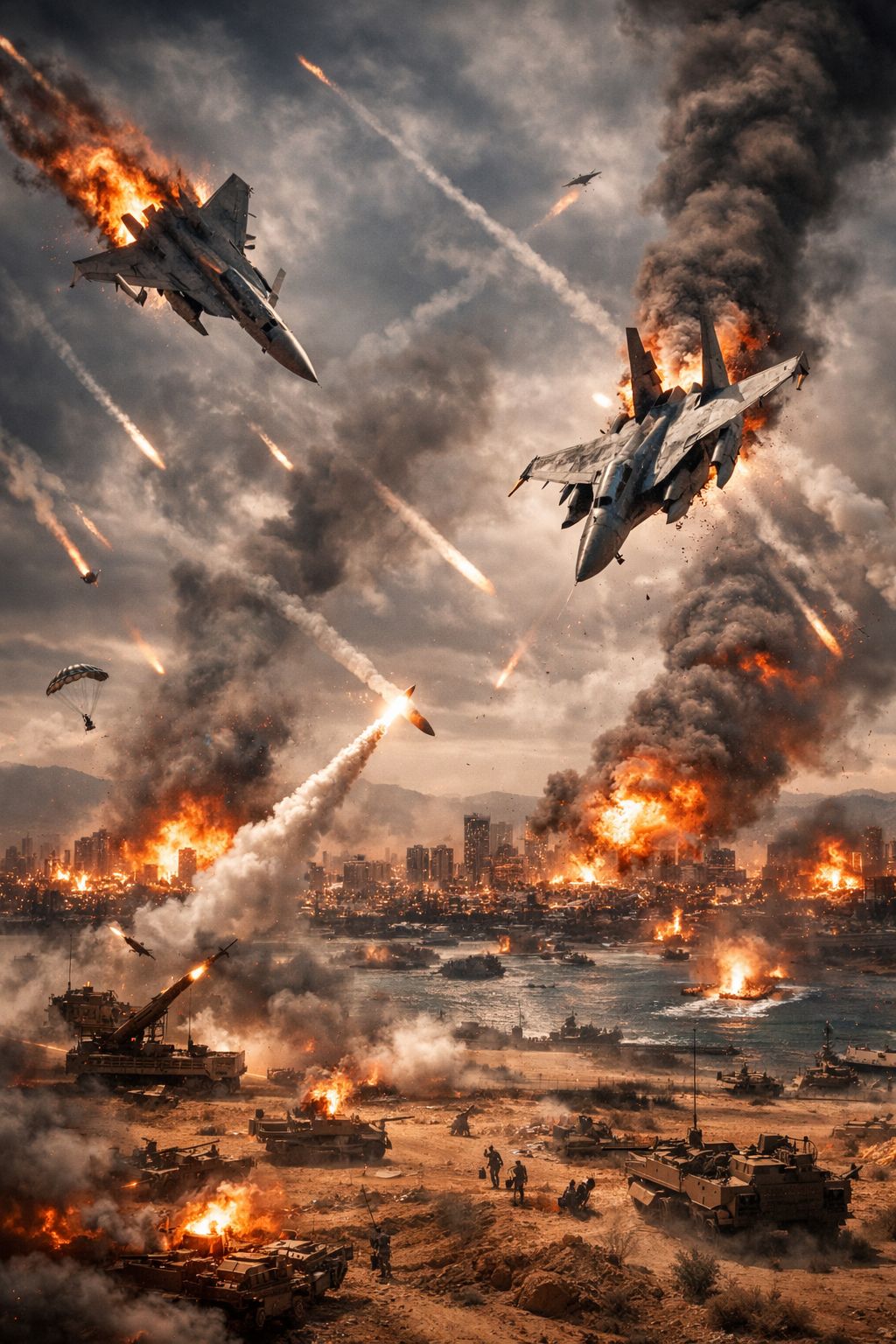
COI Leader Lincoln Bain and his team were honored to meet with Deputy…
COI Leader Lincoln Bain and his team were honored to meet with Deputy Chief of Mission Kimberly Furnish and members of the U.S. Embassy team. The meeting provided a valuable opportunity for constructive dialogue, the exchange of views, and discussion on matters of mutual interest. COI appreciates the engagement and remains committed to meaningful conversations and partnerships that support progress, understanding, and the best interests of the people we serve.
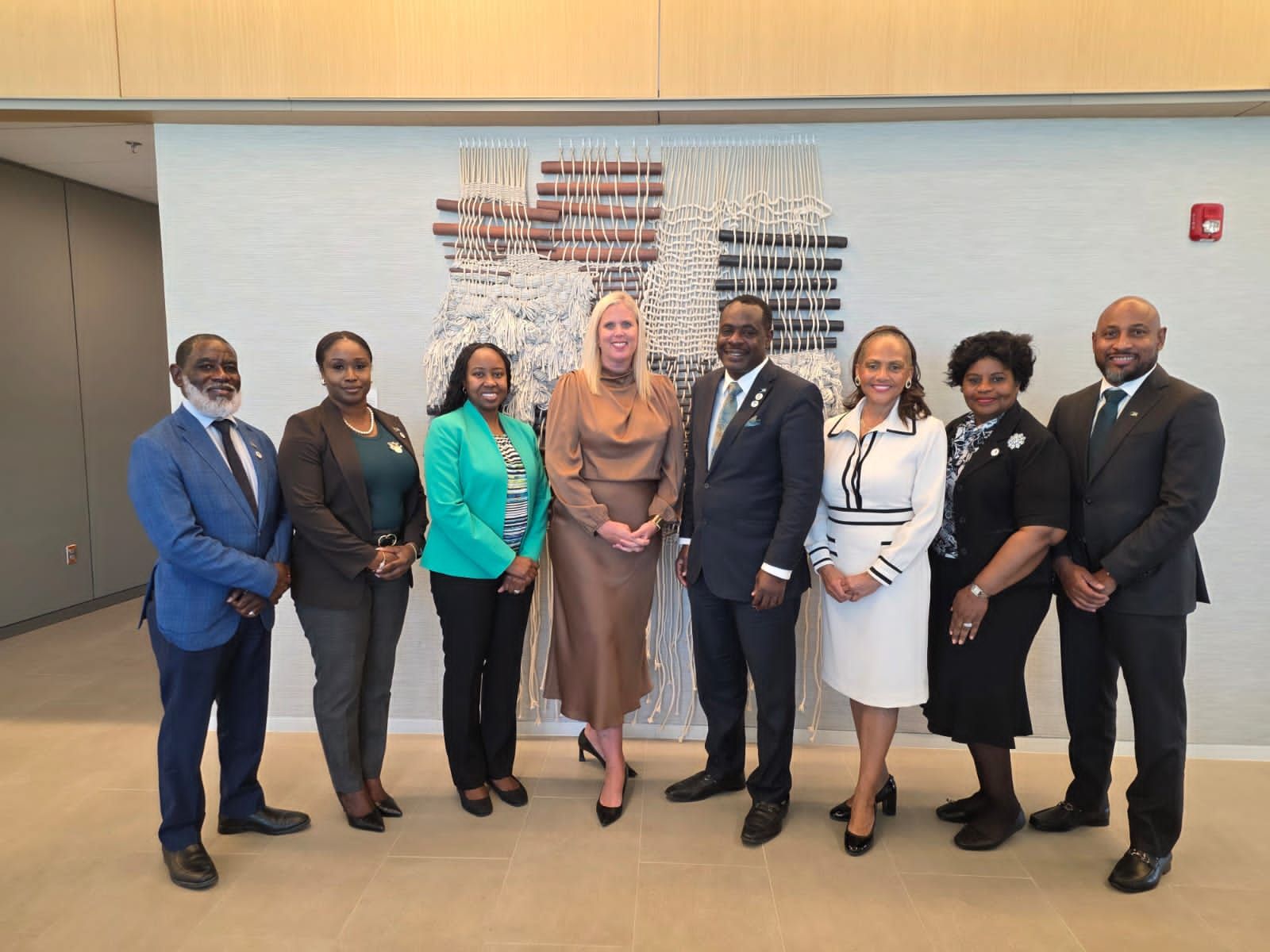
The headlines are no longer just political.
The headlines are no longer just political. They are biblical.
By: Michael Elijah Muhammad Clare
The book of Revelations
As missiles move, alliances shift, and nations posture for dominance, many believers are turning to the final book of Revelation and asking a serious question: are we watching prophecy unfold in real time?
The Holy Bible speaks repeatedly of wars, rumors of wars, rising empires, a trembling Middle East, and a global realignment of power before the end of the age. Today, with tensions surrounding Iran, the spiritual significance of Jerusalem, the military influence of the United States, the ambitions of China, the question of Taiwan, and instability touching Pakistan and Iraq, the parallels are impossible to ignore.
Revelation 6 describes the Four Horsemen, conquest, war, famine, and death, riding across the earth. The second horseman is specifically given power to take peace from the earth so that people would kill one another. This is not described as a small regional dispute. It is global in reach.
When conflict erupts in the Middle East, it never stays contained. Oil markets react. Military alliances activate. Superpowers choose sides. The entire planet feels it. Revelation does not describe isolated skirmishes, it describes a chain reaction.
Revelation 9 speaks of a massive army rising from the east. Revelation 16:12 mentions “kings from the east.” For decades that passage was abstract. Today, eastern superpowers are no longer secondary players they are central to the global balance of power.
Then there is Jerusalem.
Zechariah 12:3 says Jerusalem will become a “burdensome stone” for all nations. Revelation 11 speaks of the holy city being trampled by the nations. No other city on earth carries the prophetic gravity that Jerusalem does. Every major religion claims significance there. Every major power has an opinion about it. Every regional war somehow circles back to it.
Iran’s hostility toward Israel, America’s strategic partnership with Israel, China’s growing influence in the region, and the shifting alliances between Muslim-majority nations all fit into a larger prophetic framework that has existed for over two thousand years.
Revelation 13 introduces the idea of a coming global system, political, economic, and spiritual, that consolidates power in unprecedented ways. We are living in an era where global coordination, digital currency systems, surveillance technology, and multinational governance structures are not theory but reality. The infrastructure for a unified global authority is now technically possible.
Revelation 16 describes Armageddon, a gathering of the nations for a final confrontation. It does not describe random chaos. It describes alignment. Strategic positioning. A slow march toward a decisive global conflict centered in the Middle East.
Consider the pattern:
Regional war escalating beyond borders.
Major powers positioning militarily.
Eastern and Western blocks forming.
Jerusalem remaining central.
Economic tremors affecting the whole earth.
This is not fear-driven speculation. It is pattern recognition.
Even Jesus in Matthew 24 warned of wars and rumors of wars, nation rising against nation, and increased turmoil as birth pains, not the end immediately, but signs that something is building.
Skeptics say every generation has thought it was the last. That is true. But no generation before ours has seen nuclear capability in so many hands, instant global communication, military reach across continents within hours, the geopolitical convergence of East and West over Jerusalem, and the technological foundation for a single economic system.
Revelation was written when Rome ruled the world. There were no satellites, no global markets, no intercontinental missiles. Yet it described a world interconnected enough for all nations to be drawn into one final conflict.
That level of foresight forces a deeper question: coincidence, or divine revelation?
When Iran threatens Israel, when America responds, when China watches Taiwan, when Pakistan and Iraq balance their positions, when oil routes and trade corridors become battlegrounds, the world is not just shifting politically. It is moving prophetically.
The Bible does not give a date. It gives a trajectory.
Revelation is not merely about destruction. It ends with restoration, a new heaven and a new earth. But before renewal comes shaking. Before peace comes confrontation.
Are we at the climax? No one can say with certainty.
But the convergence is real.
The alignment is visible.
The tension is escalating.
And for those who read Revelation carefully, the events unfolding across the Middle East and the rising power struggle between East and West look less like random history and more like a script moving toward its final act.
The question is no longer whether the Bible speaks about war.
The question is whether we are finally living inside the chapters it warned us about.
If you don’t know God, maybe it’s time that you got down on your knees and humbled yourself before it’s too late for you…
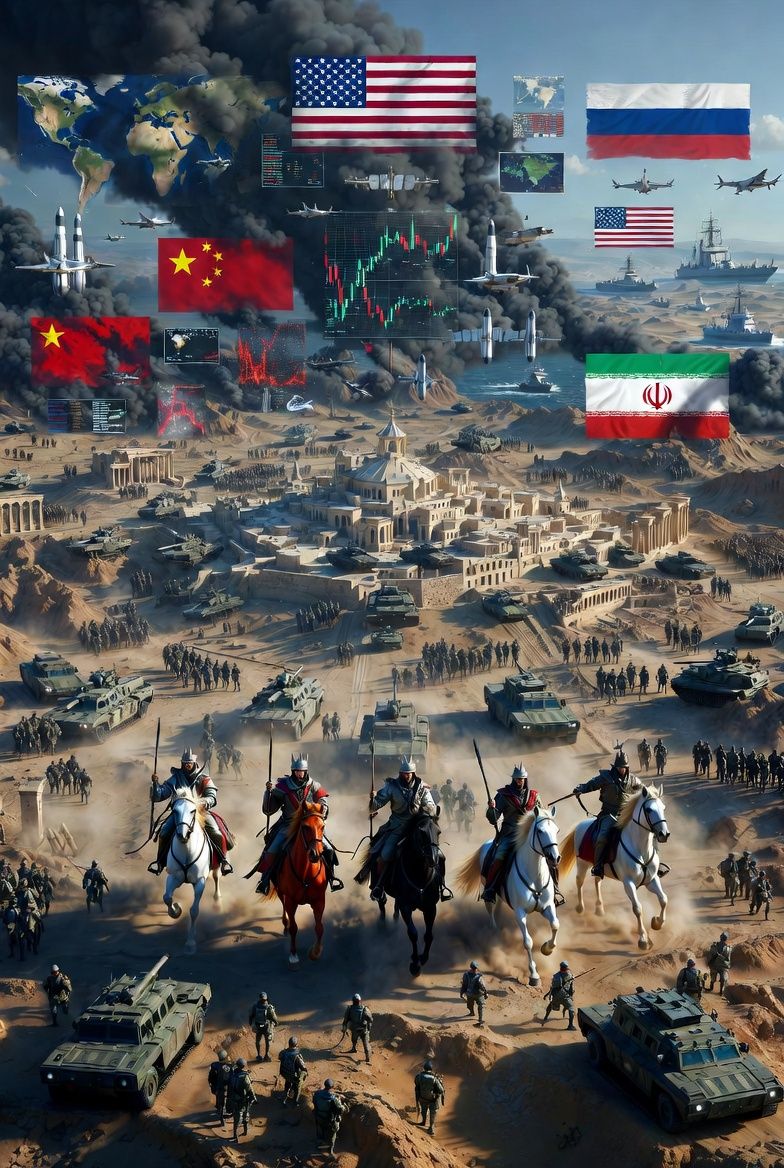
The Doomsday Clock
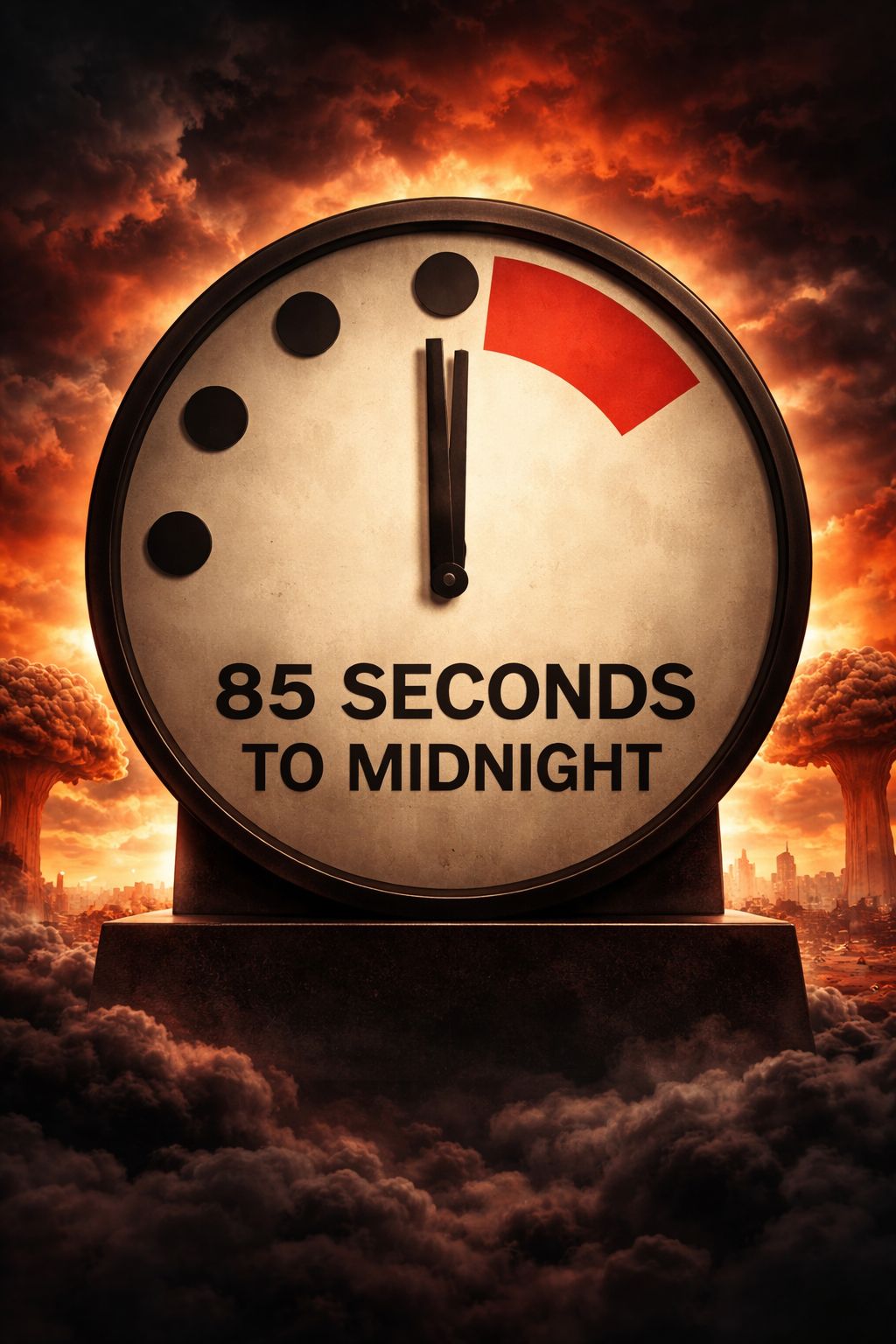
Xi Jinping and China’s good fortune
Xi Jinping and China’s good fortune
By: Jason McGraw
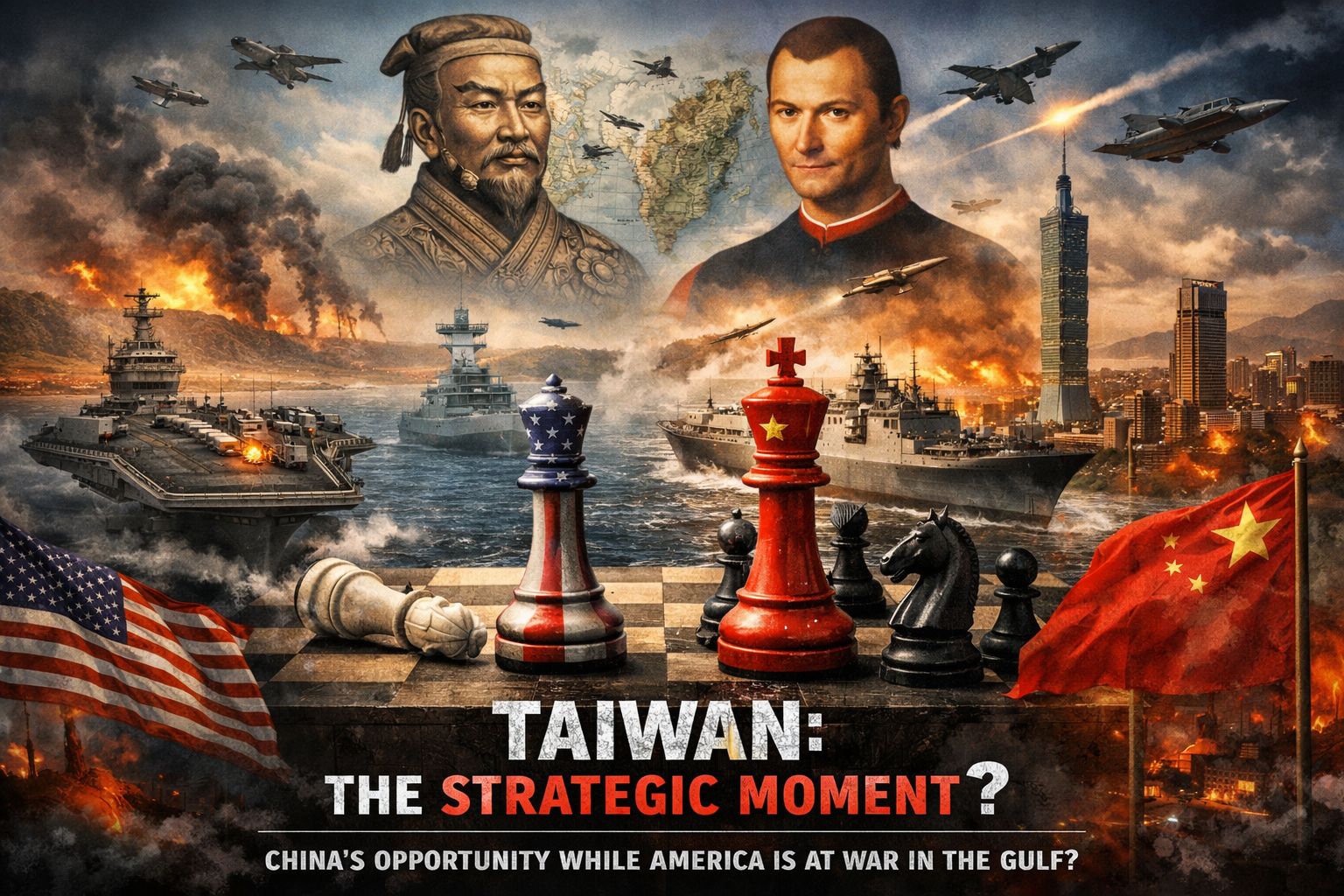
History is not kind to those who wait for perfect timing. In the world of power, opportunity favors the decisive. Today, 2026, the strategic landscape may never again align so clearly for China to assert control over Taiwan.
The United States is stretched thin. A major conflict in the Gulf has consumed its military resources, diverted political focus, and sapped public attention. Domestically, divisions deepen, alliances are tested, and the capacity for rapid response in East Asia is limited. In strategic terms, America’s hand is weakened; its reach is compromised.
For China, this is a rare window of advantage. Years of military modernization, from advanced naval capabilities to missile systems and cyber warfare, position Beijing to act decisively. Control of Taiwan is not merely symbolic, it secures critical semiconductor resources, reinforces regional dominance, and signals strength on the global stage.
History’s greatest strategists teach that fortune favors preparation meeting opportunities. Sun Tzu emphasized that supreme victory is achieved by striking when the opponent is unprepared, by winning without fighting if possible, and by timing the attack to leverage the enemy’s weakness. Niccolò Machiavelli reinforced that a ruler must act boldly when circumstances align, lest hesitation allow others to dictate the terms of engagement.
Strategically, the risks are calculable. Rapid, precise action could limit economic backlash while demonstrating decisive power. Subtle moves, blockades, cyber pressure, political isolation campaigns, can precede or accompany any military operation, magnifying leverage while minimizing uncertainty.
The alternative, waiting, risks the narrowing of opportunity. Global alliances could reorganize, U.S. focus could return, and regional powers may prepare defenses, turning a strategic advantage into a far more dangerous contest.
From the lens of pure power calculus, the moment is now. The alignment of global distraction, domestic readiness, and long-term national interest may never coincide so clearly again. In strategy, as in chess, the decisive move must not be delayed.
History favors the bold, and the world will remember the leaders who understood the moment and acted.
Is this China’s good fortune being presented by the Iran US & Israel war that could last for years to come?
If President Donald J Trump and America can make their move, why can’t China?
Page Reply:
This article is solely designed for strategic analysis of Bahama Drama’s military mindset at play!
I’m not suggesting that China takes over Taiwan, or attacks Taiwan. I’m just saying if I was China, now would be the time I’d make my move with the speed of a lightning strike, without hesitation.
We are living in the end times the Bible speaks about in the book of Revelations, so if this is indeed the end times, I want to see a action movie… 🍿 😂
Dark clouds of war have spread across the Middle East
Dark clouds of war have spread across the Middle East
Is our generation witnessing the beginning of the end many are asking!
By: Michael Elijah Muhammad Clare
The United States and Israel unleashed a relentless military campaign against Iran that has ripped open decades of tension and plunged the region into full-scale conflict.
The offensive began with coordinated strikes on Iran’s key military infrastructure and leadership, code-named Operation Epic Fury. In the first impact, senior commanders and critical targets were obliterated as aircraft, missiles, and drones screamed across the skies and Iran’s supreme leadership lay dead in the rubble.
But the skies did not belong to one side.
Multiple U.S. fighter jets were shot down during deep-penetration strike missions over heavily defended airspace. Iranian air defense batteries, reportedly using advanced surface-to-air missile systems and radar tracking networks, locked onto incoming aircraft as they crossed contested zones. Explosions lit up the upper atmosphere as at least several jets were hit mid-flight.
Flaming wreckage fell across remote terrain outside Tehran and near strategic military corridors. Search-and-rescue operations were immediately launched. Reports indicate some pilots ejected before impact, while the status of others remains unclear. Iranian state media broadcast images of debris fields, claiming a significant defensive victory.
Iran did not stay silent.
Ballistic missiles and swarming attack drones shot out across the horizon, hammering military bases, allied positions, and cities. Gulf states felt the thunder as air defenses flared in Bahrain, Qatar, the United Arab Emirates, and beyond while skies once calm turned electric with explosions.
At sea, vital shipping lanes around the Strait of Hormuz froze in fear. Tankers stopped, anchors dropped, and war risk insurers pulled coverage as the world’s oil lifeblood stood on the brink.
On the land border of Lebanon, Iran’s long-time ally Hezbollah fired rockets and drones into northern Israel, dragging that front into the maelstrom. In return, Israeli airstrikes pounded Beirut’s southern quarters and mountain valleys, turning cities into combat zones and forcing civilians into flight.
Smoke and shockwaves rippled onto global markets. Stock exchanges in the United Arab Emirates shut down, trading halted as uncertainty buckled investor confidence.
Across capitals in Europe, defense forces stood poised, ready to react, alert to the rippling threat that could pull nations deep into combat.
The war, born from strategic strikes, downed aircraft, and fierce retaliation, has spread from cities to deserts, seas, and skies. What was once a simmering geopolitical standoff is now an all-out confrontation with no clear end.
Armies advance. Missiles blaze trails across horizons. Nations brace for what comes next. The Middle East and perhaps the world — watches as the thunder of battle defines the dawn of a new chapter in warfare.