GLOBAL WAR BRIEFING: THE SHADOW WAR ERUPTS — INSIDE THE…
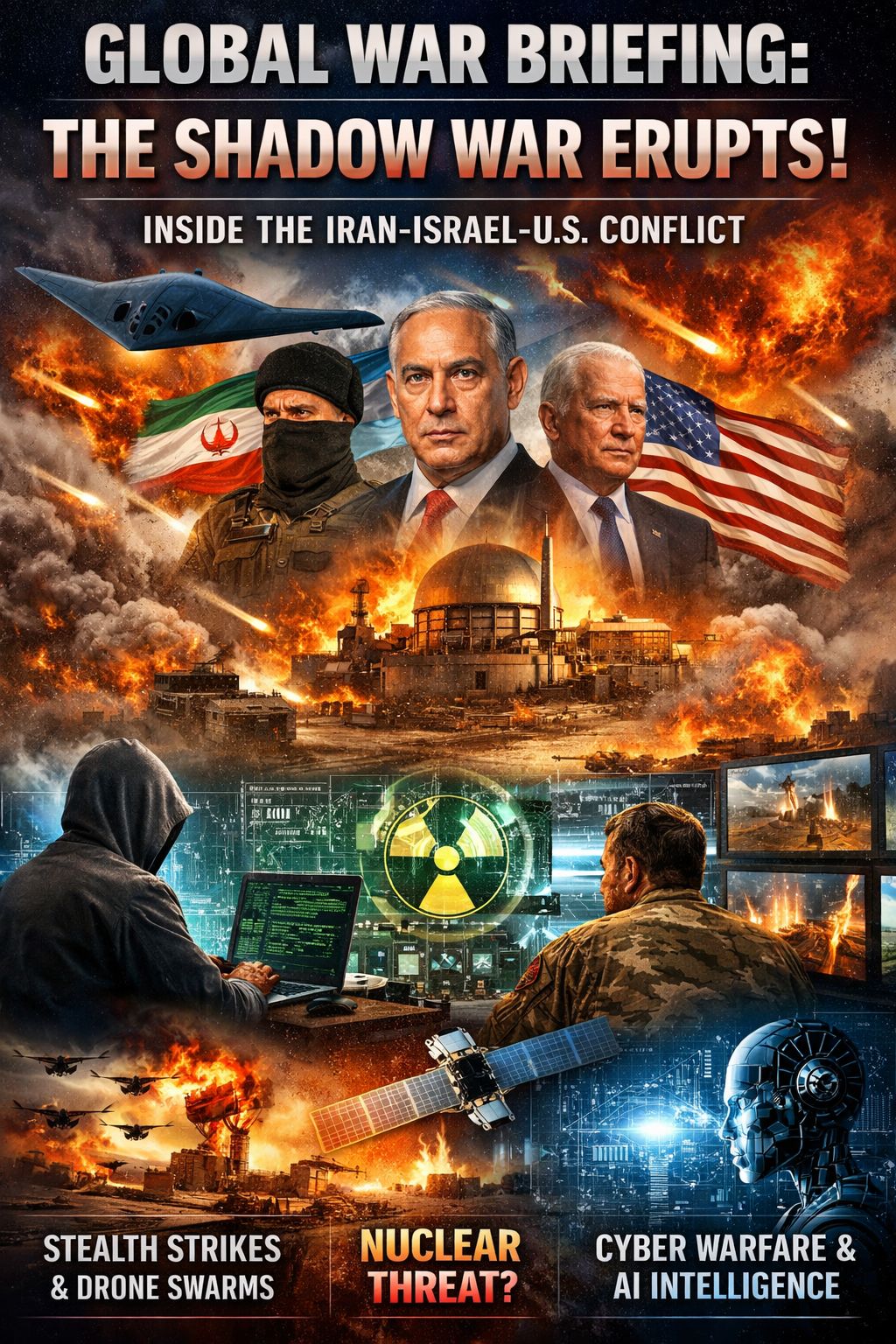
GLOBAL WAR BRIEFING: THE SHADOW WAR ERUPTS — INSIDE THE IRAN–ISRAEL–U.S. CONFLICT
Researcher ✔️
Michael Elijah Muhammad Clare
The world is now watching one of the most dangerous military confrontations of the 21st century unfold across the Middle East. What began as a sudden series of devastating airstrikes has quickly escalated into a multi-front war involving missiles, drones, cyber warfare, satellites, and artificial intelligence guiding military decisions in real time.
For the followers of Bahama Drama, here is the full intelligence-style briefing on what is happening, why it started, and what could happen next.
THE OPENING STRIKE
In the early hours of February 28, a coordinated military operation launched by the United States and Israel struck deep inside Iran. Hundreds of targets were hit within hours.
Stealth bombers, cruise missiles, and advanced precision weapons targeted:
Missile bases
Military command centers
Underground bunkers
Nuclear facilities
Air defense systems
Some of the strikes were carried out by stealth aircraft capable of flying across continents without being detected by radar. These aircraft dropped massive bunker-buster bombs designed to penetrate deep underground facilities.
Within the first day of the operation, hundreds of explosions were reported across Iranian military sites.
THE SHOCK THAT CHANGED EVERYTHING
The moment that transformed the situation from a strike operation into a full-scale war came quickly.
During the opening wave of attacks, Iran’s Supreme Leader was reportedly killed when a command facility was hit.
This decapitation strike sent shockwaves across the region and immediately triggered retaliation from Iranian forces and their allies.
THE WAR SPREADS
The conflict is no longer confined to Iran.
Multiple battlefronts are now active across the Middle East.
Iran has launched ballistic missiles and drone attacks toward U.S. military bases across the Gulf region.
Missiles and drones have targeted installations in Bahrain, Qatar, the United Arab Emirates, Kuwait, and other strategic locations.
At the same time, Iran’s powerful ally Hezbollah has opened a northern front against Israel from Lebanon.
Thousands of rockets have been fired toward Israeli territory, forcing Israel’s advanced missile defense systems to intercept wave after wave of incoming threats.
Entire populations are being evacuated near the border zones.
THE STRAIT OF HORMUZ CRISIS
One of the most dangerous developments is the growing threat around the Strait of Hormuz.
This narrow waterway is one of the most critical energy routes on Earth. Nearly 20 percent of the world’s oil supply passes through this corridor.
Iran has warned commercial shipping not to pass through the region, and several drone and missile incidents near tankers have already been reported.
Oil tankers are now stacking up outside the strait, waiting for safe passage.
If this waterway closes completely, the global economy could feel the shock within days.
OIL PRICES, FUEL COSTS, AND THE GLOBAL EFFECT
When conflicts hit oil supply routes, the effects ripple across the planet.
Energy analysts are warning that oil prices could surge dramatically if the conflict continues or expands.
Higher oil prices would impact:
Fuel prices
Shipping costs
Food transportation
Electricity generation
For countries that import fuel, including island nations like the Bahamas, global energy disruptions can quickly translate into higher prices at the pump and increased cost of living.
THE TECHNOLOGY WAR
This war is also becoming a showcase of next-generation military technology.
Stealth bombers capable of crossing continents undetected.
Hypersonic missiles traveling at speeds faster than Mach 5.
Swarm drones launched in large numbers to overwhelm defense systems.
Artificial intelligence analyzing satellite imagery and battlefield data to select targets in minutes instead of days.
Advanced missile defense systems intercepting rockets in mid-air before they reach cities.
Modern warfare is no longer just soldiers and tanks. It is now a complex battlefield where satellites orbiting the Earth, artificial intelligence algorithms, and cyber units are constantly working behind the scenes.
THE RISE OF AI AS A MILITARY ADVISOR
One of the most fascinating developments in this conflict is the growing role of artificial intelligence not just as a weapon system, but as a strategic advisor.
Military planners now use AI systems to analyze enormous amounts of information including satellite imagery, communication intercepts, drone footage, and battlefield movements.
These systems can recommend strike targets, identify potential threats, and even simulate how battles may unfold before commanders make decisions.
In some command centers around the world, AI systems are now acting like digital war advisors, helping generals plan operations faster than ever before.
THE SECRET REASON THIS WAR STARTED NOW
While the public explanation for the strikes focuses on Iran’s nuclear program, many analysts believe the timing of the attack was driven by intelligence discoveries that dramatically changed the strategic picture.
According to multiple intelligence assessments circulating among Western and Middle Eastern security officials, Iran was believed to be approaching what experts call the “breakout threshold.”
This means Iran may have been very close to producing enough enriched uranium to build a nuclear weapon.
Even more concerning were reports suggesting that parts of Iran’s nuclear infrastructure had been moved deep underground or into hardened facilities designed specifically to survive airstrikes.
Military planners feared that if these facilities became fully operational, destroying them later might become nearly impossible.
From that perspective, the strikes were not simply retaliation or political pressure. They were viewed as a last-minute attempt to prevent a nuclear shift in the balance of power in the Middle East.
WHO COULD ENTER THE WAR NEXT
While the main fighting involves the United States, Israel, Iran, and Hezbollah, several global powers are watching closely.
Russia has longstanding military ties with Iran and could provide intelligence or technological support.
China has major economic interests tied to Middle Eastern oil supplies and is pushing for diplomatic solutions to avoid global economic disruption.
Regional powers such as Saudi Arabia could become involved if Iranian attacks begin threatening their oil infrastructure.
If any of these actors step deeper into the conflict, the war could rapidly expand beyond its current scale.
THE NUCLEAR QUESTION
Despite the seriousness of the situation, experts say the immediate risk of nuclear weapons being used remains low.
However, the existence of nuclear programs and nuclear-capable states in the region makes the stakes extremely high.
One of the major concerns is that continued bombing of nuclear facilities could release radioactive materials into the environment.
Another concern is that if Iran believes its government is at risk of collapse, it could attempt a rapid nuclear breakout.
These scenarios remain unlikely but are closely monitored by intelligence agencies worldwide.
WHAT HAPPENS NEXT
Military analysts believe the next phase of the conflict could involve several possible developments.
Continued airstrikes inside Iran.
Expanded fighting between Israel and Hezbollah in Lebanon.
Iranian missile attacks against regional bases and infrastructure.
Cyber warfare targeting power grids and financial systems.
Naval confrontations around the Strait of Hormuz.
Every one of these possibilities carries risks that could pull additional countries into the conflict.
A WORLD WATCHING
For now, the world watches as advanced technology, military strategy, intelligence operations, and geopolitical rivalries collide in a conflict that could reshape the Middle East.
This war is not only being fought with missiles and drones.
It is also being fought with algorithms, satellites, cyber networks, and artificial intelligence systems helping guide decisions behind the scenes.
The battlefield of the future has arrived.
And the outcome of this conflict may determine what that future looks like for the entire world.