😂😂😂😂😂
Bahamian Entrepreneur asks
Bahamian Entrepreneur asks
What is it that people are willing to pay for online. How many things can you name that people are willing to pay a subscription for or one time payment? What all do people want that’s not physical? It must be an online product.
Bahama Drama — 4 September 2026
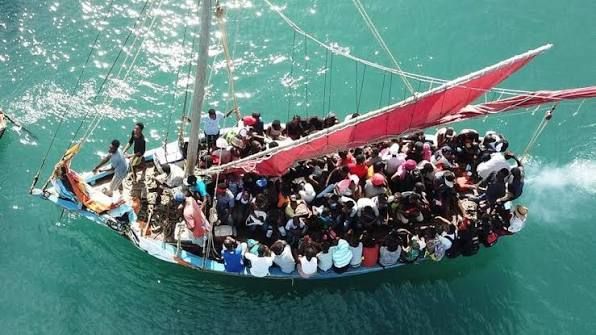
146 PEOPLE AT SEA — THEN THE INTERCEPTION BEGAN
146 PEOPLE AT SEA — THEN THE INTERCEPTION BEGAN
BAHAMA DRAMA EXCLUSIVE
Researcher ✔️
Michael Elijah Muhammad Clare
THE SOUTHERN BAHAMAS JUST BECAME THE CENTER OF ANOTHER MAJOR MARITIME INTERCEPTION.
It was Wednesday evening, September 2.
Somewhere south of Great Inagua, a migrant vessel was moving through Bahamian waters carrying a staggering 146 people.
But they were not moving unnoticed.
High above the water, U.S. Coast Guard aircrews were watching.
On the surface, Royal Bahamas Defence Force assets were operating in the same maritime environment.
Then came the move.
The vessel was intercepted.
According to information released by the U.S. Embassy in Nassau, the operation involved U.S. Coast Guard aircrews and the Royal Bahamas Defence Force, with 146 people found aboard the migrant vessel.
For those on the water, what may have started as another dangerous journey suddenly became a confrontation with the reality of modern maritime enforcement.
Aircraft overhead.
Defence Force assets on the water.
A vessel carrying 146 people.
And the southern Bahamas stretching out in every direction.
This is the part of border security that most people never see.
There are no highways.
No checkpoints.
No border fence.
Just hundreds of miles of open ocean separating islands, countries and people.
That makes surveillance and cooperation absolutely critical.
And Great Inagua is not just another dot on the map.
Its location places it near some of the most important maritime routes in the region, making the waters around the island a critical area for monitoring migration, smuggling and other maritime activity.
The U.S. Embassy says the latest operation demonstrates the continuing cooperation between Washington and Nassau on maritime security, border protection and safe, lawful migration.
And this latest interception comes against a much larger backdrop.
The Bahamas and the United States have repeatedly worked together to detect and intercept vessels moving through the region. In July, for example, the U.S. Coast Guard and RBDF worked together in an operation near Great Inagua that resulted in the seizure of approximately 2,380 pounds of suspected marijuana.
That tells us something important.
The waters around our southern islands are not quiet.
They are part of an enormous maritime crossroads.
And when a vessel carrying 146 people is detected and intercepted, it is not simply a story about one boat.
It is a reminder of the enormous challenge facing a country made up of hundreds of islands and cays.
Every night, vessels can disappear into darkness.
Every storm can reduce visibility.
Every mile of ocean creates another challenge for those responsible for protecting Bahamian waters.
That is why aircraft, patrol vessels, intelligence sharing and international cooperation matter.
The RBDF cannot be everywhere at once.
Neither can the U.S. Coast Guard.
But working together, their ability to detect and respond becomes considerably stronger.
The question now is what happens next for the 146 people intercepted south of Great Inagua.
Their journey has ended at sea.
But the larger issue has not.
Migration pressure continues to place enormous demands on Caribbean nations, while dangerous sea voyages continue to put human lives at risk.
For The Bahamas, this is also about protecting our territorial waters and maintaining control of our borders.
Because out here, the border is not a line on a map.
THE BORDER IS THE OCEAN.
And on September 2, somewhere south of Great Inagua, that ocean became the scene of another major interception.
146 people.
One migrant vessel.
U.S. Coast Guard aircrews.
Royal Bahamas Defence Force personnel.
And a southern Bahamian sea route once again placed under the spotlight.
Page Reply:
If anyone of these 146 Haitian migrants grew up in America and are from the bunch that was deported by the Trump administration. I really don’t blame them for getting the hell out of Haiti fast and trying to make it into the Bahamas or Turks and Caicos islands. I want my readers to ask themselves honestly and on the real, What would you have done if you were in their shoes?
He who feels it knows it best. I’m not giving anyone the greenlight to enter any one of these countries illegally. I’m just saying I feel their pain and struggle to the bone. But for dem Haitian’s who grew up in Haiti, please stay y’all asses right there, y’all is the ones that got Haiti like it is today!
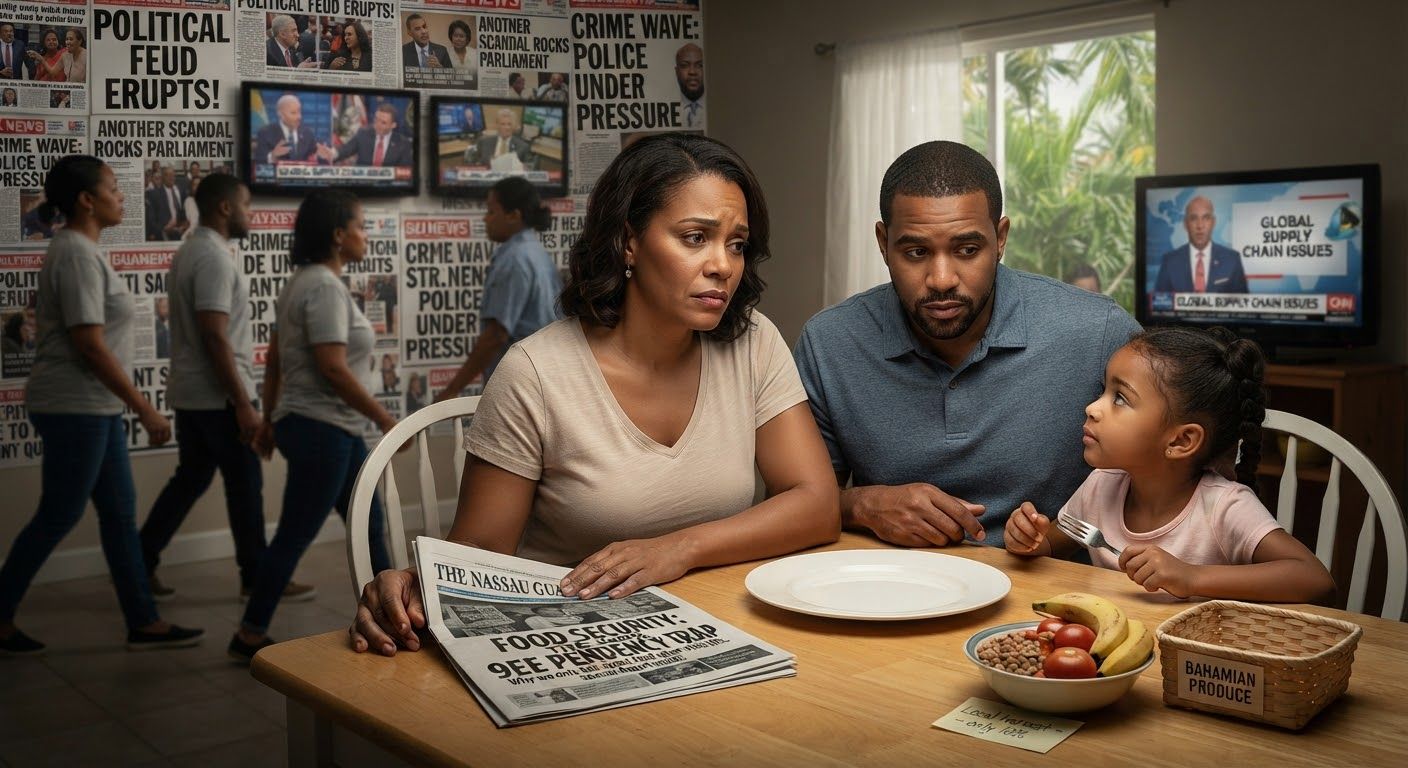
LESS TALK ABOUT FOOD SECURITY IN THE BAHAMAS
LESS TALK ABOUT FOOD SECURITY IN THE BAHAMAS
Why Does Food Security Only Become News When Something Goes Wrong?
Researcher ✔️
Michael Elijah Muhammad Clare
By BAHAMA DRAMA INVESTIGATIVE DESK
There is something seriously wrong with the way we talk about food security in The Bahamas.
Actually, the bigger problem may be that we hardly talk about it at all.
Turn on the television.
Open a newspaper.
Scroll through social media.
Look at the latest headlines.
Crime.
Politics.
Scandals.
Arguments between politicians.
Celebrity drama.
Court cases.
Traffic accidents.
Controversies.
Who said what about whom.
These stories have their place. They are part of the daily news cycle.
But there is another issue sitting quietly in the background that affects every single Bahamian every single day.
FOOD.
And more specifically, whether this country can continue feeding its people when something goes seriously wrong.
That conversation should never disappear from the national agenda.
Yet too often, food security seems to become important only when there is a crisis, a hurricane, an empty shelf, a price increase or some frightening headline coming out of another country.
Why?
Why are we constantly chasing the newest headline while one of the most fundamental issues facing this country receives far less sustained attention?
THE FOOD ON OUR TABLES SHOULD BE FRONT PAGE NEWS
The Bahamas imports nearly 90 percent of the food it consumes, with an annual food import bill of around $1 billion.
That should not be treated as some boring agricultural statistic.
That should be treated as a national security issue.
It means that much of what Bahamians eat depends on systems outside our control.
Ships have to arrive.
Ports have to operate.
Fuel has to be available.
Foreign farmers have to produce.
Foreign roads and transportation systems have to function.
International markets have to remain relatively stable.
And the countries supplying our food must continue exporting it.
We are depending on a complicated international chain just to put breakfast, lunch and dinner on Bahamian tables.
What happens when that chain breaks?
That is the question we should constantly be asking.
Not only after a hurricane.
Not only after prices jump.
Not only when supermarkets begin running short of something.
Now.
EVERYTHING ELSE SEEMS TO GET MORE ATTENTION
The Bahamian media is incredibly good at finding the latest controversy.
A politician makes a statement and within minutes it becomes a headline.
Somebody gets arrested and it becomes breaking news.
Two public figures have an argument and everybody wants to know what happened.
A scandal emerges and suddenly it dominates the national conversation.
But food security?
Crickets.
Until something happens.
Then everybody wants to talk about it.
This is where the media has to look at itself.
News organizations are businesses. They need readers, viewers, followers, advertising and engagement.
We understand that.
But journalism is supposed to be more than chasing whatever produces the biggest number of clicks today.
The media also has a responsibility to help a country understand the problems that could determine its future.
Food security is one of those problems.
A newspaper should not have to wait until supermarket shelves are empty before asking whether The Bahamas can feed itself.
A television station should not have to wait until food prices explode before asking what the country is doing about agricultural production.
A news website should not need a hurricane to remind Bahamians that our food supply depends heavily on transportation and imported products.
These questions should be asked continuously.
THE MEDIA DOES NOT HAVE TO WAIT FOR A CRISIS
Imagine if Bahamian media treated food security the way it treats crime.
Imagine regular investigations into how much food we produce locally.
Imagine journalists visiting farms in Andros, Exuma, Long Island, Eleuthera and other Family Islands.
Ask farmers what is stopping them from producing more.
Ask how much fertilizer costs.
Ask about electricity.
Ask about water.
Ask about transportation.
Ask about refrigeration.
Ask about financing.
Ask whether farmers can actually make enough money to stay in business.
Ask supermarkets how much Bahamian-produced food they sell.
Ask hotels and restaurants how much local food they purchase.
Ask the government what percentage of its agricultural spending actually reaches productive capacity.
Ask the hard questions.
Then keep asking them.
That is journalism.
FOOD SECURITY IS NOT JUST ABOUT FARMERS
One of the biggest misunderstandings about food security is that people think it is simply an agricultural issue.
It isn’t.
It is an economic issue.
It is a transportation issue.
It is an energy issue.
It is a national security issue.
It is a hurricane preparedness issue.
It is a poverty issue.
It is a business issue.
And ultimately, it is a survival issue.
A family can walk into a supermarket and see shelves full of food while still being food insecure because they cannot afford what is on those shelves.
That is an important distinction.
Food security is not simply about whether food exists.
It is about whether people can reliably access and afford enough food.
JAMAICA SHOULD HAVE OUR ATTENTION
The warning signs are already visible elsewhere in the Caribbean.
The original article examined Jamaica’s food security situation and highlighted data indicating that a large portion of the Jamaican population experienced moderate or severe food insecurity.
Jamaica has substantially more agricultural capacity and land than The Bahamas.
Yet Jamaica can still experience serious food insecurity.
That should make Bahamians uncomfortable.
Not because Jamaica has failed.
But because Jamaica demonstrates something important.
Having farms does not automatically guarantee that everyone can afford food.
And having supermarkets full of food does not automatically mean every family can afford to eat properly.
So what happens in The Bahamas?
A country with hundreds of islands and cays.
A country that imports most of its food.
A country that must move food across water and air.
A country exposed to hurricanes.
A country heavily dependent on tourism.
A country where the cost of living is already a major concern for ordinary families.
These are exactly the circumstances that should make food security a permanent national conversation.
NOT JUST WHEN A HURRICANE IS COMING
Every hurricane season, Bahamians suddenly remember food security.
People rush to supermarkets.
Bottled water disappears.
Canned goods disappear.
Bread becomes difficult to find.
Gas stations become crowded.
Everybody starts thinking about supply.
But why does it take a hurricane to make us think this way?
A hurricane is only one possible disruption.
What about an international war?
What about a major shipping interruption?
What about fuel shortages?
What about a major disease outbreak affecting agriculture?
What about a serious economic crisis?
What about a major hurricane destroying agricultural production in one of our primary supplier countries?
What about international food prices suddenly rising?
What about a disruption at a major American port?
We cannot predict every crisis.
But we can prepare for the possibility that something will eventually go wrong.
THE MEDIA SHOULD HELP KEEP THE PRESSURE ON
This is where the Bahamian media can make a tremendous difference.
Don’t just report that the government allocated millions of dollars to agriculture.
Follow the money.
Don’t just announce that another agricultural programme has been launched.
Go back six months later.
Did it work?
Go back one year later.
How many farmers benefited?
How much food is actually being produced?
How much has production increased?
What problems remain?
Don’t just interview a politician standing at a podium.
Interview the farmer who has to pay the electricity bill.
Interview the fisherman who has to buy fuel.
Interview the restaurant owner trying to purchase local produce.
Interview the supermarket manager.
Interview the ordinary mother standing in the grocery line.
That is where the real story is.
WE NEED LESS HEADLINE CHASING AND MORE NATIONAL CONVERSATION
There is nothing wrong with reporting breaking news.
There is nothing wrong with reporting crime.
There is nothing wrong with political controversy.
But a country cannot build its future by spending all of its attention reacting to whatever happened yesterday.
Some issues require constant attention precisely because they are not dramatic.
Food security is one of them.
There may be no explosion.
No arrest.
No political shouting match.
No viral video.
No scandal.
But every morning millions of dollars worth of food have to somehow make their way into this country and eventually onto our tables.
That is a story.
Every day.
THE BAHAMAS NEEDS TO ASK A VERY SIMPLE QUESTION
If the ships stopped coming tomorrow, how long could we feed ourselves?
Not forever.
Not even close.
That should concern us.
We should know exactly how much food we have stored.
We should know what we can produce locally.
We should know which foods we can increase production of quickly.
We should know which Caribbean countries could supply us during an emergency.
We should know how much refrigerated storage capacity exists.
We should know how vulnerable our ports are.
We should know how quickly Family Island farmers can get their products to Nassau.
We should know what happens to our food supply when fuel prices suddenly rise.
And most importantly, ordinary Bahamians should know the answers too.
THE MEDIA HAS A ROLE TO PLAY
This is not an attack on every journalist or every media organization in The Bahamas.
There are journalists doing serious work.
But as a national industry, we can do better.
Much better.
The media has enormous power to determine what Bahamians discuss around the dinner table.
If the media talks about a subject every day, people notice.
If the media asks the government difficult questions every week, politicians notice.
If journalists repeatedly investigate the same national problem, policymakers eventually have to respond.
That is the power of journalism.
Use it.
FOOD SECURITY SHOULD NEVER BE OFF THE MENU
The irony is almost painful.
We are a country where everyone eats.
Every politician eats.
Every journalist eats.
Every business owner eats.
Every construction worker eats.
Every hotel employee eats.
Every police officer eats.
Every teacher eats.
Every child eats.
Every pensioner eats.
Yet one of the issues that determines whether all of these people can continue eating receives nowhere near the sustained national attention it deserves.
We need to change that.
Food security should not be a once-a-year conversation.
It should not be a hurricane-season conversation.
It should not become important only after a foreign crisis.
And it certainly should not disappear because another sensational headline has grabbed everyone’s attention.
The Bahamas needs less talk about the latest scandal and more serious discussion about the food on our tables.
Less obsession with what happened yesterday.
More attention to what could happen tomorrow.
Less headline chasing.
More investigative journalism.
Less waiting for the crisis.
More preparation before the crisis.
Because when the shelves are empty, it will be too late to start asking questions.
And when a family cannot afford to put food on the table, telling them that nobody saw the problem coming will not feed them.
The warning signs are already there.
The vulnerability is already there.
The dependence is already there.
The question is whether we are going to pay attention before something forces us to.
Food security must remain on the national menu.
And this time, it needs to stay there.
In the beginning there was God.
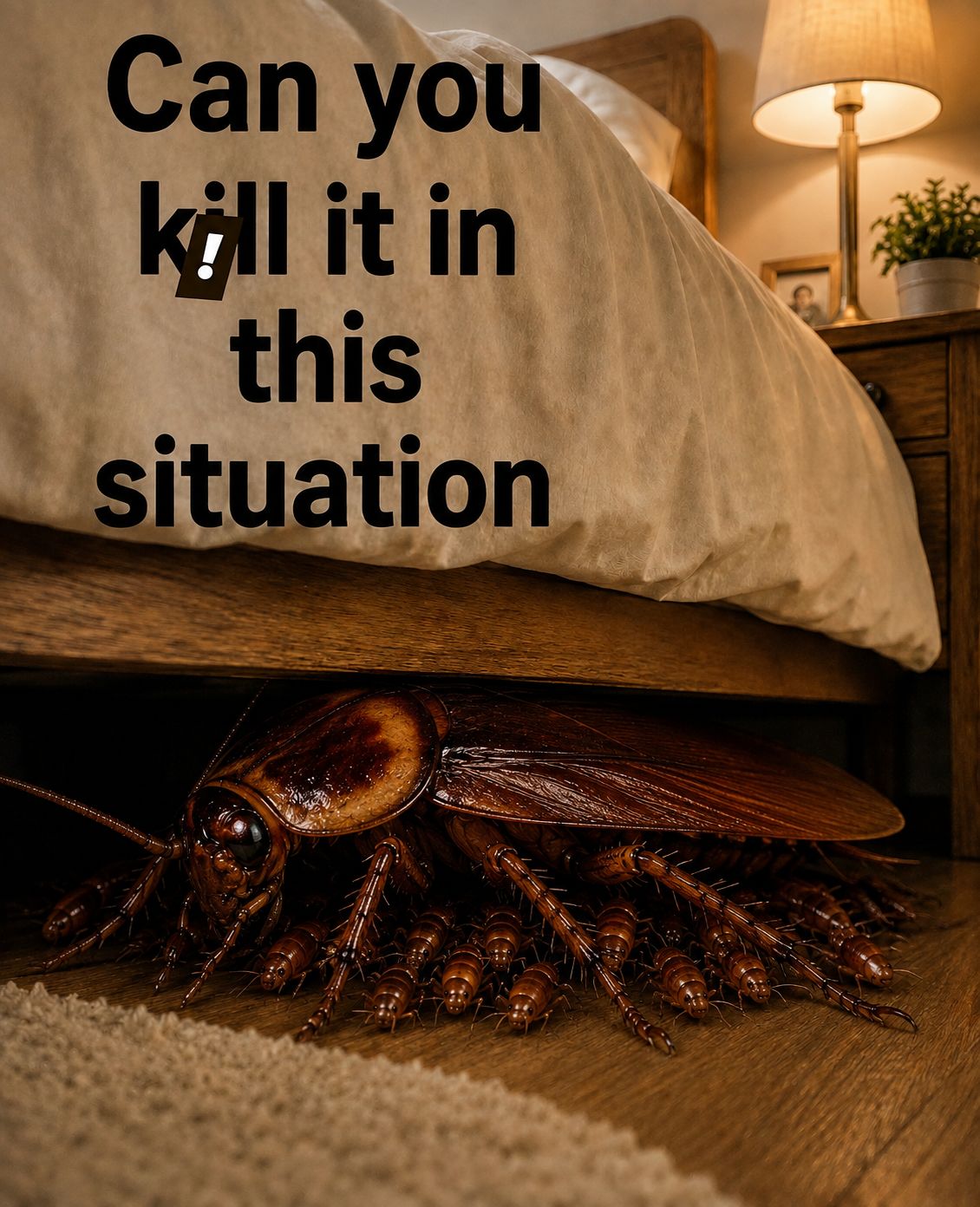
She’s only trying to stay warm under your bed, and feed her babies…
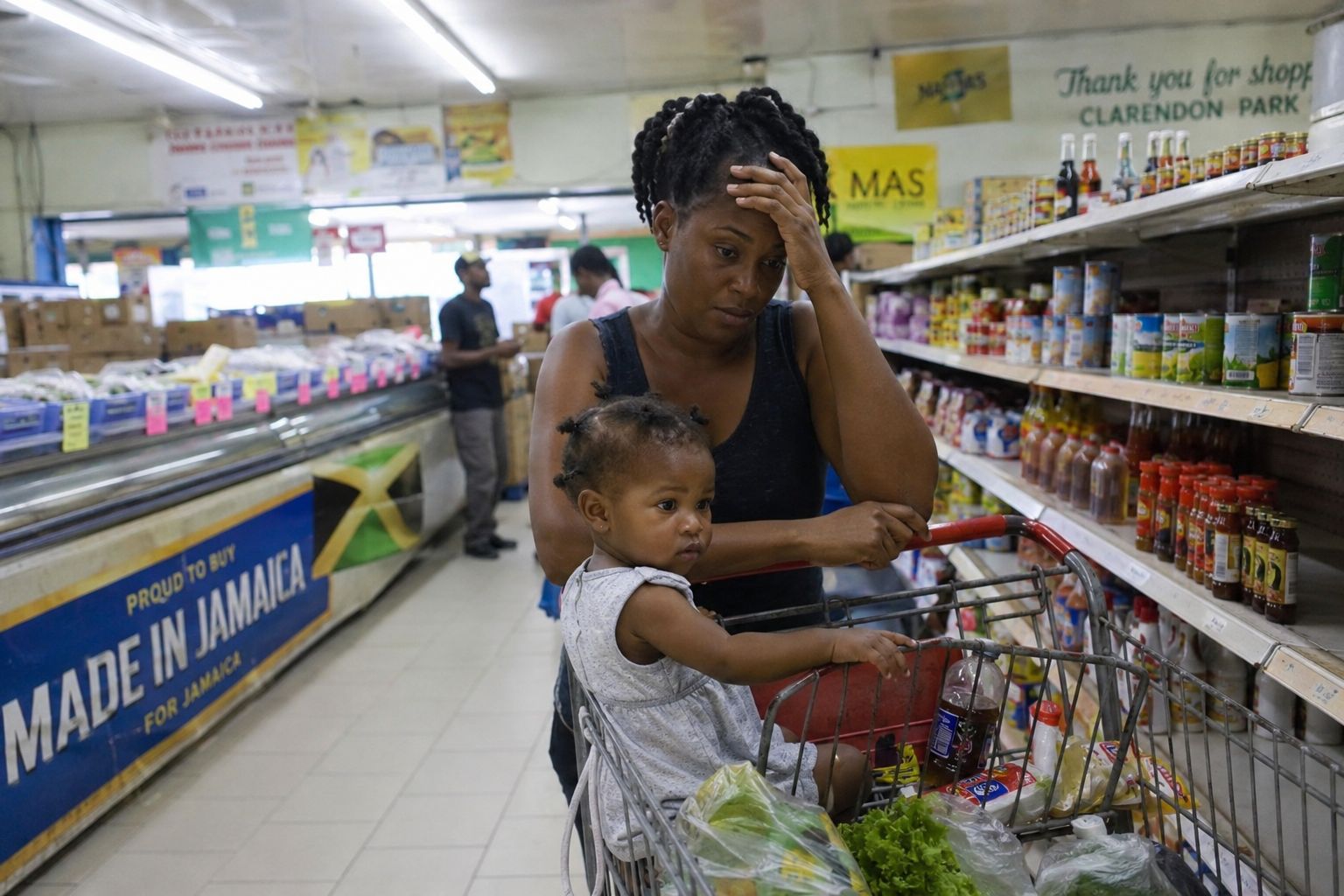
THE FOOD ON OUR TABLES: What Jamaica’s Food Crisis Should Teach The…
THE FOOD ON OUR TABLES: What Jamaica’s Food Crisis Should Teach The Bahamas
Researcher ✔️
Michael Elijah Muhammad Clare
There is something happening in Jamaica right now that every Bahamian should be paying attention to.
It is not simply about farming.
It is not simply about grocery prices.
And it is not just about whether there is food sitting on store shelves.
It is about whether ordinary people can actually afford to put enough food on their tables.
Recent figures being discussed in Jamaica are raising serious concerns. About 55 percent of Jamaicans experienced moderate or severe food insecurity between 2021 and 2023, according to United Nations food security data.
Even more disturbing, Jamaican food security expert Dr. Cecil Cornwall said this week that about 28 percent of Jamaicans are experiencing severe food insecurity, including people going hungry or sometimes spending an entire day without eating.
Think about that for a moment.
More than half of the population facing some level of food insecurity.
And more than one in four facing much more serious conditions.
That should get the attention of every government, every business owner, every farmer and every ordinary citizen in the Caribbean.
Because Jamaica is not some distant country on the other side of the world.
Jamaica is our neighbour.
And what happens there can teach us something about what could happen here.
THE BAHAMAS HAS A BIG PROBLEM TOO
The Bahamas has beautiful beaches, expensive resorts, luxury hotels and a tourism industry that brings billions of dollars into the country.
But there is another side to our economy that does not always get the attention it deserves.
We import nearly 90 percent of the food we eat.
That food bill is around $1 billion every year.
That means a huge part of what Bahamians eat comes from outside the country.
Chicken.
Beef.
Rice.
Flour.
Vegetables.
Fruit.
Eggs.
Milk products.
Processed foods.
And many of the other things people put into their shopping carts every week.
We depend heavily on other countries to feed us.
That is not necessarily a problem when everything is working normally.
The problem comes when something goes wrong.
WHAT IF THE SHIPS STOP COMING?
Imagine going into a supermarket in Nassau and seeing certain shelves getting emptier every day.
The problem might not be that there is no food in America.
The problem might be that the ships carrying the food cannot get here.
A hurricane could shut down a major port.
A transportation problem could slow deliveries.
Fuel prices could suddenly increase.
A war somewhere in the world could disrupt shipping.
A major disaster could damage roads, ports, warehouses or farms.
Or American food prices could rise so much that bringing those products into The Bahamas becomes even more expensive.
Suddenly, the problem becomes ours.
And because we produce relatively little of our own food, we have fewer alternatives.
That is the part Bahamians need to understand.
Food security is not about having a farm in your backyard.
Food security means having enough reliable ways to make sure people can eat, even when something goes wrong.
JAMAICA IS SHOWING US THE WARNING SIGNS
Jamaica has something The Bahamas does not have to the same degree.
Jamaica has a much larger agricultural sector and a much larger land area.
Yet Jamaica is still dealing with serious food insecurity.
That should tell us something.
Having farmers does not automatically mean everybody can afford food.
Having food available does not automatically mean everybody can buy it.
A family can walk into a supermarket and see plenty of food on the shelves while still being food insecure because the money in their pocket is not enough to buy what they need.
That is the difference many people miss.
FOOD SECURITY IS ALSO ABOUT MONEY
Think about the average working person.
Rent is due.
The light bill is due.
The water bill is due.
The car needs gas.
The children need school supplies.
There are transportation costs.
There are medical expenses.
Then comes the grocery bill.
If food prices keep rising while wages do not keep up, something has to give.
Families begin buying cheaper foods.
They buy less meat.
They buy fewer fruits and vegetables.
They stretch one meal into two.
They skip meals.
Parents may eat less so their children can eat.
That is food insecurity.
And it can happen even when supermarkets still have food.
THE BAHAMAS HAS ANOTHER PROBLEM
Our geography makes the situation even more complicated.
The Bahamas is made up of hundreds of islands, islands and cays spread across a huge area.
Moving food around this country is expensive.
A farmer in Andros cannot simply put his produce on a truck and drive it to Nassau.
The farmer needs transportation.
The produce needs storage.
It may need refrigeration.
It needs to get onto a boat or aircraft.
Then somebody has to move it from the dock or airport to the supermarket.
Every step costs money.
And when fuel and electricity become more expensive, the cost eventually reaches the consumer.
This is one reason why growing food locally is not as simple as telling Bahamians to plant more crops.
We need the entire system.
Farms.
Farmers.
Storage.
Refrigeration.
Processing.
Transportation.
Markets.
Financing.
And customers willing to buy Bahamian products.
WE DO NOT NEED TO GROW EVERYTHING
There is also an important point that needs to be made.
The Bahamas does not have to produce every single thing that Bahamians eat.
That would not be realistic.
We are not going to grow everything we need on our limestone islands.
But we can produce more of the foods that make sense for us.
Eggs.
Chicken.
Fish.
Vegetables.
Fruit.
Root crops.
Herbs.
And other products that can be produced efficiently here.
That would mean that if something happened to international shipping, we would still have some food production inside the country.
That is called building a stronger safety net.
JAMAICA AND GUYANA CAN TEACH US SOMETHING
The Caribbean is already trying to deal with this problem together.
CARICOM originally launched an initiative known as 25 by 2025, with the goal of reducing the region’s enormous food import bill by 25 percent.
The programme has now been extended to 2030.
The idea is simple.
Instead of Caribbean countries spending billions of dollars buying food from outside the region, Caribbean countries should buy more food from each other and produce more food themselves.
Guyana is becoming particularly important in this effort because it has something The Bahamas desperately needs.
Land.
Lots of it.
Guyana has the ability to produce large quantities of rice, vegetables, corn, soybeans, livestock and other agricultural products.
The Bahamas has the money and the market.
Guyana has much more land and agricultural potential.
That creates an opportunity.
Instead of thinking only about importing food from Florida, why shouldn’t The Bahamas also be thinking about building stronger food relationships with Guyana, Jamaica and other Caribbean countries?
WHY THIS MATTERS TO EVERY BAHAMIAN
This is not just a government issue.
It is not just a farmer issue.
It is not just something for agricultural experts to discuss at conferences.
It affects everybody.
The wealthy person.
The middle class.
The working poor.
The pensioner.
The single mother.
The construction worker.
The hotel employee.
The restaurant worker.
The small business owner.
Everybody eats.
And everybody feels it when food prices go up.
The question is not whether The Bahamas should stop importing food.
We cannot.
The real question is this:
How much of our food should we be able to produce ourselves?
And how much should we be able to obtain from our Caribbean neighbours?
Because depending overwhelmingly on one major foreign supply chain is a risk.
THE HURRICANE PROBLEM
Then there is the weather.
The Caribbean has learned repeatedly that one powerful hurricane can destroy years of agricultural work in a matter of hours.
Jamaica was hit hard by Hurricane Melissa in 2025, damaging agricultural infrastructure and farmers’ livelihoods.
The effects of a hurricane do not end when the storm leaves.
Crops are destroyed.
Animals can be lost.
Roads can be damaged.
Bridges can be destroyed.
Electricity can disappear.
Warehouses can be damaged.
Ports can be disrupted.
And food prices can rise.
That is why food security must also be part of hurricane preparedness.
WE NEED TO THINK DIFFERENTLY
The Bahamas has already begun putting more attention and money into agriculture.
The government’s 2025/2026 budget increased the agriculture allocation to $35 million.
There is also major attention being placed on expanding egg and poultry production through projects such as Golden Yolk, as well as hydroponic farming and other modern agricultural methods.
Those are steps in the right direction.
But the real question is whether we are willing to think bigger.
Imagine agricultural facilities powered partly by solar energy.
Imagine modern greenhouses producing vegetables throughout the year.
Imagine refrigerated storage facilities that allow farmers to keep food fresh longer.
Imagine Bahamian farmers having guaranteed markets with hotels and restaurants.
Imagine more Bahamian eggs, chicken, vegetables and fish being sold in Bahamian supermarkets.
Imagine Family Island farmers being able to sell directly into Nassau without losing most of their profit to transportation costs.
That is the kind of food system The Bahamas should be building.
THIS IS NOT ABOUT PANIC
Nobody should read this article and start running to the supermarket to buy everything they can find.
That is not the point.
The point is preparation.
Jamaica’s numbers should make us stop and think.
If more than half of Jamaicans can experience food insecurity despite Jamaica having a much larger agricultural base than The Bahamas, then we should not fool ourselves into believing that we are automatically safe because our supermarkets are full today.
The food sitting on the shelf today does not guarantee that the same food will be there tomorrow.
And the price of food today does not guarantee that working families will still be able to afford it tomorrow.
THE QUESTION WE SHOULD BE ASKING
The Bahamas is a wealthy country by Caribbean standards.
But wealth does not automatically equal food security.
A country can have luxury resorts, multimillion-dollar homes and billions of dollars moving through its economy and still have families struggling to buy groceries.
That is why food security needs to become part of the national conversation.
Not tomorrow.
Now.
Because the lesson from Jamaica is not that Jamaica has failed.
The lesson is that even a Caribbean country with a much larger agricultural sector can face serious food insecurity when people cannot reliably afford or access enough food.
The Bahamas has an opportunity to learn that lesson before we are forced to learn it the hard way.
We do not have to produce everything.
We do not have to stop importing.
But we should be producing more.
We should be buying more from our Caribbean neighbours.
We should be protecting our farmers.
We should be investing in modern agriculture.
We should be building better food storage.
And we should make sure that when the next hurricane, economic crisis, shipping disruption or international emergency comes along, Bahamians are not left wondering where their next meal is coming from.
Because at the end of the day, food security is not an academic term.
It is very simple.
Can your family eat?
And can they still eat when something goes wrong?
That is the question The Bahamas needs to answer.