
THE FOOD ON OUR TABLES: What Jamaica’s Food Crisis Should Teach The…
THE FOOD ON OUR TABLES: What Jamaica’s Food Crisis Should Teach The Bahamas
Researcher ✔️
Michael Elijah Muhammad Clare
There is something happening in Jamaica right now that every Bahamian should be paying attention to.
It is not simply about farming.
It is not simply about grocery prices.
And it is not just about whether there is food sitting on store shelves.
It is about whether ordinary people can actually afford to put enough food on their tables.
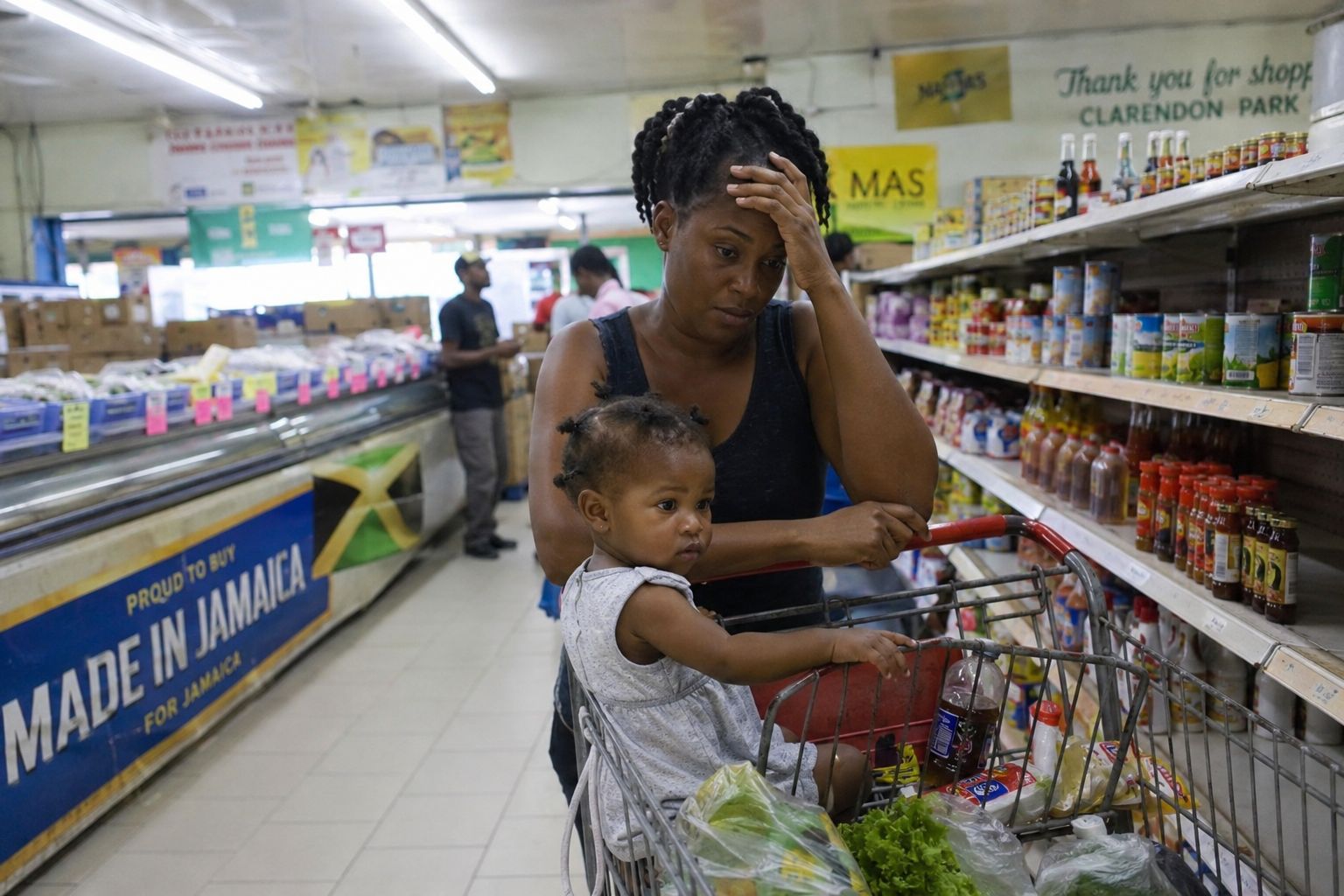
Recent figures being discussed in Jamaica are raising serious concerns. About 55 percent of Jamaicans experienced moderate or severe food insecurity between 2021 and 2023, according to United Nations food security data.
Even more disturbing, Jamaican food security expert Dr. Cecil Cornwall said this week that about 28 percent of Jamaicans are experiencing severe food insecurity, including people going hungry or sometimes spending an entire day without eating.
Think about that for a moment.
More than half of the population facing some level of food insecurity.
And more than one in four facing much more serious conditions.
That should get the attention of every government, every business owner, every farmer and every ordinary citizen in the Caribbean.
Because Jamaica is not some distant country on the other side of the world.
Jamaica is our neighbour.
And what happens there can teach us something about what could happen here.
THE BAHAMAS HAS A BIG PROBLEM TOO
The Bahamas has beautiful beaches, expensive resorts, luxury hotels and a tourism industry that brings billions of dollars into the country.
But there is another side to our economy that does not always get the attention it deserves.
We import nearly 90 percent of the food we eat.
That food bill is around $1 billion every year.
That means a huge part of what Bahamians eat comes from outside the country.
Chicken.
Beef.
Rice.
Flour.
Vegetables.
Fruit.
Eggs.
Milk products.
Processed foods.
And many of the other things people put into their shopping carts every week.
We depend heavily on other countries to feed us.
That is not necessarily a problem when everything is working normally.
The problem comes when something goes wrong.
WHAT IF THE SHIPS STOP COMING?
Imagine going into a supermarket in Nassau and seeing certain shelves getting emptier every day.
The problem might not be that there is no food in America.
The problem might be that the ships carrying the food cannot get here.
A hurricane could shut down a major port.
A transportation problem could slow deliveries.
Fuel prices could suddenly increase.
A war somewhere in the world could disrupt shipping.
A major disaster could damage roads, ports, warehouses or farms.
Or American food prices could rise so much that bringing those products into The Bahamas becomes even more expensive.
Suddenly, the problem becomes ours.
And because we produce relatively little of our own food, we have fewer alternatives.
That is the part Bahamians need to understand.
Food security is not about having a farm in your backyard.
Food security means having enough reliable ways to make sure people can eat, even when something goes wrong.
JAMAICA IS SHOWING US THE WARNING SIGNS
Jamaica has something The Bahamas does not have to the same degree.
Jamaica has a much larger agricultural sector and a much larger land area.
Yet Jamaica is still dealing with serious food insecurity.
That should tell us something.
Having farmers does not automatically mean everybody can afford food.
Having food available does not automatically mean everybody can buy it.
A family can walk into a supermarket and see plenty of food on the shelves while still being food insecure because the money in their pocket is not enough to buy what they need.
That is the difference many people miss.
FOOD SECURITY IS ALSO ABOUT MONEY
Think about the average working person.
Rent is due.
The light bill is due.
The water bill is due.
The car needs gas.
The children need school supplies.
There are transportation costs.
There are medical expenses.
Then comes the grocery bill.
If food prices keep rising while wages do not keep up, something has to give.
Families begin buying cheaper foods.
They buy less meat.
They buy fewer fruits and vegetables.
They stretch one meal into two.
They skip meals.
Parents may eat less so their children can eat.
That is food insecurity.
And it can happen even when supermarkets still have food.
THE BAHAMAS HAS ANOTHER PROBLEM
Our geography makes the situation even more complicated.
The Bahamas is made up of hundreds of islands, islands and cays spread across a huge area.
Moving food around this country is expensive.
A farmer in Andros cannot simply put his produce on a truck and drive it to Nassau.
The farmer needs transportation.
The produce needs storage.
It may need refrigeration.
It needs to get onto a boat or aircraft.
Then somebody has to move it from the dock or airport to the supermarket.
Every step costs money.
And when fuel and electricity become more expensive, the cost eventually reaches the consumer.
This is one reason why growing food locally is not as simple as telling Bahamians to plant more crops.
We need the entire system.
Farms.
Farmers.
Storage.
Refrigeration.
Processing.
Transportation.
Markets.
Financing.
And customers willing to buy Bahamian products.
WE DO NOT NEED TO GROW EVERYTHING
There is also an important point that needs to be made.
The Bahamas does not have to produce every single thing that Bahamians eat.
That would not be realistic.
We are not going to grow everything we need on our limestone islands.
But we can produce more of the foods that make sense for us.
Eggs.
Chicken.
Fish.
Vegetables.
Fruit.
Root crops.
Herbs.
And other products that can be produced efficiently here.
That would mean that if something happened to international shipping, we would still have some food production inside the country.
That is called building a stronger safety net.
JAMAICA AND GUYANA CAN TEACH US SOMETHING
The Caribbean is already trying to deal with this problem together.
CARICOM originally launched an initiative known as 25 by 2025, with the goal of reducing the region’s enormous food import bill by 25 percent.
The programme has now been extended to 2030.
The idea is simple.
Instead of Caribbean countries spending billions of dollars buying food from outside the region, Caribbean countries should buy more food from each other and produce more food themselves.
Guyana is becoming particularly important in this effort because it has something The Bahamas desperately needs.
Land.
Lots of it.
Guyana has the ability to produce large quantities of rice, vegetables, corn, soybeans, livestock and other agricultural products.
The Bahamas has the money and the market.
Guyana has much more land and agricultural potential.
That creates an opportunity.
Instead of thinking only about importing food from Florida, why shouldn’t The Bahamas also be thinking about building stronger food relationships with Guyana, Jamaica and other Caribbean countries?
WHY THIS MATTERS TO EVERY BAHAMIAN
This is not just a government issue.
It is not just a farmer issue.
It is not just something for agricultural experts to discuss at conferences.
It affects everybody.
The wealthy person.
The middle class.
The working poor.
The pensioner.
The single mother.
The construction worker.
The hotel employee.
The restaurant worker.
The small business owner.
Everybody eats.
And everybody feels it when food prices go up.
The question is not whether The Bahamas should stop importing food.
We cannot.
The real question is this:
How much of our food should we be able to produce ourselves?
And how much should we be able to obtain from our Caribbean neighbours?
Because depending overwhelmingly on one major foreign supply chain is a risk.
THE HURRICANE PROBLEM
Then there is the weather.
The Caribbean has learned repeatedly that one powerful hurricane can destroy years of agricultural work in a matter of hours.
Jamaica was hit hard by Hurricane Melissa in 2025, damaging agricultural infrastructure and farmers’ livelihoods.
The effects of a hurricane do not end when the storm leaves.
Crops are destroyed.
Animals can be lost.
Roads can be damaged.
Bridges can be destroyed.
Electricity can disappear.
Warehouses can be damaged.
Ports can be disrupted.
And food prices can rise.
That is why food security must also be part of hurricane preparedness.
WE NEED TO THINK DIFFERENTLY
The Bahamas has already begun putting more attention and money into agriculture.
The government’s 2025/2026 budget increased the agriculture allocation to $35 million.
There is also major attention being placed on expanding egg and poultry production through projects such as Golden Yolk, as well as hydroponic farming and other modern agricultural methods.
Those are steps in the right direction.
But the real question is whether we are willing to think bigger.
Imagine agricultural facilities powered partly by solar energy.
Imagine modern greenhouses producing vegetables throughout the year.
Imagine refrigerated storage facilities that allow farmers to keep food fresh longer.
Imagine Bahamian farmers having guaranteed markets with hotels and restaurants.
Imagine more Bahamian eggs, chicken, vegetables and fish being sold in Bahamian supermarkets.
Imagine Family Island farmers being able to sell directly into Nassau without losing most of their profit to transportation costs.
That is the kind of food system The Bahamas should be building.
THIS IS NOT ABOUT PANIC
Nobody should read this article and start running to the supermarket to buy everything they can find.
That is not the point.
The point is preparation.
Jamaica’s numbers should make us stop and think.
If more than half of Jamaicans can experience food insecurity despite Jamaica having a much larger agricultural base than The Bahamas, then we should not fool ourselves into believing that we are automatically safe because our supermarkets are full today.
The food sitting on the shelf today does not guarantee that the same food will be there tomorrow.
And the price of food today does not guarantee that working families will still be able to afford it tomorrow.
THE QUESTION WE SHOULD BE ASKING
The Bahamas is a wealthy country by Caribbean standards.
But wealth does not automatically equal food security.
A country can have luxury resorts, multimillion-dollar homes and billions of dollars moving through its economy and still have families struggling to buy groceries.
That is why food security needs to become part of the national conversation.
Not tomorrow.
Now.
Because the lesson from Jamaica is not that Jamaica has failed.
The lesson is that even a Caribbean country with a much larger agricultural sector can face serious food insecurity when people cannot reliably afford or access enough food.
The Bahamas has an opportunity to learn that lesson before we are forced to learn it the hard way.
We do not have to produce everything.
We do not have to stop importing.
But we should be producing more.
We should be buying more from our Caribbean neighbours.
We should be protecting our farmers.
We should be investing in modern agriculture.
We should be building better food storage.
And we should make sure that when the next hurricane, economic crisis, shipping disruption or international emergency comes along, Bahamians are not left wondering where their next meal is coming from.
Because at the end of the day, food security is not an academic term.
It is very simple.
Can your family eat?
And can they still eat when something goes wrong?
That is the question The Bahamas needs to answer.
Related stories

Biometric Voter Cards Go Local, PAC Digs Into $1.5m Vouchers, and Some PMH Wards Relocate
Late-afternoon Bahamas Islands Briefing for Wednesday, October 14, 2026: Exuma’s Business Outlook is tomorrow;…

PUBLIC MESSAGE TO ALL BAHAMA DRAMA FOLLOWERS
We are taking Bahama Drama to the next level, and we want you to…

Eleuthera Residents Threaten to Stop Paying BPL Bills, Treasure Cay’s $177m Sale Nears Closing, and a “Miracle Baby” Gets Her Wheels
Afternoon Bahamas Islands Briefing for Wednesday, October 14, 2026: Eleuthera residents threaten to withhold…
Join the conversation
No comments yet. Be the first.