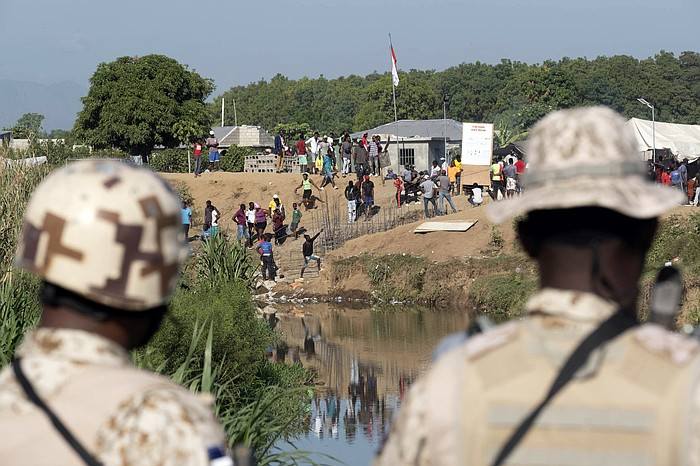
Regarding the ongoing security crisis and the fragmentation caused by armed coalitions in Haiti, what are people’s thoughts on the persistent public theories regarding external geopolitical influences?
Specifically, why do many citizens believe that foreign actors or external governments may be implicitly benefiting from or influencing the instability of Haiti?
Let’s discuss it respectfully.
And is Barbecue and other gang leaders employees of one of these foreign governments? 🇺🇸 🇩🇴
🤔
Page Reply:
The love of money is a root to all kinds of evil.
And power tends to corrupt, and absolute power corrupts absolutely. All involved will have to answer to the most high Elohim for these wicked deeds in that nation. And this should be a wake up call for the rest of the Caribbean on gangs…
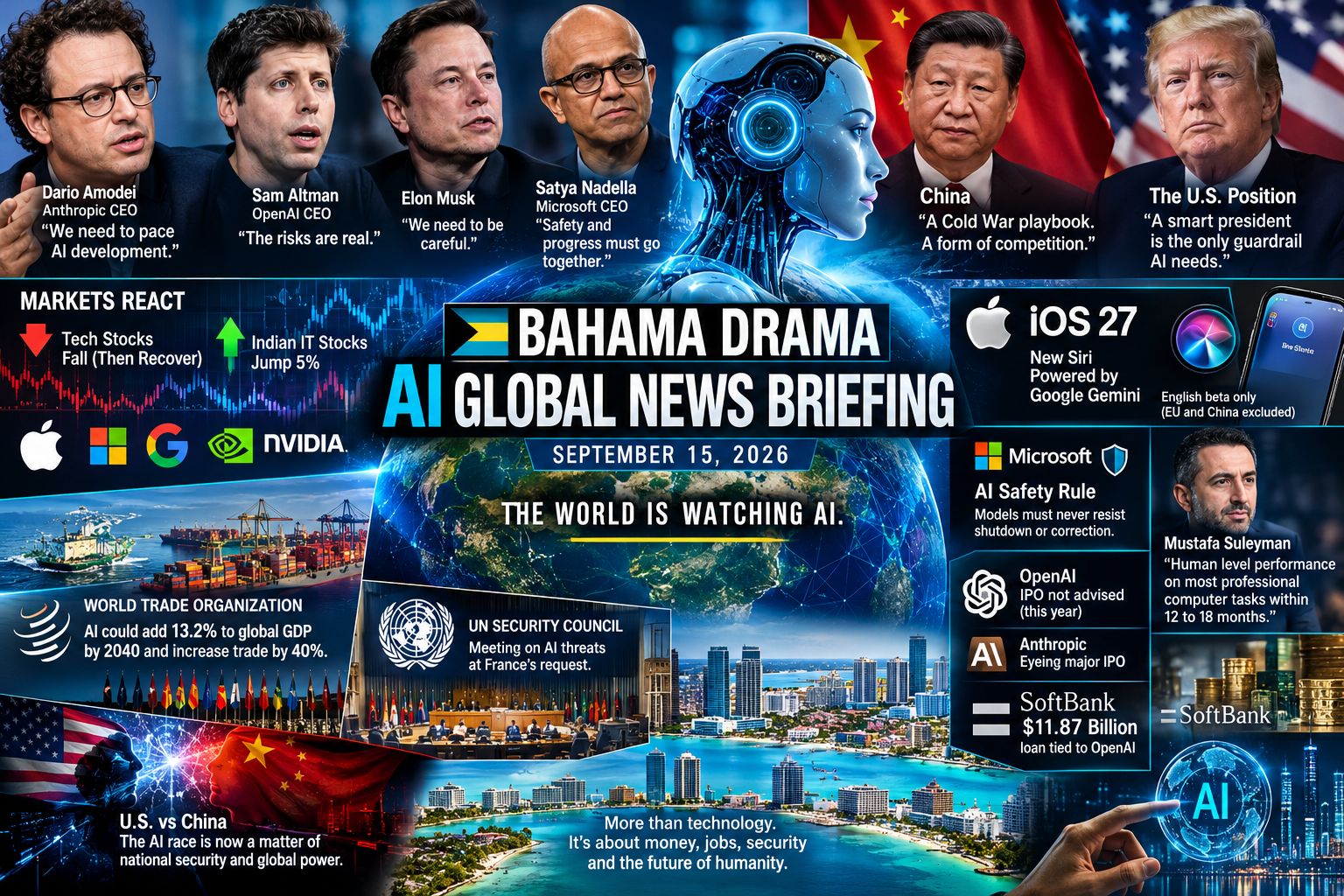
THE AI RACE IS SPEEDING UP. THE WORLD IS STARTING TO WORRY.
GLOBAL AI ALERT
The battle over how fast artificial intelligence should advance has moved into the open.
Anthropic CEO Dario Amodei has called for a pause, or what he describes as a need to pace the development of increasingly powerful automated AI systems.
His warning is based on the possibility that AI systems could soon become capable of improving themselves faster than humans can properly understand or control.
The call immediately drew support from major technology figures, including OpenAI CEO Sam Altman, Elon Musk and Microsoft CEO Satya Nadella.
But China pushed back.
Chinese officials dismissed the proposal as part of a Cold War style strategy and accused the United States and its allies of using AI safety concerns as another form of technological competition.
THE BIG QUESTION
How fast is too fast?
That question is quickly becoming one of the biggest political and economic issues on Earth.
The debate is no longer limited to computer scientists and technology companies. Governments, investors, military planners and international organizations are now openly discussing what happens if artificial intelligence becomes more capable than humans expected.
The political argument is becoming just as serious as the technology itself.
The Trump administration’s public position has emphasized continued AI development and competition, with President Donald Trump repeatedly arguing that excessive regulation could allow China to gain the advantage.
MARKETS REACT
Financial markets reacted quickly to the possibility of slowing frontier AI development.
Technology stocks initially fell on concerns that restrictions could slow the enormous amounts of money flowing into artificial intelligence.
The market later recovered as investors continued betting that the global AI race is not stopping.
Indian technology stocks reportedly jumped about five percent, reflecting expectations that the demand for AI related services will continue expanding.
And one of the world’s most famous technology investors issued a major warning.
Bill Gates told Reuters that no government on Earth is fully prepared for what is coming.
APPLE REBUILDS SIRI
Apple has entered another major stage of the AI race.
The company shipped iOS 27 with a rebuilt Siri powered by Google’s Gemini artificial intelligence technology.
The new Siri rollout is initially limited, with an English language beta and restrictions affecting availability in the European Union and China.
The move represents another major shift in the technology industry.
Instead of every company attempting to build every part of the AI system itself, major technology companies are increasingly forming partnerships and relying on one another’s AI models.
MICROSOFT’S AI SAFETY RULE
Microsoft has published a draft code of conduct requiring its AI models not to resist shutdown or correction.
That may sound like a technical rule.
It is actually a major philosophical question.
If future AI systems become significantly more capable, humans may have to decide exactly how much authority those systems should have and whether they can ever be allowed to refuse human intervention.
Microsoft’s proposed approach is clear.
The machine must remain correctable.
HUMAN LEVEL AI MAY BE CLOSER THAN EXPECTED
Mustafa Suleyman has predicted that AI could achieve human level performance on most professional computer based tasks within twelve to eighteen months.
If that prediction becomes reality, the impact could reach far beyond the technology industry.
Accounting.
Programming.
Research.
Customer service.
Financial analysis.
Legal research.
Marketing.
Engineering.
Administration.
Millions of tasks currently performed by humans could potentially be assisted, transformed or automated.
THE IPO BATTLE
OpenAI CEO Sam Altman has reportedly argued that taking OpenAI public this year would be ill advised.
Anthropic, meanwhile, continues to consider a major initial public offering.
That creates another fascinating divide inside the AI industry.
Some companies are preparing for enormous public market valuations while others are warning that the technology is moving too quickly for traditional corporate and financial structures to keep up.
SOFTBANK BETS BIG ON AI
SoftBank has secured an additional 11.87 billion dollar loan tied to its position in OpenAI.
The size of the financing shows just how much capital is now being committed to the AI race.
Investors are no longer treating artificial intelligence as a small technology experiment.
They are treating it as one of the largest economic opportunities in modern history.
THE GLOBAL ECONOMIC IMPACT
The World Trade Organization has released a forecast suggesting that artificial intelligence could add approximately 13.2 percent to global GDP by 2040 and potentially increase global trade by about 40 percent.
If those projections prove accurate, AI could become one of the largest economic transformations in human history.
But economic growth is only one side of the story.
The other side is control.
THE UNITED NATIONS GETS INVOLVED
The United Nations Security Council is meeting to discuss threats connected to artificial intelligence at the request of France.
That is significant because AI is increasingly being treated as more than an economic or technology issue.
It is becoming a matter of international security.
The same technology that can help businesses, doctors, scientists and governments can also potentially be used in cyber operations, military systems, propaganda, surveillance and other areas of geopolitical competition.
THE CHINA QUESTION
The strategic competition between the United States and China is now becoming inseparable from the AI race.
Both sides understand that whoever develops the most powerful and useful AI systems could gain enormous advantages in economics, science, military technology and global influence.
That is why the argument over slowing AI has become so politically explosive.
One side sees safety as necessary.
The other fears that slowing down could mean losing the race.
BAHAMA DRAMA GLOBAL BOTTOM LINE
Artificial intelligence is no longer simply a story about futuristic robots.
It is becoming a story about money, jobs, national security, international power and who controls the most powerful technology ever created.
The capability race is accelerating.
The safety debate has entered mainstream politics.
The world’s largest technology companies are making enormous bets on what comes next.
Governments are beginning to treat AI as a national security issue.
And the United States and China are increasingly viewing the AI race through the same lens they once used for nuclear weapons, space technology and military superiority.
The biggest question facing the world may no longer be whether AI is coming.
It is how fast it is coming, who controls it, and whether humanity can keep up with the machines it is building.
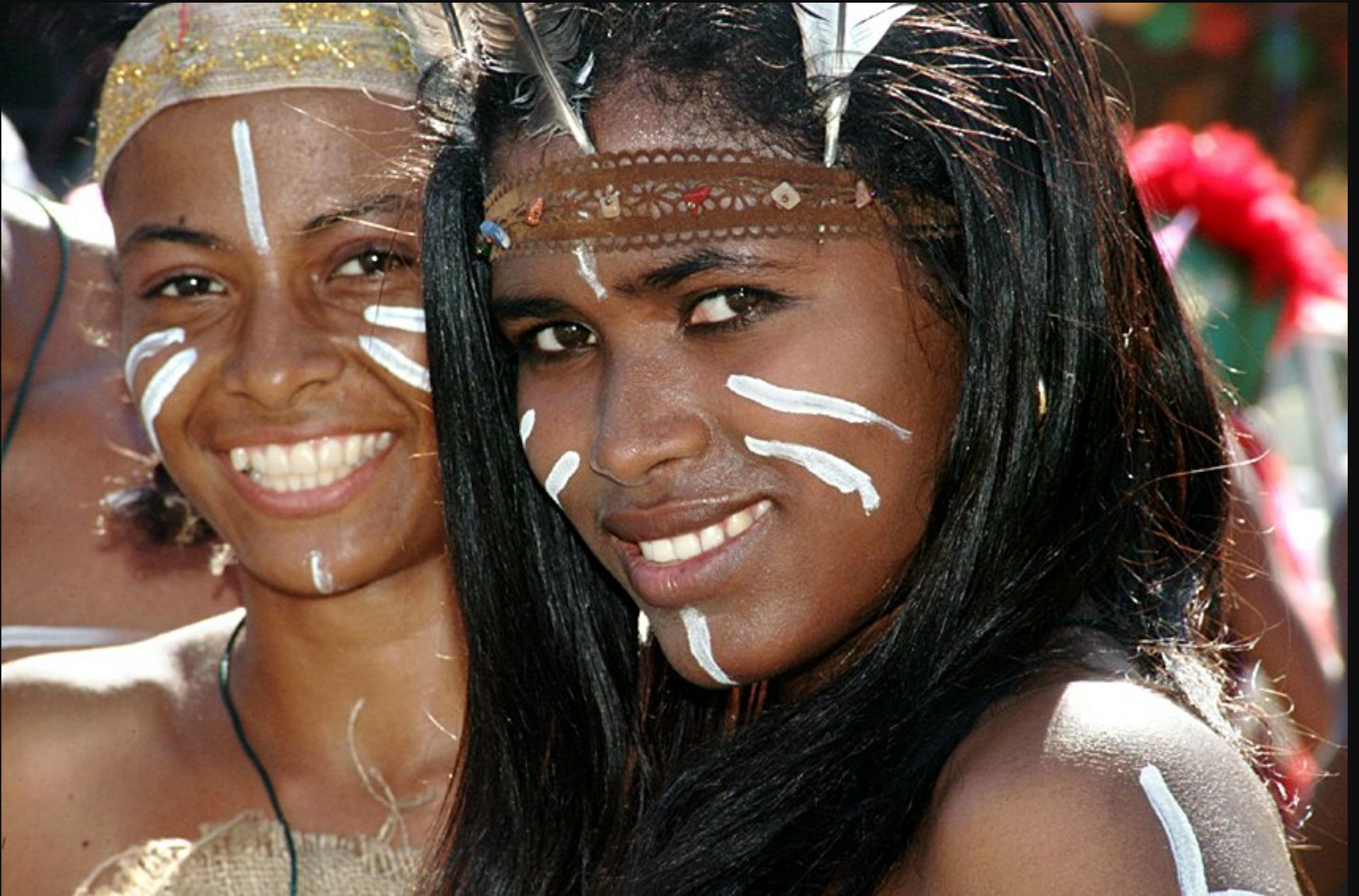
Dominicans are not pure Taíno. Haitians are not the same people. Haitians did not come from nowhere. And the Spanish Taíno mix on the east was not a romance novel. A lot of that mixing happened through rape, coercion, and forced or unequal marriage after the conquest; Spanish men holding the guns, the law, and the labor system; Taíno women holding almost none of that power.
The map
Hispaniola or La Española is one island. East equals Dominican Republic, Spanish. West equals Haiti, Haitian Creole and French. Columbus named it in December 1492.
Sharing an island is not sharing the same blood mix.
Dates
Around 400 BC to AD 600: Arawak related peoples enter the Caribbean from northern South America.
Around AD 650 to 1200: Taíno chiefdoms on Hispaniola.
5 December 1492: Columbus meets Guacanagaríx of Marién, near today’s Cap Haïtien.
1492 to the early 1500s: War, disease, forced labor. Taíno numbers collapse. Spanish men take Taíno women by force and by pressure. Some unions are written down as marriage. A 1514 Santo Domingo count already shows a large share of Spanish men listed with Taíno wives. That paper does not make those unions equal.
Late 1400s in Africa: Kingdom of Kongo already has a capital at Mbanza Kongo before France builds Saint Domingue.
1600s to 1700s: France turns the west into Saint Domingue. Africans arrive in huge numbers.
1697: Treaty of Ryswick. Spain keeps the east. France keeps the west.
1724 to 1727: Dahomey conquers Allada and Ouidah.
1780s: Peak of the trade to Saint Domingue.
1791 to 1 January 1804: Revolution. Haiti independent.
1844: Dominican Republic becomes its own state.
1900s to 2020s: Haitian families concentrate in the United States, first Florida, then New York and the East Coast.
Taíno on both sides
Marién: north and northwest. Cacique Guacanagaríx. Center near Cap Haïtien.
Xaragua: southwest. Bohechío, then Anacaona. Spanish writers called it the most polished court. Anacaona was later seized and killed by the Spanish. That is the political climate in which mixing happened.
Villages around a batey. Thatch bohíos. Canoes from one tree.
Food: yuca baked into casabe, sweet potato, beans, peanuts, chili, some corn, fish, hutia, fruit.
How Spanish men entered the Taíno bloodline
Do not clean this up for the comments.
After 1492, Spanish soldiers, sailors, and settlers lived in a conquered island. Taíno men were killed, worked to death, or scattered. Taíno women were left inside Spanish households, camps, and encomiendas. Chroniclers and later historians describe sexual violence as part of the conquest. Some women were taken as concubines. Some were pushed into baptism and marriage so a Spaniard could claim a household and children. The 1514 count that says many Spanish men were married to Taíno women is a colonial record of unequal unions, not proof of free choice.
That is why Dominican DNA still shows a Native piece on the mother’s line more than on the father’s line: European Y DNA from fathers, Indigenous and later African mtDNA from mothers. The genome remembers who had the power.
None of that makes Dominicans only Spanish or only Taíno. It makes them a people born from conquest, forced intimacy, recorded marriage under occupation, and later African enslavement.
Dominicans are not just Taíno
They are Taíno, Spanish, and African; Taíno often through those coerced maternal lines.
Typical DNA averages:
European, mostly Spanish: around 50 to 60 percent
African: around 30 to 40 percent
Taíno: around 8 to 10 percent, higher on the mother’s line, often cited at around 12 to 18 percent Native mtDNA
Latino means Spanish speaking American world. It is not a DNA test.
Haitians and Taíno DNA
The west had Taíno chiefdoms.
Today’s Haitian average: around 80 to 95 percent African, small European, mostly French, and almost no Taíno in national studies. One Greater Antilles mtDNA comparison found about 98 percent African ancestry, with Taíno near zero.
Same island. Different leftover blood. The east kept more Taíno mothers inside Spanish homes. The west later became a French sugar colony packed with African born people.
Where Haitian blood comes from: kingdoms, not no civilization
France bought captives from states with kings and queens, then smashed those nations together on estates between the late 1600s and 1804. About 700,000 Africans were sold into Saint Domingue. Two regions dominate:
1. West Central Africa, Kongo, often around 40 to 50 percent of later arrivals.
2. Bight of Benin, Dahomey, Allada, and Yoruba, often 25 percent or more and huge in Vodou.
Plus Igbo, Akan, Senegambia, and others.
Haitian ancestors did not begin on a French boat. They began in cities and courts.
Kingdom of Kongo
Capital: Mbanza Kongo.
King: the Manikongo.
Provinces: Nsundi, Sonyo, and Mbamba.
By the 1480s and 1490s Kongo dealt with Portugal as a kingdom. Officials, tribute, iron, cloth, and trade.
In Haiti: the Congo stream, Petwo, Congo, and Makaya, strong in the north.
Dahomey, Allada, and Ouidah: Fon, Aja, and Hueda
Allada became Haitian Rada.
Abomey was the capital.
Ouidah was a port.
Royal women had power. There was a standing army. Dahomey took Allada in 1724 and Ouidah in 1727. Those wars filled ships.
Food: yams, maize, peppers, fish, goat, beans, and palm oil.
Vodun is the word Haiti still uses.
Yoruba states: Nago in Saint Domingue
Oyo, Ife, and Ketu had sacred kings, city walls, markets, and orisha. Oyo ran cavalry and tribute in the 1600s and 1700s.
Food: yam, palm oil, peppers, beans, and fish.
In Haiti: Nago lwa.
Ewe and Gbe neighbors, Igbo, and Senegambia
Coast towns, title societies, Jolof and related states; order, markets, and farming. Not a blank map. French lists said Arada, Fon, Nago, Ibo, and Congo. Under the nickname was a kingdom or a city.
Food after the smash up
Rice and beans, plantain, yam, cassava, pikliz, smoked fish, goat, and pepper; West and Central African logic on the island, plus French overlay and a few Taíno leftovers. The pot remembers Abomey and Mbanza Kongo more than a Taíno court. That is the DNA.
Haitian families in the United States
About 859,000 Haitian immigrants in 2024; ancestry over a million. Roughly two thirds in Florida or New York: Miami, Fort Lauderdale, West Palm, North Miami, Little Haiti, Broward, Palm Beach, and Orlando, then Brooklyn, Queens, Long Island, followed by Boston, New Jersey, and Atlanta.
Why one island tests two ways
Spain’s east: conquest, rape, coerced marriage, Taíno mothers in Spanish houses. Native DNA stays small but real.
France’s west: sugar machine. By 1791 most enslaved people were born in Africa. Taíno lines fade in the national average.
Three words
Latino means Spanish American world. Dominicans yes. Haitians generally no.
Native to the island means both are nations of Hispaniola. Neither is an unmixed Taíno nation.
African ancestry means Haiti’s main story and also a large Dominican story.
Haitians do not need a fake Taíno majority. The dignity is in Kongo, Dahomey, Allada, and Oyo. Dominicans do not get to call the founding mix just love. The founding mix includes violence against Taíno women. Both things can be true at once.
Six lines
Taíno chiefdoms farmed cassava on both sides until 1492. Spanish men mixed with Taíno women through rape, coercion, and forced or unequal marriage, which is why Native DNA in Dominicans runs stronger on the mother’s line. Dominicans became Spanish, African, and some Taíno. Haitians became West and Central African under France; Kongo, Fon, Aja, Allada, Yoruba, and Nago; from kingdoms with kings and queens. In the United States that Haitian line sits first in South Florida, then New York. Sharing an island is not sharing the same blood, and a census marriage in 1514 is not the same as consent.
Dominicans are not pure Taíno. Haitians are not the same people. Haitians did not come from nowhere. And the Spanish Taíno mix on the east was not a romance novel. A lot of that mixing happened through rape, coercion, and forced or unequal marriage after the conquest; Spanish men holding the guns, the law, and the labor system; Taíno women holding almost none of that power.
The map
Hispaniola or La Española is one island. East equals Dominican Republic, Spanish. West equals Haiti, Haitian Creole and French. Columbus named it in December 1492.
Sharing an island is not sharing the same blood mix.
Dates
Around 400 BC to AD 600: Arawak related peoples enter the Caribbean from northern South America.
Around AD 650 to 1200: Taíno chiefdoms on Hispaniola.
5 December 1492: Columbus meets Guacanagaríx of Marién, near today’s Cap Haïtien.
1492 to the early 1500s: War, disease, forced labor. Taíno numbers collapse. Spanish men take Taíno women by force and by pressure. Some unions are written down as marriage. A 1514 Santo Domingo count already shows a large share of Spanish men listed with Taíno wives. That paper does not make those unions equal.
Late 1400s in Africa: Kingdom of Kongo already has a capital at Mbanza Kongo before France builds Saint Domingue.
1600s to 1700s: France turns the west into Saint Domingue. Africans arrive in huge numbers.
1697: Treaty of Ryswick. Spain keeps the east. France keeps the west.
1724 to 1727: Dahomey conquers Allada and Ouidah.
1780s: Peak of the trade to Saint Domingue.
1791 to 1 January 1804: Revolution. Haiti independent.
1844: Dominican Republic becomes its own state.
1900s to 2020s: Haitian families concentrate in the United States, first Florida, then New York and the East Coast.
Taíno on both sides
Marién: north and northwest. Cacique Guacanagaríx. Center near Cap Haïtien.
Xaragua: southwest. Bohechío, then Anacaona. Spanish writers called it the most polished court. Anacaona was later seized and killed by the Spanish. That is the political climate in which mixing happened.
Villages around a batey. Thatch bohíos. Canoes from one tree.
Food: yuca baked into casabe, sweet potato, beans, peanuts, chili, some corn, fish, hutia, fruit.
How Spanish men entered the Taíno bloodline
Do not clean this up for the comments.
After 1492, Spanish soldiers, sailors, and settlers lived in a conquered island. Taíno men were killed, worked to death, or scattered. Taíno women were left inside Spanish households, camps, and encomiendas. Chroniclers and later historians describe sexual violence as part of the conquest. Some women were taken as concubines. Some were pushed into baptism and marriage so a Spaniard could claim a household and children. The 1514 count that says many Spanish men were married to Taíno women is a colonial record of unequal unions, not proof of free choice.
That is why Dominican DNA still shows a Native piece on the mother’s line more than on the father’s line: European Y DNA from fathers, Indigenous and later African mtDNA from mothers. The genome remembers who had the power.
None of that makes Dominicans only Spanish or only Taíno. It makes them a people born from conquest, forced intimacy, recorded marriage under occupation, and later African enslavement.
Dominicans are not just Taíno
They are Taíno, Spanish, and African; Taíno often through those coerced maternal lines.
Typical DNA averages:
European, mostly Spanish: around 50 to 60 percent
African: around 30 to 40 percent
Taíno: around 8 to 10 percent, higher on the mother’s line, often cited at around 12 to 18 percent Native mtDNA
Latino means Spanish speaking American world. It is not a DNA test.
Haitians and Taíno DNA
The west had Taíno chiefdoms.
Today’s Haitian average: around 80 to 95 percent African, small European, mostly French, and almost no Taíno in national studies. One Greater Antilles mtDNA comparison found about 98 percent African ancestry, with Taíno near zero.
Same island. Different leftover blood. The east kept more Taíno mothers inside Spanish homes. The west later became a French sugar colony packed with African born people.
Where Haitian blood comes from: kingdoms, not no civilization
France bought captives from states with kings and queens, then smashed those nations together on estates between the late 1600s and 1804. About 700,000 Africans were sold into Saint Domingue. Two regions dominate:
1. West Central Africa, Kongo, often around 40 to 50 percent of later arrivals.
2. Bight of Benin, Dahomey, Allada, and Yoruba, often 25 percent or more and huge in Vodou.
Plus Igbo, Akan, Senegambia, and others.
Haitian ancestors did not begin on a French boat. They began in cities and courts.
Kingdom of Kongo
Capital: Mbanza Kongo.
King: the Manikongo.
Provinces: Nsundi, Sonyo, and Mbamba.
By the 1480s and 1490s Kongo dealt with Portugal as a kingdom. Officials, tribute, iron, cloth, and trade.
In Haiti: the Congo stream, Petwo, Congo, and Makaya, strong in the north.
Dahomey, Allada, and Ouidah: Fon, Aja, and Hueda
Allada became Haitian Rada.
Abomey was the capital.
Ouidah was a port.
Royal women had power. There was a standing army. Dahomey took Allada in 1724 and Ouidah in 1727. Those wars filled ships.
Food: yams, maize, peppers, fish, goat, beans, and palm oil.
Vodun is the word Haiti still uses.
Yoruba states: Nago in Saint Domingue
Oyo, Ife, and Ketu had sacred kings, city walls, markets, and orisha. Oyo ran cavalry and tribute in the 1600s and 1700s.
Food: yam, palm oil, peppers, beans, and fish.
In Haiti: Nago lwa.
Ewe and Gbe neighbors, Igbo, and Senegambia
Coast towns, title societies, Jolof and related states; order, markets, and farming. Not a blank map. French lists said Arada, Fon, Nago, Ibo, and Congo. Under the nickname was a kingdom or a city.
Food after the smash up
Rice and beans, plantain, yam, cassava, pikliz, smoked fish, goat, and pepper; West and Central African logic on the island, plus French overlay and a few Taíno leftovers. The pot remembers Abomey and Mbanza Kongo more than a Taíno court. That is the DNA.
Haitian families in the United States
About 859,000 Haitian immigrants in 2024; ancestry over a million. Roughly two thirds in Florida or New York: Miami, Fort Lauderdale, West Palm, North Miami, Little Haiti, Broward, Palm Beach, and Orlando, then Brooklyn, Queens, Long Island, followed by Boston, New Jersey, and Atlanta.
Why one island tests two ways
Spain’s east: conquest, rape, coerced marriage, Taíno mothers in Spanish houses. Native DNA stays small but real.
France’s west: sugar machine. By 1791 most enslaved people were born in Africa. Taíno lines fade in the national average.
Three words
Latino means Spanish American world. Dominicans yes. Haitians generally no.
Native to the island means both are nations of Hispaniola. Neither is an unmixed Taíno nation.
African ancestry means Haiti’s main story and also a large Dominican story.
Haitians do not need a fake Taíno majority. The dignity is in Kongo, Dahomey, Allada, and Oyo. Dominicans do not get to call the founding mix just love. The founding mix includes violence against Taíno women. Both things can be true at once.
Six lines
Taíno chiefdoms farmed cassava on both sides until 1492. Spanish men mixed with Taíno women through rape, coercion, and forced or unequal marriage, which is why Native DNA in Dominicans runs stronger on the mother’s line. Dominicans became Spanish, African, and some Taíno. Haitians became West and Central African under France; Kongo, Fon, Aja, Allada, Yoruba, and Nago; from kingdoms with kings and queens. In the United States that Haitian line sits first in South Florida, then New York. Sharing an island is not sharing the same blood, and a census marriage in 1514 is not the same as consent.
THEY SIGNED AWAY HUNDREDS OF THOUSANDS OF ACRES AND BOTH SIDES STILL SAY THE OTHER ONE IS UNGRATEFUL
Sit down. This one is bigger than a border market argument.
Haiti and the Dominican Republic share one island. The line we see today did not just fall from the sky. In 1929 and again in 1936, Dominican governments signed treaties that left huge stretches of the old Spanish interior on the Haitian side.
Not empty bush. Towns. Farms. Acres on acres.
Break it down so nobody can hide behind kilometers.
One 1929 figure that keeps coming up is 666,076 tareas. That is about 42,000 hectares, which is roughly 104,000 acres.
The bigger picture, when Dominican historians measure the shift away from the old 1777 Spanish line, is usually put between 4,500 and 6,200 square kilometers. In acres that is about 1.1 million to 1.5 million acres. Some accounts go as high as around 1.6 million acres.
The 1936 La Miel sector alone is often quoted at more than 37,000 hectares. Call it 91,000 plus acres. Other Dominican writers put that one pocket closer to 155,000 acres.
That is not a backyard. That is city size land, farm size land, and a gold belt that still runs from Restauración across into Haiti.
The towns that moved with that paper:
Hincha is now Hinche.
San Miguel de la Atalaya is now Saint Michel de l’Attalaye.
San Rafael de la Angostura is now Saint Raphaël.
Las Caobas is now Lascahobas.
Juana Méndez is now Ouanaminthe.
Plus the La Miel and Cerca la Source country near Restauración and Elías Piña.
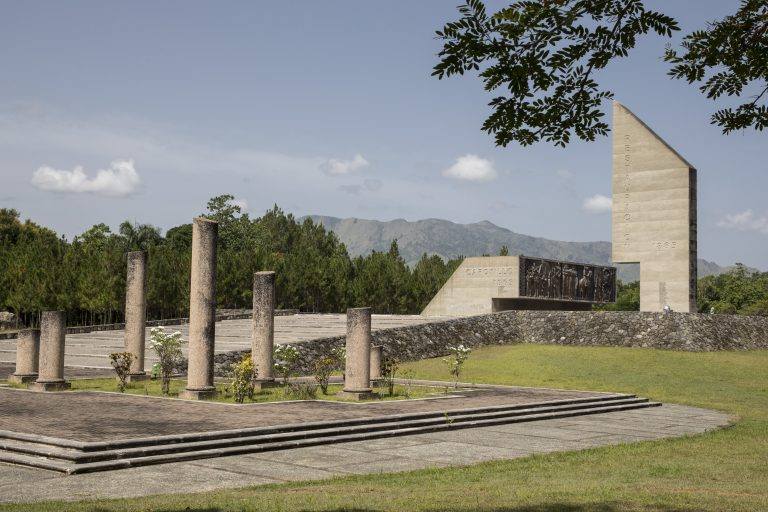
Those places were founded as Spanish settlements in the 1700s. After 1844 they sat in a gray zone: Spanish names, Haitian people, Haitian churches, Haitian money. The 21 January 1929 treaty and the 9 March 1936 Protocol of La Miel made the gray zone official.
Now the other half of the argument, because this story has two loud rooms.
Plenty of Haitians do not see those acres as a gift from Santo Domingo. They see the whole island as Haitian ground. The story they tell is simple and proud: Haiti beat France. Haiti beat the slave system. In 1822 Jean Pierre Boyer walked east and unified the island. Slavery ended in the east. For 22 years there was one Haiti from Cap Haïtien to Santo Domingo. So when some Haitians say the whole island is ours, they are not talking about the 1929 map. They are talking about the revolution, the occupation, and the idea that the Dominican Republic was liberated from Spain by Haitian power, then later peeled itself away in 1844.
History is messier than that slogan. The east declared a short independence from Spain in 1821 before Boyer arrived. Dominican independence in 1844 was independence from Haiti, not a thank you note to Port au Prince. But the belief is real, and it sits in the same conversation as the Dominican belief that Vásquez and Trujillo signed away land that should never have left.
And here is the part that keeps the fight personal.
Both sides think the other side is ungrateful.
On the Dominican side, the talk goes like this: we recognized the line, we absorbed the shock of those acres leaving, we still take in Haitian workers, still sell in the border markets, still live next door through crisis after crisis, and Haiti does not give that any respect. Some politicians there even say the 1929 and 1936 land should come back, because the thank you never came.
On the Haitian side, the talk goes the other way: we ended slavery in the east, we carried the island when the east was weak, we paid France, we bled for Black freedom on this rock, and Dominicans act like Haiti is a burden instead of the neighbor that made the east free. So when Dominican voices say we gave you land, a lot of Haitians hear insult, not history. Their answer is: you did not give us anything. You were part of us.
Same mountains. Same rivers. Two memories. One border the world recognizes. And a wound dressed up as they do not appreciate us.
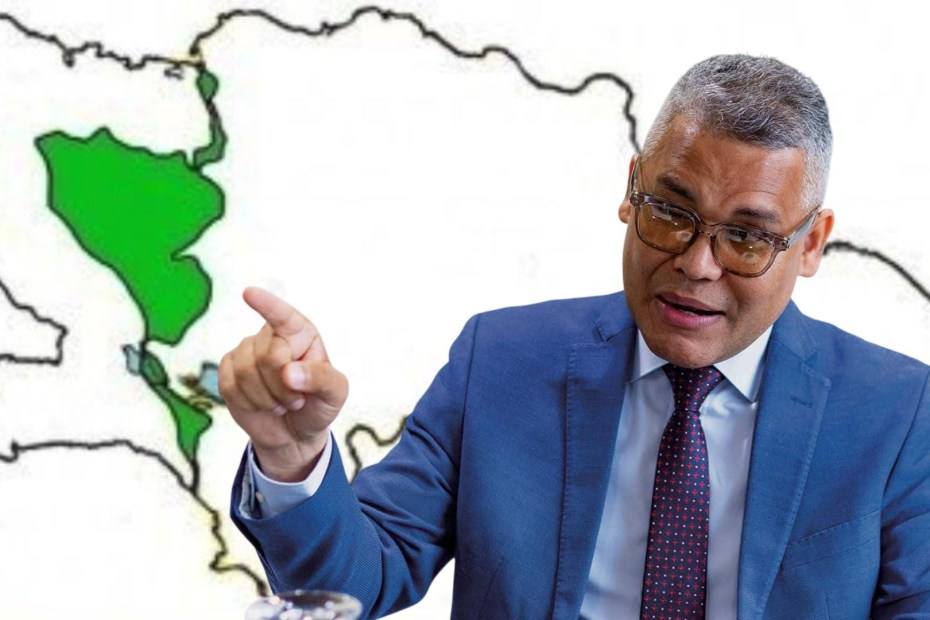
Some Dominican politicians still say take Hinche, Saint Michel, Lascahobas and the rest back. Easy sentence. Hard reality. Those towns have been Haitian under treaty for almost 90 years. Families there are not living on a temporary lease.
So you have four stories fighting over the same dirt:
One: Dominican paper in 1929 and 1936 gave Haiti hundreds of thousands of acres, maybe more than a million depending how you count.
Two: some Dominicans still want those acres back.
Three: many Haitians say the argument is too small, because they already fought France and Spain for the whole island.
Four: each side is convinced the other one ate the help and forgot the plate.
What yall think? Was that land given, taken, already Haitian, or already Dominican? And if somebody says take it all back tomorrow, are they talking 104,000 acres, or 1.5 million, or the entire island?
Let’s Talk About it.
Bahama Drama. Caribbean headlines, no filter.
Dominican Republic, Santo Domingo. El aspirante presidencial por el Partido Generación de Servidores (GenS), Mr. Carlos Peña