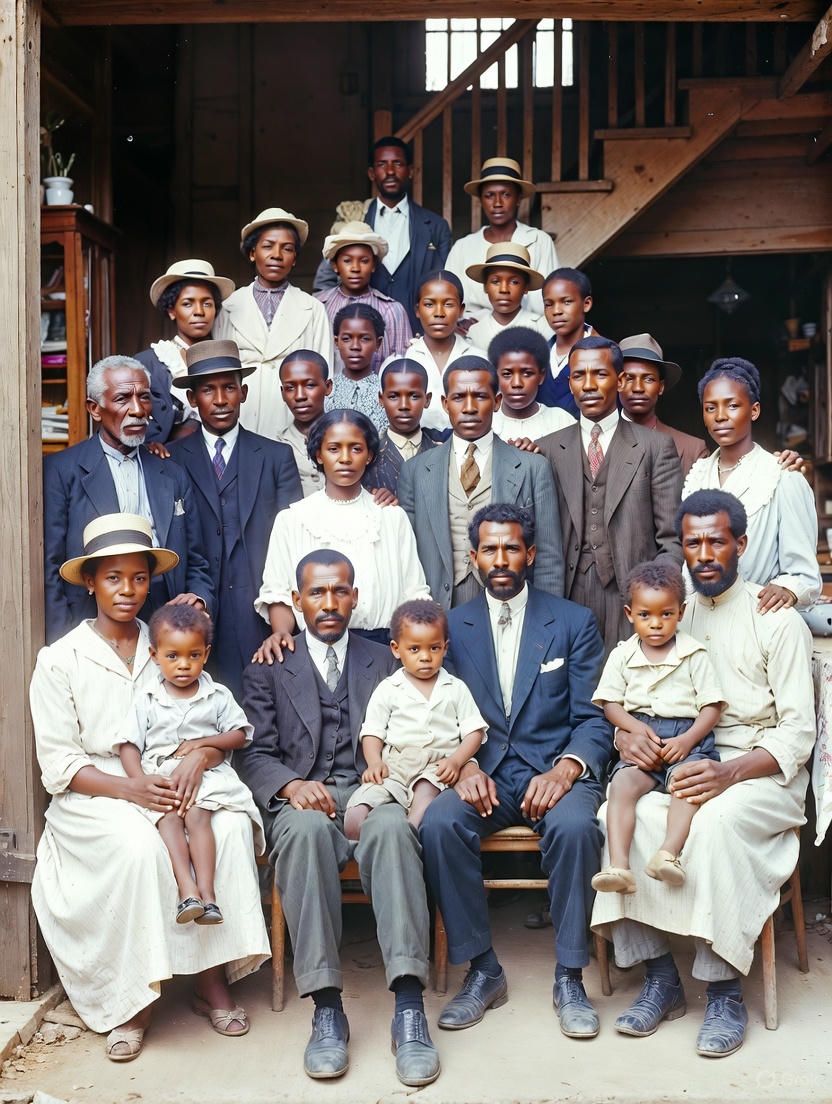
SURNAME ANDERSON
SURNAME ANDERSON
By: Michael Elijah Muhammad Clare
A name shaped by strength, movement, and generations of builders
When you hear the name Anderson, you’re looking at a lineage that travelled through centuries of migration, survival, and reinvention. It’s a name that carries a quiet confidence, the kind that doesn’t need to announce itself because it speaks through the people who wear it.
The surname Anderson has its earliest roots in Scotland, England, and northern Europe. It means son of Andrew, and Andrew was one of the most common names in medieval times. Anderson families were known for carpentry, shipbuilding, agriculture, estate work, metalwork, and practical skills that kept communities alive. They were dependable people who built, repaired, managed, and guided.
When the Loyalists came to the Bahamas after the American Revolution, some Anderson families came with them. They brought their discipline, craftsmanship, and strong work ethic. Over time their lineage blended into the islands.
On the African side, the connection comes through history. Anderson is not an African tribal surname. African people in the Bahamas received European surnames through enslavement, colonial systems, plantation records, and the naming process after emancipation. Many Africans carried the name Anderson for identification, land registration, access to work, or simply to keep families together after slavery ended.
But African families transformed the name into something powerful. They gave it meaning through resilience, wisdom, survival, and community strength. They rebuilt their lives in Exuma, Long Island, Abaco, Eleuthera, and New Providence. Their descendants shaped the Anderson identity into something uniquely Bahamian.
A Bahamian Anderson often carries natural leadership, strong family loyalty, calm strength, careful thinking, and the ability to build and adapt. These families show up in community leadership, construction, farming, education, church work, and public service. They notice details, sense danger early, and endure hardship without breaking.
If you carry the name Anderson, you are carrying a history that survived oceans, wars, plantations, and centuries of change. It is a name built on skill, discipline, intelligence, and resilience. A name shaped by people who built their world piece by piece and generation by generation.
Steady as an Anderson.
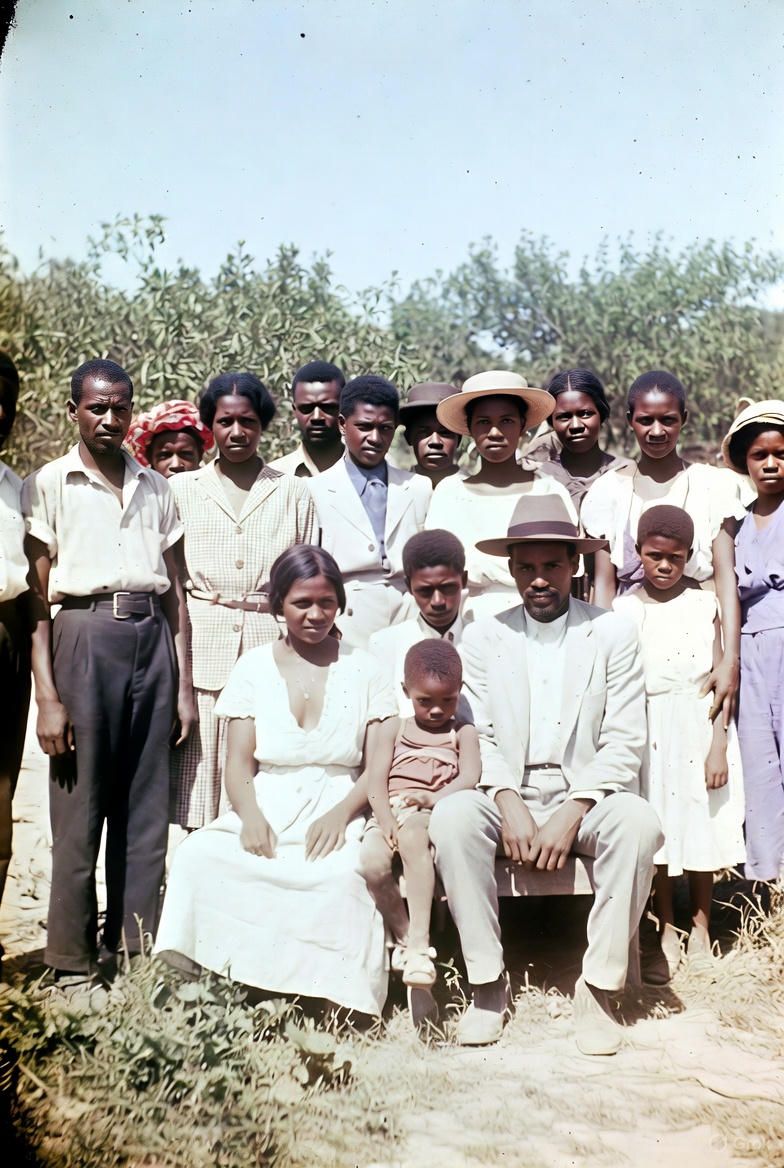
Surname Sanders
Surname Sanders
By: Michael Elijah Muhammad Clare
A Bahamian Story of Survival, Pride, and a Bloodline Born to Lead
When Bahamian’s hear the name Sanders, they hear more than a surname. They hear a legacy. They hear families who carried the weight of islands on their shoulders, who survived storms both natural and human-made, and who built communities where hope, resilience, and resourcefulness became the law of life.
The Sanders name is found across Nassau, Harbour Island, Eleuthera, Abaco, Long Island, Exuma, and even in Florida, New York, London, and beyond. But the story behind the name is older than any map or census, older than emancipation, older than Loyalist arrivals, older than the modern Bahamas itself.
Before Slavery
Where the Name Began
Sanders is an English surname, a patronymic derived from “Sander,” itself a medieval form of “Alexander,” meaning “defender of men.” In old England, Sanders families were landholders, craftsmen, and community leaders. They managed resources, taught trades, protected their neighbors, and built societies brick by brick, skill by skill.
Those traits traveled across oceans. They carried into the Bahamas in ways both visible and hidden, shaping families in ways that survive to this day.
How the Name Arrived in the Bahamas
During the Loyalist migrations following the American Revolution, English settlers carrying the Sanders name came to the islands, bringing with them their skills, trades, and knowledge of community-building. Some became small landowners. Some worked in farming, fishing, and maritime trades.
Enslaved Africans living under their ownership, or in proximity, were often given the surname Sanders. These Africans were mostly from West African regions including the Akan, Yoruba, and Igbo, whose cultural values emphasized community, shared responsibility, and survival together. These values mixed with the European skills and naming traditions to create a Bahamian branch of Sanders, English in name, African in blood, Bahamian in soul.
The Rise of the Sanders Name in the Bahamas
Following emancipation in 1834, Sanders families began to fully claim the surname as their own. Freedmen and women built settlements across the islands, including Harbour Island, Nassau, Eleuthera, Long Island, and Exuma. Many became boat builders, fishermen, teachers, midwives, and community leaders. Others managed farms, raised livestock, or opened small businesses that became the backbone of island economies.
Generations passed, and the Sanders name grew stronger. It became synonymous with hard work, integrity, community service, and leadership. The Bahamas today holds one of the largest concentrations of Sanders families in the world, a testament to survival and influence across centuries.
The Spiritual and Cultural Heart of Sanders
Every Sanders family carries stories of people who gave everything for others. People who sacrificed comfort, wealth, or even safety to protect family and neighbors. This is not just history, it is a spiritual inheritance, a reflection of West African cultural philosophies that emphasize collective survival, foresight, and generosity.
It is the legacy of ancestors who endured the Middle Passage, slavery, colonial oppression, and island hardships, yet continued to teach the next generation what it meant to lead with heart. That instinct, that vigilance, that sense of responsibility, still pulses in Sanders families today.
Notable Sanders
Bahamian Sanders families have contributed to education, politics, maritime trades, arts, and entrepreneurship. They are leaders in their communities, voices in national development, and examples of the island spirit that refuses to bend to injustice. Beyond the Bahamas, Sanders descendants continue to carry the values of skill, foresight, and leadership in places like the United States, Canada, and the United Kingdom.
What the Name Means Today
If your surname is Sanders, this is your inheritance:
English roots, African ancestry, Bahamian resilience, a spirit of service, a tradition of leadership, and a heart trained to protect and care for others. You come from people who survived impossible circumstances and built thriving communities, not just for themselves, but for everyone around them.
To Every Bahamian Sanders
Your name is not ordinary. It is a symbol of endurance, foresight, and strength. It carries the legacy of ancestors who defended their people, shaped islands, and created opportunities for generations yet to come. Wear it with pride. Honor it with action. The Bahamas is stronger today because of the Sanders bloodline.
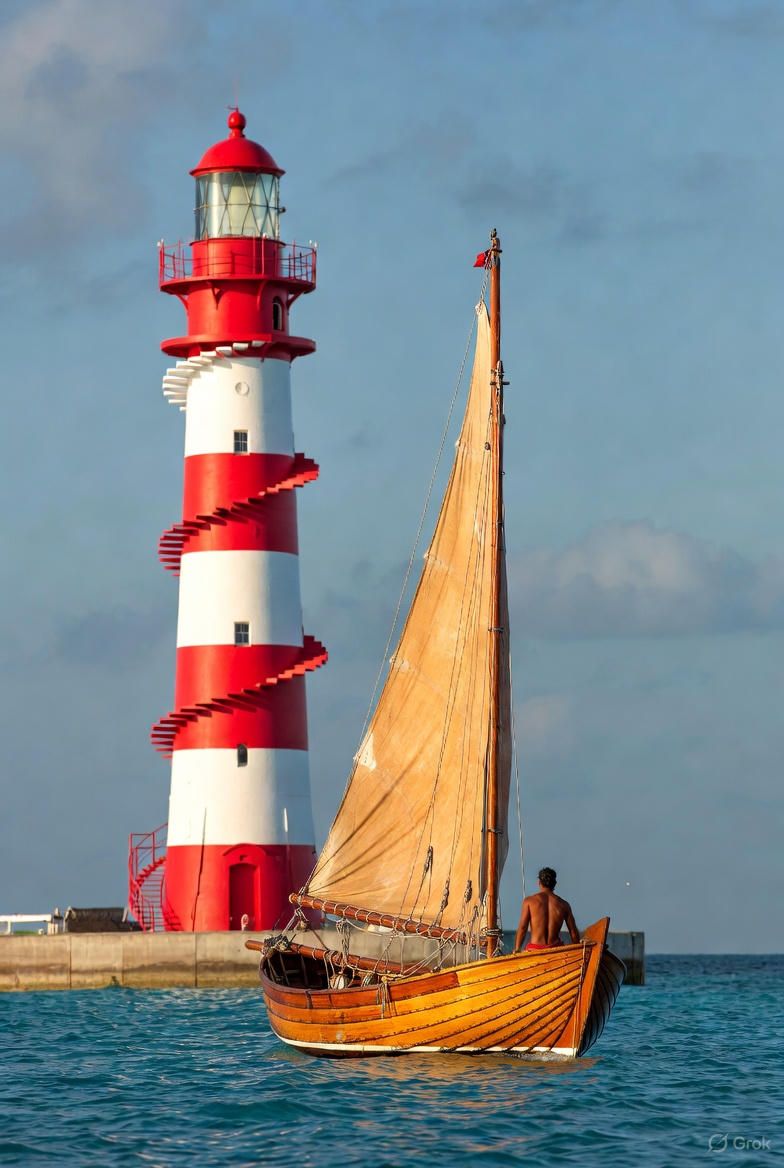
SURNAME FOX
SURNAME FOX
By: Michael Elijah Muhammad Clare
A legacy that carries both endurance and instinct
Most people hear the name Fox and think of the animal, but in truth the name carries a history far deeper and far older than the images people attach to it today. When you hold this name, you’re holding a story that crosses continents, bloodlines, tragedies, and triumphs.
The surname Fox originates in England and Ireland. In those countries, families with this name were often known for their sharp minds, cleverness, and skill in practical trades. During the 1600s and 1700s, many Fox families worked as craftsmen, metalworkers, blacksmiths, wheelwrights, and builders. Their talent for shaping raw material into something strong and purposeful earned them respect in local communities they were “the ones who could turn nothing into something.” That reputation followed them wherever they traveled.
When the British loyalists came to the Bahamas after the American Revolution, some Fox families arrived with them. They brought with them a builder’s mindset, discipline, and a talent for mastering complex skills. Over time, these families mixed with the local population, including descendants of enslaved Africans who often adopted European surnames such as Fox. This blending created a Bahamian Fox lineage rooted in resilience, intelligence, and adaptability.
Today, many Bahamian’s with the last name Fox carry a natural talent for reading situations, spotting opportunity, and navigating challenges with strategy and care. A Fox can walk into a room and sense the dynamics at play without saying a word. They notice the small details, anticipate danger, and know when to act and when to stay still.
This is why the name Fox in the Bahamas often appears in families recognized for leadership in communities, problem-solving abilities, and wisdom that comes not just from age but from experience. They carry a bloodline that understands survival, craftsmanship, intelligence, and awareness all at once.
If your name is Fox, or if you come from that line, you’re carrying a history that says you were never meant to just blend in. You come from people who survived by being alert, thinking deeply, and mastering the tools they had at hand. That is the heritage that runs through the name today.
Slick As A Fox 🦊
Lol 🤣
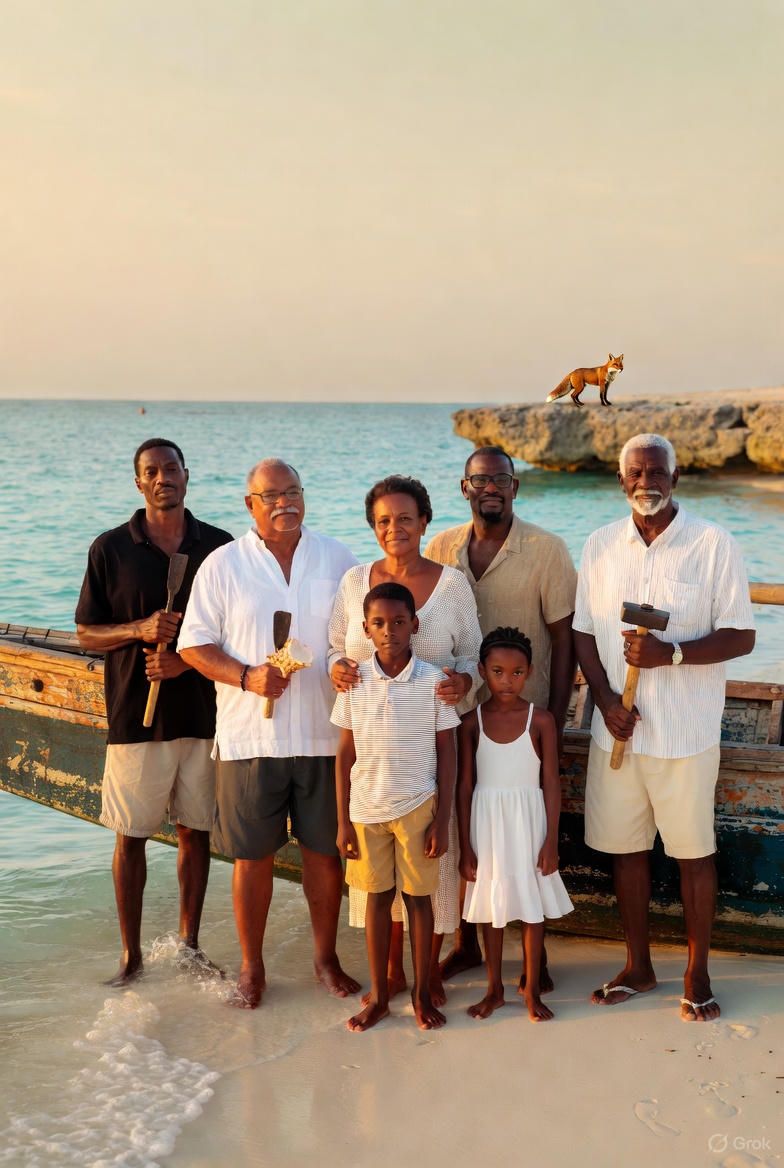
Smuggling Of Migrants Bill 2025
Smuggling Of Migrants Bill 2025
Why didn’t the PLP government put forth this bill before the By Election in Golden Isles?
Y’all Sharp bey.
Well at least y’all did it before the upcoming general election 2026…
Surname ARMBRISTER
Surname ARMBRISTER
By: Michael Elijah Muhammad Clare
THE UNTOLD HISTORY OF A BAHAMIAN SURNAME SERIES
The Bahamas is more than sun and sea. Our surnames carry stories. They carried us long before we could carry ourselves. And today, Michael, this one is for every Armbrister across the islands and across the world who never got to hear the full weight, the full glory, and the full truth of their name.
This is your history.
This is your inheritance.
This is your pride.
THE AFRICAN ROOT: THE SIDE THAT CARRIED THE PAIN AND THE POWER
Long before the name Armbrister reached the Bahamas, the African ancestors who would one day carry that name were taken from strong, resilient ethnic groups across West Africa. Many were captured from regions that today include Ghana, Sierra Leone, Guinea, and parts of Nigeria. These were not weak people. These were not passive people. These were farmers, fishermen, metalworkers, women who traded goods across rivers, men who built their own canoes, and families who lived by skill, rhythm, and ancestral wisdom.
On the African side of the Armbrister bloodline, luck didn’t just run, it lived. It breathed. It survived storms that should have wiped them out. Luck in that bloodline wasn’t about chance. It was about resilience that defied the odds. Strength that refused to break. A spirit so stubborn, even chains could not silence it.
When African ancestors were brought to the Bahamas during slavery, to islands like Eleuthera, Cat Island, Exuma, Long Island, and New Providence, that same luck followed them. Plantation owners had no idea they were forcing together people who came from centuries of intelligence, skill, and spiritual grounding. Those ancestors passed that quiet luck down to the Armbrister descendants of today.
THE EUROPEAN ROOT: THE SIDE THAT CARRIED THE CRAFT AND THE PROFESSION
Now here is where the name itself enters the picture.
The surname Armbrister comes from European roots, specifically from German-speaking regions. The early European Armbristers were craftsmen, not warriors or royalty. They were something even more interesting. The name comes from the word for crossbow-maker or bow-builder. These were technical, skilled tradesmen. People who worked with their hands. People who understood precision. People whose craft required steady nerves, deep concentration, and artistry.
The early European Armbristers were known for:
• woodcraft
• mechanical skill
• tool-making
• precision engineering of early weaponry
• building reliable instruments for hunting and protection
In simpler terms: they were trusted builders. They made things that had to work. They made tools that could protect families. They built with the expectation of accuracy. And that attention to detail stayed in their bloodline.
They later migrated into England and Scotland, where the name evolved in spelling and pronunciation. By the 1700s and 1800s, some Armbristers moved into shipping, trade, maritime work, and agriculture. Many were described as hardworking, highly skilled, and remarkably consistent in their craft.
THE BLENDING OF THE BLOODLINES: WHERE THE MAGIC BEGAN
When slavery ended in the Bahamas, the new society that formed was a mixture of African strength and European surnames. The African side brought spiritual power, survival, creativity, family loyalty, and inherited luck that came from outliving impossible conditions. The European side brought skill, craftsmanship, precision, and a deep cultural history of building tools and adapting to new environments.
When these two sides blended, the Armbrister surname in the Bahamas transformed into something new. Something uniquely Bahamian. Something powerful.
African resilience met European craftsmanship.
African luck met European precision.
African heart met European skill.
And from that combination came Bahamians who were strong, smart, resourceful, adaptable, and spiritually grounded.
THE ARM BRISTER JOURNEY ACROSS THE BAHAMAS
Historically, Armbristers became rooted in islands like:
• Eleuthera
• Cat Island
• Exuma
• Long Island
• New Providence
• And later spreading into Grand Bahama and Abaco
Many early Bahamian Armbrister families were fishermen, boat builders, farmers, educators, musicians, and church leaders. Their African resilience made them survivors. Their European surname lineage added an instinct for craft and skill.
Together, it created a bloodline known for:
• sharp-mindedness
• good hands, whether in building, writing, or creating
• natural leadership
• spiritual intuition
• a streak of good fortune that follows them generation after generation
• a strong sense of family and community on whichever island they settled
WHERE THEY ARE TODAY
Today, Armbrister descendants can be found not just across the Bahamas but across the world, in the United States, Canada, the United Kingdom, and parts of the Caribbean. Many of them have no idea how deep their roots go. Many do not realize they are carrying a name shaped by African survival and European craftsmanship.
THE BAHAMIAN ARM BRISTER LEGACY
When you meet an Armbrister, you are meeting someone whose ancestors built boats, built tools, survived islands, survived empires, survived slavery, and still found a way to pass down good fortune, resilience, craftsmanship, and spiritual grounding into the modern world.
That is what the name Armbrister means in the Bahamas.
A story of luck that survived chains.
A story of skill that survived time.
A story of two worlds blending into one powerful Bahamian identity.
So today, every Armbrister across these islands can hold their head high.
Your name is not just European.
Your blood is not just African.
Your identity is not just a mixture.
Your lineage is a masterpiece.
Surname Adderley
Surname Adderley
By: Michael Elijah Muhammad Clare
A Bahamian Story of Survival, Pride, and a Bloodline Born to Care
When Bahamian’s hear the name Adderley, they do not just think of a surname. They think of a people. A family spread across islands and generations. A lineage connected to the very soil, sea, and struggle that built the modern Bahamas.
The Adderley’s are one of the most rooted, respected, and widespread Bahamian families. You will find this name in Nassau, Grand Bahama, Long Island, Eleuthera, Abaco, Exuma, Florida, New York, London, and many other places around the world.
But behind that name is a much older story. A story that begins in England, survives the brutality of slavery and colonialism, touches the plantations of the Bahamas, blends with West African ancestry, and blossoms into something uniquely Bahamian. A spirit built on community, compassion, and resilience. If you carry this surname, or are connected to it through marriage or birth, you are standing inside a legacy that shaped this nation long before Independence.
Before Slavery
Where the Name Began
The surname Adderley originally comes from England. It was the name of villages in Shropshire and Staffordshire dating back before the year 1100. The meaning comes from Ealdred, an early English personal name, and lea, meaning a clearing or meadow. It described a family tied to land, farming, and community organization. People connected to the land, protectors of their area, and steady anchors in their community.
Even centuries later, Bahamian Adderley’s would still reflect those qualities. Builders, caretakers, organizers, protectors of their people.
How the Name Arrived in the Bahamas
And the Plantation That Carried It
This is where the Bahamian story deepens.
Abraham Adderley settled in the Bahamas before 1767. In 1790 he received a 700 acre land grant on the northern end of Long Island. That land became known as Adderley’s Plantation.
By the 1820s, under William Adderley, the plantation had expanded to around 2500 acres. Historical studies show it included a great house, cookhouse, storehouse, workers’ houses, livestock pens, grain threshing areas, wells, and salt pans. It was a full plantation complex.
Enslaved Africans on this plantation and others across the islands were stripped of their African names and forced to use the surname of the estate owner. After generations, the enslaved people who survived adopted the name as their own. And when freedom came, they carried it proudly into a new era.
This is why the Bahamian branch of the Adderley name has its own powerful identity. English in spelling, African in blood, Bahamian in soul.
After Emancipation
The Bahamian Rise of the Adderley Name
Emancipation began in 1834 and full freedom came in 1838. That is when freed Africans in the Bahamas officially kept the surnames they would pass down to their children. During this time, the Adderley name began its Bahamian transformation.
Freed Adderley’s formed communities across the islands including Nassau, Long Island, Eleuthera, Abaco, San Salvador, The Berry Islands, Exuma, and Grand Bahama. They became boat builders, farmers, fishermen, midwives, teachers, and church leaders. Many helped establish the early settlements Bahamian’s know today.
As the generations continued, the name expanded until it became one of the largest and most recognizable Bahamian surnames in the entire country. Today, the Bahamas is the global center of the Adderley surname. More Adderley’s live in the Bahamas than anywhere else on earth. That alone is a symbol of pride.
The Mystical Bahamian Trait in the Adderley Bloodline
Almost every Adderley family has stories of someone who gave everything to help others. Someone who always puts people first. Someone who will sacrifice their last dollar. Someone who carries burdens that were not even theirs. Someone who simply cannot turn away from people in need.
Some call it a curse. But it is really a spiritual inheritance.
The Akan, Yoruba, and Igbo peoples of West Africa lived by a deep philosophy of community. They believed that a person exists through their connection to others. They practiced cooperative farming, shared childcare, collective decision making, and communal survival.
That value survived the Middle Passage. It survived plantation life. It survived emancipation. And today, it still flows in the hearts of families like the Adderley’s. Their reputation is built on duty, generosity, loyalty, and heart. It is not a curse. It is a gift. A birthright. A spiritual calling that carried their ancestors through the harshest eras of Bahamian history.
The Transformation of the Plantation
After the death of William Adderley in 1888, the old Long Island plantation lands eventually changed hands. Some portions were sold, later repurposed, and by the mid 1900s large sections were bought by outside interests. But the ruins still stand. The old structures, stone walls, and broken foundations remain as reminders of a difficult but essential chapter in Bahamian history.
The plantation did not survive. But the people did. And they carried the name into a new world, building families, settlements, churches, and communities that still stand today.
The Pride of the Name
Adderley’s Who Changed the World
The Adderley name shines far beyond the Bahamas.
Julian Cannonball Adderley and Nat Adderley, celebrated jazz legends with Bahamian ancestry, transformed modern music. Their nephew Nat Adderley Jr became a respected musical arranger who helped shape the career of Luther Vandross.
In the Bahamas, many Adderley’s contributed to education, governance, social development, and national progress throughout the twentieth century. The name carries weight. The name carries influence. And the name carries history tied to the very shaping of Bahamian society.
What the Name Means for Bahamian’s Today
Especially Long Island Adderley’s
If your surname is Adderley, or you are tied to the family, this is what your bloodline carries. English origins, African ancestry, Bahamian rebirth. A legacy of survival. A spirit of community. A tradition of leadership. A heart built to take care of others. A history tied to both struggle and triumph.
You come from people who crossed oceans, endured bondage, built early settlements, raised families under impossible conditions, and still created culture, unity, and strength. You come from a bloodline that refused to lose its humanity.
You do not just wear this surname. You belong to a story larger than yourself.
To Every Bahamian Adderley
Your name is not ordinary. Your name is not random. Your name is not a leftover from slavery. Your name is a testimony. A testimony of strength and endurance. A testimony of compassion and resilience. A testimony of a people who survived the worst chapters of history and still passed down a legacy of care.
Your ancestors lived through storms and still found ways to help others. The Adderley name is a Bahamian crown. Wear it boldly. Wear it proudly. Wear it knowing that your family turned plantation sorrow into generational strength. And the Bahamas is better today because of it.