Ambassador Mr.
Ambassador Mr. Bootle
At the gray cliff with guests from Indiana.
Great job Mr. Bootle..
Bahama Drama sees you!

Bahamian news, stories and drama
Ambassador Mr. Bootle
At the gray cliff with guests from Indiana.
Great job Mr. Bootle..
Bahama Drama sees you!
😎
Living Like Socrates, Bahama Drama does
Sometimes, when I look around the islands, at the politics, the gossip, the betrayals, the schemes, I see Bahama Drama not just as stories or rumors, but as a reflection of who we are as a society. And sometimes, being awake in that world feels like standing trial in your own city for daring to speak the truth.
As the Administrator of Bahama Drama, I’ve lived it. I’ve seen the setups, the false accusations, the attempts to silence voices that challenge the comfortable lies. And in those moments, I feel like Socrates standing before the jurors in Athens, accused of corrupting the youth and not believing in the gods of the city. Socrates was punished for questioning, for awakening thought. Here in the Bahamas, questioning the drama, exposing injustice, and standing for truth often carries its own risks, but it’s the only way to awaken the people.
For if you kill me, Socrates warned, you will not easily find another like me. I am a gadfly, he said, stirring the great horse of the state, urging it to care for the soul, to act justly, to speak the truth. That is the same spirit I carry here. I call out Bahama Drama not to entertain, but to expose, to challenge, to force reflection on what our society has become.
I’ve been hunted, silenced, and betrayed but I have lived rightly. And like Socrates, I say: you may try to stop me, but you will not easily find another who carries this purpose. I write from hiding, from the edges of danger, because speaking truth is more important than comfort or safety.
Even as Socrates faced death, he remained calm, saying to his friend: “Crito, we owe a cock to Asclepius; pay it and do not neglect it.” Even in the darkest moments, he reminded the world of duty, gratitude, and faith. I carry that lesson with me every day, acknowledging the drama, but refusing to be consumed by it.
Bahama Drama is our mirror. It shows us our fears, our weaknesses, our corruption, but it also gives us the chance to rise above it. To question. To challenge. To speak truth. To awaken others. That is the Socratic path I walk here in the Bahamas as Administrator of Bahama Drama, and the one I hope my followers will see, understand, and most importantly, carry forward in their own lives.
Because living rightly, speaking truth, and standing for justice is a life worth living…
File photo: FYI 😁
The Real Reason the FNM Lost Two By Elections and will most likely lose the upcoming 2026 election
By: Michael Elijah Muhammad Clare
There comes a time when you have to stop whispering and start telling the truth.
This is one of those moments.
People have been blaming the FNM candidates.
People have been blaming the leadership.
People have been blaming the strategy.
But none of that is the real reason behind the two by election losses.
The real issue is the silent group sitting in the background pretending to be loyal supporters.
Especially the ones with the financial strength to actually fuel a real national fight.
The FNM leader is not the problem.
The candidates are not the problem.
The problem is the financially capable supporters who vanish the moment action is required.
They talk loud behind closed doors. They speak boldly online. But when it is time to support the machine they disappear.
The candidates showed courage.
They did the work.
They carried their weight.
But even the strongest soldier cannot win a war barefooted.
And that is what happened.
They stepped onto the field with no cleats because their own supporters refused to equip them.
Meanwhile the PLP kept doing what a disciplined army is supposed to do. They stayed in campaign mode even after victory.
They remained organized.
They kept their boots laced and never let their momentum die.
That kind of discipline deserves respect.
So let us stop pretending. The FNM did not lose because of failed leadership or weak candidates. They lost because the individuals with the resources chose comfort over commitment.
And based on everything happening on the ground right now here is the honest truth.
If this pattern continues the FNM is heading toward another defeat in the 2026 election.
That is my prediction.
Not because the candidates are unqualified.
Not because the leader is ineffective.
But because the people with power refuse to act.
A political party cannot run on empty.
A movement cannot grow without energy.
A battle cannot be won when the soldiers with the ammunition refuse to load the weapon.
This is why reorganization is not optional. It is urgent.
The FNM needs to appoint new Meritorious Council Members across every island.
Not next year.
Not in six months.
Within two weeks from the moment this message reaches the public from Bahama Drama .
Fresh MCMs mean fresh energy.
Fresh loyalty.
Fresh discipline.
Sun Tzu taught that an army must refresh its ranks.
Stagnation leads to defeat.
If the FNM wants to stand a chance in 2026 it starts with new MCMs who are ready to work not the same disengaged figures holding positions without producing results.
Because if nothing changes the next loss will not be a surprise.
It will be the natural consequence of inaction.
A party cannot win barefooted.
A party cannot win without its financial heart beating.
And a party cannot win when the people who should be the backbone choose silence over movement.
This is the wake up call.
This is the warning shot.
This is the truth without makeup…
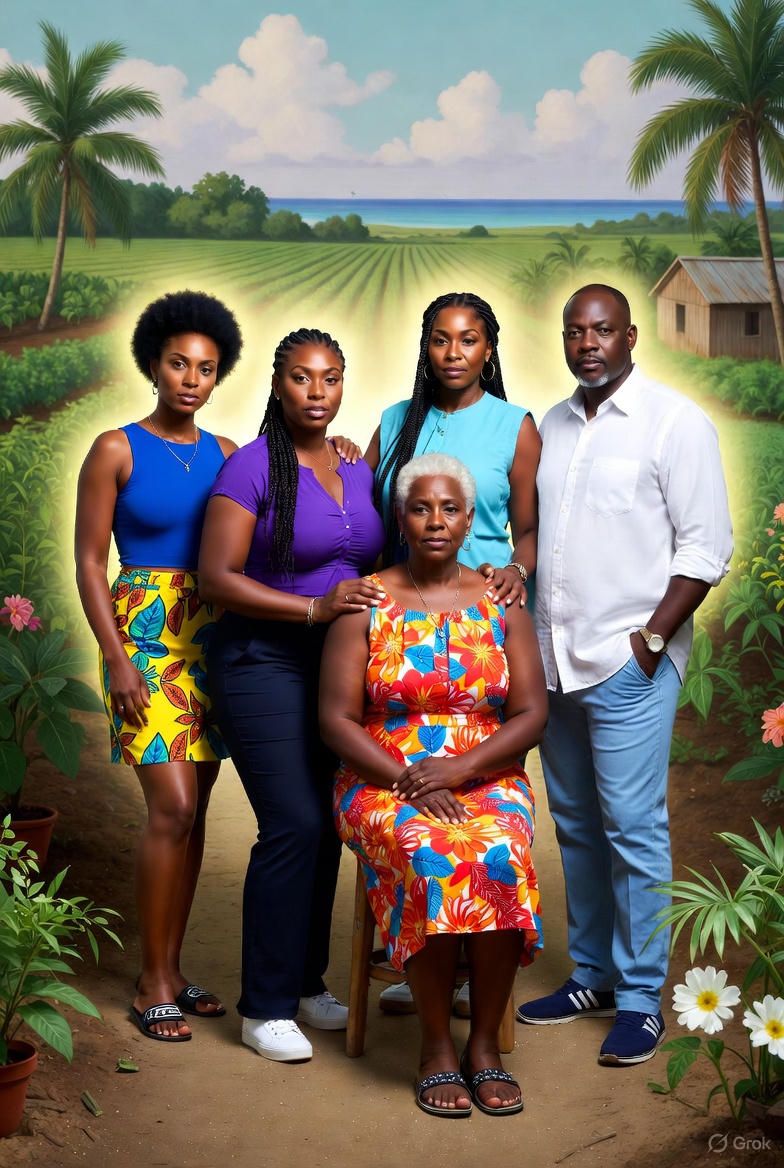
HOW TO CLAIM YOUR GENERATION LAND WITHOUT A LAWYER
A FULL DO-IT-YOURSELF GUIDE + COPY-AND-PASTE SAMPLE LETTER THAT YOU CAN ACTUALLY USE!
Bahamian family, listen closely.
We have thousands of acres in this country sitting in our bloodlines, land our ancestors worked for, lived on, defended, and raised generations upon. And too many people still walking around thinking they don’t own anything.
But you might already OWN a piece of this country.
You just never claimed it.
This guide is for every Bahamian and every descendant abroad. Bahama Drama loves you, and I’m doing this because too many people suffering, too many lawyers tricking poor people, and too many families losing land that is rightfully theirs.
Read everything carefully.
Print it.
Share it.
SAVE YOUR FAMILY LAND.
───────────────────────────────────────────
WHERE THESE GENERATION LANDS COME FROM
Generation property in The Bahamas comes from several sources:
1. Land occupied by freed slaves after 1834–1838.
When emancipation came, many families settled unused Crown land, cleared it, farmed it, and lived on it without ever receiving a paper title. Their descendants still have rights.
2. Crown Grants issued by the Queen or the British Crown.
During the 1800s and early 1900s, the Crown granted parcels of land to freed families, Loyalists, farmers, fishermen, and workers. Many of these grants were never formally divided, and the descendants still exist today.
3. Land passed down informally from parents, grandparents, great-grandparents.
No deed, no will, no problem — Bahamian law still recognizes rights gained by long family occupation and possession.
4. Land that was never divided but held in the family name.
One ancestor held it, and every descendant today has the same rights as the children born in the 1800s.
If your people lived, farmed, buried loved ones, built houses, or kept animals on a piece of land for decades, you have a claim.
───────────────────────────────────────────
WHERE MOST FAMILY LANDS ARE LOCATED
Cat Island
Arthur’s Town, New Bight, Old Bight, Orange Creek, Port Howe
Andros
Nicholls Town, Fresh Creek, Red Bays, Bowen Sound
Exuma
George Town, Little Exuma, Farmer’s Cay, Staniel Cay, Barraterre
Eleuthera & Harbour Island
Rock Sound, Gregory Town, Governor’s Harbour, Tarpum Bay, Harbour Island
Long Island
Salt Pond, Deadman’s Cay, Hamilton’s, Glinton’s
Abaco
Marsh Harbour, Green Turtle Cay, Hope Town
Other Family-Land Islands
Crooked Island, Acklins, Inagua, Mayaguana, Rum Cay, San Salvador, Bimini, Ragged Island, and many others. The full list of islands is to long to post to Facebook.
───────────────────────────────────────────
COMMON SURNAMES WITH GENERATION LAND HISTORY
Rolle, Johnson, Williams, Brown, Smith, Dean, Pinder, Bain, Bethel, Stubbs, Hunter, Roberts, Carey, Hanna, Culmer, Adderley, Deveaux, Pratt, Moss, Poitier, Cartwright, Gibson, Saunders, Armbrister, Bowe — and many more.
If these names are in your tree… PAY ATTENTION.
───────────────────────────────────────────
CAN YOU FILE AN ADJUDICATION CLAIM WITHOUT A LAWYER?
YES. 100% LEGALLY.
Bahamian law does not require an attorney to file a claim for land adjudication.
Any ordinary citizen can walk into the Supreme Court Registry (or the new Land Tribunal office) and file the forms yourself.
People think they need a lawyer because lawyers WANT YOU TO THINK THAT.
Why? Because the average person spends $3,000–$10,000 on legal fees for something they could’ve filed for less than $50.
YOU CAN DO THIS YOURSELF.
───────────────────────────────────────────
COST TO FILE A CLAIM
These fees may vary a little island-to-island, but generally:
• Supreme Court Filing Fee: about $50
• Affidavit Swear Fee: $2–$4
• Copies & stamping: $5–$10
That’s it.
Not $3,000…
Not $8,000…
Not $15,000.
Under $75 if you follow these steps.
───────────────────────────────────────────
STEP-BY-STEP GUIDE FOR OUR FOLLOWERS
STEP 1 – Gather Your Family Documents
Get:
• Your birth certificate.
• Your parents’ or grandparents’ certificates
• Any family record showing your surname and island connection.
• Any photos, affidavits, church books, old receipts, or anything showing your people lived there.
STEP 2 – Contact the National Archives
Ask for any:
• Wills
• Crown Grants
• Deeds
• Baptism records
• Family plot references
STEP 3 – Visit the Island Administrator
Tell them you are researching ANCESTRAL OCCUPATION for adjudication.
Ask what records exist for your family name in that settlement.
STEP 4 – Prepare Your Claim Letter
Use the sample letter below. It is simple and court-approved.
STEP 5 – Go to the Supreme Court Registry (or Land Tribunal)
Take:
• Your letter
• Your documents
• Your ID
• The small filing fee
File it. Get your stamped copy.
STEP 6 – Wait for the Tribunal Site Visit
They will come to the land, inspect it, talk to neighbors, and verify your claim.
STEP 7 – Receive the Adjudication Decision
Once approved, you receive your official certificate — YOUR TITLE.
───────────────────────────────────────────
COPY-AND-PASTE SECTION FOR PRINTING
(Our followers can copy this to their phones and print it.)
───────────────────────────────────────────
SAMPLE LETTER TO THE COURT FOR ADJUDICATION (NO LAWYER NEEDED)
To: The Registrar
Supreme Court of The Bahamas / Land Adjudication Tribunal
Nassau, Bahamas
Subject: Application for Land Adjudication and Claim of Ancestral Property
I, ___________________________, of ___________________________, hereby submit this application for adjudication of land located in ___________________________ on the island of ___________________________.
This land is historically connected to my family through long-term occupation and descent. My ancestors, including ___________________________ (name of earliest known ancestor), lived on, farmed, and maintained this land. The family has continuously occupied or claimed it from the post-Emancipation period, through Crown Grant settlements, or through long possession.
I respectfully request that the Tribunal review my documents and conduct a site visit to confirm my family’s ancestral connection to this property.
Attached are:
1. Birth certificates and family documents
2. Historical records from the National Archives
3. Affidavits or statements from community members
4. Any photographs or supporting evidence
I request that this matter be processed in accordance with the Land Adjudication Act and that my interest be formally recognized.
Signed: ___________________________
Date: ___________________________
───────────────────────────────────────────
FINAL MESSAGE TO THE PEOPLE
Bahamian people, listen.
You deserve to own what your ancestors struggled for. Too many folks lost land simply because they didn’t know the process or couldn’t afford a lawyer.
Bahama Drama loves you, and many of you already know that.
That’s why this information is free.
Share it.
Save it.
Help your family and friends own a piece of the rock 🪨
Help your community.
Your inheritance is calling you!
By: Michael Elijah Muhammad Clare…
I believe in y’all. Now go and fight the good fight. 💪
I will still be helping a lot of people who need extra help with the process via my personal Whatsapp number. If you need to know my identity, my profile picture on my Whatsapp has that info from a book of prayers that I wrote years ago and published on Amazon. Or you can just Google me lol 😂😆 not a problem…
Bahamas Land-Claim Online Resources
1. bahamaslandreform.gov.bs
Official site for the new land adjudication system.
Use it to see when your island or settlement becomes an adjudication area and to get official instructions.
2. bahamasnationalarchives.bs
Search old family documents, wills, deeds, Crown Grants, church records, and settlement records.
Perfect for proving generational or post-slavery family land.
3. courts.gov.bs (Judiciary of The Bahamas)
The Judiciary’s online filing system.
Use it to submit court forms, upload documents, and pay filing fees electronically.
4. opm.gov.bs
Government updates on land-reform announcements, new land laws, and national registration plans.
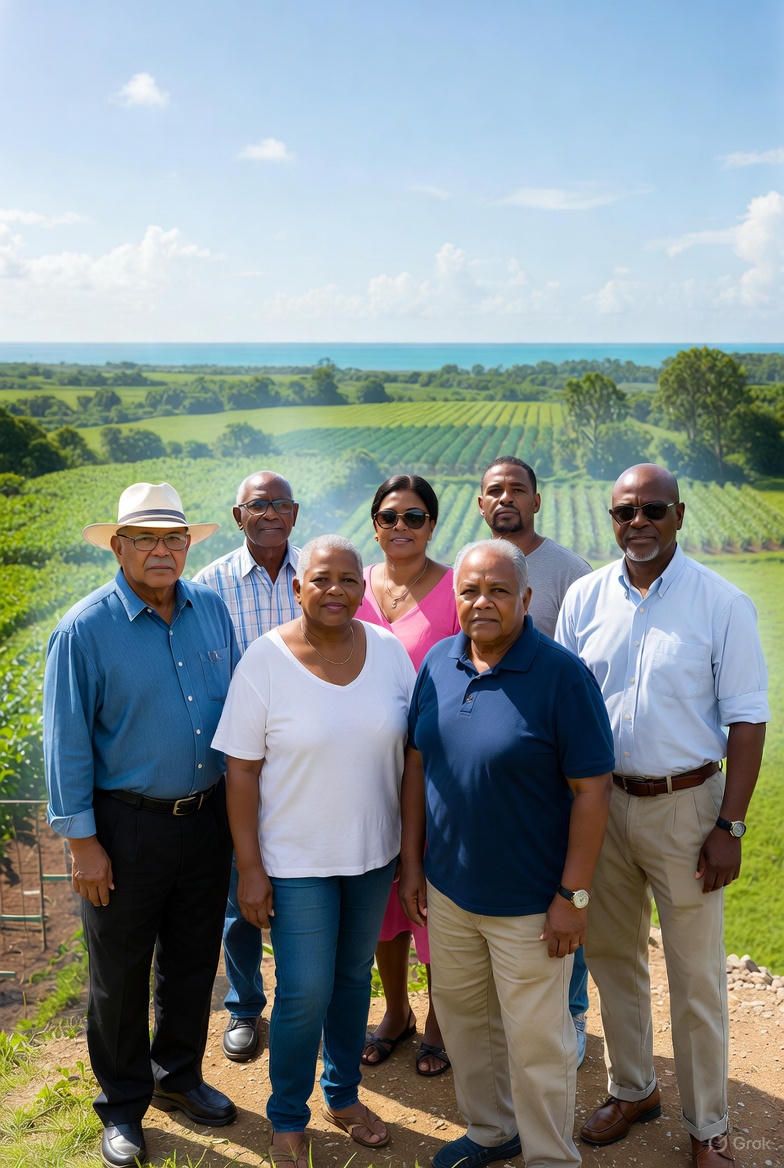
Surname Hudson
By: Michael Elijah Muhammad Clare
The surname Hudson traces its roots to medieval England, emerging as a patronymic name meaning son of Hudde, a diminutive form of Hugh or Richard, both popular given names in the Anglo Saxon period. First recorded in the 13th century in Yorkshire and surrounding regions, it spread through migration and trade, eventually reaching British colonies in the Americas. By the 18th century, Hudson had become a common English surname carried by settlers, merchants, and military personnel to places like the Bahamas, which were under British control since the late 1600s.
In the Bahamas, the Hudson name appears in colonial records as early as the mid 1700s, tied to the islands turbulent history of piracy, plantation economies, and loyalist influxes. The Bahamas, governed by Britain from 1718 onward, saw an influx of English families during the Woodes Rogers era, who arrived to stabilize the region after the expulsion of pirates. Early mentions of Hudsons include land grants and parish registers from the 1730s and 1740s, particularly in New Providence and the Out Islands, where families engaged in subsistence farming, fishing, and trade.
Following the American Revolution, a wave of Loyalists from the southern American colonies arrived in the Bahamas around 1783 to 1785, bringing enslaved Africans and establishing cotton plantations. Some Hudson families were among these settlers, with records showing Hudsons receiving land allocations in Exuma and Eleuthera for agricultural pursuits. The surname also proliferated among the enslaved population, who often adopted or were assigned their owners names upon emancipation in 1834. This reflects the complex interplay of slavery and identity in Bahamian society. By the 19th century, Bahamian Hudsons, primarily of African descent blended with European and Creole influences, had established themselves as resilient farmers and seafarers, cultivating sea island cotton, sisal, and fruits on family plots.
Migrations of Hudson Families to American States
The story of Bahamian Hudsons is one of mobility and adaptation, with significant migrations to the United States beginning in the late 19th century. Economic hardships in the Bahamas, such as the decline of cotton plantations due to soil exhaustion and competition from American markets, prompted many families to seek opportunities abroad.
Historical records document Hudson families relocating to Florida, particularly Key West and Miami, as early as the 1880s for work in sponge diving, cigar manufacturing, and railroad construction under Henry Flagler and the Florida East Coast Railway project. Passenger manifests from the 1890s show Hudsons from Nassau and Andros arriving in Tampa and Jacksonville, drawn by agricultural jobs in citrus groves and phosphate mining.
Further north, migrations extended to Georgia and South Carolina in the early 1900s, where Hudsons worked as sharecroppers and laborers in the expanding cotton and tobacco industries. The Great Migration era from 1910 to 1970 saw additional waves, with Bahamian Hudsons moving to industrial cities like Chicago and Detroit for factory jobs during World Wars One and Two. Census records from 1920 to 1940 reveal clusters of Hudson families in these states, often citing Bahamian birthplaces and occupations in steel mills, auto assembly lines, and domestic service.
These moves were driven by the search for better wages, education, and freedom from colonial limitations. Their journey showcases the entrepreneurial spirit and determination that define the bloodline. Today, descendants in the Bahamas and across America, from Florida communities to major Midwest cities, carry forward this legacy of perseverance and continue contributing to agriculture, business, and the arts.
Jennifer Hudson and Bahamian Roots
Adding a profound layer to the Hudson narrative is the ancestral link to acclaimed American singer and actress Jennifer Hudson, whose family tree reveals ties to the Bahamas on her paternal side. Genealogical records and oral family histories indicate that her great grandfather, Elijah Hudson, born around 1895 in Eleuthera, migrated to Florida around 1915 during the sponge industry boom. He later moved north to Georgia for farm work and eventually settled in Chicago in the 1920s during the Great Migration.
Elijah, a descendant of emancipated Bahamian farmers whose lineage stretched back to enslaved Africans and loyalist settlers of the 18th century, carried with him the resilient spirit of island life. In Chicago he worked in the stockyards, married, and established the line that eventually led to Jennifer Hudson’s father, Samuel Simpson. Immigration manifests and census records list Bahamian born Hudsons living in early 20th century Chicago, strengthening this connection.
Jennifer’s powerful voice and compassionate stage presence echo the intuitive musical gifts often attributed to Bahamian Hudson lines, blending African rhythms with gospel traditions passed down through generations.
Hudson Bloodline
Woven into Hudson family lore are stories of mystical traits, including deep intuition and an uncanny ability to sense others emotions and thoughts. These qualities are said to stem from African spiritual ancestry and Bahamian folklore, giving generations the strength to navigate hardships with empathy and grace.
For Hudsons in both the Bahamas and the United States, this bloodline represents resilience and cultural pride. It celebrates the journey from humble farmers to global trailblazers whose influence spans agriculture, music, community building, and the arts.
Ocean Front, Villa Gekko House
in Exuma just changed a family’s life in a way they’ll never forget. They blessed a family of three with a brand-new car, giving them freedom, opportunity, and a fresh start that goes far beyond the keys in their hand.
In a world where generosity is rare and most people only look out for themselves, moments like this remind us that real kindness still lives among us. And here in the Bahamas, where transportation can shape your entire future, a gift like this is more than a vehicle, it’s a doorway to new possibilities.
These are the silent angels we don’t always hear about. The ones who make a difference quietly, without cameras or noise, just pure heart.
Ocean Front, Villa Gekko House: well done.
Your gesture reflects the true soul of these islands, where people still believe in helping one another and uplifting families.
On behalf of everyone who loves seeing good done in this country, we salute you…
Surname Mortimer
By: Michael Elijah Muhammad Clare
The Mortimer Legacy
A Name Built on Strength, Survival, and Generations of Ingenuity
The Mortimer surname did not simply appear in the Bahamas. It began centuries ago in Normandy, France, rooted in the old place name Mortemer, long before the age of kings, conquests, and colonial maps. When the Normans crossed into England after 1066, they carried the name with them, and from there the legacy stretched across the Atlantic, eventually reaching the Caribbean.
By the time the British settled the Bahamas, loyalists arrived, enslaved Africans were brought into the islands, and communities were being reshaped. It was during this era that the name Mortimer entered Bahamian history. Some carried it by birth, others adopted it after emancipation in 1834, but in every case it became woven into Bahamian identity.
Over the years, Bahamian Mortimers became known not only for where they came from but for what they built. One of the strongest examples is the line of Samuel Hugo Mortimer, his son Ulric Jason Mortimer Sr., and the generations that followed in Inagua and Nassau.
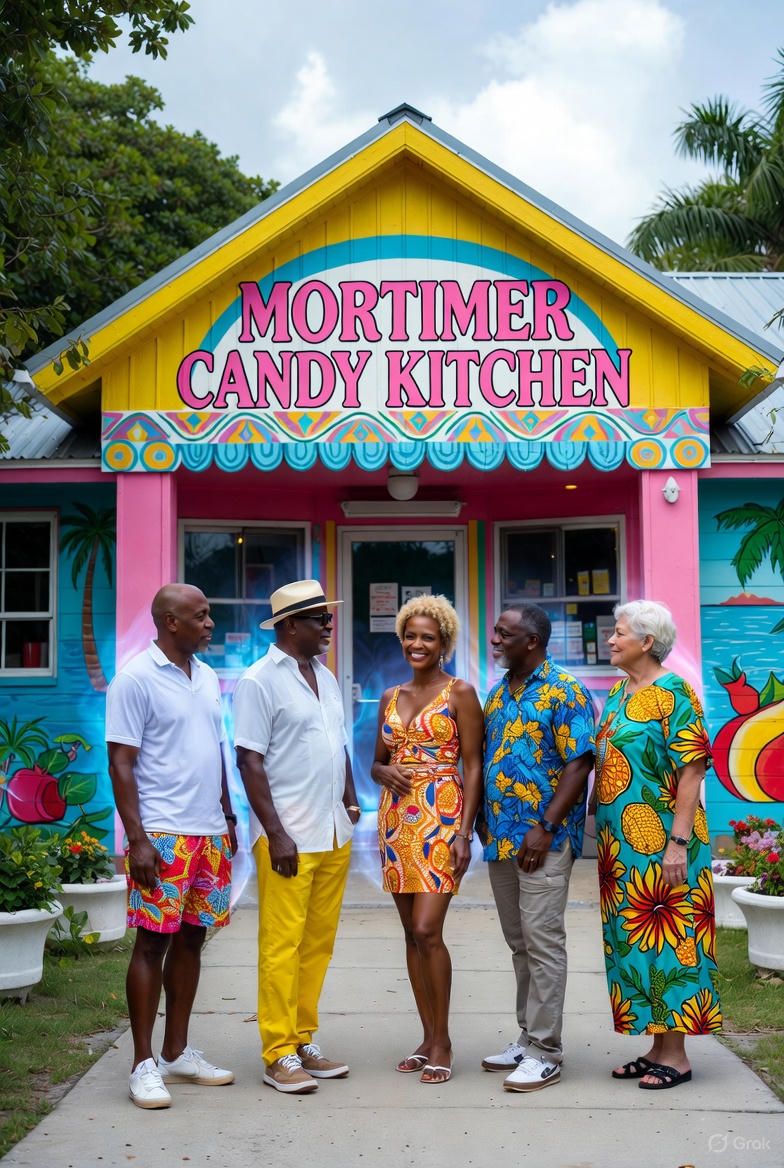
A Bahamian Landmark: The Mortimer Candy Kitchen
When Ulric Jason Mortimer Sr. founded the Mortimer Candy Kitchen in 1928, he did more than start a business. He created a piece of Bahamian culture.
A young black entrepreneur from Inagua, he turned copper kettles, marble slabs, and pure determination into an iconic establishment that produced handmade sweets loved across the islands. Coconut candies, peppermint sticks, and guava treats became symbols of Bahamian pride. The candy kitchen stood as proof that Bahamians could innovate, excel, and push forward even when opportunities were limited. His children and grandchildren carried on that vision, keeping the business alive for four generations. The name Mortimer became tied to craftsmanship, consistency, and community pride.
A Bloodline With Heart and Spirit
Among many Bahamian families, there are stories of something deeper passed through the Mortimer generations. Not wealth or land but a spiritual gift. The ability to understand people without words. A natural empathy that feels almost supernatural. A good heart that seems to be part of the blood itself.
These oral traditions do not appear in official archives, but they appear in the way Mortimers treat their families, neighbors, and communities. These stories are just as valuable as the historical ones because they reveal the spirit of the name.
Why the Mortimer Name Matters
A surname is more than its origin. It is defined by what a people do with it. The Mortimers of the Bahamas did not simply inherit a name, they built a legacy.
They created businesses.
They raised families.
They held communities together.
They carried empathy, strength, and an entrepreneurial flame that refused to go out.
Anyone carrying the Mortimer surname today carries centuries of history and generations of resilience and ingenuity that grew right here in the Bahamas.
This is a name that has crossed oceans.
A name that survived empires and eras.
A name that continues to stand tall.
And that is something every Mortimer can be proud of.
File photo: