Why I Disagree With the Bahamas Government & CARICOM
Why I Disagree With the Bahamas Government & CARICOM
And Why I’m Not Apologizing For It
By: Michael Elijah Muhammad Clare
Let me say this plainly without the diplomatic cushioning many politicians and statesmen in the Caribbean hide behind, without regional code words, and without apology:
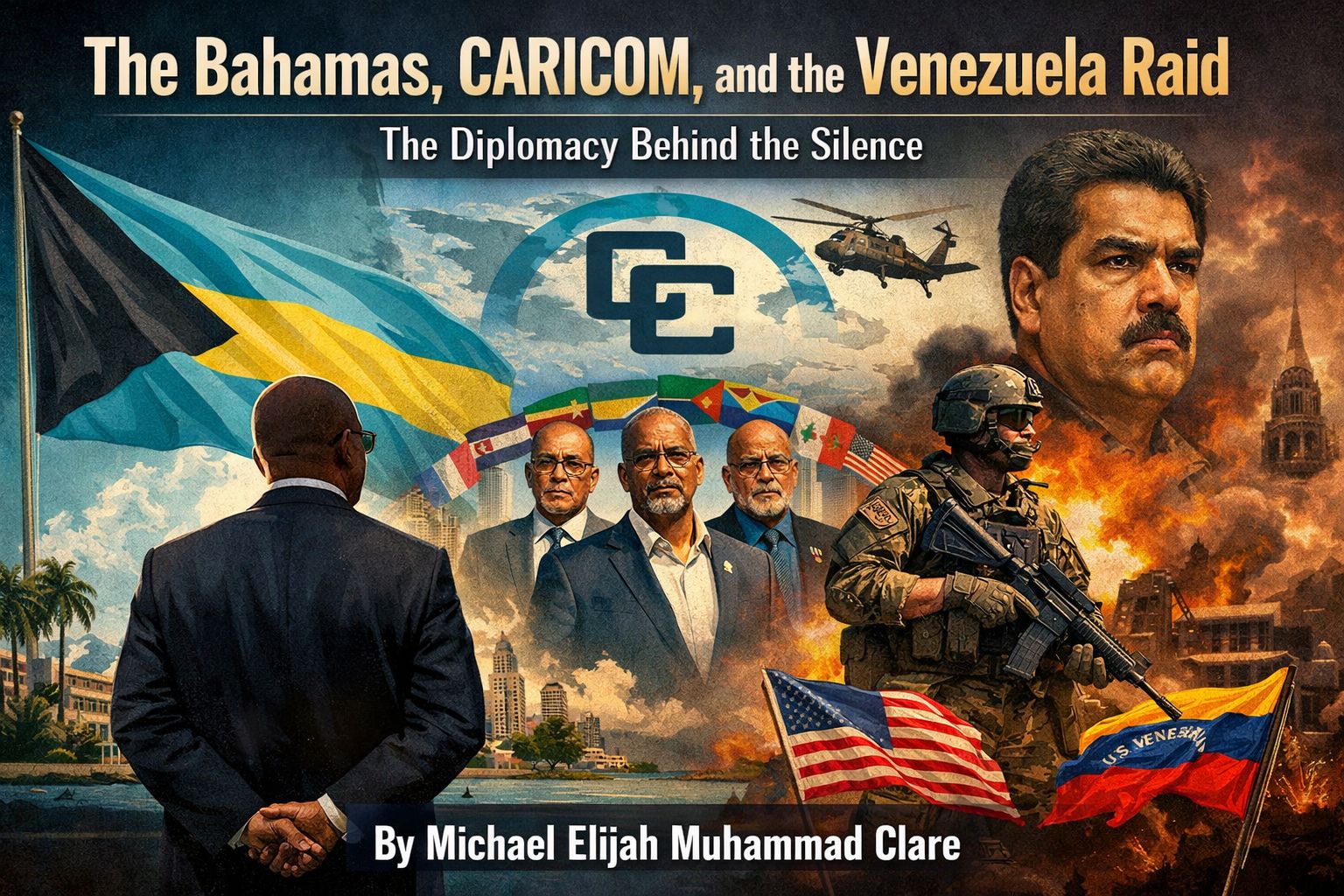
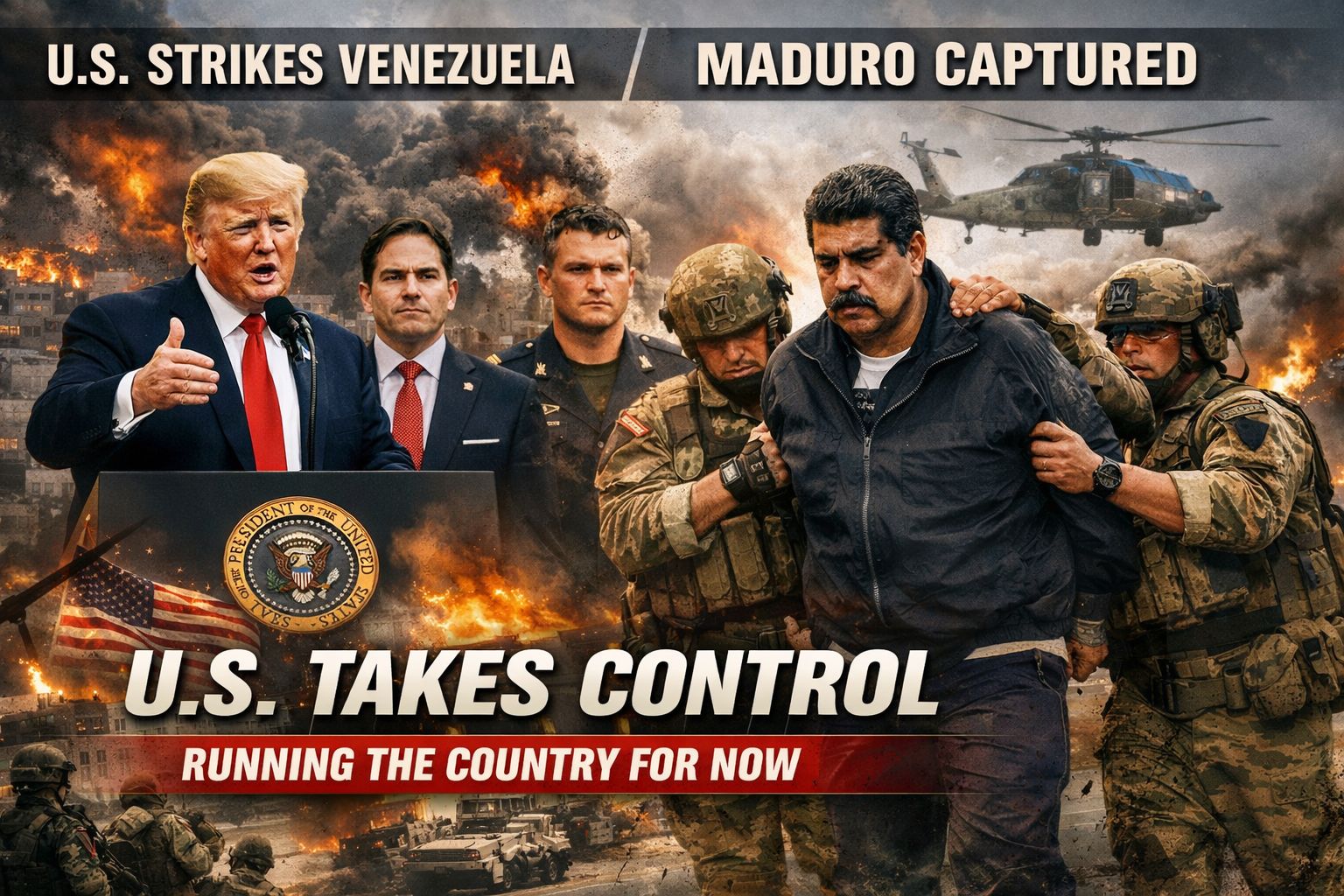
I disagree with CARICOM’s position on Venezuela, and I fully support the United States’ action.
Not halfway.
Not conditionally.
One hundred percent.
CARICOM’s response, cloaked in language about sovereignty, territorial integrity, and dialogue, may sound principled on paper. But principles mean very little when they are used to protect the powerful while the powerless suffer. What CARICOM is really defending is process, not people. And when process becomes more important than human life, something has gone terribly wrong.
Venezuela under Hugo Chávez and his successor Nicolás Maduro was not a misunderstood democracy. It was not a government merely facing “economic challenges.” It was an authoritarian system that crushed dissent, jailed opponents, manipulated elections, and presided over the slow destruction of an entire nation. People were killed. People were starved. Millions fled. That is not a political disagreement, that is state failure mixed with cruelty.
At some point, sovereignty stops being sacred and becomes a shield for abuse.
CARICOM insists on dialogue. But dialogue with whom? A regime that has already demonstrated it does not negotiate in good faith? A leadership that uses talks as a stalling tactic while tightening its grip on power? Dialogue is not a magic word. It only works when both sides respect life, truth, and limits. The Venezuelan regime respected none of those things.
Here is the uncomfortable truth many governments won’t say out loud:
Some leaders lose the moral right to govern.
When a government turns its guns on its own people, destroys its economy through corruption and ideology, and forces millions to flee across borders, it forfeits the protections normally afforded to sovereign states. At that point, insisting on non-intervention becomes less about law and more about moral cowardice.
I understand why CARICOM speaks the way it does. Small states fear precedent. They fear a world where powerful nations decide who stays and who goes. That fear is rational but fear is not morality. And fear should not be confused with righteousness.
History does not reward silence. It does not celebrate carefully worded statements issued while people are dying. It remembers outcomes.
The United States did not act delicately. It did not act politely. But tyrants are not removed by polite language. They are removed when power finally meets consequence. To pretend otherwise is to ignore every hard lesson history has already taught us.
So no, I do not agree with CARICOM.
I do not agree with its neutrality.
I do not agree with its soft condemnation wrapped in legal jargon.
And I am not apologizing for saying that out loud.
Supporting decisive action against a murderous regime does not make me anti-Caribbean. It makes me anti-tyranny. It means I refuse to pretend that endless “dialogue” is a moral high ground when it produces nothing but more graves, more refugees, and more ruined futures.
There are moments when the world must choose between rules and reality.
Between comfort and courage.
Between silence and responsibility.
This was one of those moments.
And in this moment, America did the right thing.
One thing you should know about us Bahamian people is, we don’t feel sorry for dictators, tyrants of any country or place EVER, when they’re dealt with EVER!!!
YOU WON’T SEE A PITY PARTY FROM BAHAMIAN CITIZENS. Nevermind what our government says, their politicians, they say anything that works for good political optics! Individual citizens are totally different, like night and day. We don’t care how or who you took if they were bad people!