Bahama Drama

Past Post History to Date

6,047 posts

FLORIDA GETS SNOW AGAIN, WILL THE BAHAMAS ALSO?

FLORIDA GETS SNOW AGAIN, WILL THE BAHAMAS ALSO?

AND WHY IT FEELS FAMILIAR

By: Michael Elijah Muhammad Clare

History has a strange way of tapping you on the shoulder and whispering, remember when you said this would happen?

This week, snow fell in Florida again.

Not metaphorical snow. Not internet exaggeration. Real flakes drifting down over parts of the Florida Panhandle, dusting rooftops, grass, palm fronds, and highways that usually never see ice. The kind of scene that makes people stop, pull out their phones, and ask the same question over and over: How is this even possible?

And for me, watching those images roll across the screen, I felt something deeper than surprise.

I felt recognition.

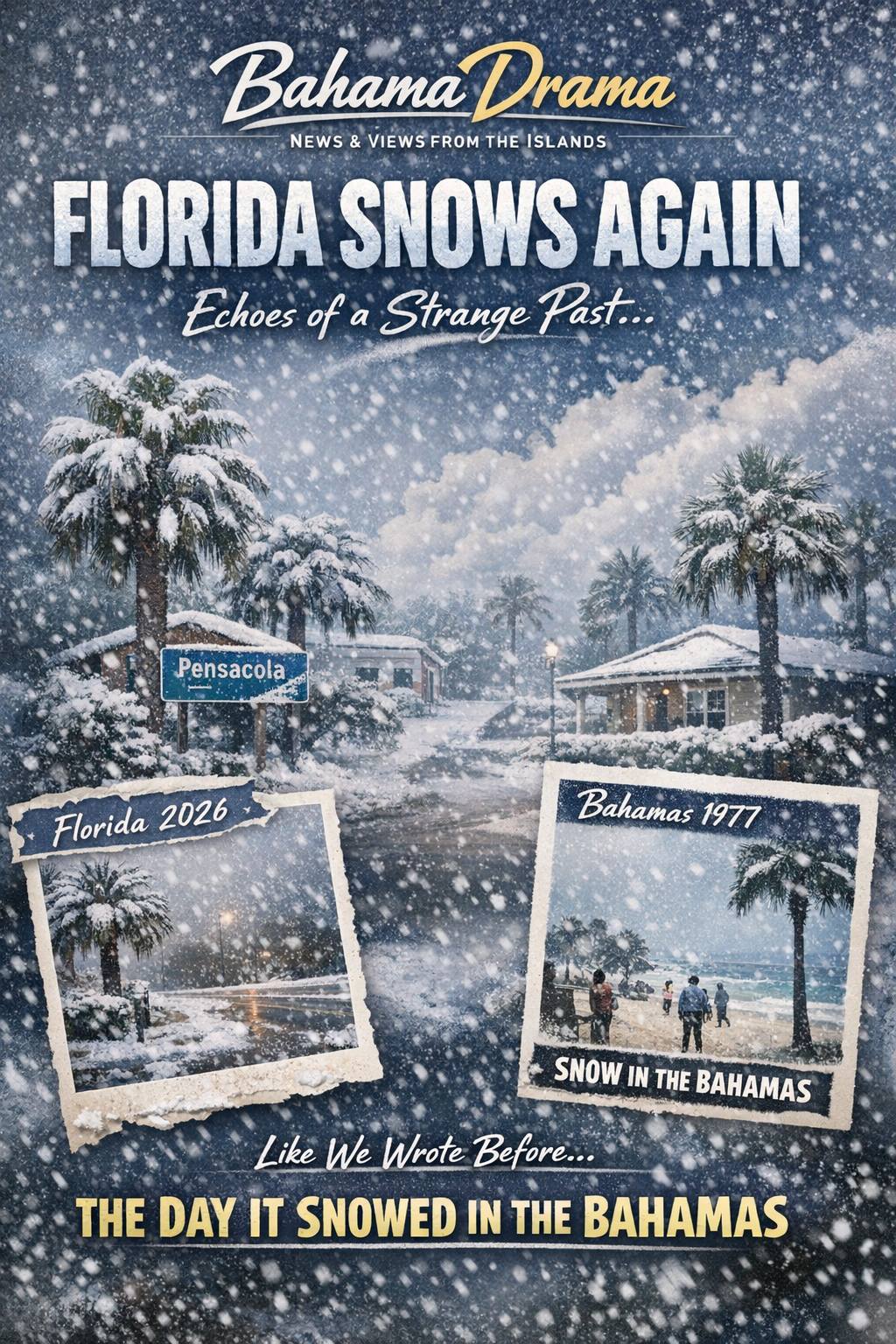
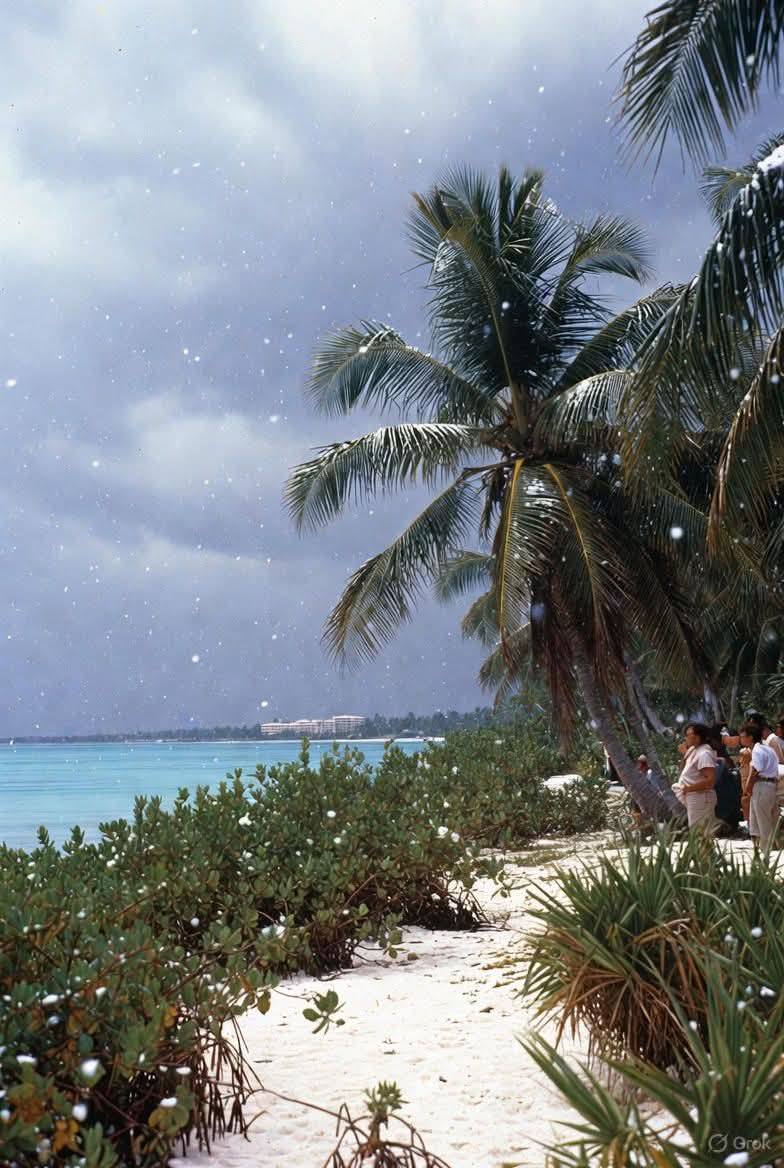
Because just weeks earlier, on December 8th, 2025, Bahama Drama published an article remembering the one and only time snow fell in the Bahamas — January 19th, 1977, and how that same Arctic system also affected parts of Florida. That article wasn’t written because Florida was snowing then. It was written because something in the atmosphere, and something in the spirit, felt unsettled.

Now here we are.

Florida snowing again.

The past knocking on the present’s door.

And me sitting back, asking myself the same uncomfortable question I’ve asked more times than I can count:

Why does it keep happening like this?

On December 8th, the article wasn’t about prediction. It was about memory. About the day the Bahamas briefly stepped outside its tropical identity and touched winter for a moment. About how nature sometimes bends the rules just enough to remind us that certainty is an illusion.

Yet here we are in January, watching Florida experience snow once more, not as a once-in-a-century myth, but as a recurring anomaly. Two winters in a row now, the southern edge of America flirting with conditions it was never meant to know.

When you connect the dots, it feels strange. Not spooky. Not mystical. Just… precise.

I’ve written many pieces like this. About weather. About geopolitics. About social shifts. About moments that feel inevitable before they arrive. And more often than not, time circles back and taps the same spot.

I don’t walk around claiming perfection. I’m grounded in reality. I study patterns. I observe history. I listen more than I speak. But I’d be lying if I said there isn’t tension inside me, a constant tug-of-war between faith and the accepted norms of society.

One side says: Pay attention. Patterns repeat. History speaks.

The other says: Don’t step too far outside the lines. People don’t like certainty before it arrives.

Sometimes those two realities clash.

I believe in God, not as an abstract idea, but as the God of worlds, systems, laws, balance, and consequence. And I also believe that being grounded in reality doesn’t weaken faith, it sharpens it. The conflict comes when society wants prediction only after the event, wisdom only in hindsight, and truth only once it’s safe.

But weather doesn’t wait for permission.

Snow doesn’t ask Florida if it believes.

And history doesn’t apologize for repeating itself.

When snow fell in the Bahamas in 1977, it didn’t stay. It didn’t settle. It didn’t change who we are. But it left a mark on our memory. A reminder that even paradise is not immune to the larger forces shaping this planet.

Florida’s snow today feels like that same reminder, louder this time.

Not a warning of ice ages or frozen beaches, but proof that the climate system is stretching, wobbling, and occasionally snapping into places it shouldn’t reach. Arctic air plunging south. Jet streams bending. Boundaries blurring.

And for those of us paying attention, it feels less like shock and more like confirmation.

I don’t claim to control the future.

But I do respect patterns.

And when patterns keep answering questions you asked weeks, months, or years earlier, it forces you to sit with yourself and wonder: Am I just observant… or am I being prepared for something larger?

Bahama Drama exists for moments like this. Not to boast. Not to frighten. But to document the strange, the unlikely, and the moments when the world briefly steps out of character.

Florida snowing again is one of those moments.

Just like the day it snowed in the Bahamas.

A reminder that certainty is fragile.
That history echoes.
And that sometimes, the future whispers long before it speaks out loud.
Mobile uploads
Mobile uploads
Comment

The Zombie Flu Is Real maybe?

The Zombie Flu Is Real maybe?

A Public Apology for Yesterday!

By: Michael Elijah Muhammad Clare on the behalf of the Bahama Drama team as well; can’t make a fire without the fuel.

Yesterday I was battling the flu at its absolute worst. The post I chose to make reflected exactly how miserable I felt, inside and out, as my body and mind were in full war mode.

My eyes were bloodshot red. I even resigned from my job the day before and gave a two-week notice as this flu began to intensify.

But Yesterday while off from work, I was World War III in the flesh.

I don’t know if this new flu is part of the COVID-19 brotherhood or not, but it damn sure felt like it.

My thought process and reasoning were clearly off. Some of the things I posted reflected the internal battle my body and mind were fighting at the time.

I apologize to everyone I may have offended globally, not out of fear or convenience, but because, upon reflection, my behavior was completely uncivilized by my own standards.

I’d even say I was a bit heartless.

I never want to experience that feeling again. That flu felt like a test run for a zombie apocalypse virus. I was out of control, unable to fully recognize my own thought patterns, and incapable of regulating my emotions enough to control my actions and behavior.

So this morning, I’ll be cleaning 🧹 house and reviewing all posts on my page.

Your comments about how we made you feel yesterday are welcome below, but please state where you’re from first, and I will personally apologize to you in the comments.

The Zombie Flu is real maybe.
2026.

I’m feeling much better this morning, thank God…

The Zombie Flu Is Real maybe?

A Public Apology for Yesterday!

By: Michael Elijah Muhammad Clare on the behalf of the @[100023394293756:2048:Bahama Drama] team as well; can't make
Comment

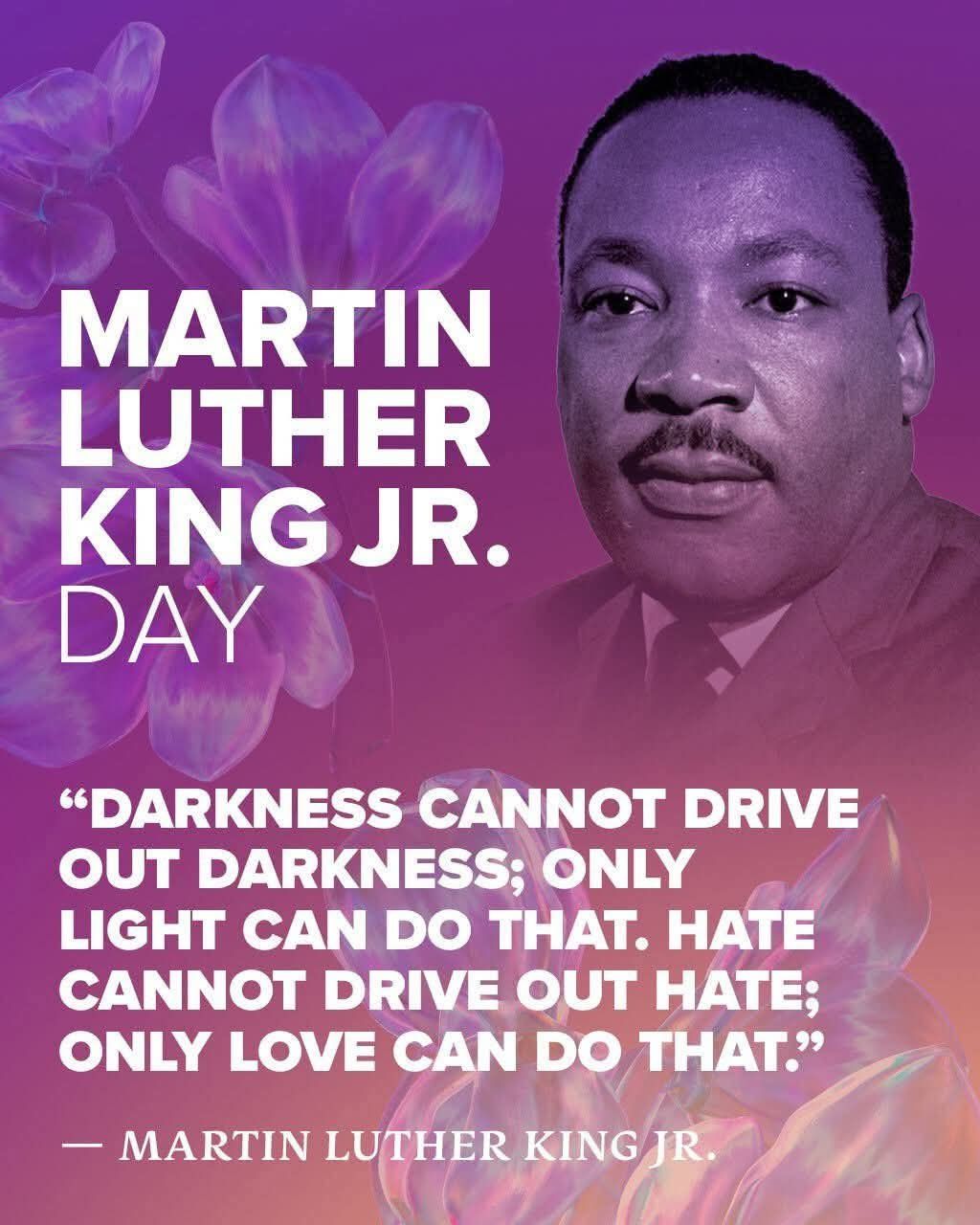
Saluting Martin Luther King Jr.

Saluting Martin Luther King Jr. Day

Today, the United States pauses to observe Martin Luther King Jr. Day, but the meaning of this day stretches far beyond American borders. From the streets of Atlanta to the islands of the Bahamas, from the Caribbean to Africa, Europe, and everywhere people of color still face discrimination, this day belongs to anyone who understands what it means to fight for dignity in a world that does not always offer it freely.

This is a day rooted in the legacy of Martin Luther King Jr., a man who did not simply dream of equality but demanded it through courage, sacrifice, and relentless moral pressure. His struggle was not just about buses, lunch counters, or voting booths. It was about human worth. It was about whether systems built on exploitation and racial hierarchy could ever be forced to recognize the humanity of those they marginalized.

For Americans, especially Black Americans, this day carries the weight of history and the reminder that progress has never been gifted, it has always been fought for. The civil rights movement reshaped the United States, but racism did not disappear with new laws or speeches. It evolved. It learned how to wear suits, hide behind policies, and operate quietly through economics, incarceration, housing, education, and opportunity gaps.

For people of color globally, the struggle is familiar. In the Caribbean, the legacy of slavery, colonialism, and economic extraction still shapes daily life. In the Bahamas, we may not face the same racial dynamics as the United States, but we are not disconnected from the global system that once profited from Black bodies and still benefits from unequal power structures today. Colorism, classism, and inherited disadvantage are not foreign concepts here, they are realities that deserve honest discussion.

This day is also a reminder that racism is not only loud hatred. It is silence. It is neglect. It is the slow erosion of opportunity. It is being told to wait while others prosper. And for millions around the world, that waiting has lasted generations.

Yet Martin Luther King Jr. Day is not only about pain. It is about resilience. It is about the ability of oppressed people to imagine a future that does not yet exist and to act as if it must. It is about joy as resistance, pride as survival, and community as strength. Celebrating this day is not weakness, it is defiance.

So from the Bahamas to America, from island shores to inner cities, Bahama Drama salutes this day. We salute the Americans who continue to push for justice. We salute people of color everywhere who refuse to accept inequality as normal. We salute the ancestors who endured so we could stand, speak, and dream.

Enjoy this day. Reflect on it. Celebrate it. But most importantly, carry its meaning forward because the struggle against racism did not end with Martin Luther King Jr., and it will not end with a single holiday.

Saluting Martin Luther King Jr. Day

Today, the United States pauses to observe Martin Luther King Jr. Day, but the meaning of this day stretches far beyond American borders. From
Comment

SpaceX in The Bahamas

SpaceX in The Bahamas

A Future for All, or Just the Few?

By: Michael Elijah Muhammad Clare

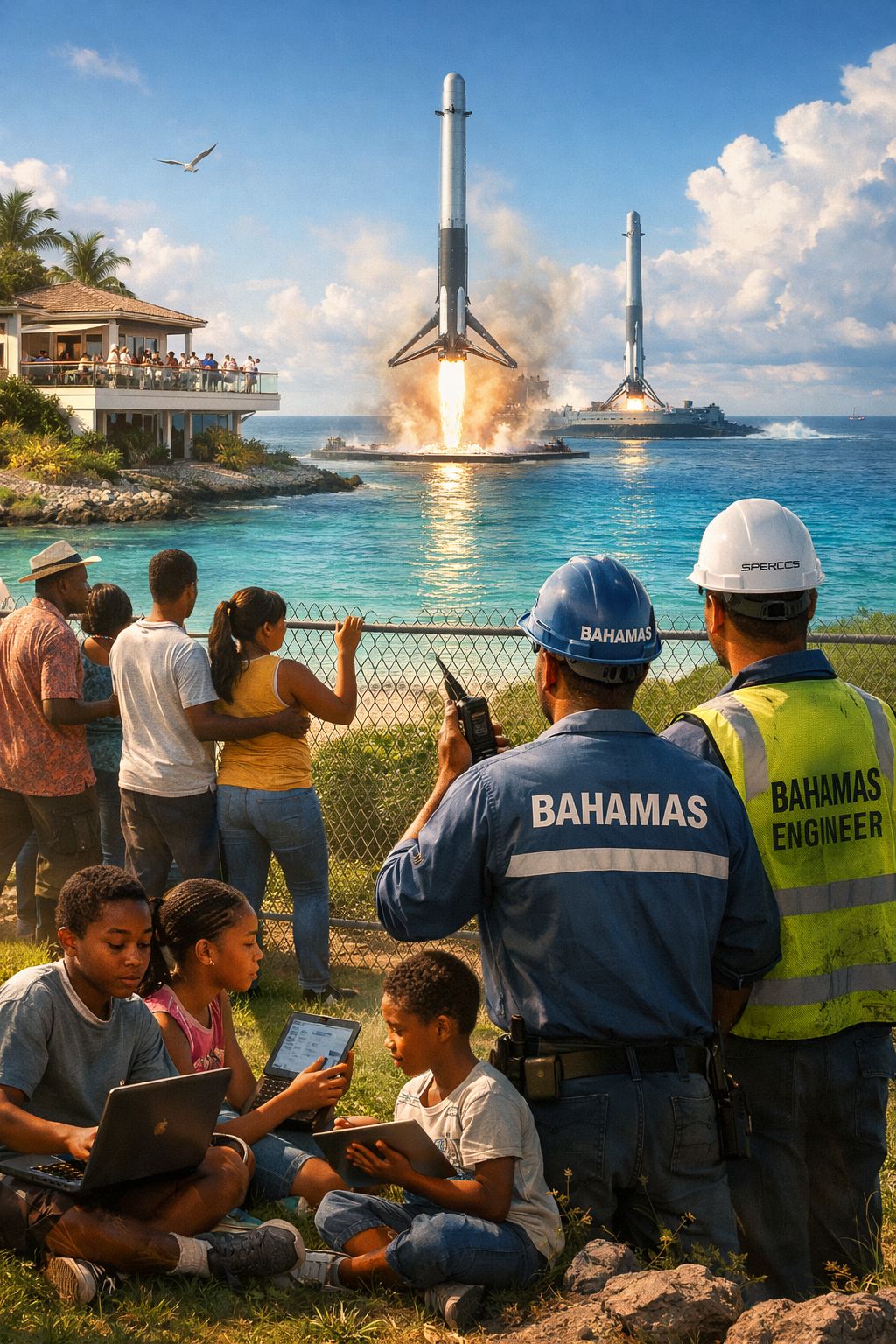
The Bahamas has always been a land of beauty, sun, and sea, but now, it is on the brink of becoming a gateway to the space age. In February 2025, SpaceX’s Falcon 9 booster made history by landing on a drone ship stationed in Exuma Sound, marking the first-ever SpaceX booster landing outside the United States. Tourists cheered, headlines celebrated, and dignitaries praised the country’s new role in global aerospace.

But for the average Bahamian, the excitement comes with a bitter edge. While rockets descend over turquoise waters, most citizens remain cut out of the wealth, opportunity, and excitement. The luxury villas and Airbnbs where tourists stay are not owned by Bahamians, leaving ordinary people watching from distant shores or public beaches. Students, engineers, and small business owners feel the thrill, and the frustration, of being excluded from the very possibilities these rockets bring.

A Glorious Opportunity, If Citizens Are Included

SpaceX’s arrival could transform the Bahamas in unimaginable ways. Tourism could expand beyond beaches to space viewing experiences, creating new income streams for local businesses. Starlink connectivity could bring high-speed internet to schools and communities, unlocking STEM education and global learning for students even on remote islands. High-tech jobs in engineering, research, and logistics could provide Bahamians with career paths that never existed before. Universities and research centers could evolve into innovation hubs attracting international talent and investment.

Yet ordinary citizens ask the same haunting question: Who really benefits? History has shown that politically connected elites often control the deals, leaving the majority excluded. The rockets may land, the tourists may cheer, but most Bahamians remain on the sidelines, powerless to claim even a slice of the opportunity.

Citizens’ Fears Are Real

Bahamian citizens are not paranoid, they are experienced. They have seen deals favor insiders, contracts bypass public scrutiny, and foreign partnerships enrich the political elite. Ordinary citizens feel ignored, sidelined, and used as spectators in their own country.

Environmental concerns add to the tension. Rocket landings near whale habitats and fragile marine ecosystems demand careful oversight. Citizens fear decisions are being made without full consultation or accountability.

Bahama Drama Demands: Freedom of Information First

This is why Bahama Drama insists: before any expansion of SpaceX operations, a strong, enforceable Freedom of Information Act must be enacted. Every Bahamian must have access to environmental impact and safety reports, full contract terms and economic benefit projections, STEM education program details, and public oversight of jobs, training, and tourism opportunities.

Only transparent, enforceable law can ensure ordinary citizens receive the benefits, knowledge, and opportunities they deserve, rather than leaving all gains in the hands of a political elite.

A Future That Belongs to All

Imagine a future where Bahamian engineers work alongside aerospace teams, students gain access to global education through Starlink, local businesses capture the tourism revenue from rocket-viewing visitors, housing, opportunity, and contracts are fair and open to ordinary citizens, and the Bahamas becomes a global hub for innovation and justice, not just beauty.

This is not fantasy. It is entirely possible, but only if the people are empowered, informed, and included. The first Falcon 9 landing in Exuma Sound was just the opening chapter. Nineteen more booster recoveries are planned, pending environmental review and approval.

The rockets may return from the sky, but the real lift-off must be for ordinary Bahamians, not just the elite. Citizens must see, understand, and participate, otherwise, SpaceX’s promise will pass over the islands, leaving most people watching from the sidelines.

Bahama Drama supports a bold, visionary future in space, but insists: freedom of information and citizen oversight must come first, loud and unshakable. Only then can the Bahamas truly rise with the rockets, and ordinary citizens finally share in the glory, wealth, and opportunity that rightfully belong to them.

The Bahamas is beautiful, but soon, it could be historic, if the people rise with the rockets instead of being left behind.

SpaceX should be for us not the well connected of our country and politicians and their families…

SpaceX in The Bahamas 

A Future for All, or Just the Few?

By: Michael Elijah Muhammad Clare 

The Bahamas has always been a land of beauty, sun, and sea, but now, it is on the br
Comment

Is the current Bahamas government clapping back at the Trump…

Is the current Bahamas government clapping back at the Trump administration?

By: Michael Elijah Muhammad Clare

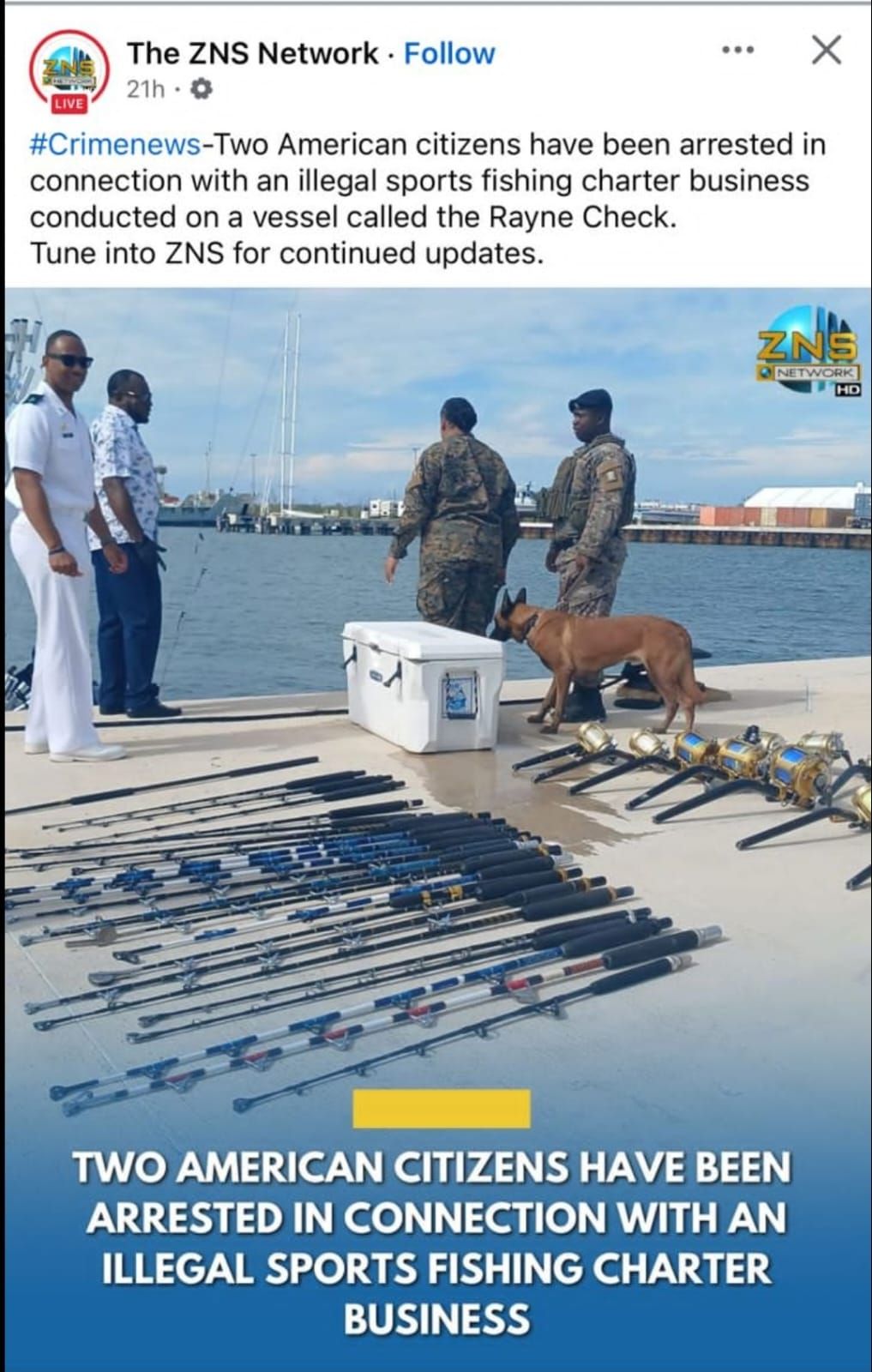
The image was loud, even if no one spoke a word.

Two American citizens in custody.
Defense Force officers lining the dock.
A K9 unit on display.

Fishing gear spread out like evidence from a major criminal bust.

And the entire moment broadcast by ZNS, the Bahamas’ state-owned television network, for the world to see.

This wasn’t routine law enforcement. This was political theater.

And in international politics, theater is never accidental.

—

This wasn’t normal enforcement

Boaters in the Bahamas are fined all the time. They get warnings. They go to court quietly.

They do not usually get militarized visuals, dockside staging, national television exposure, or government-media amplification.

That kind of presentation is reserved for major drug busts, weapons seizures, human trafficking, and national security threats, not charter licensing violations.

So when two Americans are suddenly treated like headline offenders, and the government makes sure the world sees it, the question is unavoidable:

Was this law enforcement or a message?

—

Timing is everything

This didn’t happen in a vacuum.

It happened while the Trump administration tightened U.S. visa processing, putting the Bahamas on a restricted list. American boaters are fuming over new, aggressive cruising and docking fees. Tougher immigration laws have sparked protests across the islands. China quietly expands its presence in the Bahamas. Regional tensions over Venezuela remain high.

Then suddenly, two Americans are arrested and ZNS broadcasts it to the world.

This wasn’t coincidence. This was calculated optics.

—

The fees were the first warning shot

Raise fees sharply, and you know exactly who will feel it most: American boaters, the backbone of foreign maritime traffic.

This wasn’t just an economic adjustment. It was a political signal.

When pushback came, the government didn’t retreat. It doubled down.

Then came the arrest. Then came the cameras.

That sequence doesn’t read like accident. It reads like posturing.

—

State media turned it global

If this story stayed in court filings, police reports, or small local columns, no one would care internationally.

But it didn’t. It led on ZNS, the state-owned broadcaster.

That means the message wasn’t just for Bahamians. It was international.

And that message was loud: We enforce our laws, even against Americans.

Domestically, it may appear strong. Internationally, it reads as defiance.

—

A silent confrontation

No ambassadors recalled. No speeches delivered. No sanctions announced.

Instead, there is visa pressure from Washington, regulatory pressure from Nassau, immigration tightening at home, and law enforcement turned into spectacle.

This is how political conflict looks today: quiet, layered, and easy to overlook, until it’s too late.

—

The shadow of Beijing

China’s footprint in the Bahamas grows daily with infrastructure, investment, and quiet diplomacy.

Beijing doesn’t lecture. It builds. And Washington notices.

So when the Bahamas chooses this moment to make Americans an example on state television, it raises a chilling question:

Is this sovereignty or signaling?

Not signaling loyalty to China necessarily, but signaling distance from America.

And in geopolitics, distance can be read as betrayal, even when it isn’t intended that way.

—

Internal pressure adds fuel

Inside the Bahamas, protests over immigration law changes are simmering.

Place that next to U.S. visa restrictions, maritime enforcement crackdowns, and state-controlled media broadcasting arrests.

A pattern emerges, not random, but strategic.

—

Is the Bahamas clapping back?

No government official will ever say yes.

There is no official confrontation, no diplomatic notes, no trade retaliation.

But there is behavior that reads as confrontation: raising fees that hit Americans hardest, broadcasting American arrests, hardening immigration policies, and taking independent positions in regional politics.

None of this is illegal. None of this is accidental.

The real danger

The danger isn’t that the Bahamas is defying Washington.

The danger is that Washington may start believing it is.

Once a superpower interprets actions as defiance, visas tighten, pressure increases, patience disappears.

And quiet friction becomes real consequences.

Final word

That dockside arrest wasn’t just about fishing permits.

It became a political moment because the government chose to make it one.

Not with speeches, not with threats, but with optics.

And optics, in 2026, are policy.

The question isn’t whether the Bahamas intended to challenge the Trump administration.

The real question is: when your actions look confrontational, and the world sees them, can you really be surprised when the world starts treating you like an adversary?

Are we still allies?

Picture: Credit ZNS

Is the current Bahamas government clapping back at the Trump administration?

By: Michael Elijah Muhammad Clare 

The image was loud, even if no one spoke a word.

Two American cit
Comment

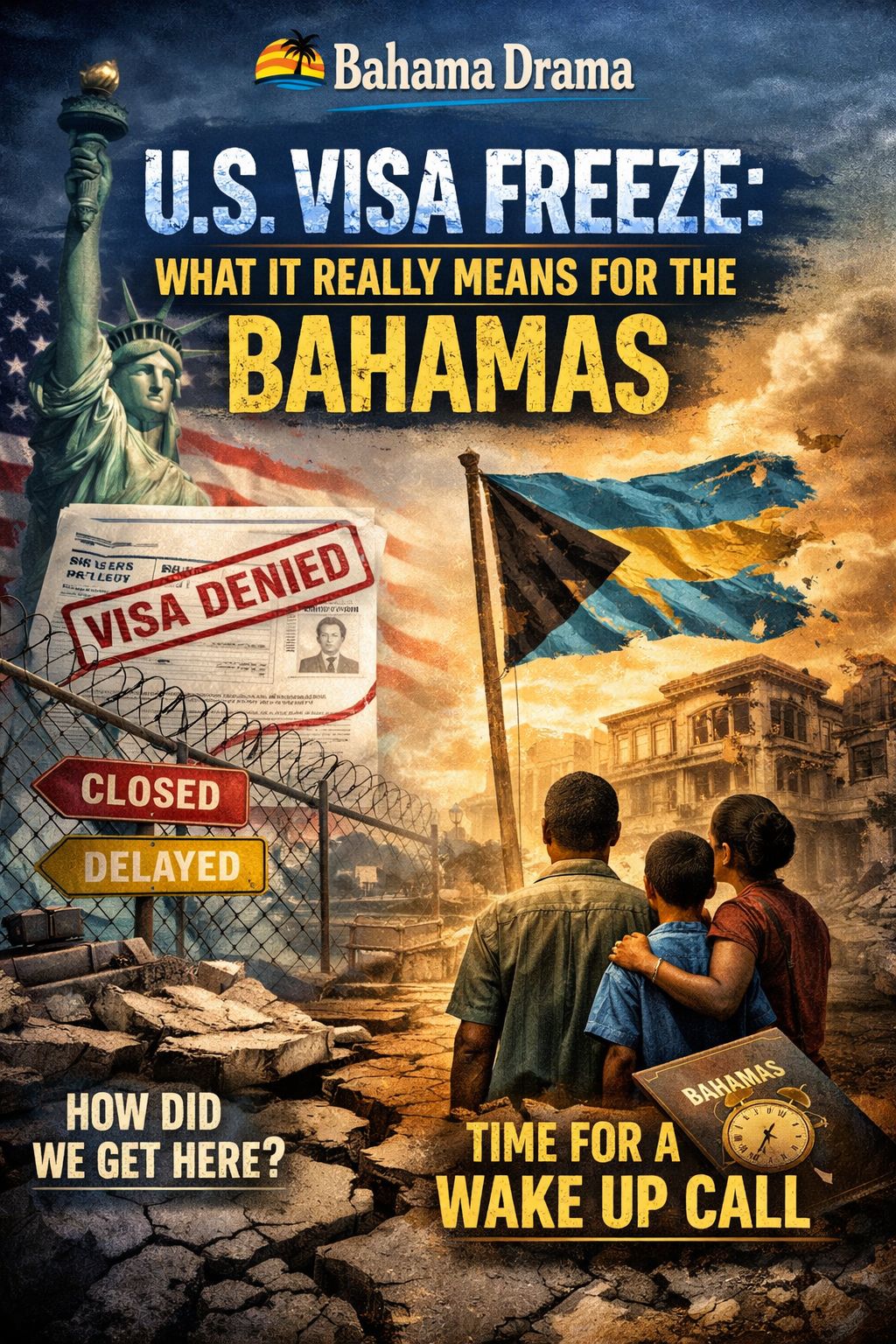
What This U.S.

What This U.S. Visa Freeze Really Means for Bahamians And How We Got Here

By: Michael Elijah Muhammad Clare

Right now, a lot of Bahamians are confused, worried, and even offended by the news that the United States has paused immigrant visa processing for dozens of countries, including The Bahamas. For many, the first reaction is shock. The second is anger. And the third is the hardest question of all. How did we end up here?

This moment did not come out of nowhere. It is the result of years of quiet changes in how the world sees small nations like ours, and how we have managed and sometimes mismanaged our own affairs.

Let us break it down in plain language.

This decision does not mean Bahamians are banned from visiting the U.S. It does not mean tourists, students, or business travelers are automatically blocked. What it really means is that immigrant visas, the kind that lead to permanent residency, are now under pause for Bahamians, just like for people in more than 70 other countries.

In simple terms, if you planned to move to America permanently through family sponsorship or certain residency programs, your process just became longer, harder, and uncertain.

That alone feels like a slap in the face for a country that has always seen itself as one of America’s closest neighbors and friends.

So why did this happen?

The official reason being given by U.S. authorities is concern over immigration abuse, public assistance dependency, and national security screening standards. But behind those words is a deeper truth. Small nations are being judged collectively now, not individually.

We are no longer seen as just The Bahamas. We are being grouped with struggling systems, weak border controls, document fraud risks, and economic instability, whether that fully represents us or not.

And this is where the uncomfortable part begins.

For years, we have watched as our immigration systems stayed outdated, our national ID systems lagged behind global standards, our economic struggles pushed more citizens to look abroad for survival instead of opportunity at home, and our leadership argued while the world quietly moved forward without us.

Other countries invested heavily in data systems, digital passports, border management, and international compliance. We debated politics, fought each other online, and waited for miracles.

The world does not wait.

And now, the consequences are landing on ordinary Bahamians, not politicians, not elites, not the connected, but regular people who just wanted a better future for their children.

This situation forces us to face a hard reality. Global respect is no longer based on friendship. It is based on systems.

Not history.
Not loyalty.
Not proximity.
Systems.

If your systems look weak, your people suffer, no matter how good hearted they are.

But there is another question many Bahamians are asking, and it deserves a real answer.

If the United States is tightening up on us with visa restrictions, then why would they send a U.S. Ambassador to The Bahamas at the same time?

To some, it feels confusing. To others, it feels insulting. But in truth, it reveals something deeper about how international power really works.

An ambassador is not sent just for handshakes and photo ops. An ambassador is sent when a country becomes strategically important, politically, economically, or security wise.

And right now, The Bahamas sits at the center of several things the U.S. cares deeply about. Migration routes. Border security in the Caribbean. Drug and arms trafficking corridors. Chinese and foreign investment influence. Financial regulation and banking oversight.

So while visa processing is being paused for ordinary Bahamians, diplomatic engagement is being strengthened at the government level.

That tells us one thing clearly. This is not about friendship anymore. This is about control, influence, and stability.

The U.S. does not pull back its people while pulling closer its diplomats. They do that when they want to manage outcomes, not abandon relationships.

In simple terms, the doors for citizens may feel like they are closing, but the doors for governments are being watched more closely than ever.

That is why an ambassador matters now more than ever.

Not because everything is fine, but because everything is under review.

This moment puts pressure not just on our people, but on our leadership. Because when powerful nations send top officials, they expect systems to improve, standards to rise, and accountability to strengthen.

So when Bahamians ask, Why would they send us an ambassador now, the honest answer is this. Because the world is paying attention to us again, and attention is never neutral.

It can become partnership.
Or it can become supervision.

Which one it turns into depends on what we do next.

So what does this moment really mean for us as a country?

It means we have reached a turning point.

Either we continue pretending everything is fine while the world slowly closes doors on us, or we take this as the wake up call it truly is.

We must modernize immigration and identification systems.

We must strengthen international compliance standards.

We must build real economic pathways at home so our people do not feel forced to leave to survive.

We must stop acting like small countries get permanent grace. The global stage is unforgiving now.

This is not just about visas.

This is about how the world is beginning to see The Bahamas.

And perception, once lost, is harder to regain than money.

But here is the other side of the truth.

We are not powerless.
We are not forgotten.
And we are not finished.

Nations fall behind quietly.
They rise loudly.

This moment can either mark the start of our slow isolation or the beginning of our national reset.

History will decide which one we choose.

Bahama Drama will continue to tell the truth, not just what sounds good, but what needs to be said.

Because real love for country is not blind pride.
It is the courage to face where we are so we can finally go where we should be.

What This U.S. Visa Freeze Really Means for Bahamians And How We Got Here

By: Michael Elijah Muhammad Clare 

Right now, a lot of Bahamians are confused, worried, and even offende
Comment

The Day We All Won

The Day We All Won

True story

By: Michael Elijah Muhammad Clare

There was a time in America when the mailbox could change your life, or at least make you believe it could.

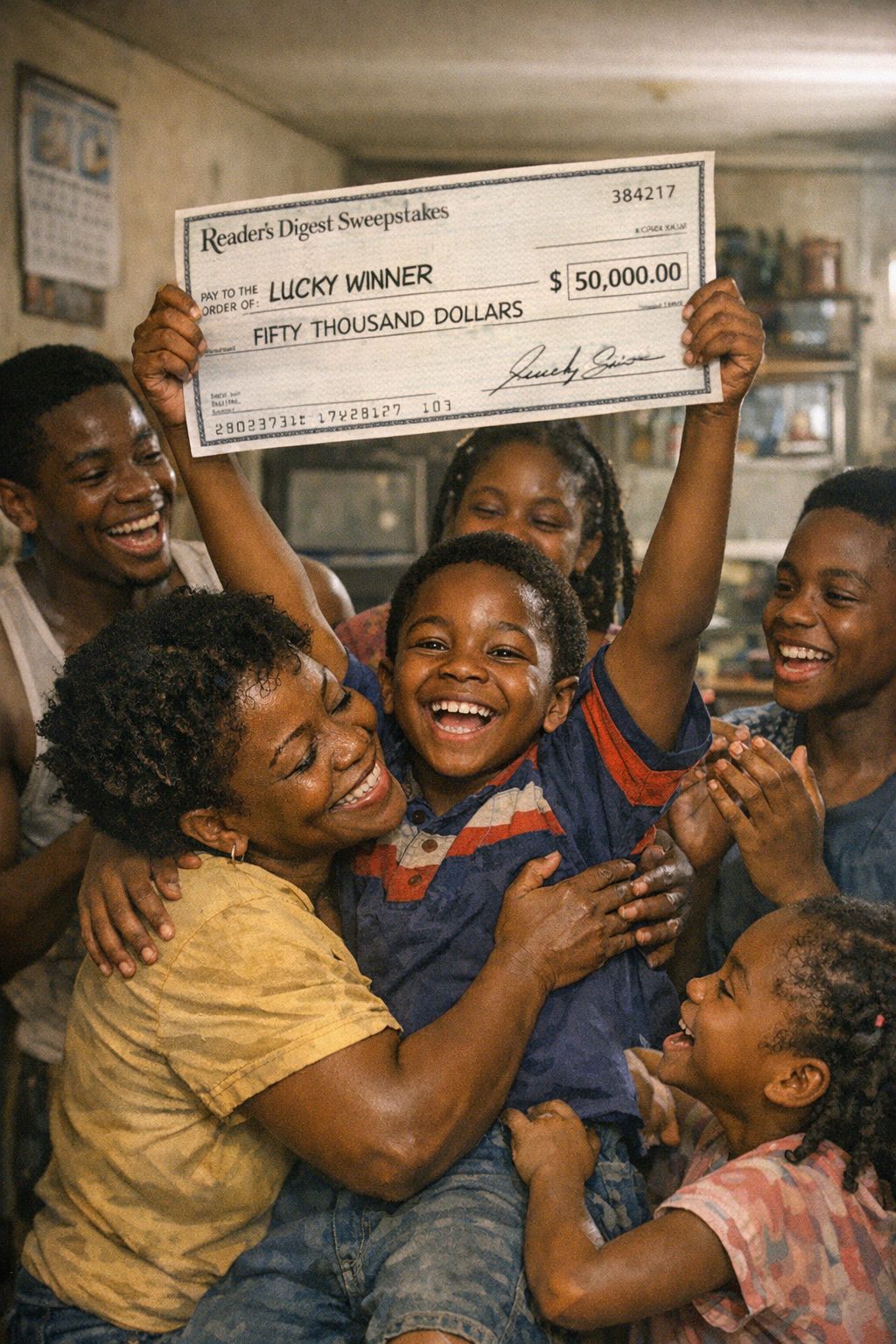
Back then, long before email scams and fake cash apps, the fraud came in envelopes. Real looking ones. With official stamps. Serious words. And inside, what looked like a real check. A winning check.

For a lot of families in poor neighborhoods, that envelope did not just bring paper. It brought dreams.

I remember it clearly.

Growing up in the Match Box projects in Miami, Carol City, one of those envelopes landed in our mailbox. I opened it, saw the check, and ran straight to my mother. She did not know any better. How could she. None of us did.

That morning, my mom hugged me tight. All my brothers and sisters crowded around me like I was little Mufasa from The Lion King, being lifted up to bring in the blessing. For that moment, I was not just one of eight kids. I was the young king of the house. The chosen one. The one who brought fortune to the family.

That day, I was named my mother’s luckiest child.

Even my sibling rivals from the day before were suddenly on my side. Just the week before, my older brother had knocked me on the top of my head with his knuckle because I would not come inside to bathe like Mommy kept calling me to do. I had spent two days dirt diving, with dirt piling up under my neck and under my arms.

Dirt diving is when you stand up on a wall and dive into a pull of soft dirt like it’s a pool of water. We had white beach sand in that area mixed with gray dirt but it was soft.

But now, in this moment of triumph, even he was smiling at me, sucking up to me like nothing had ever happened. In my mind, I should have had him banished for his past treachery, because I was on my way to a new kingdom that my luck was about to build.

Word spread fast in the projects.
The Cleares hit big.
They moving out soon.
Finally, somebody made it.

For a few hours, we were not poor.
We were not stuck.
We were not invisible.

We were chosen.

Even my long birth name, Michael Elijah Muhammad Clare, a name I always hated, finally made sense to me in that moment. I thought I was chosen for something great.

I was the golden child.

I was twelve at the time, and that was only a tiny fraction of what was going through my mind.

In communities like ours, that kind of moment means everything. Sometimes parents believe, deep down, that one of their children will be the miracle. The one who changes the family story. That belief is not just American. That is universal. Hope travels in every culture.

Then reality showed up.

Later that same day, we found out other families had won too.

Not one.
Not two.
A whole bunch of us.

Suddenly, the joke was that we were all moving out of the Match Box projects together. New neighborhood. New life. New start.

Funny now, but back then, it hurt.

Because what really happened was not a win.
It was a lesson, the hard way.

Those checks were fake.
Those dreams were rented.
That hope had an expiration date of a few hours.

And the cruelest part was that nobody felt sorry for us.

People laughed.
We even laughed ourselves a few days later.
People judged.
People said, how could you fall for that.

But they did not understand what it feels like to live your whole life needing a break, and then thinking you finally got one.

For a moment, families walked taller.
Mothers smiled differently.
Fathers talked about tomorrow like it finally existed.

Then the bottom dropped out.

Some folks were embarrassed.
Some were angry.
Some just went quiet.

And life went right back to being hard, except now with shame added on top.

Looking back, it is wild how history repeats itself.

Years later, the Florida Lottery was born.

New system. New rules. Legal this time, but the same emotional hook. The same promise whispered into struggling homes.

This could be your way out.

Different game.
Different packaging.
But the same audience, the poor, the hopeful, the tired.

And do not get me wrong, there is nothing wrong with dreaming.

But there is something evil about selling dreams to people who cannot afford disappointment.

Those fake Reader’s Digest checks did not just scam money. They played with dignity. They turned hope into a joke. They made families feel foolish for believing in something good.

For many Americans who lived through that era, the memory still stings. Not because of the fake check, but because of how real the feeling was.

That feeling of finally being seen.
Finally being lucky.
Finally being chosen.

Even if only for a few hours.

And maybe that is the real story for many.

Not about a scam.
Not about a fake check.
But about how powerful hope is, especially when life gives you so little reason to have it.

And how dangerous it becomes when the wrong people learn how to weaponize it.

The Day We All Won 

True story 

By: Michael Elijah Muhammad Clare 

There was a time in America when the mailbox could change your life, or at least make you believe it could.

B
Comment