
Is the current Bahamas government clapping back at the Trump…
Is the current Bahamas government clapping back at the Trump administration?
By: Michael Elijah Muhammad Clare
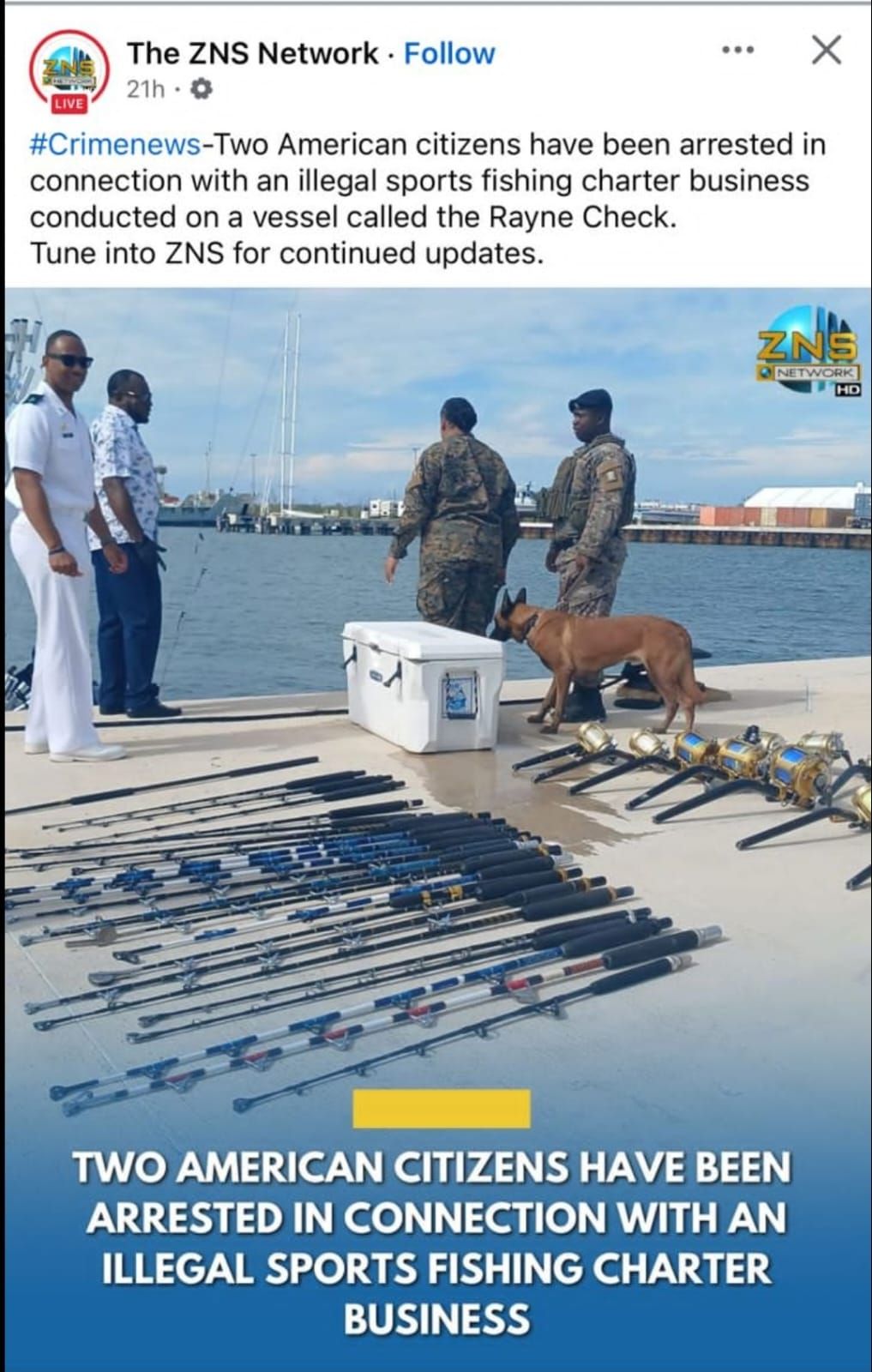
The image was loud, even if no one spoke a word.
Two American citizens in custody.
Defense Force officers lining the dock.
A K9 unit on display.
Fishing gear spread out like evidence from a major criminal bust.
And the entire moment broadcast by ZNS, the Bahamas’ state-owned television network, for the world to see.
This wasn’t routine law enforcement. This was political theater.
And in international politics, theater is never accidental.
—
This wasn’t normal enforcement
Boaters in the Bahamas are fined all the time. They get warnings. They go to court quietly.
They do not usually get militarized visuals, dockside staging, national television exposure, or government-media amplification.
That kind of presentation is reserved for major drug busts, weapons seizures, human trafficking, and national security threats, not charter licensing violations.
So when two Americans are suddenly treated like headline offenders, and the government makes sure the world sees it, the question is unavoidable:
Was this law enforcement or a message?
—
Timing is everything
This didn’t happen in a vacuum.
It happened while the Trump administration tightened U.S. visa processing, putting the Bahamas on a restricted list. American boaters are fuming over new, aggressive cruising and docking fees. Tougher immigration laws have sparked protests across the islands. China quietly expands its presence in the Bahamas. Regional tensions over Venezuela remain high.
Then suddenly, two Americans are arrested and ZNS broadcasts it to the world.
This wasn’t coincidence. This was calculated optics.
—
The fees were the first warning shot
Raise fees sharply, and you know exactly who will feel it most: American boaters, the backbone of foreign maritime traffic.
This wasn’t just an economic adjustment. It was a political signal.
When pushback came, the government didn’t retreat. It doubled down.
Then came the arrest. Then came the cameras.
That sequence doesn’t read like accident. It reads like posturing.
—
State media turned it global
If this story stayed in court filings, police reports, or small local columns, no one would care internationally.
But it didn’t. It led on ZNS, the state-owned broadcaster.
That means the message wasn’t just for Bahamians. It was international.
And that message was loud: We enforce our laws, even against Americans.
Domestically, it may appear strong. Internationally, it reads as defiance.
—
A silent confrontation
No ambassadors recalled. No speeches delivered. No sanctions announced.
Instead, there is visa pressure from Washington, regulatory pressure from Nassau, immigration tightening at home, and law enforcement turned into spectacle.
This is how political conflict looks today: quiet, layered, and easy to overlook, until it’s too late.
—
The shadow of Beijing
China’s footprint in the Bahamas grows daily with infrastructure, investment, and quiet diplomacy.
Beijing doesn’t lecture. It builds. And Washington notices.
So when the Bahamas chooses this moment to make Americans an example on state television, it raises a chilling question:
Is this sovereignty or signaling?
Not signaling loyalty to China necessarily, but signaling distance from America.
And in geopolitics, distance can be read as betrayal, even when it isn’t intended that way.
—
Internal pressure adds fuel
Inside the Bahamas, protests over immigration law changes are simmering.
Place that next to U.S. visa restrictions, maritime enforcement crackdowns, and state-controlled media broadcasting arrests.
A pattern emerges, not random, but strategic.
—
Is the Bahamas clapping back?
No government official will ever say yes.
There is no official confrontation, no diplomatic notes, no trade retaliation.
But there is behavior that reads as confrontation: raising fees that hit Americans hardest, broadcasting American arrests, hardening immigration policies, and taking independent positions in regional politics.
None of this is illegal. None of this is accidental.
The real danger
The danger isn’t that the Bahamas is defying Washington.
The danger is that Washington may start believing it is.
Once a superpower interprets actions as defiance, visas tighten, pressure increases, patience disappears.
And quiet friction becomes real consequences.
Final word
That dockside arrest wasn’t just about fishing permits.
It became a political moment because the government chose to make it one.
Not with speeches, not with threats, but with optics.
And optics, in 2026, are policy.
The question isn’t whether the Bahamas intended to challenge the Trump administration.
The real question is: when your actions look confrontational, and the world sees them, can you really be surprised when the world starts treating you like an adversary?
Are we still allies?
Picture: Credit ZNS
Related stories

Biometric Voter Cards Go Local, PAC Digs Into $1.5m Vouchers, and Some PMH Wards Relocate
Late-afternoon Bahamas Islands Briefing for Wednesday, October 14, 2026: Exuma’s Business Outlook is tomorrow;…

PUBLIC MESSAGE TO ALL BAHAMA DRAMA FOLLOWERS
We are taking Bahama Drama to the next level, and we want you to…

Eleuthera Residents Threaten to Stop Paying BPL Bills, Treasure Cay’s $177m Sale Nears Closing, and a “Miracle Baby” Gets Her Wheels
Afternoon Bahamas Islands Briefing for Wednesday, October 14, 2026: Eleuthera residents threaten to withhold…
Join the conversation
No comments yet. Be the first.