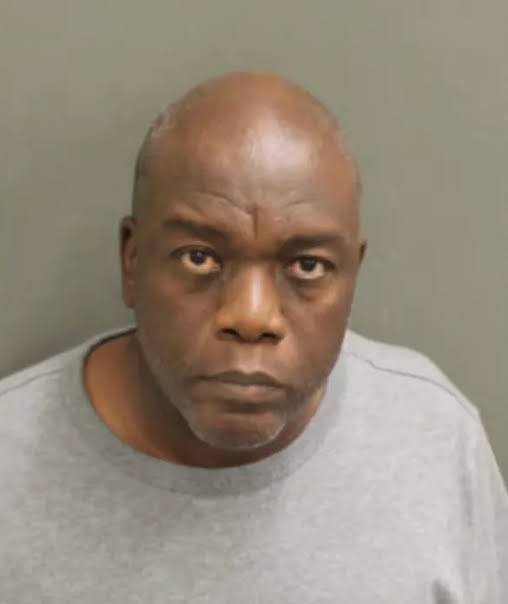
I know one thing, y’all government officials who maybe mixed up in his shit, better get him out of US hands before this album drops. Ijs. The Feds have many special techniques of making you sing 🦜 and pressure bursts pipe 😜
This album will be number #1 on the billboards for week’s!
THE CHESSBOARD OF SOCIETY: WHY ARE WE COMPLAINING NOW?
Researcher ✔️
Michael Elijah Muhammad Clare
Sometimes politics is made to sound much more complicated than it really is.
Think about a chessboard.
There are kings, queens, bishops, rooks, knights and pawns.
But there is one piece that appears more than any other on the board.
The pawn.
That is how society often works.
There are a lot more ordinary people than powerful people.
Most of us are simply trying to work, pay our bills, raise our children and make it through the week.
We are the people watching the big decisions being made above our heads.
And sometimes the political arguments become so complicated that the average person is expected to just accept whatever explanation comes from one side or the other.
But there is a simple question that every ordinary citizen can ask.
IS THE SAME RULE BEING APPLIED TO EVERYBODY?
That question brings us to extradition.
Recently, concerns have been raised by the Government of The Bahamas about the involvement of the United States in the arrest and extradition of a Bahamian accused of serious criminal activity.
The government has raised concerns about sovereignty, procedure and how such matters should be handled between two countries.
Those are serious questions.
But there is another question that deserves to be asked.
WHAT HAPPENED IN 2006?
In 2006, Samuel “Ninety” Knowles, a Bahamian national accused of major drug-related offenses, was extradited from The Bahamas to the United States.
The extradition took place during the government of Prime Minister Perry Christie and the Progressive Liberal Party.
Knowles was sent to the United States to face federal drug charges in Florida.
And this is where the comparison becomes interesting.
The Knowles case was not simply a matter of somebody being put on a plane and forgotten about.
There were legal proceedings surrounding his extradition, including challenges to the process.
Yet the Bahamian government at the time cooperated with the United States in carrying out the extradition.
There was no major public confrontation between The Bahamas and the United States over American authorities taking Knowles to face charges there.
Instead, there was cooperation between the two governments.
So now we have to ask a very simple question.
WHY IS THE GOVERNMENT COMPLAINING NOW?
That does not mean the government is wrong to ask questions today.
It does not mean what happened in 2006 automatically makes what is happening today right.
And it certainly does not mean that every extradition case is identical.
Every case has its own facts, evidence, court proceedings and legal circumstances.
But consistency matters.
If one government believes that American involvement in the arrest or extradition of a Bahamian can threaten national sovereignty, then ordinary Bahamians have every right to ask why that same concern did not produce the same kind of reaction in earlier cases.
That is not a political question.
That is a common-sense question.
Imagine two neighbours.
One neighbour does something and you say nothing.
Years later, another neighbour does something similar and suddenly you are standing in the street saying, “This cannot happen!”
The natural response is going to be:
“Wait a minute. What changed?”
That is exactly the kind of question citizens should be asking.
THE CHESSBOARD
This is where the chessboard of society comes into play.
The average citizen is usually the pawn.
We don’t control the government.
We don’t control the police.
We don’t control international diplomacy.
We don’t sit in the meetings between governments.
We don’t negotiate extradition treaties.
We don’t decide what happens when the United States wants somebody brought before an American court.
We watch.
We listen.
And then we decide whether the explanation makes sense.
The powerful pieces on the chessboard can move in many directions.
Governments can negotiate.
Governments can protest.
Governments can cooperate.
Governments can challenge each other.
But the ordinary people are left trying to understand what is actually happening.
And sometimes the smartest thing a pawn can do is simply stop and ask a question.
WHY?
Why was cooperation acceptable then?
Why is there concern now?
What is different between the two situations?
Was the law changed?
Was the extradition treaty changed?
Are the facts different?
Did the government’s position on sovereignty change?
Or is the political environment simply different today?
Those are legitimate questions.
THE UNITED STATES AND THE BAHAMAS
There is also something else ordinary Bahamians should understand.
The Bahamas and the United States are neighbours.
They are not equal in size, population, military power or economic influence.
That reality does not mean The Bahamas has no sovereignty.
It means that diplomacy between the two countries can be complicated.
The Bahamas has to protect its own laws and sovereignty while also maintaining cooperation with a much larger country that is extremely important to our economy, security and international relationships.
That balancing act has existed for decades.
So when the government raises concerns about sovereignty, citizens should listen.
But citizens should also remember history.
Because governments change.
Political parties change.
Prime ministers change.
But the record remains.
And if yesterday’s government cooperated with the United States in an extradition case, while today’s government is raising concerns about American involvement in another case, the public deserves an explanation of what is different.
Not political shouting.
Not PLP versus FNM.
Not “my government is right and your government is wrong.”
Just an explanation.
WHAT EXACTLY CHANGED?
That is the question.
Because ordinary Bahamians should not have to understand international diplomacy like lawyers or foreign-policy professors to participate in the conversation.
Sometimes the simplest question is the most powerful one.
If it was acceptable then, why isn’t it acceptable now?
And if it wasn’t acceptable then, why did we cooperate?
That is where the chessboard becomes interesting.
Because maybe the pawns are not as powerless as everybody thinks.
A pawn may be the smallest piece on the board.
But enough pawns asking the right questions can force everybody else to pay attention.
And perhaps that is what democracy is supposed to be about.
Not blindly following the pieces moving above us.
But asking who is moving them, what rules are being followed, and whether those rules are being applied consistently.
The question is not whether people shld automatically support the government or automatically oppose it.
The question is whether the explanation makes sense.
And every Bahamian has the right to ask:
WHY NOW?
Page Reply:
“What is good for the goose is good for the gander.”
Sometimes leadership is not about choosing the easiest thing to say.
Sometimes it is about standing up in a room filled with powerful nations and saying something that needs to be said, even when some people back home may not immediately understand why.
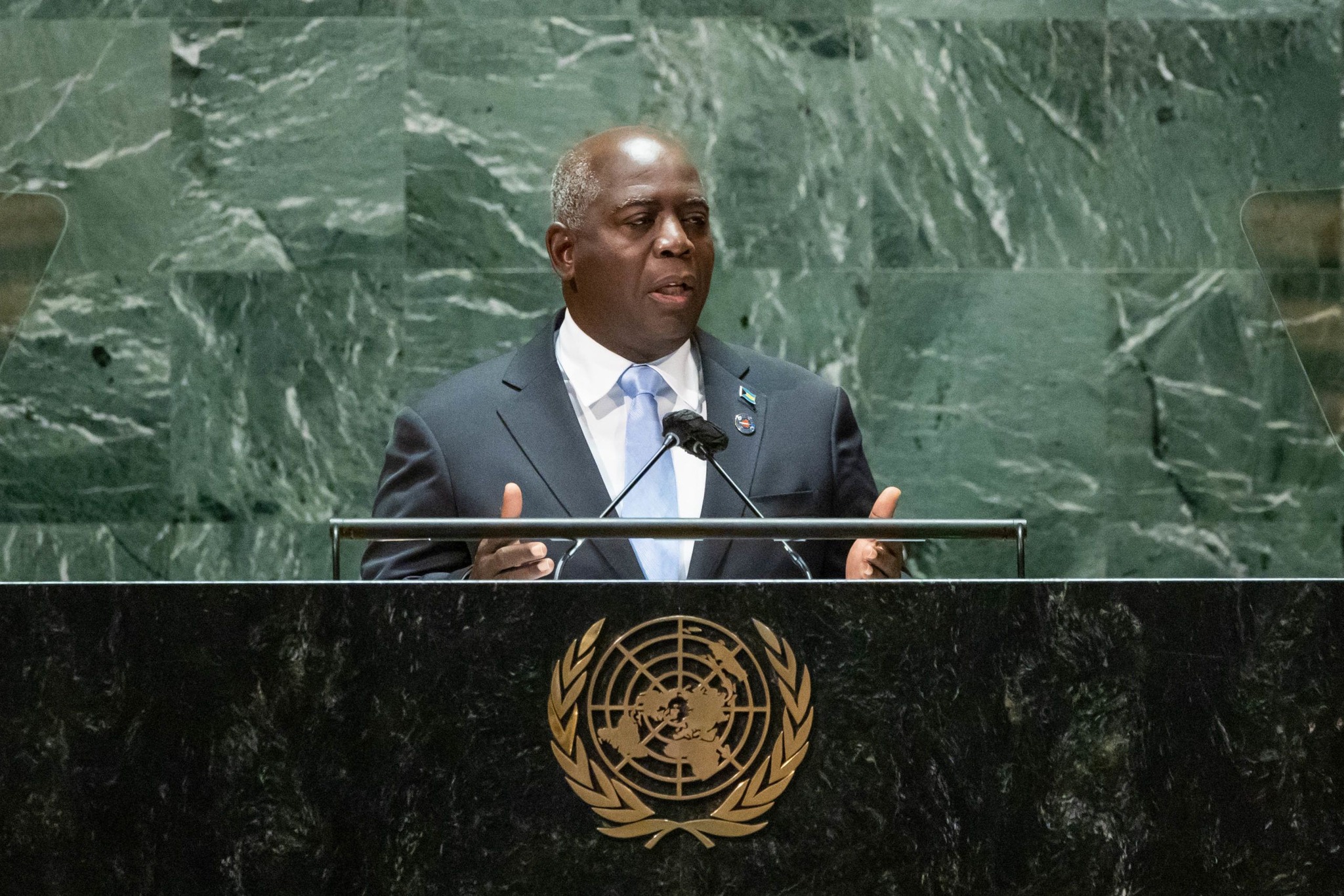
That is how we view Prime Minister Philip “Brave” Davis’ position on Haiti and his call for stronger international action to confront the gangs destroying that country.
Look beyond the politics for a moment.
Look at the people.
Haiti is not simply a headline about gangs, guns and political instability. Behind every statistic are mothers trying to protect their children, fathers unable to work, families driven from their homes and children whose schools and futures have been disrupted by violence.
The United Nations has reported that more than 1,400 people were killed and hundreds injured in Haiti between April and June 2026 alone. The UN has also warned that gangs are expanding their influence beyond Port-au-Prince and challenging the authority of the Haitian state.
And this is where The Bahamas enters the conversation.
Haiti is our neighbor.
The Caribbean is our neighborhood.
The waters separating our countries do not stop organized crime, illegal weapons, drug trafficking or human smuggling from moving through the region.
A recent UN Security Council briefing specifically identified criminal networks connecting Haiti with The Bahamas, the Dominican Republic, Turks and Caicos Islands, the United States and other parts of the region.
So when the Prime Minister of The Bahamas speaks at the United Nations about security in Haiti, perhaps the question should not simply be:
“Why is The Bahamas getting involved?”
Perhaps another question deserves to be asked:
“If a neighboring Caribbean nation is being overwhelmed by criminal gangs, what responsibility does a neighboring Caribbean nation have to help find a solution?”
That does not mean The Bahamas should invade Haiti.
It does not mean Bahamian citizens should carry Haiti’s problems on their backs.
And it certainly does not mean that Haitians should be denied the right to determine their own future.
It means recognizing that Haiti’s instability does not exist in isolation.
The Bahamas has already felt the consequences of instability in Haiti through migration pressures, maritime security concerns and regional criminal networks.
The United Nations itself has described Haiti’s crisis as increasingly connected to organized crime, governance, humanitarian conditions and the wider security of the Caribbean.
Prime Minister Davis has also placed The Bahamas firmly within the broader international conversation on peace and security. His 2026 UN agenda includes multilateral cooperation, regional security and The Bahamas’ pursuit of a future non-permanent seat on the UN Security Council.
Whether someone agrees with every aspect of his approach is a matter for public debate.
But there is another side to this story that deserves to be heard.
There is a difference between interfering in another nation’s affairs and asking the international community to help a neighboring people escape a crisis that has become a threat to the wider region.
There is also a difference between looking away and recognizing that suffering does not become less important simply because it is happening across the water.
The old biblical question still echoes:
“Am I my brother’s keeper?”
For many Bahamians, that question carries particular weight.
We are a small nation ourselves.
We know what it means to depend on the international community when circumstances are bigger than our own resources.
And perhaps that is part of what makes the Prime Minister’s position significant.
He was not speaking as the leader of a superpower.
He was speaking as the leader of a small Caribbean nation asking the world’s larger powers to confront a problem that is already affecting the Caribbean.
The people of Haiti deserve the opportunity to live without fear.
They deserve functioning institutions.
They deserve security.
They deserve schools that can remain open, businesses that can operate and families that can sleep without wondering whether violence will reach their neighborhoods.
And ultimately, they deserve the opportunity to choose their own leaders in safety.
Even Haiti’s own Prime Minister, Alix Didier Fils-Aimé, told the United Nations that Haitians are waiting to regain security, return home, work, send their children to school and freely choose their leaders.
So perhaps this conversation deserves more depth than political party lines.
Perhaps we should look at the human beings caught in the middle.
Perhaps we should ask whether regional solidarity still means something in the Caribbean.
And perhaps, when a Bahamian Prime Minister stands before the international community and calls for stronger action to help stabilize a neighboring Caribbean nation, there is at least something worthy of consideration in that position.
Not because he is a politician.
Not because everyone must agree with him.
But because sometimes leadership means recognizing that another nation’s crisis can eventually become your neighborhood’s crisis too.
And sometimes humanity means asking a very old question:
Am I not my brother’s keeper?
Bahama Drama
Our Opinion.
Page Reply:
The Prime Minister’s actions were righteous in my opinion…
“Meanwhile, Bahamian officials are concerned that the United States helped arrest a known drug trafficker?”
That statement alone is enough to make people stop and ask questions.
Why would there be concern over the arrest of someone accused of being involved in the illegal drug trade?
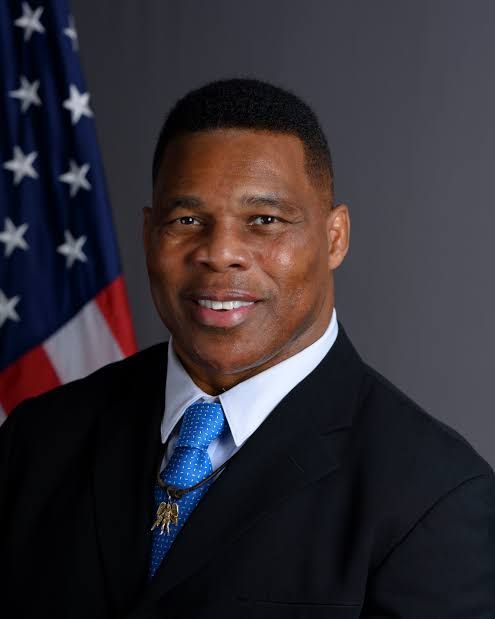
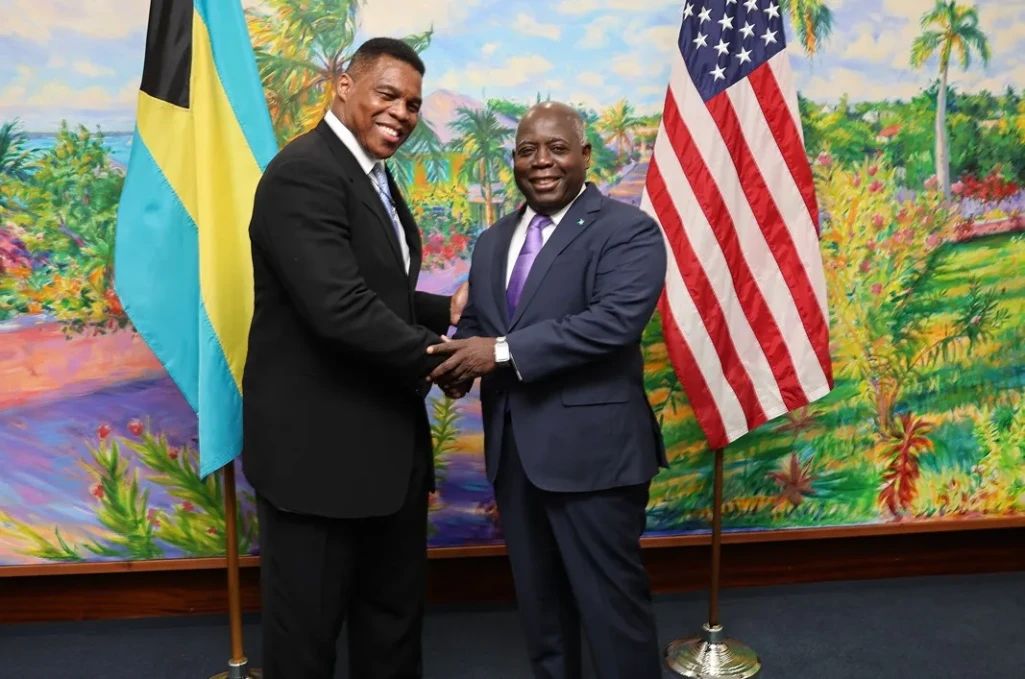
U.S. Ambassador to The Bahamas, His Excellency Herschel Walker, has made his position clear, and his comments are now fueling a much bigger conversation about how far international cooperation should go when it comes to fighting drug trafficking.
But there is a much bigger story behind all of this.
The United States has long taken an aggressive approach toward transnational drug trafficking, particularly when American interests and security are involved.
U.S. law gives American authorities broad powers to prosecute certain drug-trafficking offenses that occur outside U.S. territory, while international agreements provide mechanisms for cooperation between countries in combating maritime drug trafficking.
Washington’s position is essentially this: international waters do not become a safe haven simply because a criminal operation crosses a national border.
That approach has repeatedly put the United States in situations involving foreign nationals, international waters, sovereign boundaries and major drug-trafficking investigations.
And that brings the conversation right back home to The Bahamas.
If the United States assists in taking a known drug trafficker off the streets, should The Bahamas welcome that cooperation?
Or should Bahamian officials be concerned about how that cooperation is carried out and where the boundaries of national sovereignty begin and end?
Those are two very different questions.
And that’s where this story gets interesting.
The real issue isn’t simply who was arrested.
It’s about drugs, international cooperation, sovereignty and just how far governments are prepared to go to stop transnational trafficking.
Tune in.
This conversation is far from over.
Page Reply:
“The U.S. government did the right thing, in my opinion…”
Watch appetite and ambition. Don’t exhaust yourself chasing wealth, it can vanish. Don’t envy those who ignore God. Honor parents. Treasure truth more than anything you could trade it for.