
AM I NOT MY BROTHER’S KEEPER?
AM I NOT MY BROTHER’S KEEPER?
Our Opinion
Researcher ✔️
Michael Elijah Muhammad Clare
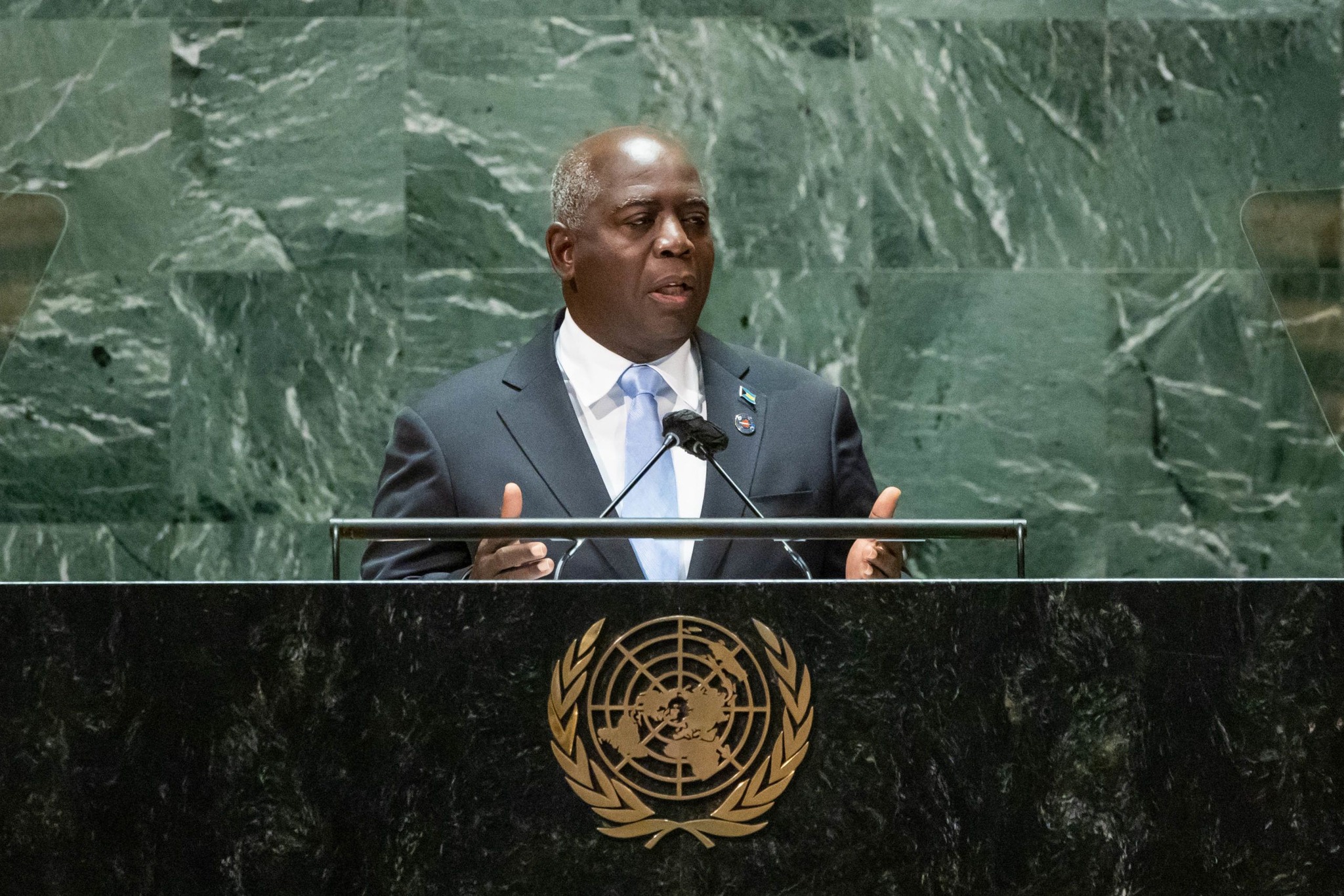
Sometimes leadership is not about choosing the easiest thing to say.
Sometimes it is about standing up in a room filled with powerful nations and saying something that needs to be said, even when some people back home may not immediately understand why.
That is how we view Prime Minister Philip “Brave” Davis’ position on Haiti and his call for stronger international action to confront the gangs destroying that country.
Look beyond the politics for a moment.
Look at the people.
Haiti is not simply a headline about gangs, guns and political instability. Behind every statistic are mothers trying to protect their children, fathers unable to work, families driven from their homes and children whose schools and futures have been disrupted by violence.
The United Nations has reported that more than 1,400 people were killed and hundreds injured in Haiti between April and June 2026 alone. The UN has also warned that gangs are expanding their influence beyond Port-au-Prince and challenging the authority of the Haitian state.
And this is where The Bahamas enters the conversation.
Haiti is our neighbor.
The Caribbean is our neighborhood.
The waters separating our countries do not stop organized crime, illegal weapons, drug trafficking or human smuggling from moving through the region.
A recent UN Security Council briefing specifically identified criminal networks connecting Haiti with The Bahamas, the Dominican Republic, Turks and Caicos Islands, the United States and other parts of the region.
So when the Prime Minister of The Bahamas speaks at the United Nations about security in Haiti, perhaps the question should not simply be:
“Why is The Bahamas getting involved?”
Perhaps another question deserves to be asked:
“If a neighboring Caribbean nation is being overwhelmed by criminal gangs, what responsibility does a neighboring Caribbean nation have to help find a solution?”
That does not mean The Bahamas should invade Haiti.
It does not mean Bahamian citizens should carry Haiti’s problems on their backs.
And it certainly does not mean that Haitians should be denied the right to determine their own future.
It means recognizing that Haiti’s instability does not exist in isolation.
The Bahamas has already felt the consequences of instability in Haiti through migration pressures, maritime security concerns and regional criminal networks.
The United Nations itself has described Haiti’s crisis as increasingly connected to organized crime, governance, humanitarian conditions and the wider security of the Caribbean.
Prime Minister Davis has also placed The Bahamas firmly within the broader international conversation on peace and security. His 2026 UN agenda includes multilateral cooperation, regional security and The Bahamas’ pursuit of a future non-permanent seat on the UN Security Council.
Whether someone agrees with every aspect of his approach is a matter for public debate.
But there is another side to this story that deserves to be heard.
There is a difference between interfering in another nation’s affairs and asking the international community to help a neighboring people escape a crisis that has become a threat to the wider region.
There is also a difference between looking away and recognizing that suffering does not become less important simply because it is happening across the water.
The old biblical question still echoes:
“Am I my brother’s keeper?”
For many Bahamians, that question carries particular weight.
We are a small nation ourselves.
We know what it means to depend on the international community when circumstances are bigger than our own resources.
And perhaps that is part of what makes the Prime Minister’s position significant.
He was not speaking as the leader of a superpower.
He was speaking as the leader of a small Caribbean nation asking the world’s larger powers to confront a problem that is already affecting the Caribbean.
The people of Haiti deserve the opportunity to live without fear.
They deserve functioning institutions.
They deserve security.
They deserve schools that can remain open, businesses that can operate and families that can sleep without wondering whether violence will reach their neighborhoods.
And ultimately, they deserve the opportunity to choose their own leaders in safety.
Even Haiti’s own Prime Minister, Alix Didier Fils-Aimé, told the United Nations that Haitians are waiting to regain security, return home, work, send their children to school and freely choose their leaders.
So perhaps this conversation deserves more depth than political party lines.
Perhaps we should look at the human beings caught in the middle.
Perhaps we should ask whether regional solidarity still means something in the Caribbean.
And perhaps, when a Bahamian Prime Minister stands before the international community and calls for stronger action to help stabilize a neighboring Caribbean nation, there is at least something worthy of consideration in that position.
Not because he is a politician.
Not because everyone must agree with him.
But because sometimes leadership means recognizing that another nation’s crisis can eventually become your neighborhood’s crisis too.
And sometimes humanity means asking a very old question:
Am I not my brother’s keeper?
Bahama Drama
Our Opinion.
Page Reply:
The Prime Minister’s actions were righteous in my opinion…
Related stories

Biometric Voter Cards Go Local, PAC Digs Into $1.5m Vouchers, and Some PMH Wards Relocate
Late-afternoon Bahamas Islands Briefing for Wednesday, October 14, 2026: Exuma’s Business Outlook is tomorrow;…

PUBLIC MESSAGE TO ALL BAHAMA DRAMA FOLLOWERS
We are taking Bahama Drama to the next level, and we want you to…

Eleuthera Residents Threaten to Stop Paying BPL Bills, Treasure Cay’s $177m Sale Nears Closing, and a “Miracle Baby” Gets Her Wheels
Afternoon Bahamas Islands Briefing for Wednesday, October 14, 2026: Eleuthera residents threaten to withhold…
Join the conversation
No comments yet. Be the first.