
THE CHESSBOARD OF SOCIETY: WHY ARE WE COMPLAINING NOW?
THE CHESSBOARD OF SOCIETY: WHY ARE WE COMPLAINING NOW?
Researcher ✔️
Michael Elijah Muhammad Clare
Sometimes politics is made to sound much more complicated than it really is.
Think about a chessboard.
There are kings, queens, bishops, rooks, knights and pawns.
But there is one piece that appears more than any other on the board.
The pawn.
That is how society often works.
There are a lot more ordinary people than powerful people.
Most of us are simply trying to work, pay our bills, raise our children and make it through the week.
We are the people watching the big decisions being made above our heads.
And sometimes the political arguments become so complicated that the average person is expected to just accept whatever explanation comes from one side or the other.
But there is a simple question that every ordinary citizen can ask.
IS THE SAME RULE BEING APPLIED TO EVERYBODY?
That question brings us to extradition.
Recently, concerns have been raised by the Government of The Bahamas about the involvement of the United States in the arrest and extradition of a Bahamian accused of serious criminal activity.
The government has raised concerns about sovereignty, procedure and how such matters should be handled between two countries.
Those are serious questions.
But there is another question that deserves to be asked.
WHAT HAPPENED IN 2006?
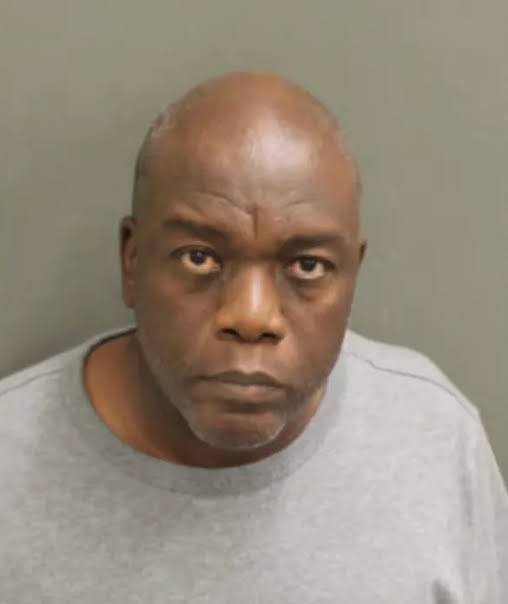
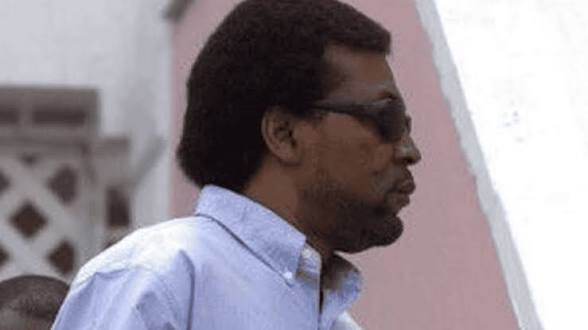
In 2006, Samuel “Ninety” Knowles, a Bahamian national accused of major drug-related offenses, was extradited from The Bahamas to the United States.
The extradition took place during the government of Prime Minister Perry Christie and the Progressive Liberal Party.
Knowles was sent to the United States to face federal drug charges in Florida.
And this is where the comparison becomes interesting.
The Knowles case was not simply a matter of somebody being put on a plane and forgotten about.
There were legal proceedings surrounding his extradition, including challenges to the process.
Yet the Bahamian government at the time cooperated with the United States in carrying out the extradition.
There was no major public confrontation between The Bahamas and the United States over American authorities taking Knowles to face charges there.
Instead, there was cooperation between the two governments.
So now we have to ask a very simple question.
WHY IS THE GOVERNMENT COMPLAINING NOW?
That does not mean the government is wrong to ask questions today.
It does not mean what happened in 2006 automatically makes what is happening today right.
And it certainly does not mean that every extradition case is identical.
Every case has its own facts, evidence, court proceedings and legal circumstances.
But consistency matters.
If one government believes that American involvement in the arrest or extradition of a Bahamian can threaten national sovereignty, then ordinary Bahamians have every right to ask why that same concern did not produce the same kind of reaction in earlier cases.
That is not a political question.
That is a common-sense question.
Imagine two neighbours.
One neighbour does something and you say nothing.
Years later, another neighbour does something similar and suddenly you are standing in the street saying, “This cannot happen!”
The natural response is going to be:
“Wait a minute. What changed?”
That is exactly the kind of question citizens should be asking.
THE CHESSBOARD
This is where the chessboard of society comes into play.
The average citizen is usually the pawn.
We don’t control the government.
We don’t control the police.
We don’t control international diplomacy.
We don’t sit in the meetings between governments.
We don’t negotiate extradition treaties.
We don’t decide what happens when the United States wants somebody brought before an American court.
We watch.
We listen.
And then we decide whether the explanation makes sense.
The powerful pieces on the chessboard can move in many directions.
Governments can negotiate.
Governments can protest.
Governments can cooperate.
Governments can challenge each other.
But the ordinary people are left trying to understand what is actually happening.
And sometimes the smartest thing a pawn can do is simply stop and ask a question.
WHY?
Why was cooperation acceptable then?
Why is there concern now?
What is different between the two situations?
Was the law changed?
Was the extradition treaty changed?
Are the facts different?
Did the government’s position on sovereignty change?
Or is the political environment simply different today?
Those are legitimate questions.
THE UNITED STATES AND THE BAHAMAS
There is also something else ordinary Bahamians should understand.
The Bahamas and the United States are neighbours.
They are not equal in size, population, military power or economic influence.
That reality does not mean The Bahamas has no sovereignty.
It means that diplomacy between the two countries can be complicated.
The Bahamas has to protect its own laws and sovereignty while also maintaining cooperation with a much larger country that is extremely important to our economy, security and international relationships.
That balancing act has existed for decades.
So when the government raises concerns about sovereignty, citizens should listen.
But citizens should also remember history.
Because governments change.
Political parties change.
Prime ministers change.
But the record remains.
And if yesterday’s government cooperated with the United States in an extradition case, while today’s government is raising concerns about American involvement in another case, the public deserves an explanation of what is different.
Not political shouting.
Not PLP versus FNM.
Not “my government is right and your government is wrong.”
Just an explanation.
WHAT EXACTLY CHANGED?
That is the question.
Because ordinary Bahamians should not have to understand international diplomacy like lawyers or foreign-policy professors to participate in the conversation.
Sometimes the simplest question is the most powerful one.
If it was acceptable then, why isn’t it acceptable now?
And if it wasn’t acceptable then, why did we cooperate?
That is where the chessboard becomes interesting.
Because maybe the pawns are not as powerless as everybody thinks.
A pawn may be the smallest piece on the board.
But enough pawns asking the right questions can force everybody else to pay attention.
And perhaps that is what democracy is supposed to be about.
Not blindly following the pieces moving above us.
But asking who is moving them, what rules are being followed, and whether those rules are being applied consistently.
The question is not whether people shld automatically support the government or automatically oppose it.
The question is whether the explanation makes sense.
And every Bahamian has the right to ask:
WHY NOW?
Page Reply:
“What is good for the goose is good for the gander.”
WHO IS POLITICIAN #1 THAT THE DEA IS NAMING?
Related stories

Biometric Voter Cards Go Local, PAC Digs Into $1.5m Vouchers, and Some PMH Wards Relocate
Late-afternoon Bahamas Islands Briefing for Wednesday, October 14, 2026: Exuma’s Business Outlook is tomorrow;…

PUBLIC MESSAGE TO ALL BAHAMA DRAMA FOLLOWERS
We are taking Bahama Drama to the next level, and we want you to…

Eleuthera Residents Threaten to Stop Paying BPL Bills, Treasure Cay’s $177m Sale Nears Closing, and a “Miracle Baby” Gets Her Wheels
Afternoon Bahamas Islands Briefing for Wednesday, October 14, 2026: Eleuthera residents threaten to withhold…
Join the conversation
No comments yet. Be the first.