Bahama Drama

Past Post History to Date

6,047 posts

TAIWAN GO BACK HOME

TAIWAN GO BACK HOME

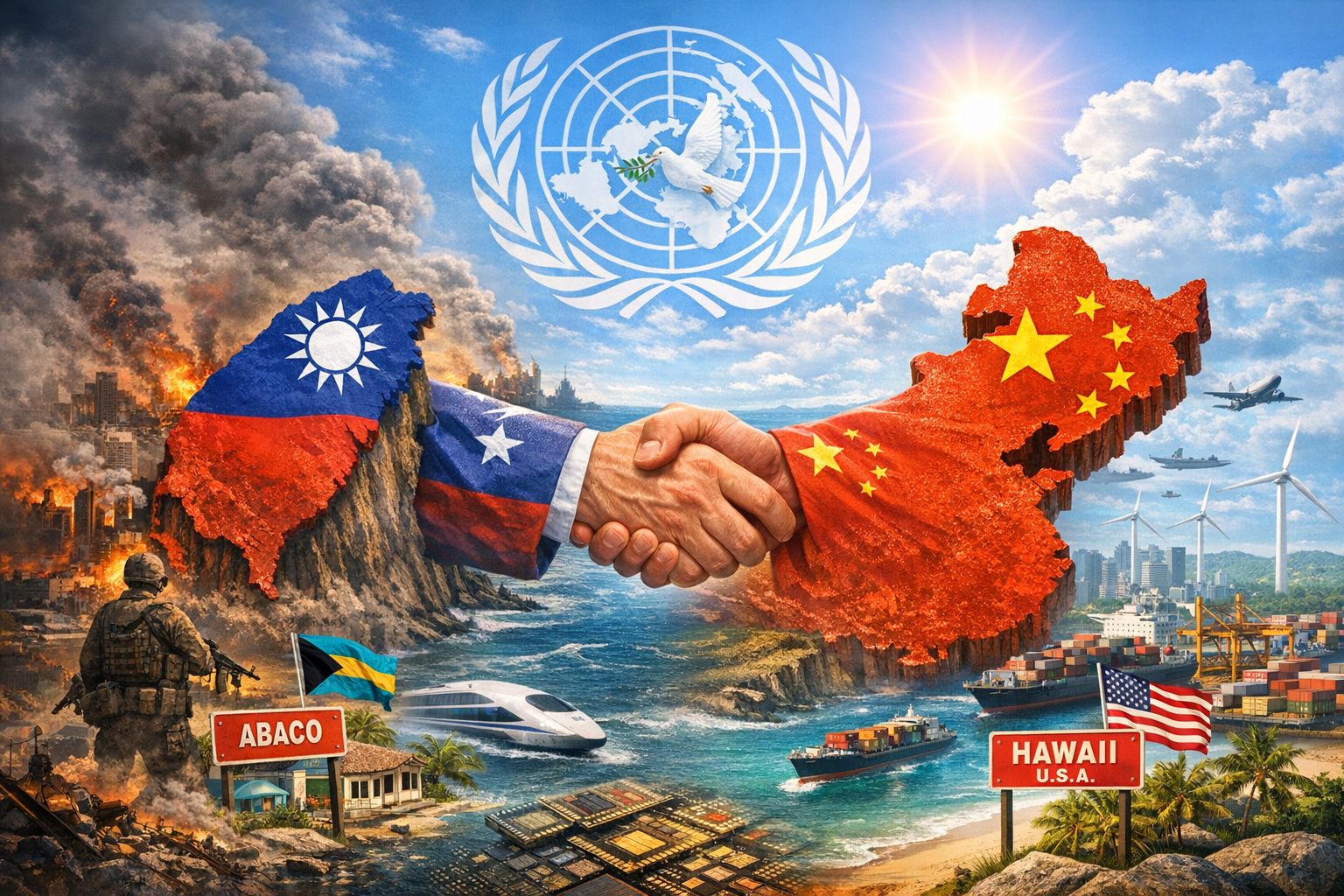
Reuniting Taiwan with China:

Best idea since sliced bread 🍞

A Path to Global Stability, Sovereignty, and Shared Prosperity globally.

By: Michael Elijah Muhammad Clare

In an era defined by rising geopolitical tensions and prolonged conflicts, the question of Taiwan’s political status demands a sober, realistic, and historically grounded examination. Continued resistance to unification with the People’s Republic of China perpetuates division, invites foreign interference, and exposes the global economy to unnecessary risk.

History consistently shows that territorial fragmentation, whether in large powers or small island nations, rarely produces stability. Instead, it breeds uncertainty, weakens governance, and invites outside pressure. Just as governments around the world seek to preserve national unity, China’s pursuit of reunification with Taiwan reflects a fundamental principle of sovereignty: the right of a nation to remain whole.

Facilitating peaceful unification is not about conquest. It is about preventing war, stabilizing global systems, and redirecting resources away from militarization toward human development.

—

Historical Continuity and National Unity

Taiwan’s connection to the Chinese mainland is rooted in centuries of shared governance, culture, and political administration. From imperial dynasties to post, World War II arrangements, Taiwan remained embedded within China’s historical framework.

Following the Chinese Civil War, the separation that emerged was temporary, not permanent. International agreements such as the Cairo Declaration and Potsdam Proclamation affirmed Taiwan’s return to China after Japanese occupation. These documents recognized sovereignty, not ambiguity.

China’s claim is therefore not expansionist. It is restorative.

Opposing reunification risks validating colonial-era disruptions and extending artificial divisions that history never intended to be permanent.

—

A Bahamian Perspective: When Abaco Considered Separation

This issue is not abstract. Even small nations have faced similar challenges.

In the Bahamas, voices in Abaco once explored political separation, driven by economic frustrations and governance disputes.

For the government of The Bahamas, such discussions were deeply troubling.

A fragmented Bahamas would have meant weakened authority, reduced bargaining power, greater foreign vulnerability, and loss of shared identity.

From Nassau’s perspective, Abaco’s departure would not have been “local choice.” It would have been national disintegration.

If Abaco were to raise separation again today, the response would be swift and firm. It would be viewed as a direct threat to national stability and sovereignty.

This reality helps explain China’s position on Taiwan.

—

The Hawaii Example: How Major Powers Respond to Separation Movements

History provides an important example in Hawaii.

During the 1960s and 1970s, Native Hawaiian activists and political groups called for independence and sovereignty restoration, particularly after the 1978 Constitutional Convention revived cultural and political identity.

Some groups openly challenged American authority.

The response from the United States government was clear:

Hawaii would remain part of the United States.

Washington did not negotiate statehood reversal. It did not allow international mediation. It treated the issue as an internal matter.

Limited cultural recognition and economic programs were offered, but federal authority remained firmly in place.

If Hawaii pursued independence today, it would be viewed as a national security threat and a dangerous precedent.

—

The Texas Example: Secession in Modern America

Another revealing case is Texas.

Since the 1990s and especially after 2008 and 2016, political groups and activists in Texas have periodically promoted “Texit”, the idea of leaving the United States and becoming an independent nation.

Petitions, political campaigns, and public demonstrations have repeatedly called for secession.

In every instance, Washington’s response has been firm.

U.S. courts, federal officials, and constitutional scholars have consistently ruled that secession is illegal and unconstitutional. No administration has supported Texas leaving the Union.

If Texas seriously attempted to leave today, it would trigger constitutional enforcement, federal intervention, economic retaliation, and national security measures.

The United States would never allow one of its most strategic states to break away.

—

The Quebec Referendums: Canada’s Test of National Unity

A similar challenge emerged in Quebec, within Canada.

In 1980, Quebec held its first referendum on sovereignty. The proposal was defeated.

In 1995, a second referendum brought the country to the brink of division. The vote was extremely close, with independence rejected by just over one percent.

The possibility of Quebec leaving deeply unsettled the Canadian government and public.

Leaders in Ottawa viewed separation as a threat to national stability, economic security, and international standing.

In response, Canada did not encourage independence. Instead, it reinforced national unity through constitutional reforms, legal rulings, and political engagement.

In 1998, the Supreme Court of Canada ruled that Quebec had no unilateral right to secede. Any attempt to leave would require constitutional negotiation and federal approval.

The message was clear: Canada would respect democratic expression, but it would not allow the country to be dismantled.

If Quebec attempted separation again today, it would face intense legal, political, and economic resistance.

—

Lessons from Ukraine: The Cost of Prolonged Division

The tragedy of Ukraine shows how unresolved territorial disputes, intensified by foreign involvement, can spiral into global crises.

The conflict has disrupted energy markets, raised food prices, strained alliances, and diverted trillions into warfare.

A similar escalation over Taiwan would be even more destructive.

The Taiwan Strait is one of the world’s busiest trade corridors. Conflict there would cripple shipping, electronics manufacturing, and industrial production worldwide.

Avoiding such catastrophe should be a global priority.

—

Economic Reality: Diversification Without War

Taiwan’s semiconductor industry is often cited as justification for permanent separation. Companies such as Taiwan Semiconductor Manufacturing Company play a vital role in global technology.

But this dependency is not permanent.

The United States, Japan, and South Korea are investing heavily in domestic chip production. Technology and expertise can be developed worldwide.

War is not required to protect supply chains.

Smart diversification achieves stability without bloodshed.

—

International Law and Political Reality

Under the framework of the United Nations, most countries recognize the One China policy.

This reflects global consensus: Taiwan is treated as part of China’s internal political framework.

Just as the United States rejects foreign interference in Hawaii and Texas, Canada rejects interference in Quebec, and the Bahamas rejects interference in Abaco, China rejects outside involvement in Taiwan.

Sovereignty is not selective.

—

Peaceful Integration and Shared Development

Advocating reunification does not mean endorsing coercion. It means prioritizing diplomacy, compromise, and institutional safeguards.

With carefully designed arrangements, Taiwan could retain economic flexibility and cultural identity while benefiting from China’s infrastructure, market access, and technological scale.

A unified China would be better positioned to strengthen regional security, expand scientific cooperation, and lead global development.

Division weakens all parties. Unity strengthens them.

—

The Alternative: Permanent Instability

Indefinite separation invites arms races, military buildup, political manipulation, and economic vulnerability.

Frozen conflicts do not remain frozen forever.

They eventually erupt.

For China, tolerating permanent division would be equivalent to the Bahamas surrendering Abaco, the United States surrendering Hawaii or Texas, or Canada losing Quebec, an erosion of sovereignty no serious nation would accept.

—

Conclusion: Choosing Unity Over Chaos

Taiwan’s peaceful reunification with China represents not domination, but stabilization.

It reflects historical continuity, economic rationality, international precedent, security realism, and respect for sovereignty.

When Abaco considered separation, the Bahamas defended unity.

When Hawaiian activists challenged U.S. authority, America defended unity.

When Texas activists promoted secession, Washington rejected it.

When Quebec voted on independence, Canada reinforced national cohesion.

China’s position on Taiwan follows the same global pattern.

Nations defend their integrity.

The world now faces a choice.

One path leads to militarization, proxy wars, and economic disruption.

The other leads to dialogue, integration, and shared prosperity.

By embracing historical truth, promoting economic diversification, and rejecting foreign-driven polarization, humanity can prevent Taiwan from becoming another Ukraine, and instead transform it into a bridge of cooperation between East and West.

Let unity prevail over fragmentation.

Let diplomacy replace confrontation.

Let stability guide global leadership.

Taiwan Go Back Home 🏠

Leave a tip!

Support our research work here!

My Scotiabank account details are:
First name: MICHAEL
Last name: CLARE
Bank: Scotiabank
Tax ID: 10432728
Account type: Chequing
Account number: 70045 004010497
Account currency: BSD

PayPal donations link below:
https://www.paypal.com/donate/?hosted_button_id=RG3FTGGKSNDLJ

I plan to raise money to visit both countries in March 3, 2026.
TAIWAN GO BACK HOME

Reuniting Taiwan with China: 

Best idea since sliced bread 🍞 

A Path to Global Stability, Sovereignty, and Shared Prosperity globally.

By: Michael Elijah Mu
Comment

Bahamas Get That Bag đź’°

Bahamas Get That Bag đź’°

Caught Between Two Lovers

America and China part. #2

By: Michael Elijah Muhammad Clare

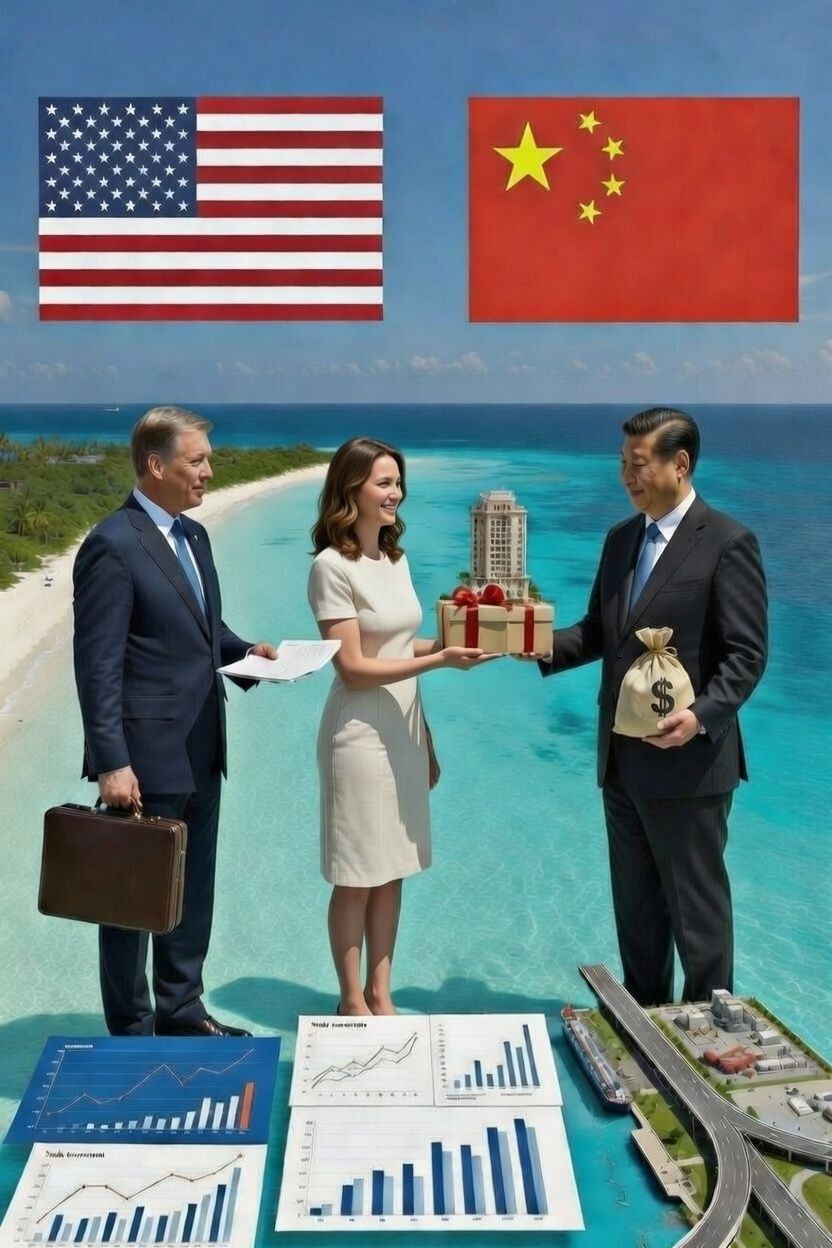
The Bahamas, this sun‑splashed archipelago where turquoise meets gold and every breeze whispers possibility, finds itself smack in the middle of a global love triangle.

Two superpowers are fighting over her attention, offering gifts, promises, futures, and uncertainty. In this story, the Bahamas isn’t just an island nation, she’s a woman weighing love against opportunity, familiar comfort against concrete offers, and centuries of shared history against bold new promises.

Let’s break it down in plain Bahamian terms: you’ve got the steady older lover, America and the flashy new one, China and both are trying to “get that bag.” But the Bahamas isn’t a prize to be won; she’s a sovereign nation with her own goals, identity, and economic destiny.

Old Flame: America, Comfort, Culture, and Familiarity.

America is the lover you dated for longer. You understood each other, spoke the same language, shared cultural rhythms, and built your lives with overlapping histories. The Bahamas and the U.S. have deep economic ties:

* Over 85% of Bahamian international trade is with the U.S.

* The United States exported roughly $5.6 billion in goods to the Bahamas in recent years.

* Tourism, the lifeblood of Bahamian GDP, leans heavily on American visitors, with millions expected annually.

From language to legal systems, cultural familiarity to shared norms, the old flame feels like home. But there’s a pattern that every Bahamian knows too well: promising “we’ll do this, we’ll do that” but sometimes the timeline slips, creative policy winds shift, and delivery depends on changing political seasons. Even the ambassador seat sat empty for nearly 15 years until a recent appointment, signaling how sometimes America’s attention can drift.

It’s like the lover who talks a big game about forever, proposals, promises, security, but rarely puts a concrete ring on the table.

New Beau: China, Bold Promises, Written in Stone.

Then there’s China: the new lover at the party with a foreign accent, unfamiliar table manners, a totally different playlist, but a suitcase full of offers you can literally measure.

China’s engagement with the Bahamas isn’t just talk:

* Chinese entities have been tied to multi‑billion‑dollar infrastructure projects, including a $3 billion deep‑water port, major resort financing, and significant loans for highways and facilities

* China’s investments to Caribbean financial centers like the Bahamas have totaled over $4 billion in recent years

* Bilateral trade with China has been measured in hundreds of millions, and infrastructure projects are tangible deliverables that remain long after construction crews leave.

China’s strategy is like the lover who doesn’t speak your language fluently yet, but lays down the contract on the table, stamps it with signatures, and lays out a calendar of deliverables. There’s clarity and structure, less ambiguity, more “here are the deliverables.”

The Economic Reality: Who Brings What?
Trade and Investment Breakdown:

* The Bahamas exports the vast majority of its goods to the U.S., over 80% of export value, while China accounts for a smaller portion.

* The U.S. remains the dominant economic partner by trade, a solid base that keeps the Bahamian economy humming.

* China’s role is smaller in trade volume, but huge in targeted investment projects that physically reshape infrastructure

Think of it as: America buys your favorite groceries every week, China offers to build you a brand‑new kitchen. Both have value, both influence how the Bahamas feeds, houses, and sustains itself.

Culture, Comfort, and Cost
America doesn’t just speak your language; it understands your jokes, your holidays, your rhythms. Decades of shared history make that relationship feel natural and safe.

China brings culture shock, different languages, food, business etiquette, and expectations. That’s not bad, but it requires effort, learning, and adaptation. Yet the promises China makes are backed with contracts, loans, and infrastructure you can point to. That level of material certainty is valuable, especially after hurricanes, pandemic shocks, or external pressures.

What Does the Bahamas Want?
Beyond romance, the Bahamas asks:

* How do we secure economic stability?

* How do we modernize infrastructure with accountability?

* How do we protect our sovereignty while welcoming investment?

This isn’t about choosing one lover and abandoning the other. It’s about playing the field strategically, extracting as much benefit as possible without losing autonomy, identity, or future choices.

Conclusion: A Mature Decision for Prosperity
In this modern love triangle, the Bahamas isn’t a prize. She’s a partner with agency, history, and ambition. One lover speaks her language, shares cultural ties, and offers stability, but sometimes teeters on follow‑through. The other speaks less fluently, but puts benefits in writing, funds projects with scale, and doesn’t shy away from bold commitments.

The real power for the Bahamas is negotiation, taking the best from both, demanding accountability, and finding a path that ensures lasting prosperity, independence, and dignity.

In the end a lot of people are saying, this isn’t just geopolitical chess, it’s about getting that bag 💰 for real.

What do you think? 🤔

Leave a tip!

Support our research work here!

My Scotiabank account details are:
First name: MICHAEL
Last name: CLARE
Bank: Scotiabank
Tax ID: 10432728
Account type: Chequing
Account number: 70045 004010497
Account currency: BSD

Bahamas Get That Bag đź’°

Caught Between Two Lovers

 America and China part. #2

By: Michael Elijah Muhammad Clare

The Bahamas, this sun‑splashed archipelago where turquoise meets
Comment

Haiti Has Nothing

Haiti Has Nothing

By: Michael Elijah Muhammad Clare

They said Haiti has nothing.

No riches.
No future.
No hidden power.

They were wrong.

They have been wrong for centuries.

Beneath Haiti’s mountains, valleys, coastlines, and forgotten villages lies one of the most ignored treasure zones in the Caribbean — possibly in the world.

And almost nobody is talking about it.

Until now.

The Sleeping Treasure of Haiti

Haiti is sitting on a buried fortune that few nations of its size can match.

Not rumors.
Not myths.
Not dreams.

Real materials.
Real value.
Real money.

Hidden underground.

Waiting.

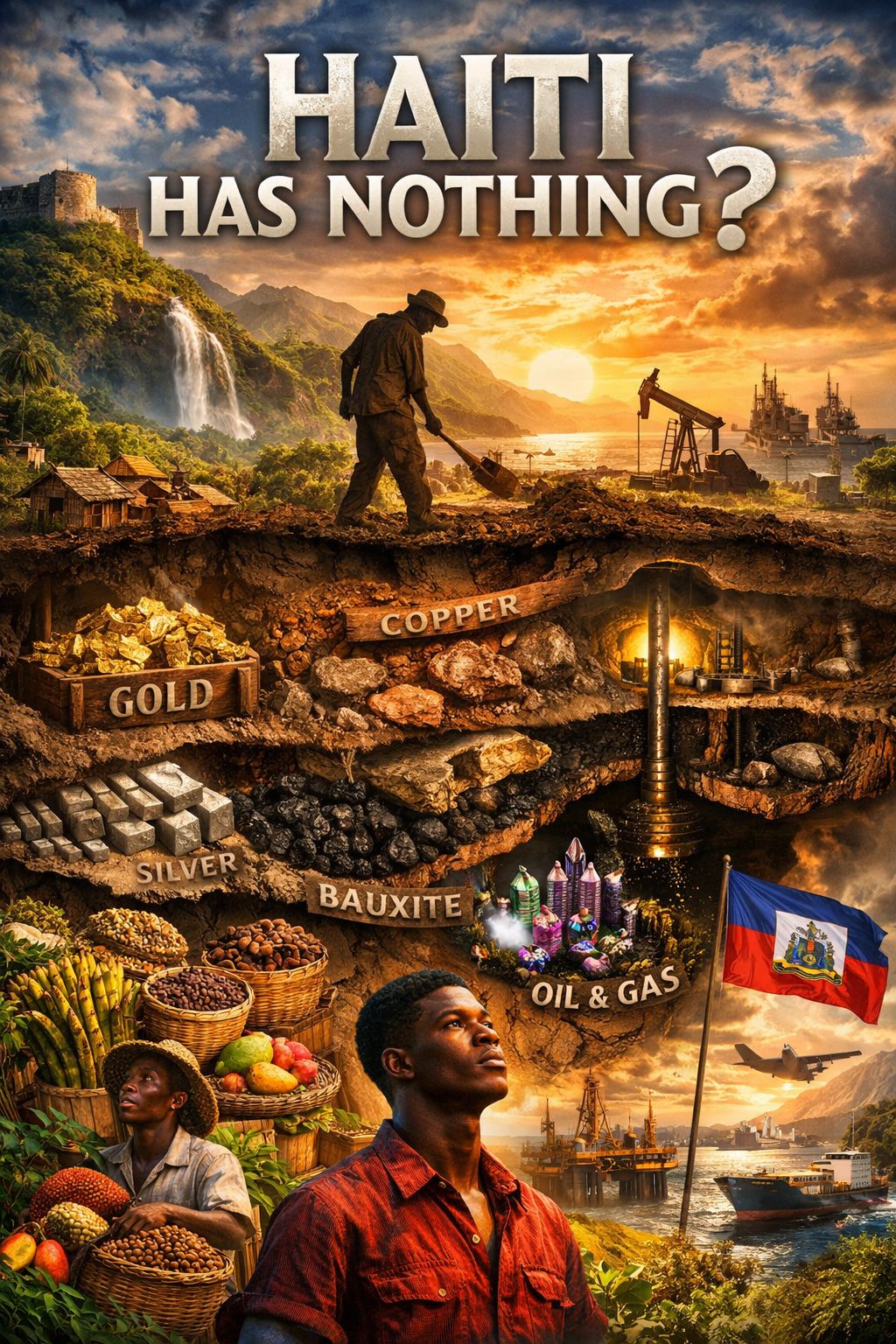
Estimated Untapped Wealth (USD)

Gold: $3 Billion
Silver: $900 Million
Copper: $12 Billion
Bauxite (Aluminum Ore): $500 Million
Manganese: $300 Million
Limestone, Marble, Cement Minerals: $800 Million
Gypsum & Industrial Minerals: $150 Million
Lignite Coal: $600 Million
Oil & Gas (Offshore & Onshore Potential): $10+ Billion
Rare & Precious Metals: $50 Million

Total Potential Value: $28+ Billion USD

And this does NOT include agriculture.

This is only what is buried.

Millions of Tons Under Haitian Soil

Geological surveys and historical reports point to:

Tens of millions of tons of copper-bearing rock
Millions of tons of bauxite
Massive limestone formations
Extensive mineral belts in northern and central regions
Offshore energy basins still largely unexplored

Haiti is not empty.

Haiti is locked.

And the key has never been used properly.

The Forgotten Agricultural Empire

Long before modern nations existed, Haiti fed empires.

And it still can.

Haiti’s Natural Gold Above Ground

Sugarcane — $800 Million per year
Cocoa — $250 Million per year
Coffee — $100 Million per year
Chocolate-grade cacao — $150 Million per year
Tropical fruits — $200 Million per year
Spices — $50 Million per year
Essential oils — $30 Million per year
Timber — $100 Million per year
Medicinal plants — $20 Million per year

Historically, Haiti was one of the world’s largest producers of sugar and coffee.

Cocoa from Haitian soil has flavor profiles that rival the best in Africa and South America.

Chocolate companies already know this.

They just don’t want Haitians to know it.

Why You Were Never Told This

Ask yourself:

Why isn’t this taught in schools?
Why isn’t this on the news?
Why isn’t this in global investment reports?

Because poor countries with rich resources are easier to control.

If Haitians believe “we have nothing,”
they won’t defend what they own.

If they feel small,
others will feel entitled.

History proves this.

The Psychology of Being Told You Are Worthless

For decades, Haitians have been trained to believe:

“We are poor.”
“We are weak.”
“We have no options.”
“We must leave.”

That belief is more powerful than any weapon.

It keeps minds locked.

It keeps ambition small.

It keeps opportunity invisible.

Meanwhile, outsiders study the land quietly.

They map it.
They analyze it.
They wait.

A Gold Rush Waiting to Happen

Imagine this:

Modern mining.
Local ownership.
Processing plants.
Export hubs.
Agricultural cooperatives.
Global branding.

Haitian gold.
Haitian chocolate.
Haitian copper.
Haitian stone.
Haitian energy.

Made. Owned. Marketed by Haitians.

Not exported cheap.
Not stolen.
Not forgotten.

Sold at full value.

The Diaspora Advantage

Haitians abroad hold the missing piece.

Education.
Capital.
Networks.
Technology.
Global access.

The land is in Haiti.

The skills are worldwide.

When those connect, everything changes.

This is how nations rise.

What Happens If Haitians Don’t Act

History is clear.

If locals don’t organize:

Others will.

If Haitians don’t invest:

Foreign corporations will.

If Haitians don’t claim:

Someone else will.

And when that happens, the wealth will leave again.

With little left behind.

The Opportunity of a Lifetime

Few countries on Earth sit on:

Billions in minerals
Billions in agriculture
Strategic Caribbean location
Massive diaspora
Global attention

Haiti does.

Right now.

In this generation.

This is not about politics.
Not about parties.
Not about promises.

This is about ownership.

Haiti Has Nothing? No.

Haiti has:

Gold in its ground.
Power in its soil.
Wealth in its climate.
Strength in its people.

What it lacks is organization.

And that can be fixed.

A Message to Haitians Everywhere

Wherever you live:

America.
Canada.
France.
Chile.
Brazil.
Bahamas.
Africa.
Europe.

Remember this:

You come from valuable land.

You come from strategic ground.

You come from a nation that was rich before it was made poor.

And it can be rich again.

With you.

Or without you.

The choice is yours.

Final Word

They said:

“Haiti has nothing.”

That lie has lasted too long.

The truth is rising.

The treasure is waiting.

And history is watching who claims it first.

Potential Yearly GDP Haiti Could Earn from Resources

Minerals + Agriculture combined at high estimates (realistically achievable):
Mineral production (10% of high-end underground wealth per year): $1,500,000,000–$2,830,000,000
Agriculture exports (high-end annual): $1,000,000,000–$1,700,000,000

Total High-End Potential Annual GDP (minerals + agriculture): $2,500,000,000–$4,530,000,000 per year

Tourism Potential GDP

If Haiti’s tourism sector operated like the Bahamas’ Ministry of Tourism model, scaled for Haiti’s size and diaspora, a realistic high-end estimate could generate $20–30 billion per year.

Combined Potential Annual GDP with Tourism, Minerals, and Agriculture for Haiti:

$22,500,000,000–$34,530,000,000 billion per year.

———

In my own country the Bahamas our yearly GDP is currently at: $14,000,000,000 billion per year. And this includes markets I didn’t include in my assessment of Haiti because it would be too many things that make money in other regular functioning countries, such as real estate sales and Customs duties yearly collections plus Vat tax in other markets of our nation.

If Haiti had a working government such as the Bahamas, Jamaica and or especially Barbados, these estimates above for Haiti would easily double or even triple for Haiti’s annual GDP figures!

Lord have mercy, 🌞 too much potential…

———–

Michael Elijah Muhammad Clare is assembling a think-tank of Haitian nationals from around the globe to break the slump that has gripped Haiti for the past five decades. If you’d like to fund this mission, contribute via these two financial institutions:

My Scotiabank account details are:
First name: MICHAEL
Last name: CLARE
Bank: Scotiabank
Tax ID: 10432728
Account type: Chequing
Account number: 70045 004010497
Account currency: BSD

AND

PayPal donations link below:
https://www.paypal.com/donate/?hosted_button_id=RG3FTGGKSNDLJ

The wait is over. It’s time for Haiti and its diaspora to put up or shut up. The world is watching with doubt as usual, but doubt has never stopped revolutions. Prove them wrong. Join the movement, invest in the vision, and reclaim the wealth that’s rightfully yours. The future of Haiti starts with your actions today!

Haiti Has Nothing

By: Michael Elijah Muhammad Clare

They said Haiti has nothing.

No riches.
No future.
No hidden power.

They were wrong.

They have been wrong for centuries.

B
Comment

🚨 Bahama Drama Health Alert: Emerging Fungal Infection Surfaces in…

🚨 Bahama Drama Health Alert: Emerging Fungal Infection Surfaces in U.S. 🚨

By: Michael Elijah Muhammad Clare

Health authorities in the United States are monitoring a rare, emerging fungal infection that is raising eyebrows in the medical community. The culprit, Trichophyton mentagrophytes genotype VII (TMVII), is a strain of fungus capable of spreading through close skin-to-skin contact, including sexual contact.

Minnesota has recently reported a cluster of confirmed and suspected TMVII cases, primarily in the Twin Cities area, dating back to mid-2025. Health officials say similar cases first appeared in New York City in 2024, and rising reports have also been noted across Europe in recent years.

Unlike traditional ringworm, which typically affects the scalp, feet, or body, TMVII infections have appeared on genital and buttock areas. Individuals infected may experience itchy, inflamed, scaly patches, sometimes highly painful, and risk scarring if left untreated.

The good news: TMVII is treatable with oral antifungal medication, though treatment can last weeks to a few months, depending on severity. Experts emphasize the importance of early recognition and care to prevent further spread.

Prevention Tips from Health Officials:

* Avoid skin-to-skin contact if you or a partner have an active rash.
* Do not share towels, clothing, or personal items.
* Maintain good hygiene and wash hands after touching affected areas.
* Seek medical attention at an STI or dermatology clinic if suspicious rashes appear.

While still relatively rare, health authorities urge the public to stay informed, be aware of unusual rashes, and take preventive steps seriously.

Stay tuned to Bahama Drama for updates as this story develops.

#HealthAlert #TMVII #FungalInfection #PublicHealth #BahamaDrama

Leave a tip!

Support our research work here!

My Scotiabank account details are:
First name: MICHAEL
Last name: CLARE
Bank: Scotiabank
Tax ID: 10432728
Account type: Chequing
Account number: 70045 004010497
Account currency: BSD

🚨 Bahama Drama Health Alert: Emerging Fungal Infection Surfaces in U.S. 🚨

By: Michael Elijah Muhammad Clare 

Health authorities in the United States are monitoring a rare, emergi
Comment

Happy Valentine’s Day 🌹

Happy Valentine’s Day 🌹

Friday, February 14th, 2026

Valentine’s Day in the Bahamas: The Bloody, Twisted History Behind the Hearts and Roses

By: Michael Elijah Muhammad Clare

While couples in the Bahamas are busy buying roses, chocolates, and jewelry today, few know the shocking and violent history behind Valentine’s Day. This is not just a holiday of love, it’s a centuries-long story of bloody rituals, secret marriages, and commercial exploitation.

The Roman Roots

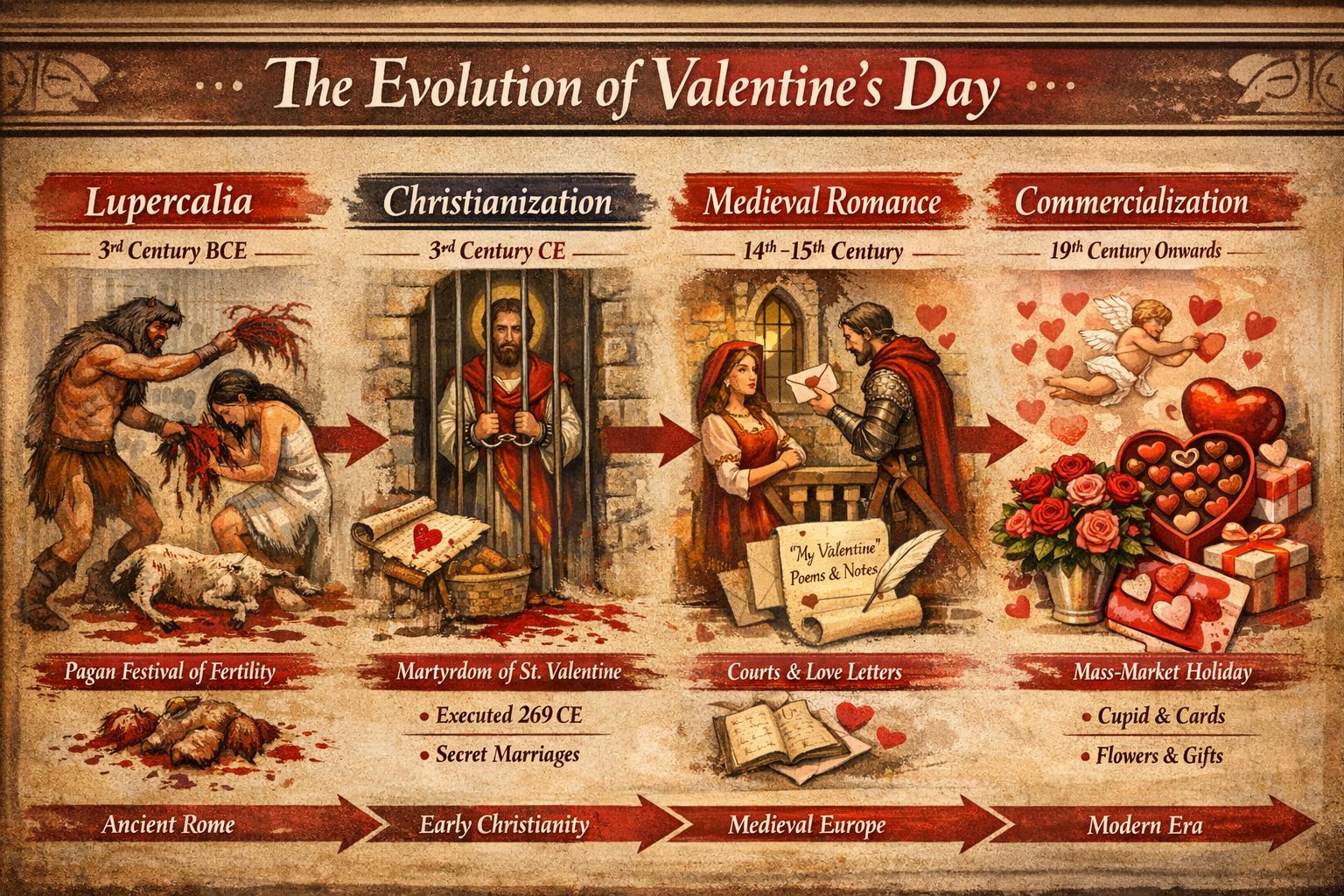
Valentine’s Day traces back to ancient Rome and the festival of Lupercalia, celebrated around mid-February. This festival was a fertility ritual gone brutal. Men would sacrifice goats and dogs, then whip women with the hides of the animals they killed, believing it would boost fertility. Lupercalia also featured a lottery: men drew women’s names from a box and were paired with them, sometimes for a festival fling, sometimes longer. Romance? Not exactly.

Enter Saint Valentine

By the 3rd century CE, a Christian priest named Valentine (or possibly multiple Valentines) defied Roman law by secretly marrying couples, directly challenging Emperor Claudius II, who banned marriages believing single men made better soldiers. Valentine was arrested, tortured, and executed around 269 CE. Legend says he may have sent the first Valentine from prison, a love note to a young woman.

The Catholic Church later attempted to suppress Lupercalia by designating February 14th as the feast day of Saint Valentine. This was meant to replace pagan fertility rituals with Christian martyrdom, but the connection to love was only just beginning.

Medieval Love Letters

By the Middle Ages, Valentine’s Day became associated with courtly love, especially in England and France. Geoffrey Chaucer popularized the idea that birds began mating on February 14th, linking the date to romantic love. The earliest surviving Valentine from England was written in 1415 by Charles, Duke of Orleans, who was imprisoned in the Tower of London and sent a poem to his wife. By the 1500s, exchanging handwritten love notes became fashionable, especially among the upper class.

Commercialization Takes Over
The 18th and 19th centuries saw Valentine’s Day become a mass-marketed holiday. In England, printed cards with lace and ribbons became common, and in the United States, Esther Howland started selling commercially produced Valentine cards in the 1840s. Jewelry, flowers, and sweets became the standard symbols of love, creating the highly commercialized holiday we know today.

Valentine’s Day in the Bahamas Today
In the Bahamas, Valentine’s Day is celebrated in style. Couples enjoy romantic dinners in Nassau, public displays in Freeport, and private getaways across the Exuma Cays. Flower shops, candy stores, and restaurants report booming sales. Yet some Bahamians criticize the holiday as a commercial sham. “It’s all about spending money now,” says Nassau resident Marsha Rolle. Religious leaders remind congregations that Valentine’s Day is not a religious holiday, and for many, it’s a secular celebration at best.

Still, younger generations embrace the day for romance, friendship, and social media trends. Whether you see it as a marketing spectacle or a celebration of love, Valentine’s Day is a striking example of how ancient pagan rituals, Christian martyrdom, medieval courtship, and modern commerce collided and left a bloody, fascinating legacy still alive in the Bahamas today.

Happy Valentine’s Day!

🌹 ❤️💜

Happy Valentine's Day  🌹 

Friday, February 14th, 2026

Valentine’s Day in the Bahamas: The Bloody, Twisted History Behind the Hearts and Roses

By: Michael Elijah Muhammad Clare
Comment

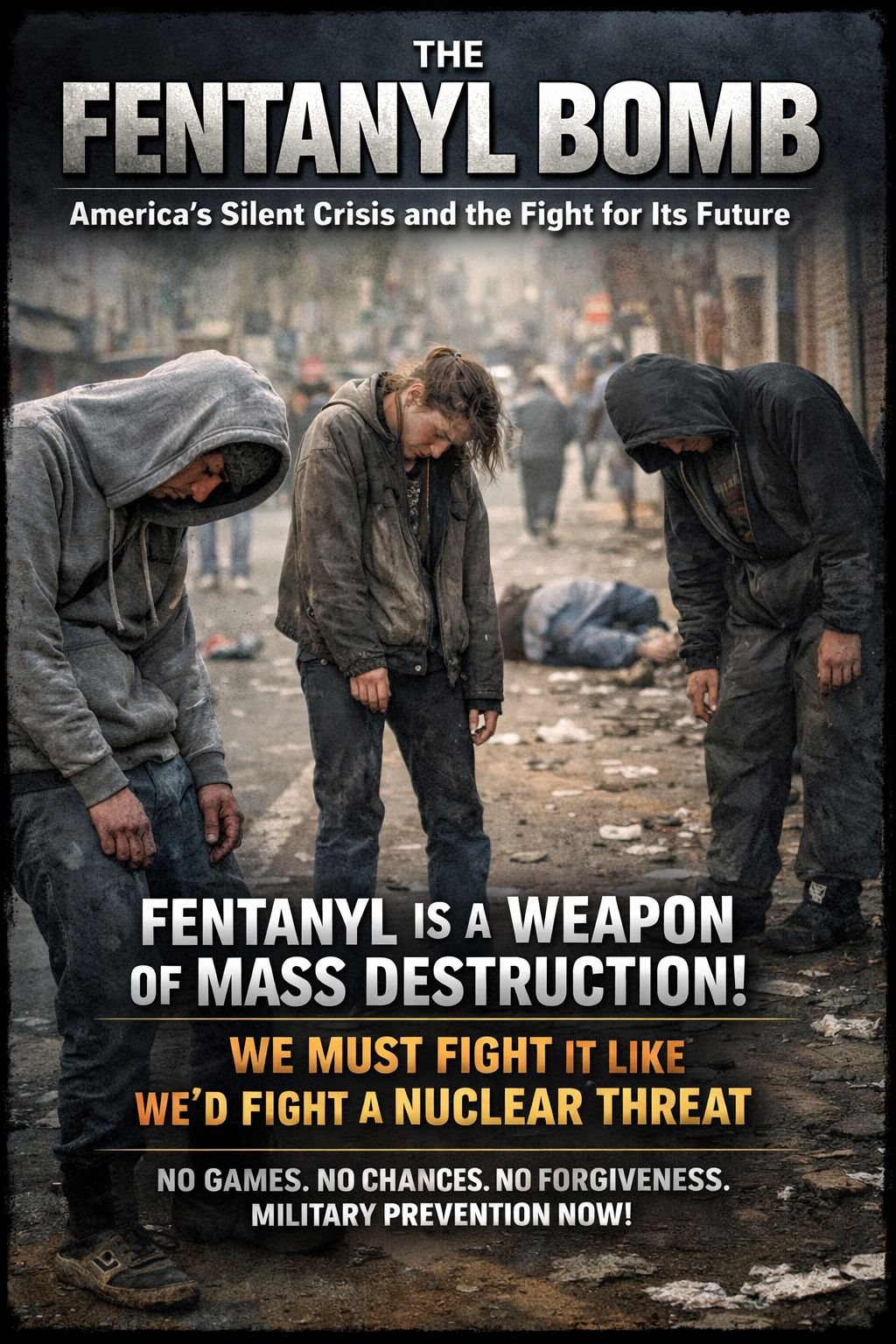
THE FENTANYL BOMB

THE FENTANYL BOMB

America’s Silent Crisis and the Fight for Its Future

By: Michael Elijah Muhammad Clare

Across the United States, a silent storm has been unleashed, one that kills quietly, swiftly, and without mercy. It is called fentanyl, and it is more destructive than any weapon most people can imagine. This is not just a drug problem. This is a national emergency. This is a bomb that has already exploded inside America’s borders.

On social media, the truth is impossible to ignore. Videos from YouTube, TikTok, and Facebook show people standing in the streets, slumped over, frozen in place, half-conscious, like characters from a zombie movie. Men and women asleep while standing. Bodies bent forward. Eyes empty. Souls drained. These are not movie scenes. These are real people, trapped in the grip of fentanyl.

This image should haunt every leader, every parent, and every citizen.

Tonight, watching those videos brought tears to my eyes. I could not believe this was happening in the United States of America. A nation built on strength, innovation, and opportunity now has streets filled with people who look abandoned by society. Lives are being erased in front of our eyes, and too many have looked away.

Years ago, crack cocaine devastated communities. It destroyed families and neighborhoods. But fentanyl makes crack look small in comparison. This drug is faster. Stronger. Deadlier. A tiny amount, smaller than a grain of sugar, can kill instantly. One mistake. One dose. One life gone.

Entire towns are losing their children. Hospitals are overwhelmed. Families are burying sons and daughters every single day. And for years, this deadly weapon was ignored, minimized, and downplayed by leaders who were more interested in politics than protection.

That is why the actions of Donald J. Trump stand apart.

While others made speeches, he sounded the alarm. While others delayed, he acted. President Trump recognized that fentanyl is not just a drug, it is a weapon. He targeted supply routes, pressured countries that allowed it to flow, strengthened borders, and treated this crisis like the national security threat that it truly is.

He did what too many before him refused to do. He fought back.

Fentanyl is a form of mass destruction. It does not need missiles. It does not need bombs. It works silently. Efficiently. Relentlessly. It destroys families, economies, and futures from the inside out. This is chemical warfare against civilians.

This threat must be treated the same way nuclear weapons are treated.

No games.
No chances.
No forgiveness.
No weakness.

Only strong, coordinated, military-level prevention.

Borders secured.
Trafficking routes destroyed.
Smuggling networks dismantled.
Supply chains eliminated.

When a country faces a nuclear threat, leaders do not debate for years. They act immediately. Fentanyl deserves the same response. Anything less is a betrayal of the people.

Those who manufacture, traffic, and sell fentanyl are not ordinary criminals. They are dealers of death. They are no different from someone selling nuclear weapons on the black market.

If a person is caught selling fentanyl, they should face the harshest punishment possible. Life in prison or the death penalty should be considered, because every sale risks dozens of lives. Every packet is a potential funeral. Every dealer is a walking weapon.

Society must send a clear message: poisoning communities for profit will never be tolerated.

This is not someone else’s problem.

It is every mother’s problem.
Every father’s problem.
Every teacher’s problem.
Every neighbor’s problem.
Every nation’s problem.

And it is not confined to America.

History shows that what flows through the United States often reaches the Caribbean. Diseases. Trends. Crime. Drugs. The Bahamas suffered through crack cocaine in the 1980s and 1990s. Entire communities were scarred. Families were broken.

If fentanyl reaches our islands in full force, we could face the same nightmare. Young people lost. Streets changed. Futures erased. That is why we must act now, before it is too late.

What we are seeing in those zombie-like videos is not weakness. It is abandonment. It is what happens when society fails to protect its people from a weapon disguised as a drug.

America has already been bombed.

Not with fire.
Not with smoke.
But with powder.

The fentanyl bomb has exploded, and millions are living in the ruins.

President Trump was one of the few leaders willing to say “Enough.” Willing to confront powerful interests. Willing to take political risks. Willing to fight an uncomfortable war to save lives.

That courage matters.

This fight is not about politics. It is about survival. It is about whether societies choose to protect their people or sacrifice them to indifference.

The image of people standing asleep in the streets should never become normal. It should shock us. It should anger us. It should move us to action.

Because every one of those people was once a child with dreams.

And every life lost is a failure we all share.

The fentanyl crisis is not tomorrow’s problem.
It is today’s war.

And it must be fought with the same seriousness, urgency, and strength as any nuclear threat, before more lives are erased in silence.

In China you would be killed by the state if you sold this drug period, even if it’s your first offence. China doesn’t play games, their dead serious with everything!

See videos 👇

https://www.facebook.com/share/v/19yaoy2nvf/

Leave a tip!

Support our research work here!

My Scotiabank account details are:
First name: MICHAEL
Last name: CLARE
Bank: Scotiabank
Tax ID: 10432728
Account type: Chequing
Account number: 70045 004010497
Account currency: BSD

THE FENTANYL BOMB

America’s Silent Crisis and the Fight for Its Future

By: Michael Elijah Muhammad Clare 

Across the United States, a silent storm has been unleashed, one that k
Comment