


Wednesday, October 14, 2026
AI Medicine BreakthroughsToday’s AI Medicine Breakthroughs covers a Tanzania diabetic retinopathy screening trial that nearly doubled specialist follow-up, a conversational diagnostic AI feasibility study in primary care, EAGLE AI for esophageal cancer on noncontrast CT, the open MedGemma medical vision-language model, and AI-designed cancer drugs REC-7735 and ISM6331 entering early human trials — plus careful forward-looking expectations. This briefing is not medical advice.


Tanzania AI diabetic retinopathy RCT — nearly twice the clinic follow-up
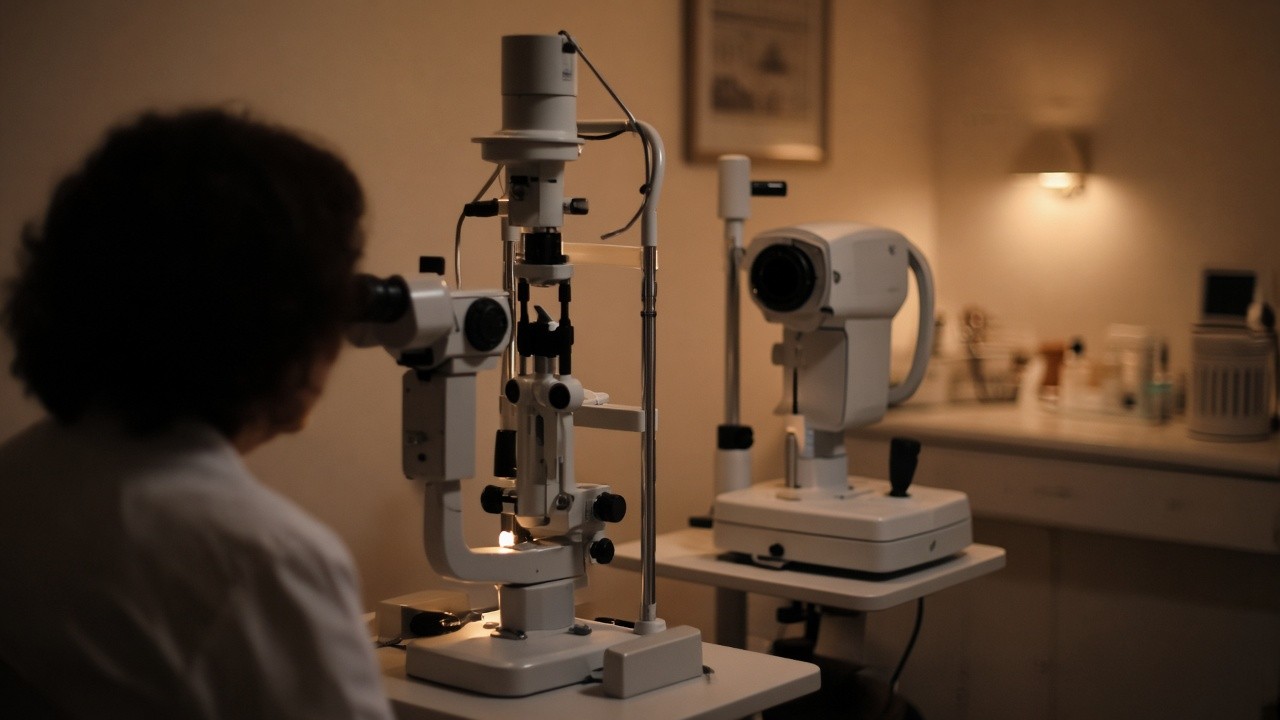
Cleland et al. report in The Lancet Global Health (LSHTM news, 13 Oct 2026) a randomised trial of 2,378 people across 24 hospitals in Tanzania (Kilimanjaro Christian Medical Centre with LSHTM). An AI-supported pathway delivered an immediate result plus face-to-face counselling, versus standard delayed human grading plus phone counselling.
Among people with true referable diabetic retinopathy, specialist clinic attendance within 8 weeks was 35.9% (AI) versus 18.2% (standard) — nearly twice as likely. Mean time to specialist care among attendees was 10.9 days (AI) versus 36.9 days (standard). Tanzania’s Ministry of Health has committed to integrating AI diagnostics into diabetic eye screening in multiple regions. Context: diabetic retinopathy remains a leading cause of blindness, with 44–82 million people projected at risk of sight loss by 2045.
AMIE — conversational diagnostic AI in primary care

A prospective feasibility study of the patient-facing conversational system AMIE appears in The Lancet (8 Oct 2026; ClinicalTrials.gov NCT06911398). Patients used AMIE for up to 5 days before a single-complaint urgent primary care appointment. Physician safety supervisors monitored and could intervene on predefined safety criteria.
From April–November 2025: 114 enrolled, 98 completed both AMIE and the PCP appointment. Zero conversation safety stops on prespecified criteria. Supervisors noted 1 hallucination and added clinical information in 5 interactions. Clinical evaluators rated AMIE conversations favourably in 87–100% of cases (17 criteria); patients 48–96% (16 criteria). PCPs returned post-surveys in 60/98; 44 reviewed the transcript before the visit; helpful for visit prep in 33/44; might have changed behaviour in 25/44. Feasibility — not a replacement for doctors; further research needed.
EAGLE — esophageal cancer AI on noncontrast CT
Zhou, Guo, Yao et al. in Nature Medicine (22 Sep 2026) describe EAGLE. Trained on 6,813 patients (2 centres); validated across 12 centres / 3 countries; 80,612 patients total across settings (ChiCTR2300074806).
- External opportunistic screening (8 centres, n=11,466): 98.5% specificity; 90.0% sensitivity for cancer; 52.5% for precancerous HGIN.
- LDCT validation (2 centres, n=1,607): comparable with LDCT simulation strategy.
- Real-world calibration (3 centres, n=35,402): false positives cut 72.7% while preserving sensitivity.
- Prospective hospital validation n=17,446: PPV 42.2%.
- Real-world low-dose screening n=10,959: specificity 99.94%.
- Paired CT–endoscopy (n=702): sensitivities 65.0% precancerous, 78.4% stage I EC at a higher-sensitivity operating point.
Stage: research/validation — not a general consumer product; could help opportunistic CT screening and endoscopy triage.
MedGemma — open medical vision-language model

Sellergren, Kazemzadeh, Mahvar, Kiraly, Traverse et al. in Nature Medicine (6 Oct 2026) report MedGemma — medical vision-language foundation models based on Gemma 3 with a MedSigLIP vision encoder. Out-of-distribution gains versus base models: +2.6–10% medical image QA; +15.5–18.1% chest X-ray finding classification; +10.8% agentic evaluations. Fine-tuning MedGemma was more effective than fine-tuning base Gemma 3 with limited data. Research foundation — accelerates downstream medical AI apps; not a bedside diagnosis product by itself.
AI-designed cancer drugs enter early trials

Recursion REC-7735. Recursion Pharmaceuticals (Salt Lake City) reports an AI-designed PI3Kα H1047R inhibitor with >100-fold selectivity for the mutant over wild-type. Company: novel chemical hit to cleared IND in ~10 months; 242 candidate compounds screened by ML models. IND cleared (~5 Aug 2026). ZINNIA Phase 1/2 NCT07819136 recruiting from Sep 2026 for unresectable/locally advanced/metastatic PIK3CA-H1047R solid tumors (including breast, endometrial, colorectal). Estimated enrollment 90; first-in-human sites include START Midwest, NEXT Oncology Dallas, NEXT Virginia. Early Phase 1/2 — patients may benefit only if trials succeed years from now.
Insilico ISM6331. FDA Fast Track 29 Jul 2026 for unresectable malignant pleural mesothelioma after anti-PD-1 (± anti-CTLA-4) + platinum chemo — first Fast Track in Insilico’s AI pipeline; Orphan Drug Designation June 2024. Oral non-covalent pan-TEAD (Hippo pathway); Chemistry42 structure-based design. Global Phase 1; first patient Jan 2025; NCT06566079. First-in-human data planned for ESMO Congress 23–27 Oct 2026 (Madrid). Not approved; safety/efficacy not established.
What experts expect in the next couple of years

These are cited expert expectations, not promises. Nature Reviews Drug Discovery and oncology AI reviews (2025–2026) describe AI accelerating target discovery, molecular design, and trial matching, while clinical validation and regulation remain bottlenecks. Near-term: more AI diagnostics entering real-world pathways (eye, opportunistic CT, digital pathology risk); more AI-designed oncology candidates in Phase 1/2. Industry commentary still frames first AI-designed cancer drug approvals as unlikely before the late decade. Pipeline trackers note most AI oncology assets remain early-stage; Phase II/III readouts are the key near-term tests.
Research moves fast — and careful validation still decides what reaches patients.AI Medicine Breakthroughs

Related stories

Bahamas Morning Briefing: News Headlines – Saturday, November 28, 2026
The U.S. military says it disabled a ship trying to run its blockade of…

Bahamas Evening Briefing: News Headlines – Friday, November 27, 2026
A trainee immigration officer charged in the death of Desmonique Clarke, a possible tornado…

Bahamas Midday Briefing: News Headlines – Friday, November 27, 2026
A $1 billion resort is planned for Cave Cay in the Exumas, the Christian…
