
DON’T LOOK INTO THAT HOUSE
DON’T LOOK INTO THAT HOUSE
DAN NOTTAGE ESTATES
Bahamian Folklore article:
By: Michael Elijah Muhammad Clare
Nobody ever gave the house an official name, but in the quiet corners of Dan Nottage Estates everyone knew which one it was.
I remember after being told this story by a friend, they all bet me $20.00 to go inside of it, but I didn’t take the bet.
Tucked behind the narrow roads where taxis rarely idled and neighbors kept their curtains drawn, the yard had grown thick with bush and wild grass, as if the land itself wanted to hide what happened inside.
The house is still standing.
Evil lives inside.
The father drove a taxi for years. Reliable man. Airport runs, hotel shuttles, long hours talking to tourists who liked his easy smile and quick jokes. One Christmas season a regular visitor from abroad handed him a heavy tip along with a wrapped box.
“For your boy,” the man said, laughing. “He’ll like this.”
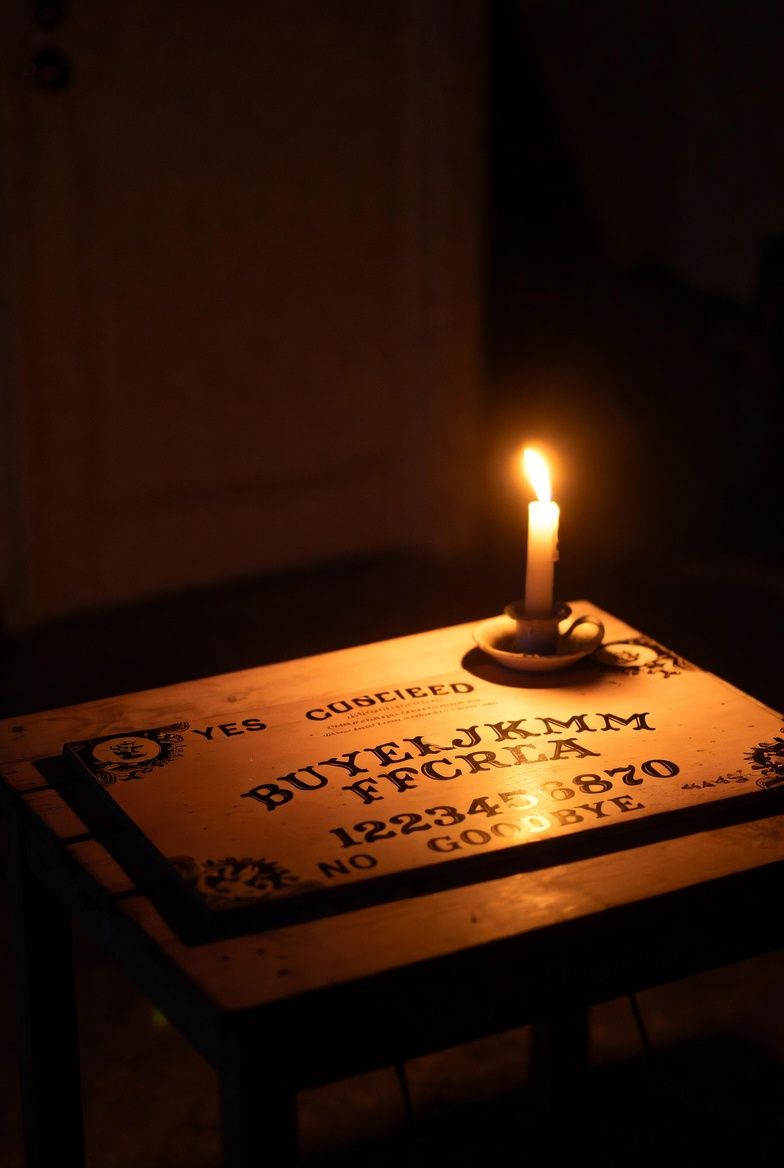
Inside was a Ouija board, smooth wood, faded letters, numbers, and a small plastic planchette.
The father thought nothing of it. He smiled, said thanks, brought it home, and placed it under the Christmas tree with the other gifts.
The boy was eleven. Quiet by nature, always had been. After Christmas he changed.
At first it was innocent enough. He would take the board to his room after dinner, close the door, and sit on the floor moving the planchette slowly across the letters by the light of a small candle he kept on his desk.
He asked simple questions. The answers came back quickly. Too quickly.
Soon he was no longer playing.
His mother began noticing the faint glow of candlelight leaking from beneath his bedroom door late into the night, two, three in the morning. She would stand in the hallway and hear his low voice answering something that never seemed to pause for breath.
One night she knocked softly and asked who he was talking to.
“They’re here,” he told her, calm and matter-of-fact.
She tried to laugh it off, but after that night she slept poorly. She would wake suddenly, listening for sounds that never quite matched what a child should sound like.
Over the following weeks the boy withdrew. He stopped eating at the family table. He rarely left his room. His eyes grew distant, as though he were constantly watching something just beyond the edge of normal sight.
The father noticed but said little. The mother grew anxious. His older sister, thirteen, teased him at first, then stopped when she saw he no longer reacted.
Then came the night when the entire house fell silent.
No television. No music. No conversation. Just a heavy, unnatural stillness that pressed against the walls.
What happened inside remains known only to the rooms themselves.
But this is the story that still circulates in the estates, spoken quietly, never in front of children.
They say the boy moved through the house room by room, deliberate and unhurried, as though carrying out instructions he had received and accepted.
No one in the neighboring houses heard screams. That is what still disturbs people most.
He used a kitchen knife.
His father was first, found in the living room, throat cut while he sat in his usual chair.
His mother was in the bedroom. Same method. She never made it out of bed.
His sister tried to run. She was older, stronger, but not fast enough. He caught her in the hallway. Her head was severed and left on the floor a short distance from her body.
The boy was thorough.
By the time he finished, the family of four was gone.
Morning came and the house remained quiet.
Days passed. No one saw the family coming or going. The yard grew wilder. A faint smell began to drift beyond the fence.
Eventually a concerned neighbor called the police.
When officers entered, they found the scene exactly as he had left it.
The official report listed “domestic tragedy” and “severe psychological disturbance.” The case was closed with little public detail.
But in the streets the story refuses to die.
People remember how the boy had spoken about the board in the weeks before. They remember the candlelight burning late. They remember the way he looked at people, as if listening to another conversation running parallel to their own.
When authorities finally led him out of the house, he was not crying. He was not resisting. He simply walked between the officers, small smile on his face, lips moving in a soft, continuous whisper, as though he were still receiving directions.
He is no longer in the general population at Fox Hill.
They keep him in a separate wing, away from other inmates. Those who have seen him say he rarely speaks above a murmur and still answers questions no one else can hear.
The house remains.
Paint peeling, roof sagging, yard completely overgrown.
Yet some residents claim that on certain quiet nights a faint glow can still be seen through one of the back windows, like a single candle burning on a table where someone, or something, continues to sit and wait.
The older people in the estates deliver the same warning every time the story is told:
Do not invite what you cannot send away.
Because some things do not simply answer.
They stay.
The Ouija board was never removed and is still there today on the floor of the boys room. But you have to enter the house to see it.
Several real estate companies brought the house in the past. They then hired tractors to knock it down, one of the operators died from a lightning strike while in the tractor, the other one had a heart attack in his truck sitting in front of the house and the last one tractor stopped working as he drove towards the house as he said he saw a little girl inside of the house holding her head in her arms looking down at him from the second floor window just floating there.
People even tried burning it down and were sucked into the vortex inside of the fire flames themselves, never to be seen again, an old guy and his wife told me years ago, as I was curious passing by it in 2005.
Many people warn not to look towards the house as you drive by it because something follows you home if you do.
The house is alive.



![@[100023394293756:2048:Bahama Drama] would rather be hated for good, than loved for evil
By: Michael Elijah Muhammad Clare
I need to say something that might not sit right with](https://lol242.com/wp-content/uploads/bahama-drama/2026/03/52780a5a6f3613021199.jpg)