
Wednesday, October 14, 2026
Recruitment Awareness · Episode 1 · Full OverviewA new public-awareness briefing from Bahama Drama lays out the five-step pattern criminal crews use to turn ordinary people into participants — flattery, isolation, a small favour, a payment, and then ownership — and explains how those favours are later rebuilt into evidence against the recruit rather than the recruiter. The episode also addresses, in general terms, how schemes grow more dangerous when anyone inside an institution acts outside the law, while affirming that the vast majority of officers serve honestly, and closes with verified reporting channels inside and outside The Bahamas.

They recruit you with kindness

Wicked people do not recruit you with wickedness. They recruit you with kindness — a meal, a ride, a hundred dollars when rent is short, a seat where somebody finally says your name right. That is the hook. Not fear. Belonging.
Two things drive almost every recruitment: money, and belonging. Money gets you in the door. Belonging keeps you in the room.
Five steps, every time

Flattery. Isolation. A small ask. A payment. Then ownership. The accents change. The steps do not.
Fictional recruiter lines
- “You too smart to be struggling like this. I could use somebody like you.”
- “Nobody in this settlement looking out for you but us. Remember that.”
- “It ain’ nothing. Just tell me who she talking to. Easy money.”
- “You in now, sweetheart. You already took the money.”
- “And if you walk? Who they gon’ believe — you by yourself, or all of us together?”
The methods
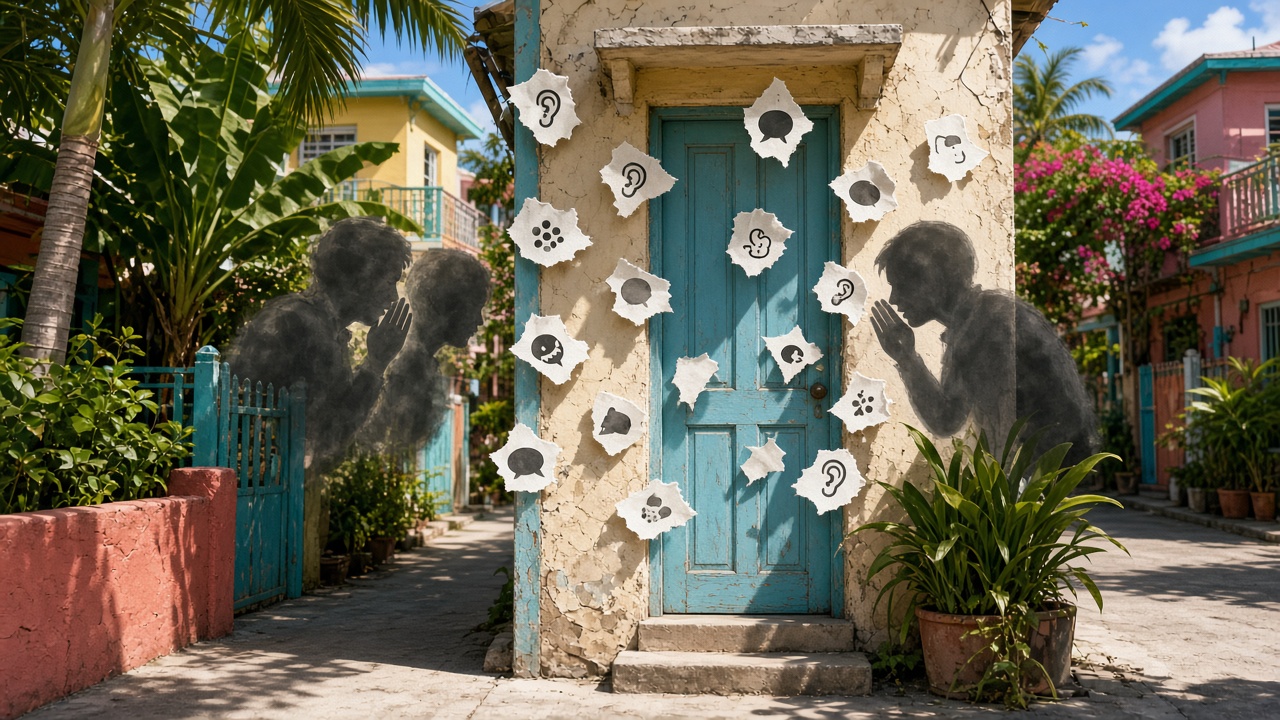
Surveillance and intimidation — ordinary people watching an ordinary person and making sure she knows it. The point is the feeling: tired, doubting herself.
Rumor campaigns — a whisper with no author and no address. You cannot sue a whisper. That is why they use it.
Isolation — cousins go quiet, co-workers get awkward, the church sister stops calling. Friends are lost one at a time until the last one is gone.
Framing and setup — a thing is placed, a story is told, a witness is arranged. Framing only works after someone has been made to look lonely first.
How to know you are being recruited

Small favors with no explanation. Pay that is more than the task is worth. Orders to keep it from your mother, partner, or pastor. Pressure to stop speaking to someone. Reminders of what you “already took.”
Red-flag words: “Just this one time.” “Don’t tell nobody.” “You already in it.” “You owe me.” “We family now.” “She deserve it.” “You ain’ have to do nothing, just watch.” “Trust me, I know people.” Any one alone might be nothing. Three in one conversation is a recruitment.
When belonging becomes evidence

You were never a member. You were inventory.Narrator
Every ride, message, dollar, and silent presence can be rebuilt into a case against you. Small, legal-looking favors are how ordinary people end up as co-accused. The safest moment to walk away is the first moment.
When a badge is used for crime

Most officers serve honestly. Respect them. But a badge is not a permission slip. Bribes, favors, false tips, grudges, and evidence tampering are crimes — abuse of office, misconduct in public office, corruption. This briefing names no real officer. Condemning corruption defends honest service.
Refuse, document, report

Say no out loud, with no explanation. Do not take the money. Tell one trusted person the same day. If you are targeted: do not confront; document and report.
How to report — inside The Bahamas

- Crime Stoppers Bahamas (anonymous): Nassau (242) 328-8477; Family Islands (242) 300-8477.
- RBPF Complaints and Corruption Branch: (242) 326-0142; email [email protected].
- Police Complaints Inspectorate: through the Ministry of National Security — look up their official contact.
- Attorney General: look up the official number on oag.gov.bs.
- Ombudsman: look up the official contact.
- Legal Aid (EDLS): (242) 322-5943.
- Bahamas Crisis Centre: (242) 328-0922.
Preserve evidence

Keep originals. Do not edit or delete. Back up off your phone. Keep a dated log. Keep receipts. Get a police reference number. Put copies with a lawyer. Never alter evidence. Never confront anyone yourself.
How to report — outside The Bahamas

- Crime Stoppers International — official website Report Now page.
- FBI tips (US nexus): tips.fbi.gov.
- U.S. Embassy Nassau (U.S. citizens): (242) 461-5025, option 1.
- IACHR: oas.org/ipsp.
- UN OHCHR: ohchr.org reporting violations page.
- Transparency International: transparency.org/en/contact.
Related stories

GB Power Debt Warning, an Eleuthera Highway Crash, and a $285M Hospital Move Toward Construction
Overnight full briefing: Grand Bahama Chamber warns of up to about $412m in GB…

Empty Shelves on Long Island, Exuma’s Big Day Tomorrow, and a $700 Million Question in Nassau
The official morning edition of The Bahamas Islands Briefing: Exuma’s 20th Business Outlook is…

“Just Look”: How One Small Errand Becomes the Evidence Against You
The Favor Trap: how a ride, a message, and “just look” become a file…
Join the conversation
No comments yet. Be the first.