
The Wonderful Life and High IQ of the Exuma Garden Snail
The Wonderful Life and High IQ of the Exuma Garden Snail
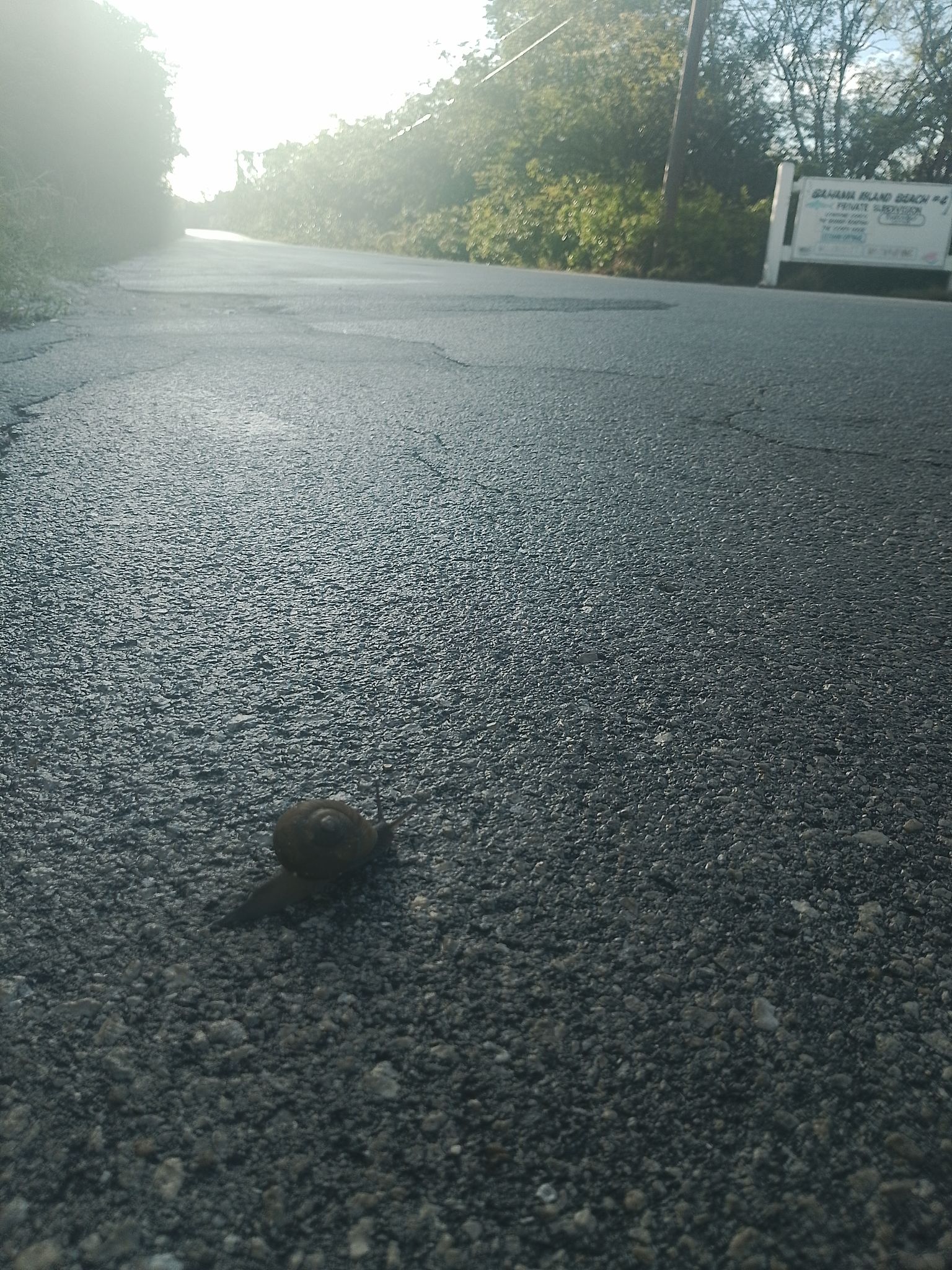
Step outside after a fresh tropical downpour in Exuma, and you aren’t just witnessing a rain shower. You are witnessing a masterclass in urban transit optimization. While humans zip past in sedans and trucks, our quiet, shelled neighbors are executing a brilliant logistical strategy. The common garden snail has quietly adapted our infrastructure, turning wet asphalt and slick concrete sidewalks into a high speed mass transit network.
The Slime Rail Revolution: Biological Engineering at Its Finest
Why do these creatures abandon the thick, jagged bush for smooth roadways? Simple: high level efficiency.
Navigating through dense brush, sharp twigs, and rough grass requires an immense expenditure of cellular energy, forcing a snail to constantly fight friction. But a rain slicked road is an engineering marvel. By laying down a continuous layer of lubricating mucus over a flat, paved surface, snails minimize friction entirely. They have essentially unlocked their own high speed rail system, a biological Maglev train gliding effortlessly across human made technology.
It is their version of a multi lane highway system, bypassing the jungle of the undergrowth for a straight, unobstructed shot toward their destination. To these tiny navigators, the road is a technological shortcut.
Microscopic Super Teeth and High Tech Endurance
Beneath that slow, deliberate exterior lies a surprisingly formidable biological machine with stats that will blow your mind.
The Radula Super Teeth: A snail doesn’t just have a few teeth. It packs thousands of microscopic teeth, ranging from 2,000 up to an astounding 15,000, arranged in rows on a ribbon like tongue called a radula. They use this biological conveyor belt to grind down food as they cruise along.
Extraordinary Lifespan: If they manage to successfully navigate human hazards, common garden snails live between 2 to 5 years in the wild, while some protected or larger species can live anywhere from 10 to 25 years.
Why We Must Protect Our Slow Moving Commuters
Because these brilliant little commuters have cracked the code on mobility, they flood our pathways searching for food and new territory right after a heavy downpour. But this high speed convenience comes with a high stakes hazard: the daily rush hour of human traffic.
To a snail, the road is a brilliant technological freeway. To a driver or walker, it’s just the ground. Every time we move without looking down, we risk crushing these ingenious little engineers mid transit.
So, the next time you see a slippery sidewalk or a wet road glistening in the Exuma sunshine, take a page out of the mindful traveler’s book. Watch your step, spare the local transit system, and give our slow moving intellectuals room to roll. After all, they’re just trying to get to work, too.
I love snails 🐌
Related stories

Biometric Voter Cards Go Local, PAC Digs Into $1.5m Vouchers, and Some PMH Wards Relocate
Late-afternoon Bahamas Islands Briefing for Wednesday, October 14, 2026: Exuma’s Business Outlook is tomorrow;…

PUBLIC MESSAGE TO ALL BAHAMA DRAMA FOLLOWERS
We are taking Bahama Drama to the next level, and we want you to…

Eleuthera Residents Threaten to Stop Paying BPL Bills, Treasure Cay’s $177m Sale Nears Closing, and a “Miracle Baby” Gets Her Wheels
Afternoon Bahamas Islands Briefing for Wednesday, October 14, 2026: Eleuthera residents threaten to withhold…
Join the conversation
No comments yet. Be the first.