
THE RICH KEEPS SHITTING ON THE POOR 💩
THE RICH KEEPS SHITTING ON THE POOR 💩
ANONYMOUS WRITER ✍️
Are you poor and tired of being last in your own country while others grow richer every day?
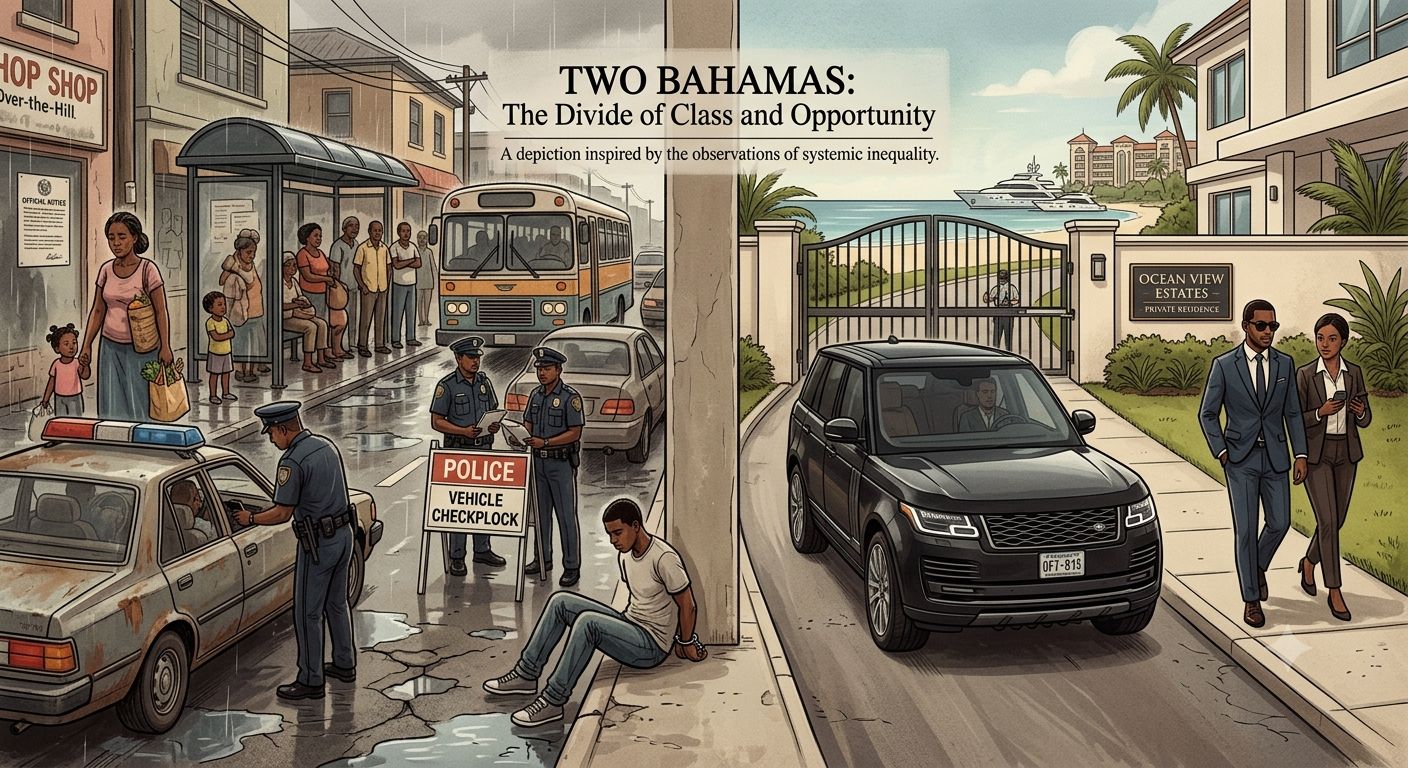
I might as well say it, because it is the truth: criminal laws are often enforced in a way that falls heaviest on the poor rather than the rich. Look at the history of the Bahamas, even to this day. Who do you think the police are actually enforcing laws on? Just think about it.
Here are ten simple examples that show how the system can feel rigged depending on how much money you have:
First, roadblocks are designed in a way that keeps the hardship on the poor. The rich can always afford to keep their vehicles licensed and insured, so a roadblock is never an issue for them. If the system was designed with the idea that everyone was wealthy, roadblocks would not exist because they would be a waste of police time and resources. Instead, they end up taxing those who can least afford it.
Second, fixed court fines and bail money do not impact everyone equally. A five hundred dollar fine or a two thousand dollar bail bond is minor spare change to a rich person. To a struggling family, that same amount means choosing between putting food on the table, paying the electric bill, or sitting in jail waiting for help. Fines without regard to income create very different consequences for different people.
Third, utility disconnections and high reconnection fees hit lower-income households hardest. When a struggling family falls behind on a water or power bill, service is cut off quickly, and added fees make it even harder to catch up. Meanwhile, large commercial accounts or major developments often negotiate extended payment plans and custom terms that regular consumers never receive.
Fourth, access to top-tier legal representation creates two distinct paths through the court system. A person with limited funds must rely on overworked public defenders who have limited time for each file. Someone with wealth can hire an entire team of private lawyers to examine every technical detail and file pre-trial motions, completely changing how their case moves through the legal process.
Fifth, bank fees and account maintenance charges cost you more when you have less. High-net-worth clients receive waived fees, private advisors, and perks because of their high balances. Lower-income account holders who live paycheck to paycheck are often charged monthly maintenance fees or low-balance penalties, slowly reducing the little savings they have.
Sixth, Crown Land distribution and property access are rarely equal. Regular citizens can submit applications for land and wait decades without hearing a word back. At the same time, large foreign investors and connected developers frequently receive approvals, long-term leases, or concessions for major projects in a fraction of the time.
Seventh, tax breaks favored for large investors contrast sharply with daily consumption taxes paid by residents. Major real estate developers often receive multi-year tax exemptions and duty-free import waivers on building materials. Average citizens, however, pay Value Added Tax on almost every single item they buy at the store every single day, regardless of their income level.
Eighth, the enforcement of building codes and public access rules differs depending on where you look. Unapproved structures built by residents in lower-income communities face quick demolition orders from local authorities. On the other hand, wealthy waterfront landowners who build walls over public beach accesses or clear coastal vegetation often face prolonged discussions or minimal fines before anything is done.
Ninth, minor drug charges carry long-lasting consequences for the working class. A young person caught with a small amount of a controlled substance can end up with a criminal record that restricts their job options, banking access, and travel opportunities for life. Wealthier individuals caught in similar situations are far more likely to secure diversion programs, private treatment options, or informal warnings.
Tenth, the difference between public transport and private infrastructure highlights the daily divide. The working class relies on public buses on routes that may lack shelters or frequent schedules, navigating flooded or damaged roads. The wealthy travel in private, air-conditioned transport straight into gated communities built to separate their residents from the infrastructure problems faced by the rest of the public.
Related stories

Biometric Voter Cards Go Local, PAC Digs Into $1.5m Vouchers, and Some PMH Wards Relocate
Late-afternoon Bahamas Islands Briefing for Wednesday, October 14, 2026: Exuma’s Business Outlook is tomorrow;…

PUBLIC MESSAGE TO ALL BAHAMA DRAMA FOLLOWERS
We are taking Bahama Drama to the next level, and we want you to…

Eleuthera Residents Threaten to Stop Paying BPL Bills, Treasure Cay’s $177m Sale Nears Closing, and a “Miracle Baby” Gets Her Wheels
Afternoon Bahamas Islands Briefing for Wednesday, October 14, 2026: Eleuthera residents threaten to withhold…
Join the conversation
No comments yet. Be the first.