
The massacre next door — and why these gangs already meet the legal…
The massacre next door — and why these gangs already meet the legal test for terrorism
Researcher ✔️
Michael Elijah Muhammad Clare
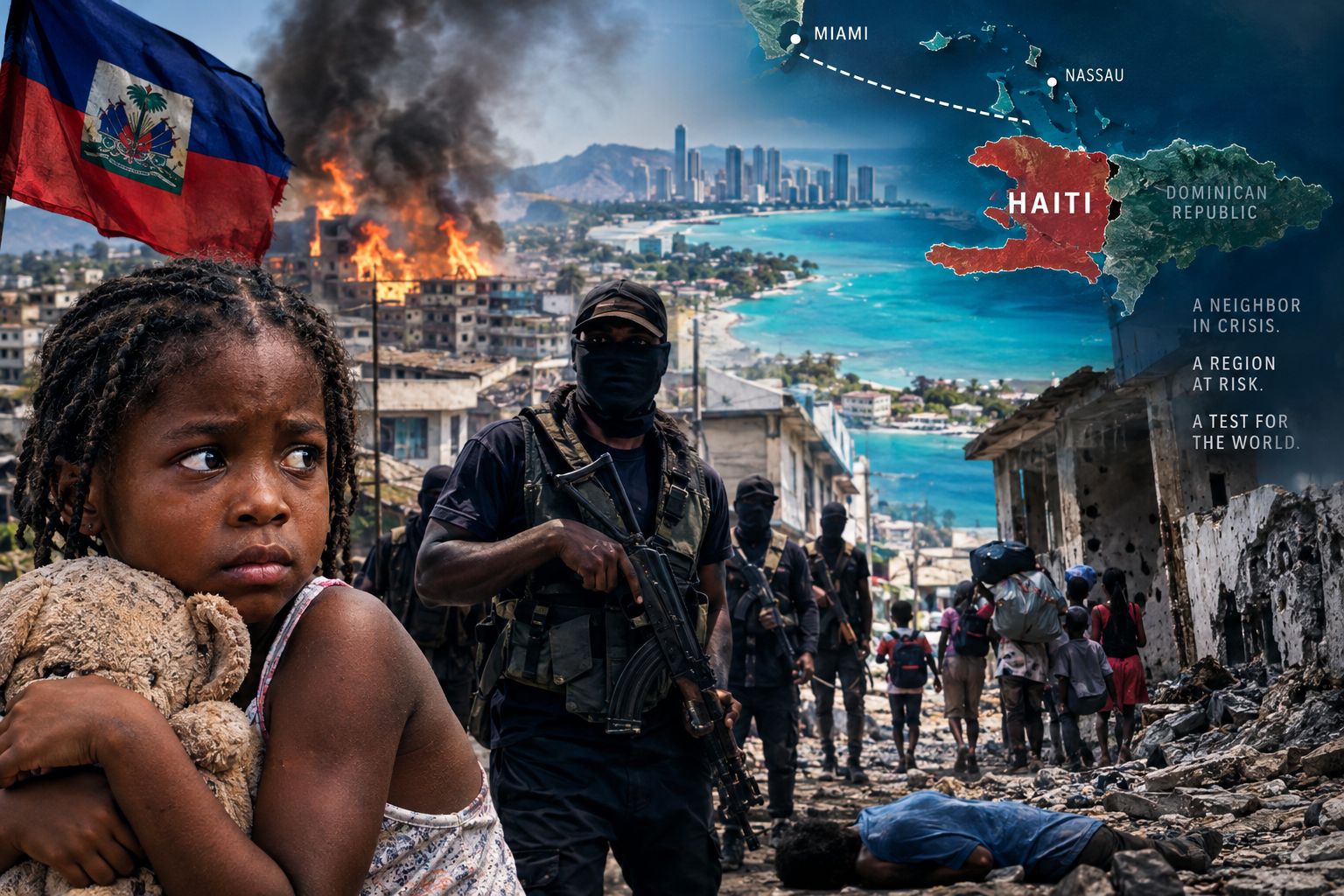
There is a stretch of blue water so short that, on a clear day, the imagination can almost walk it. Haiti sits on the same sea that washes Nassau, Miami, and the Florida Keys. It is not a distant war. It is a neighbor burning in public, on camera, in daylight — while the richest country on Earth can still see the smoke if it bothers to look.
That is the scandal. Not only that armed groups now hold most of a capital city. Not only that about 1.5 million people have been driven from their homes. The scandal is that the killings have become theater: public, filmed, meant to teach a lesson to anyone still standing. Men pulled from a church courtyard. Boys accused of “talking.” A woman who froze when gunmen asked her a question and was shot for the silence. After a World Cup match, a crowd walking home — musicians among them — cut down from rooftops. Children among the dead. The youngest, officials said, barely seven.
Call it what it is. This is not ordinary street crime. It is rule by spectacle. They film the humiliation so the next neighborhood surrenders without a fight. They burn houses with people still inside. They use rape as punishment against families living under a rival’s flag. They recruit children because hunger and displacement have made childhood itself a recruiting ground. United Nations monitors have recorded hundreds of sexual-violence victims in a single season of terror. In two neighborhoods of Port-au-Prince alone, more than six hundred people were killed in four and a half months. A third of them were not even gang members. They were the people who happened to live there.
And this is happening on the doorstep of the United States.
When brutality crosses the legal line
At a certain level of organized cruelty, the word “gang” becomes a lie of convenience. It lets governments treat a campaign of terror as a policing problem instead of what the statutes already describe.
U.S. law does not require a black flag or a sermon. Under 22 U.S.C. § 2656f, terrorism is “premeditated, politically motivated violence perpetrated against noncombatant targets by subnational groups or clandestine agents.” Under 18 U.S.C. § 2331, international terrorism includes violent acts dangerous to human life that appear intended to intimidate a civilian population or coerce a government. To list a Foreign Terrorist Organization, the Secretary of State must find three things under 8 U.S.C. § 1189: the group is foreign; it engages in terrorist activity or terrorism, or retains the capability and intent to do so; and that activity threatens U.S. nationals or U.S. national security — defense, foreign relations, or economic interests.
The United Nations has no single treaty definition, but the Security Council’s working description in Resolution 1566 is blunt enough: criminal acts against civilians intended to kill or maim, or the taking of hostages, committed to provoke a state of terror, intimidate a population, or compel a government or international organization. Resolution 1373 already requires every member state to treat such acts, and the financing of them, as serious crimes. Motivation is no excuse.
Measure Haiti against that language, not against a movie version of terrorism.
These groups are foreign organizations. They kill noncombatants on purpose. They film the killings to terrorize the rest. They take hostages for ransom and for politics. They attack police, airports, prisons, fuel terminals, and a U.N.-backed mission. They forced a prime minister from office. Their spokesperson talks like a political actor. Their goal, as Washington itself has said, is a gang-controlled state in which trafficking runs free and citizens live in fear. That is not a turf war. That is an attempt to replace the state by terror.
The third American test is no longer theoretical. Haiti’s collapse sits on the same sea as Florida and The Bahamas. It produces displacement, weapons traffic, deportation into a war zone, and a security mission the United States is helping to fund and supply. A capital 90 percent occupied by armed factions is a threat to regional order. That is national security, whether anyone wants the phrase or not.
Washington has already crossed part of this line. In May 2025 the State Department designated Viv Ansanm — the coalition that swallowed Port-au-Prince’s main factions — and Gran Grif as Foreign Terrorist Organizations and Specially Designated Global Terrorists. The National Counterterrorism Center now lists Viv Ansanm among terrorist groups. Treasury has sanctioned facilitators. The State Department put a multimillion-dollar bounty on Jimmy Chérizier, the coalition’s public face. The United Nations listed Viv Ansanm under its Haiti sanctions regime. The legal argument is no longer hypothetical. The remaining failure is political: treating the designation as a press release instead of a governing fact.
If the conduct matches the statute, the region cannot keep calling it “gang violence” as if the law had not already spoken. A terrorist designation is not poetry. It is a tool: asset freezes, material-support crimes, travel bars, pressure on the banks and arms brokers who keep the rifles coming. Leaving the label half-applied is how a massacre stays a local story.
If this were happening in a city Americans could name without a map, the footage would own every screen. Instead, Haiti was allowed to become the hemisphere’s open wound: close enough to send people fleeing across the same water, far enough for the rest of us to treat it as someone else’s misfortune.
Armed groups still control an estimated 80 to 90 percent of Port-au-Prince. The death toll from recent years of this war sits above 16,000. Displacement has reached about 1.5 million — more than one in ten Haitians, half of them children. Hospitals barely function. Schools close. Roads become toll booths for men with rifles. Large parts of the capital are occupied.
How did a region allow this?
The Caribbean is a family of small states that preach solidarity at summits and then discover, too late, that a collapsed neighbor does not stay contained. Weapons move. People move. Fear moves. The Bahamas has said the quiet part out loud: a safer Haiti is a safer Bahamas and a safer region. That is not charity talk. It is geography. When a state dies next door, the sea does not become a wall. It becomes a road.
The United States is not a bystander. Washington has poured nearly a billion dollars into Haiti’s security response across two administrations. It has also kept deportation flights going into a country so dangerous that American commercial planes are still banned from the capital. More than 470 people have been sent back since July, some stripped of protected status. Analysts warn the obvious: many will become victims. Some, with no work and no protection, will be absorbed by the same organizations the United States has already labeled terrorists. That is not a policy contradiction. It is a moral one.
The world has already tried and failed once in this chapter. The earlier Multinational Security Support mission never reached the size it was promised. The map kept turning blacker.
Now there is a new name: the Gang Suppression Force, authorized by the U.N. Security Council to push these groups off ground they have owned for years. It is supposed to grow toward 5,500 soldiers and police. Partner nations include the United States, Canada, Kenya, Jamaica, and the Bahamas. Haiti’s prime minister went to the U.N. this week begging the world not to blink again, with elections dangled for December — the first national vote in nearly a decade — as if ballots can be counted in a city where gunmen decide who walks down a street.
“There is no peace to keep,” one analyst said after walking those streets. You have to take the ground back.
That is the truth no slogan can soften. And it is also the trap. How do you retake a city without turning the civilians still trapped there into collateral? The groups already hide behind the people they starve and film. Every delay costs more graves. Every clumsy raid can manufacture the next generation of rage.
Do not make this a Haitian story only. That is how the killing was allowed to mature.
If you live in The Bahamas, this is the crisis on your southern horizon. If you live in Florida, this is the country whose collapse already shows up in shelters, court dockets, and the silence after another banned flight. If you live in Kingston, Ottawa, Nairobi, or anywhere else that still claims a conscience, this is the test of whether “terrorism” means the method or only the brand.
A child does not need a passport to be your problem. A filmed murder in daylight does not become less evil because the street has a Creole name. The people sleeping under tarps in a park that used to be a neighborhood are not extras in someone else’s news cycle. They are what happens when a region treats a neighbor’s agony as weather.
Help does not have to wait for a perfect government in Port-au-Prince. It means treating designated terrorist organizations as designated terrorist organizations: cut their money, choke their weapons, hunt their brokers, and stop pretending a massacre filmed for the camera is only crime. It means funding the force that is actually deploying. It means protecting civilians first. It means refusing to deport people into a killing field and calling it order. It means churches, diasporas, and ordinary citizens acting as if a massacre next door is a massacre in the family — because in this sea, it is.
Haiti is not asking the world to feel sorry. Haiti is showing the world what neglect looks like when it is allowed to ripen in the sun, on camera, a short flight from Miami.
The law already has a name for organizations that kill civilians to terrify a nation and break a government. The remaining question is whether the hemisphere will use that name as a weapon against them — or keep using “gang” as a way to look away.
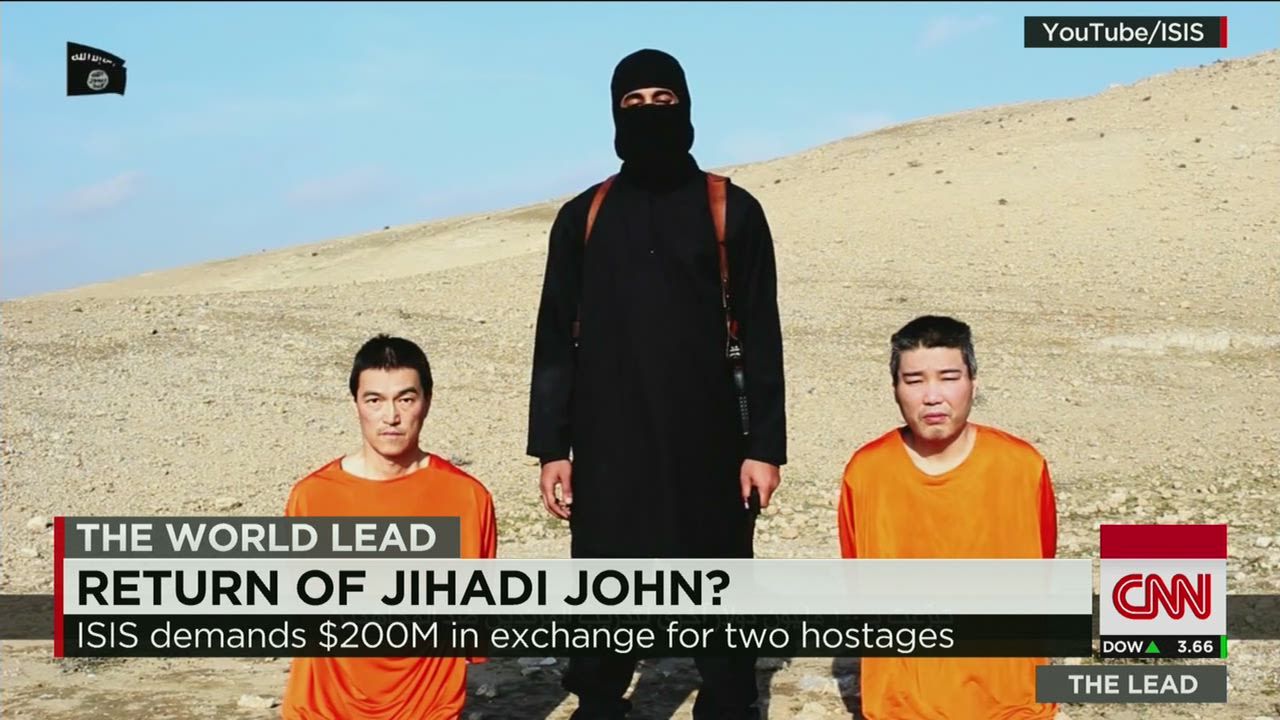
Look how quick the world forgets what terrorists look like. Here’s a reminder 🎗️
Related stories

Biometric Voter Cards Go Local, PAC Digs Into $1.5m Vouchers, and Some PMH Wards Relocate
Late-afternoon Bahamas Islands Briefing for Wednesday, October 14, 2026: Exuma’s Business Outlook is tomorrow;…

PUBLIC MESSAGE TO ALL BAHAMA DRAMA FOLLOWERS
We are taking Bahama Drama to the next level, and we want you to…

Eleuthera Residents Threaten to Stop Paying BPL Bills, Treasure Cay’s $177m Sale Nears Closing, and a “Miracle Baby” Gets Her Wheels
Afternoon Bahamas Islands Briefing for Wednesday, October 14, 2026: Eleuthera residents threaten to withhold…
Join the conversation
No comments yet. Be the first.