
The Filipino Spirit
The Filipino Spirit
One of History’s Cruelest untold stories of Occupations
By: Michael Elijah Muhammad Clare
There are nations that faced hardship.
And then there is the Philippines, a nation that survived terror.
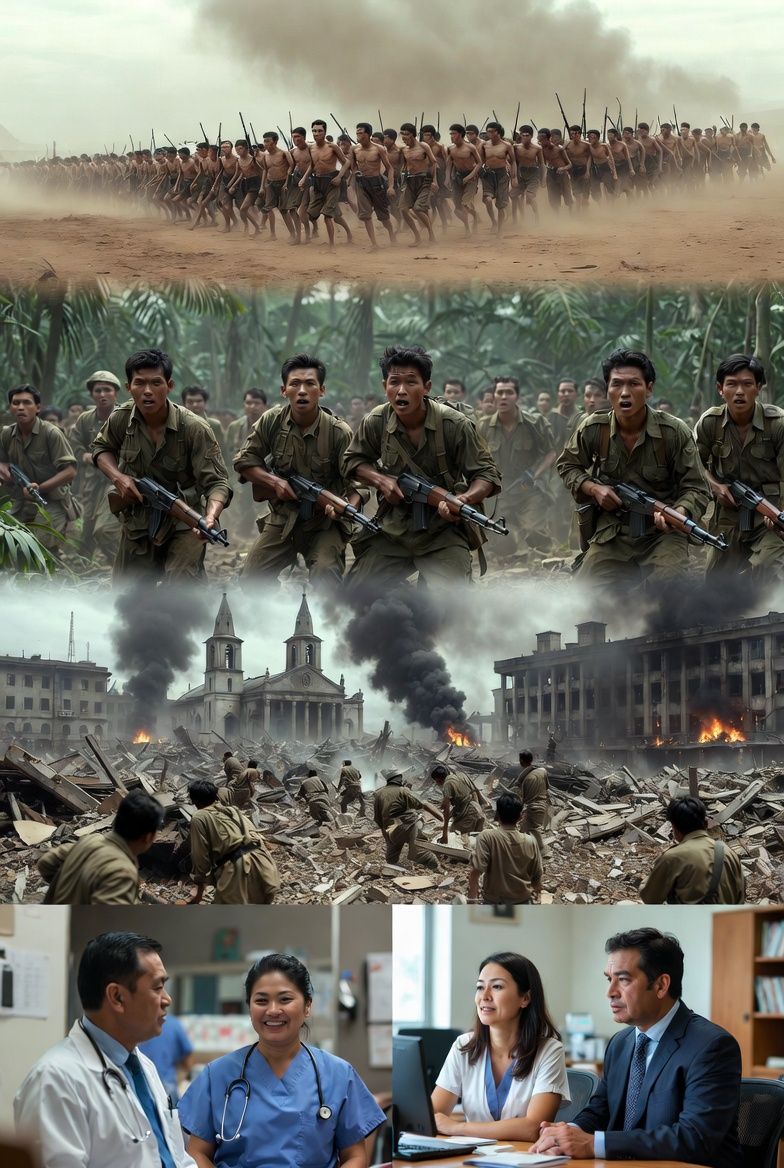
From 1942 to 1945, during World War II, Imperial Japan invaded and occupied the Philippines. What followed was not simple military rule.
It was systematic cruelty.
It was fear as policy.
It was violence as control.
Japanese forces ruled through intimidation, torture, starvation, and murder. Filipino civilians were treated as expendable. Human life meant nothing to the occupiers.
Entire communities were terrorized.
Men were beaten in public to “set examples.”
Teenagers were executed for suspicion.
Elders were humiliated.
Women were abused.
Children were left orphaned.
Fear became daily life.
One of the earliest horrors was the Bataan Death March.
After Filipino and American soldiers surrendered in 1942, more than 70,000 prisoners were forced to march over 60 miles under burning sun, without food, water, or medical care.
Those who collapsed were bayoneted.
Those who begged were shot.
Those who resisted were beheaded.
Thousands died on the road.
Not in battle.
In captivity.
Across the islands, Japanese military police hunted civilians. People accused of helping resistance fighters were tortured with electric shocks, water suffocation, beatings, and burnings.
Some were buried alive.
Some were executed in front of their families.
Many simply disappeared.
Women and girls were forced into sexual slavery as “comfort women,” locked in military brothels and abused daily. Many never recovered physically or emotionally.
Families were shamed into silence.
Food was seized. Rice was stolen. Crops were burned. Starvation became a weapon.
Parents watched children grow thin and weak.
Hospitals lacked medicine. Schools were shut or turned into propaganda centers. Churches were monitored.
Freedom of thought was crushed.
Anyone who refused to bow to Japanese soldiers was beaten.
Anyone who spoke against occupation risked death.
Japan claimed it was “liberating Asia.”
In reality, it enslaved it.
In 1943, Japan created a fake “independent” Philippine government. It was controlled entirely by the military. Filipino leaders were forced to cooperate or be killed.
The people rejected it.
They knew slavery when they saw it.
They wanted real freedom.
Not permission to breathe.
Not borrowed dignity.
Not survival under chains.
They wanted sovereignty.
So they fought.
With no tanks.
With few guns.
With little food.
But with unstoppable courage.
Filipino guerrillas formed one of the strongest resistance movements of World War II. They sabotaged enemy supply lines, protected villages, gathered intelligence, and rescued prisoners.
They hid in jungles and mountains.
They fought barefoot.
They fought hungry.
They fought knowing death was likely.
But they fought anyway.
When Allied forces returned in 1944, Filipino fighters led them through enemy territory. Without Filipino resistance, liberation would have been impossible.
Then came the Battle of Manila in 1945.
As Japan realized defeat was near, its troops unleashed final rage on civilians.
Hospitals were attacked.
Churches were burned.
Neighborhoods were massacred.
Women and children were slaughtered.
Over 100,000 innocent people died in weeks.
Manila became one of the most destroyed cities of World War II.
A city of ashes.
A city of graves.
A city of tears.
Yet even after all this…
The Filipino spirit did not die.
In 1945, Japan surrendered.
In 1946, the Philippines claimed full independence.
Not as a gift.
As a victory earned in blood.
Over one million Filipinos died during the occupation.
But millions more lived to rebuild.
And they rebuilt with faith.
With humility.
With excellence.
Today, that same strength lives in Filipinos around the world.
In nurses who never quit.
In seafarers who cross storms.
In engineers who build nations.
In caregivers who love strangers.
In workers who sacrifice quietly for family.
Filipinos are respected globally because suffering taught them discipline, compassion, and resilience.
Here in The Bahamas, we see it daily.
Filipino professionals serve in our hospitals, resorts, construction, shipping, and businesses. They bring skill, integrity, and heart.
They respect our culture.
They strengthen our economy.
They raise families here.
They stand with us in crisis.
They are part of us.
To every Filipino reading this, anywhere in the world:
Your ancestors survived one of history’s most brutal occupations.
They faced bayonets and did not bow.
They faced starvation and did not steal.
They faced terror and did not lose faith.
Their courage lives in you.
When you stand tall, that is history speaking.
When you work with honor, that is legacy.
When you never give up, that is inheritance.
You are not the product of weakness.
You are the child of warriors.
The Philippines is not defined by what Japan did to it.
It is defined by how it rose above it.
From Bataan to The Bahamas.
From ashes to excellence.
From suffering to strength.
The Filipino spirit remains unbroken to this very day, a proud people…
Your story is eternal.
And your pride is justified…
Related stories

Biometric Voter Cards Go Local, PAC Digs Into $1.5m Vouchers, and Some PMH Wards Relocate
Late-afternoon Bahamas Islands Briefing for Wednesday, October 14, 2026: Exuma’s Business Outlook is tomorrow;…

PUBLIC MESSAGE TO ALL BAHAMA DRAMA FOLLOWERS
We are taking Bahama Drama to the next level, and we want you to…

Eleuthera Residents Threaten to Stop Paying BPL Bills, Treasure Cay’s $177m Sale Nears Closing, and a “Miracle Baby” Gets Her Wheels
Afternoon Bahamas Islands Briefing for Wednesday, October 14, 2026: Eleuthera residents threaten to withhold…
Join the conversation
No comments yet. Be the first.