
The Dead Man Who Walked Home
The Dead Man Who Walked Home
KEMP ROAD
In the early 1960s, in The Bahamas, in the old Kemp Road community, there lived a fisherman named Samuel Rolle. He was not famous or wealthy, just a hardworking man who loved the sea.
One night after returning from fishing, Samuel complained of chest pains. By morning, he was unresponsive. In those days, without modern medical equipment, people believed he had died.
His family washed his body, dressed him in white, and placed him in a wooden coffin. The entire settlement gathered for prayers, hymns, and farewell. By sunset, Samuel was buried in the small village cemetery in an area between Kemp Road and Shirley Street.
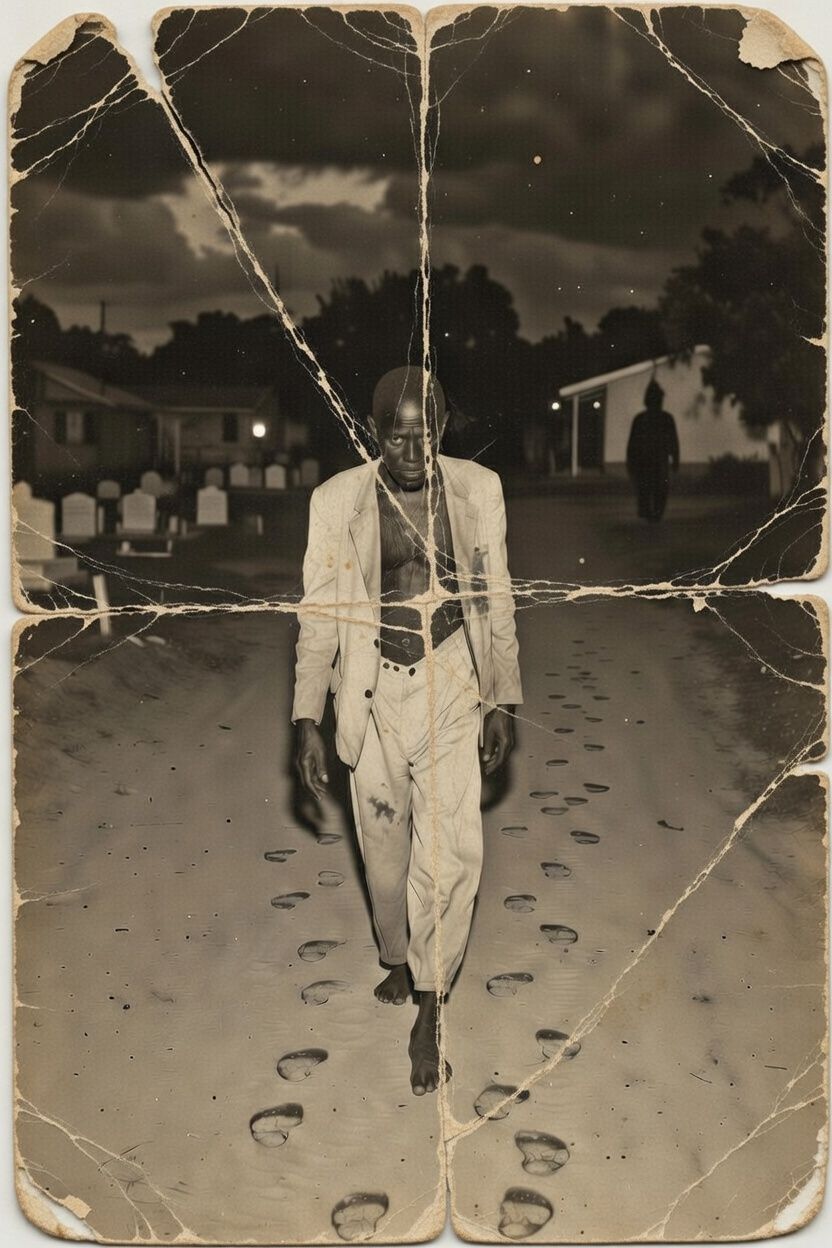
That same night, around 10:30 PM, an elderly neighbor named Miss Lorna sat on her porch when she noticed a man walking slowly down the sandy road. He carried no lantern and wore no shoes. His footsteps made no sound.
As he passed beneath the moonlight, she realized it was Samuel.
He was covered in dirt. His face looked empty. His eyes did not blink. He did not look at her. He continued walking toward his home.
Before dawn, three different neighbors reported seeing Samuel during the night. One said he stood silently in his yard, staring at his house. Another claimed he knocked softly on his door. But no one answered. Fear kept them inside, because it was Samuel and he had already been buried.
When morning came, villagers gathered to investigate.
In the sand, they found clear footprints beginning at the cemetery and leading straight to Samuel’s house. They were bare, deep, and fresh.
The men went to the cemetery with shovels. They dug until they reached the coffin. When they opened it, the lid was splintered and scratched from the inside.
Samuel’s body was twisted. His fingernails were broken, blood smeared everywhere. His mouth was open wide. His face was frozen in terror.
Later, the village doctor admitted that Samuel had not truly been dead. He had fallen into a rare coma so deep it appeared like death.
He had awakened underground, trapped in darkness. He clawed with all his strength, but the weight of the soil trapped him inside. He could not escape. He died from shock, suffocation, and exhaustion.
After that night, the Kemp Road community began waiting several days longer before burials. Bodies were watched carefully. Breathing was checked again and again. No one wanted to make the same mistake. That is why, even today, families take extra time before laying loved ones to rest.
Some elders say that on quiet nights near the old cemetery, if you look long enough, you can still see Samuel walking back and forth like a confused shadow.
Others say soft scratching can still be heard beneath the ground.
And some claim that if you pass through the area late at night, you may hear soft knocking on your door later on the same night.
Always at 3:00 AM.
Bahama Drama Bahamian folklore 1960’s story…
Bahamian history research done by: Michael Elijah Muhammad Clare.
———–
Support Bahamian Storytelling & Culture
If this story moved you, educated you, or made you feel connected to our Bahamian roots, please consider supporting our work.
Bahama Drama is independently owned and operated by Bahamian’s, dedicated to preserving our history, folklore, and voices for future generations.
Every story you read here takes time, research, and commitment. Your support helps us continue documenting the culture that belongs to all of us.
No contribution is too small. Every dollar makes a real difference.
Your support helps us:
• Produce quality local stories
• Preserve Bahamian heritage
• Amplify Bahamian voices globally
• Remain independent and authentic
Ways to Support
Bank Transfer (Scotiabank)
Name: Michael Clare
Account Type: Chequing
Account Number: 70045 004010497
Currency: BSD
PayPal Donation
[https://www.paypal.com/donate/?hosted_button_id=RG3FTGGKSNDLJ](https://www.paypal.com/donate/?hosted_button_id=RG3FTGGKSNDLJ)
Why Your Support Matters
This page reaches millions worldwide every month, showcasing Bahamian creativity, truth, and storytelling on a global stage.
By supporting Bahama Drama, you are investing in:
Bahamian culture
Bahamian ownership
Bahamian independence
The Orange Economy
You are helping build something that belongs to us.
Thank you for standing with us.
Thank you for believing in Bahamian excellence.
Thank you for keeping our stories alive.
Related stories

Biometric Voter Cards Go Local, PAC Digs Into $1.5m Vouchers, and Some PMH Wards Relocate
Late-afternoon Bahamas Islands Briefing for Wednesday, October 14, 2026: Exuma’s Business Outlook is tomorrow;…

PUBLIC MESSAGE TO ALL BAHAMA DRAMA FOLLOWERS
We are taking Bahama Drama to the next level, and we want you to…

Eleuthera Residents Threaten to Stop Paying BPL Bills, Treasure Cay’s $177m Sale Nears Closing, and a “Miracle Baby” Gets Her Wheels
Afternoon Bahamas Islands Briefing for Wednesday, October 14, 2026: Eleuthera residents threaten to withhold…
Join the conversation
No comments yet. Be the first.