
Surname Thompson
Surname Thompson
A True Bahamian Story with Hands That Heal
By: Michael Clare
Everything in the records is plain fact:
Old English and Scottish name, “son of Thom”, short for Thomas, meaning “twin”. One of the oldest surnames in the British Isles, carried by farmers, soldiers, and sea captains long before any of them ever saw a palm tree.
Came to the Bahamas with the Loyalist wave after 1783, mostly from South Carolina, Georgia, and East Florida. Thompsons show up in the earliest land grants on Eleuthera, Harbour Island, Abaco, Exuma, Long Island, and Cat Island. One Captain Thompson even had a grant on New Providence between 1719 and 1722, long before the big exodus.
Owned small cotton and sisal plots, enslaved Africans from the Gold Coast, the Bight of Biafra, and the Kongo-Angola region worked those fields.
After freedom in 1838, many who had been enslaved took the Thompson name for themselves. Within two generations the name belonged to both sides of the old fence.
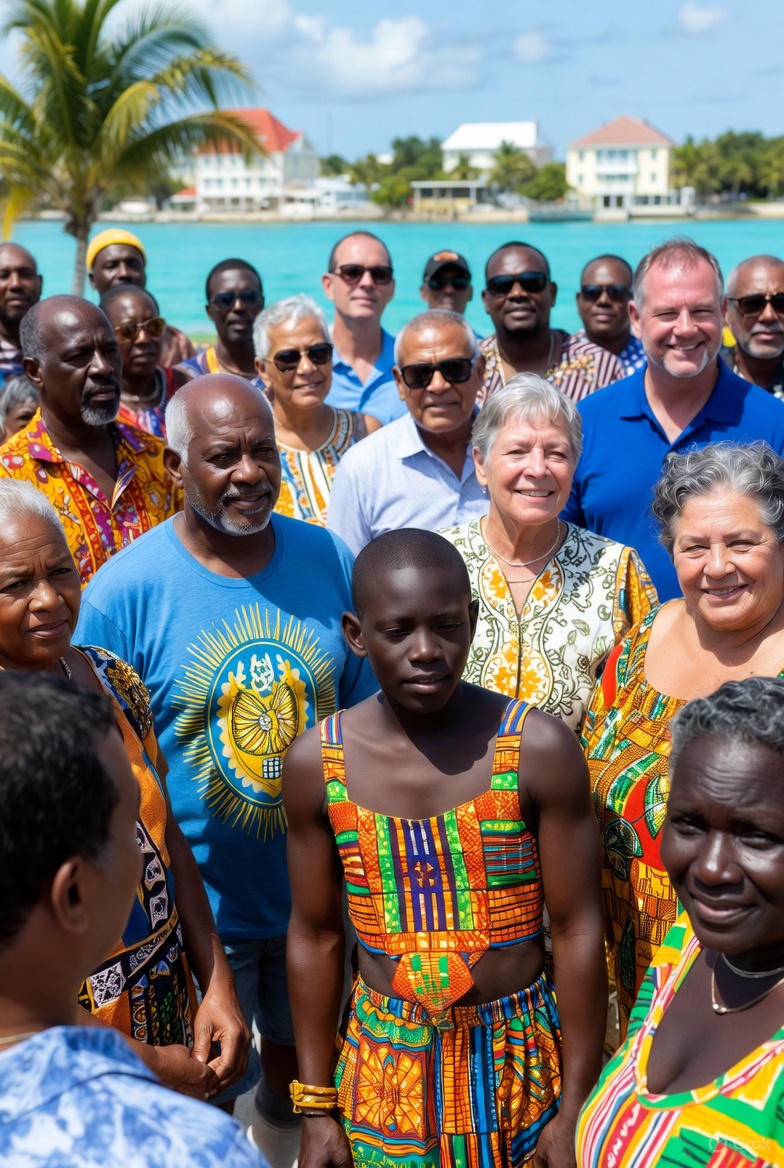
Today it’s in the top ten most common Bahamian surnames. You’ll find Thompsons of every shade driving mailboats, preaching in churches, playing rake-n-scrape, or running clinics from Nassau to Inagua.
That’s the history you can read in the Registrar General’s Office or the Department of Archives.
But every Thompson child, no matter how light or how dark, grows up hearing the same quiet family saying:
“Thompson hands don’t just work. Sometimes they heal.”
Outsiders laugh it off as superstition. Family knows better.
The gift runs straight through both sides of the tree.
From the European Thompsons comes the “cool laying-on”, a palm pressed to a fevered forehead that drops the heat in minutes, or a steady hand on a sprained ankle that takes the swelling down before the ice even arrives. Old Loyalist journals on Eleuthera (still tucked in cedar trunks) talk about a sea-captain’s wife who could stop a child’s nosebleed with a touch and a whispered prayer.
From the African Thompsons (Igbo, Yoruba, Kongo, Akan blood) comes the “warm healing”, hands that find the exact spot where the pain hides, that draw out infection like pulling a splinter, that leave an old cut feeling brand-new by morning. Grandmothers on Cat Island still tell of a woman named Ma Cudjoe Thompson who laid hands on a fisherman’s gashed leg in 1890 and closed the wound before the doctor’s boat ever reached the cay.
When the bloodlines crossed in the 1780s and 1790s (first by force, later by love), the two kinds of healing braided together and grew stronger. A Thompson today might feel both at once, the cool touch that eases a stranger’s migraine on the jitney, and the warm pulse that knits a cousin’s cracked rib while they sleep.
Outsiders never quite notice. A Thompson just rests a hand on your shoulder when you’re hurting, says “You’ll be alright,” and walks away. By evening the ache is gone and you can’t explain why.
Thompsons keep the gift the way other families keep recipes, you don’t charge for it, you don’t brag about it, and you never turn away another Thompson in need, because every Thompson (light, dark, or anything between) is family now.
So the name stays exactly what the records say it is, a Loyalist surname carried across oceans by exiles, then carried forward by the people they once owned, now so completely mixed that no branch of the tree is pure anything.
Only the family knows the deeper truth, that when a Thompson lays a hand on you, something older than chains or crowns is still working through them, something that survived the Middle Passage and the King’s grants both, and decided to stay.
And every person who carries the name today (whether their skin catches the sun like mahogany or like seashell pink) walks a little taller for it.
Because Thompson isn’t just a surname.
It’s the quiet promise that somewhere in the bloodline, there are hands that still remember how to heal.
Related stories

Biometric Voter Cards Go Local, PAC Digs Into $1.5m Vouchers, and Some PMH Wards Relocate
Late-afternoon Bahamas Islands Briefing for Wednesday, October 14, 2026: Exuma’s Business Outlook is tomorrow;…

PUBLIC MESSAGE TO ALL BAHAMA DRAMA FOLLOWERS
We are taking Bahama Drama to the next level, and we want you to…

Eleuthera Residents Threaten to Stop Paying BPL Bills, Treasure Cay’s $177m Sale Nears Closing, and a “Miracle Baby” Gets Her Wheels
Afternoon Bahamas Islands Briefing for Wednesday, October 14, 2026: Eleuthera residents threaten to withhold…
Join the conversation
No comments yet. Be the first.