
Princess Margaret hospital (PMH)
Princess Margaret hospital (PMH)
This is written for , Aileen Martha Thurston, my Mommy; born August 14, 1943, in Cooperstown, Abaco.
Researcher & Writer ✔️
Michael Elijah Muhammad Clare
Before there was Princess Margaret Hospital, there was Prospect Hospital.
It sat on Prospect Ridge, high on the limestone spine of New Providence, looking down toward the city and the sea. For years it was one of the places Nassau sent its sick, its wounded, and its old. During the Second World War it served as a Royal Infirmary, a quiet ward for soldiers who had been broken and needed somewhere to mend. Later, when there was still no proper geriatric hospital, the elderly were housed there too. It was not a palace. It was a working house of last resort, old walls, limited beds, a building that had already given more than it was built to give.
In May 1953, they moved the patients out.
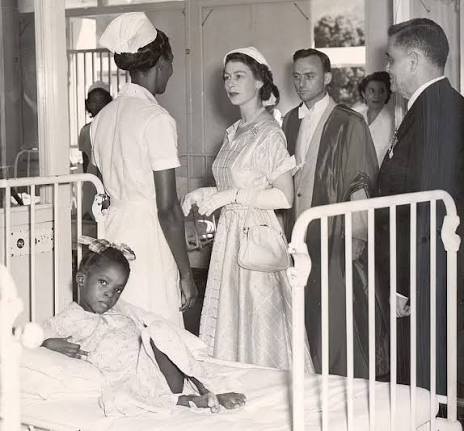
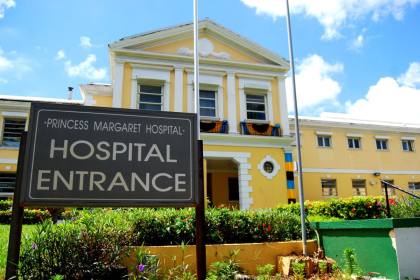
They carried them from Prospect Ridge down into a new building on Shirley Street, the Bahamas General Hospital, raised from a cornerstone laid the year before. On May 21, 1953, the first baby was born there. Two years later Princess Margaret walked its wards, and the nation put her name on the door. The old Prospect Hospital did not vanish from memory. It simply handed the living over to a larger promise.
That promise is what this story is about.
Aileen Martha Thurston grew up in a Bahamas that still asked children to walk to school barefoot because shoes were a luxury many families could not spare. She reached the third grade. She never dressed that fact in pride or shame. She only said her children would go farther than she had been allowed to go. When she was eight, her mother, an experienced diver, only thirty one, was killed in Abaco while diving. The family broke open. At fourteen she left Cooperstown and came to Nassau with her sister, sixteen and already married. Two girls. The capital. No mother waiting at the dock.
She lives in America now. She loves America. She still loves the Bahamas. What she cannot bear is the sound of young voices treating Princess Margaret Hospital as if it were only a catalog of cracks. She remembers a country that almost did not have this place. She remembers what it means when a door stays open for people who cannot pay.
Before Shirley Street there was an older chain of care: the African Hospital on West Hill Street, at the top of Queen Street where Hospital Lane still remembers the name; the Poor House on Shirley Street; the New Providence Asylum; the old Bahamas General Hospital; Prospect Ridge. Each one was a chapter. Princess Margaret Hospital was the chapter that finally held a whole nation.
It is easy, from a phone screen, to list what is wrong with an old public hospital. It is harder to stand in the night and count the lives that would have ended if that hospital had not been there.
In November 1965 the cruise ship Yarmouth Castle burned and sank on the way to Nassau. Ninety people died. Survivors came in by ship and by helicopter, burned, cut, shocked, some in nothing but pajamas. Shirley Street had to be kept clear for ambulances. Blood was donated by strangers. Nurses worked until they dropped. A new burn treatment was used. Out of that night the hospital’s volunteer auxiliary, the Yellowbirds, was born, and so was its first intensive care unit. That is not a rumor. That is the record. A public hospital on a small island received the wreckage of the sea and tried to put people back together.
And then there are the nights no newspaper named.
A little boy from over the hill, hit in the road after dark, blood on his school shirt, a mother screaming in the corridor because she has no money and no private insurance and nowhere else to go. The trauma doors open anyway. Hands work. A chest rises again.
A mother in labor, too early, too fast, the baby not breathing the way a baby should. The neonatal unit, one of the things this country is quietly proud of, takes the child that private rooms cannot always reach in time.
A fisherman from the Family Islands, brought in after a propeller, a fall, a fight with the sea. The referral hospital is this one. The Level One trauma center is this one. If PMH is closed, he does not get a second hospital. He gets the water.
A grandmother who waited too long because she did not want to bother anybody, collapsing in a clinic, sent to Shirley Street because that is where the public door still swings.
These are not fairy tales. They are the ordinary miracles of a place that has treated more than two million emergency patients, performed more than a quarter of a million operations, and delivered more than two hundred thousand children. Three out of four babies born in this country have drawn first breath in that maternity unit. If you are Bahamian and under a certain age, there is a fair chance you were born there. There is a fair chance someone you love died there too. That is what a national hospital is. It holds both the first cry and the last.
Doctors Hospital and the other private houses have their honor. They serve those who can pay. They have technology, comfort, speed. No honest article should pretend otherwise. But a private door is still a door with a price. Princess Margaret Hospital is the door the government keeps open so a citizen can walk in without a credit card. That is not a small thing. That is the difference between a country that believes the poor may live and a country that only treats the insured.
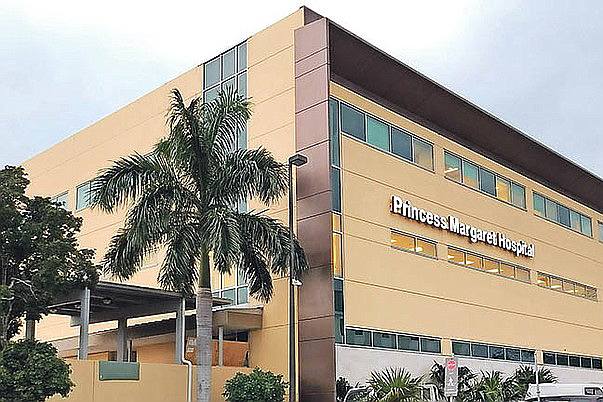
Every institution ages. Every hospital fails someone, sometime. The paid ones fail people too. They fail the ones who never get inside. PMH has carried the heaviest load for more than seventy years: hurricanes, overcrowding, old plumbing, too few beds, too many chronic diseases, nights when nurses walk to work because there is no ride and still they clock in. The emergency department has been expanded. A new specialty hospital is being built to take some of the weight. That is not the story of a corpse. That is the story of a body that is still fighting.
Aileen Martha Thurston left Abaco with a third grade education and a sister. She raised children and told them to do better. She knows the difference between complaint and memory. Complaint is easy. Memory is the little boy who lived, the mother who walked out holding a child, the burn patient who did not die on a gurney in 1965, the Family Island man who made it through the night because Shirley Street did not lock.
Without Princess Margaret Hospital, the Bahamas would have buried more of its children. It would have sent more of its poor to die at home. It would have been a different country.
The old Prospect Hospital on the ridge gave up its patients in 1953 so a larger house could begin. That larger house is still standing. It is tired. It is imperfect. It is also the gift that kept giving when giving was all some families had.
The least we can do is remember the lives it saved before we recite the flaws. The least we can do is speak of it the way Aileen Martha Thurston would have us speak, of a door that opened for people who had nowhere else to knock.
Page Reply:
I am honoured to put my name to this article.
For a long time I only heard what was wrong with Princess Margaret Hospital. The waiting. The buildings. The complaints that travel faster than gratitude. I listened, like a lot of us do. Then I sat with the history and with my mother’s life, and the picture changed.
This hospital did not appear out of nowhere. Before Shirley Street there was Prospect Hospital on the ridge, and before that even older houses of care that most of us never learned about in school. When the new hospital opened, it became the place a Bahamian could walk into without money in hand. That is not a small thing in a country where private care has always had a price.
My mother, Aileen Martha Thurston, was born in Cooperstown, Abaco, in 1943. She went to school barefoot. She left home at fourteen. She wanted her children to have more than a third grade chance. Women like her, and children like the ones in those old wards, are why a public hospital matters. Not because it is perfect. Because when the night is bad and the pocket is empty, it is still there.
If this piece changes even one person’s tone, from scorn to respect, from look at the flaws to look at the lives, then it has done what it was meant to do. We can demand better buildings and still honour the gift. Those two things are not enemies.
Read the story. Remember the door that stayed open. Then speak of Princess Margaret Hospital as if the people who were born there, healed there, and worked there are standing in the room with you.
Because they are…
Related stories

Biometric Voter Cards Go Local, PAC Digs Into $1.5m Vouchers, and Some PMH Wards Relocate
Late-afternoon Bahamas Islands Briefing for Wednesday, October 14, 2026: Exuma’s Business Outlook is tomorrow;…

PUBLIC MESSAGE TO ALL BAHAMA DRAMA FOLLOWERS
We are taking Bahama Drama to the next level, and we want you to…

Eleuthera Residents Threaten to Stop Paying BPL Bills, Treasure Cay’s $177m Sale Nears Closing, and a “Miracle Baby” Gets Her Wheels
Afternoon Bahamas Islands Briefing for Wednesday, October 14, 2026: Eleuthera residents threaten to withhold…
Join the conversation
No comments yet. Be the first.