
Pain Olympics 😭 😞
Pain Olympics 😭 😞
Researcher ✔️
Michael Elijah Muhammad Clare
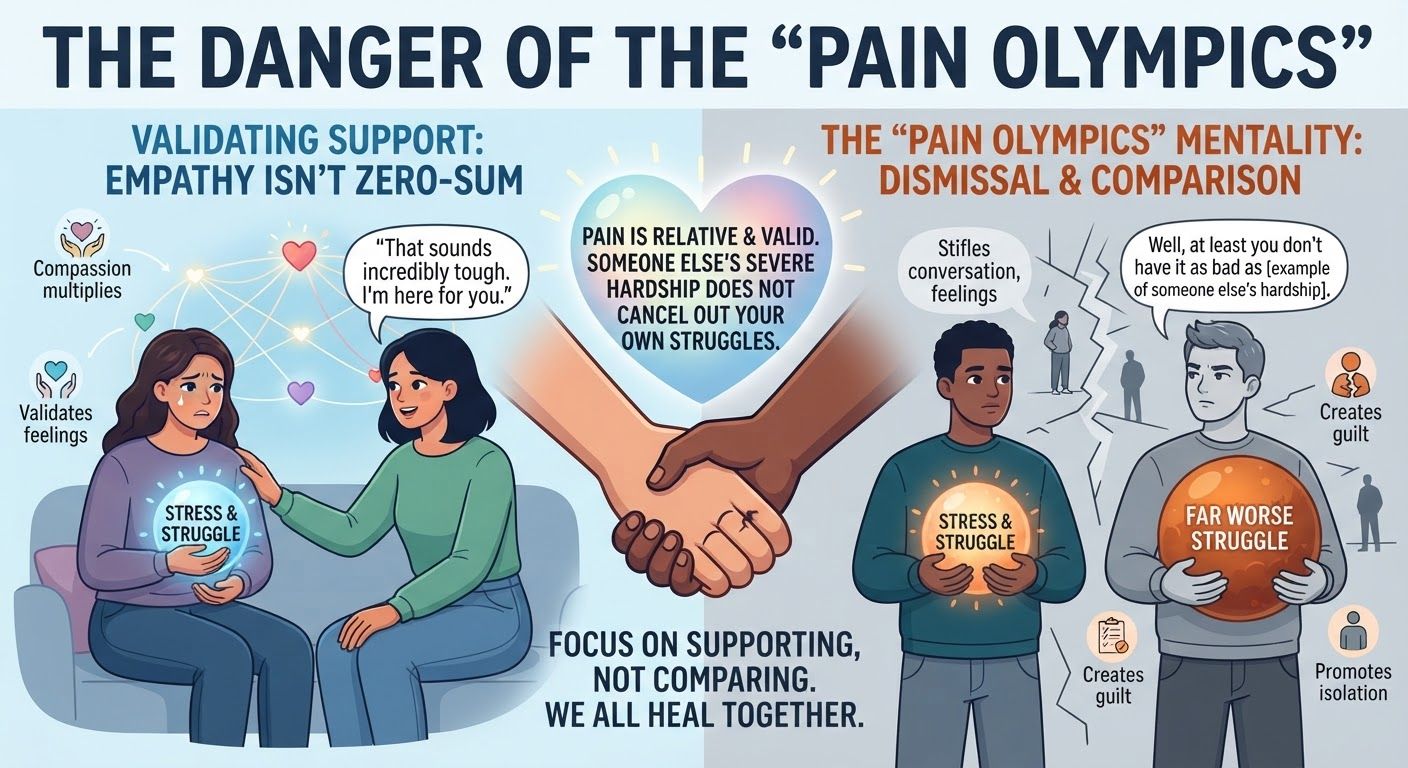
The term “Pain Olympics” is often used to describe the habit of comparing people’s suffering and trying to decide who has it worse. It can also be called “competitive victimhood” or the “Suffering Olympics.”
Basically, it happens when a person shares something painful they are going through, only for someone else to respond with a bigger problem, a worse experience, or a reminder that somebody somewhere has it much harder.
How It Shows Up in Everyday Life
Sometimes it happens without people even realizing they are doing it.
Someone might say, “I’m really stressed out because I’ve been looking for a job,” and the response might be, “At least you have somewhere to live. There are homeless people who would love to have your problems.”
The person may be trying to help or put things into perspective, but instead of making the person feel better, it can make them feel like they have no right to complain.
Another example is what could be called “trauma trumping.” You tell someone about something difficult that happened to you, and instead of listening, they immediately respond with a story about something much worse that happened to them.
Suddenly, your pain becomes a competition.
There is also the guilt people put on themselves. Someone may feel depressed, exhausted, stressed, or overwhelmed, but then tell themselves, “I shouldn’t feel this way. Other people have it much worse than I do.”
That can make a person feel guilty simply for having feelings.
Why the Pain Olympics Doesn’t Work
The truth is, suffering isn’t a competition.
Someone else having bigger problems doesn’t make your problems disappear. Their pain doesn’t cancel out yours.
You can care about someone who is going through something far worse than you while still admitting that you are struggling too.
Pain is personal. Your mind and body don’t measure your suffering against everyone else in the world.
If you break your finger, it hurts. Knowing that someone else broke both legs doesn’t make your finger stop hurting.
That’s how emotional pain can work too.
When people constantly feel like they have to prove that their suffering is serious enough to deserve attention, they eventually stop talking about what they’re going through.
They keep everything inside.
They hide their stress.
They hide their grief.
They hide their exhaustion.
And sometimes they suffer in silence because they believe someone else has “earned” the right to hurt more than they have.
That’s not healthy.
Why That Quote Can Be Harmful
The quote, “Remember, somewhere in the world, there are many people praying that what they’re going through was as small as what you’re going through,” may sound inspirational at first.
And there is certainly nothing wrong with being grateful for what you have.
But there is a difference between gratitude and making someone feel guilty for hurting.
When you use someone else’s suffering to tell a person that their own pain isn’t important, you’re not really comforting them. You’re comparing their pain to someone else’s and telling them they shouldn’t feel the way they feel.
Instead of saying, “Be grateful, but it’s okay to struggle,” the message can become, “You don’t have the right to feel bad because somebody else has it worse.”
That’s where the Pain Olympics begins.
We don’t need to compete over suffering.
We don’t need to decide whose pain is more legitimate.
Sometimes people simply need someone to listen.
You can be grateful for your life and still be hurting.
You can recognize that someone else has bigger problems and still admit that you’re struggling.
Both things can be true at the same time.
Real compassion isn’t about deciding who suffers the most.
It’s about understanding that everybody carries something, and sometimes the best thing you can do is simply listen.
Related stories

Biometric Voter Cards Go Local, PAC Digs Into $1.5m Vouchers, and Some PMH Wards Relocate
Late-afternoon Bahamas Islands Briefing for Wednesday, October 14, 2026: Exuma’s Business Outlook is tomorrow;…

PUBLIC MESSAGE TO ALL BAHAMA DRAMA FOLLOWERS
We are taking Bahama Drama to the next level, and we want you to…

Eleuthera Residents Threaten to Stop Paying BPL Bills, Treasure Cay’s $177m Sale Nears Closing, and a “Miracle Baby” Gets Her Wheels
Afternoon Bahamas Islands Briefing for Wednesday, October 14, 2026: Eleuthera residents threaten to withhold…
Join the conversation
No comments yet. Be the first.