
Haitian Gangs are coming
Haitian Gangs are coming
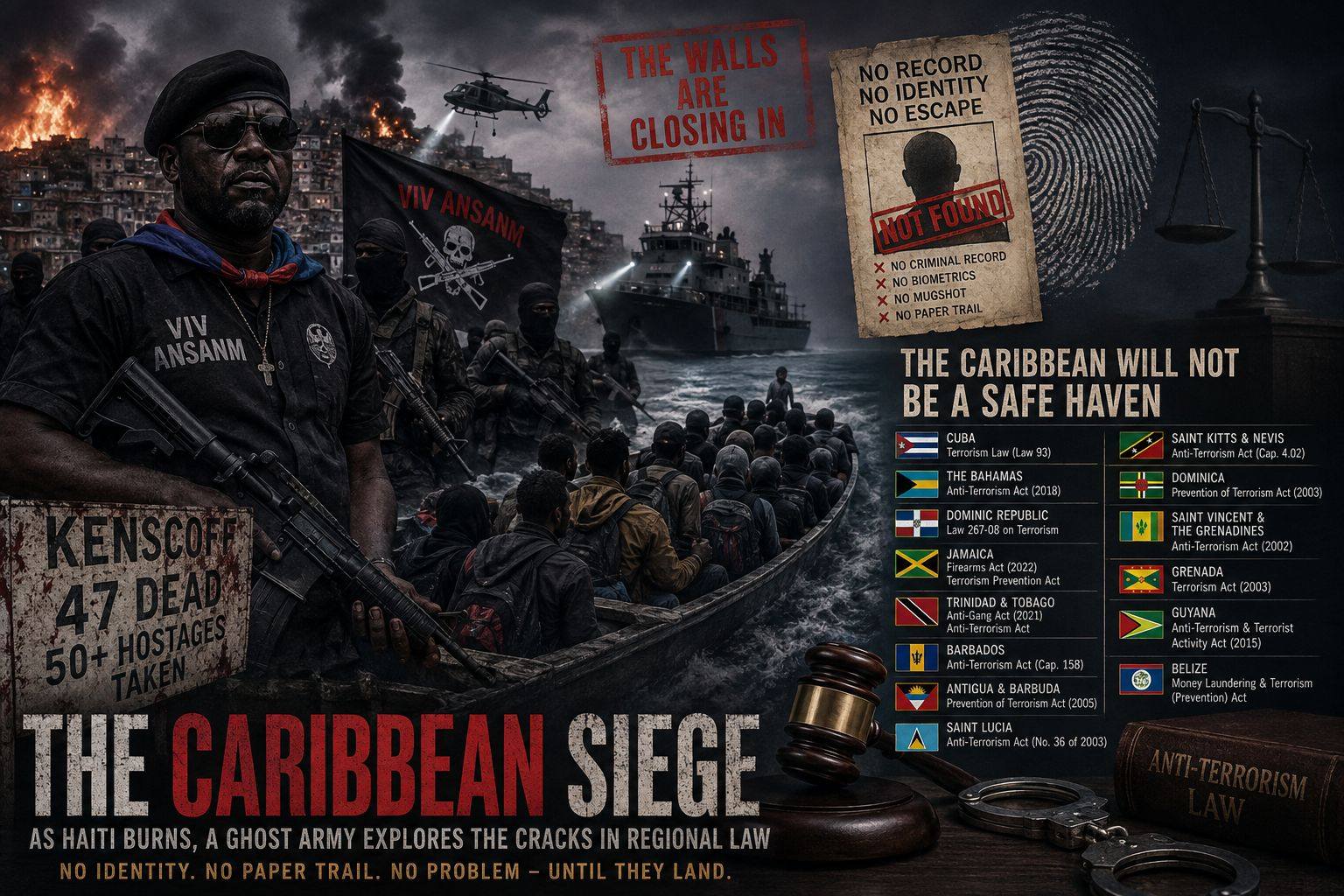
THE CARIBBEAN SIEGE
As Haiti Burns, A Ghost Army Explores the Cracks in Regional Law
By BAHAMA DRAMA INVESTIGATIVE DESK
PORT AU PRINCE
The mountain air of Kenscoff was thick with smoke and copper when the gunfire ceased. Forty seven bodies lay strewn across church grounds and hillside roads, fifty plus hostages were dragged into the darkness of the shadows. In the center of this maelstrom stands Jimmy Barbecue Chérizier and his violent coalition, Viv Ansanm. Yet beneath this brazen display of terror lies an impending crisis, the walls are closing in.
With Washington and the Trump administration escalating federal pressure, deploying interdiction assets, severing illicit supply lines, and ramping up foreign terrorist designations, Haiti’s criminal syndicates face a vice. The United States Department of Justice DOJ has unsealed sweeping federal indictments, targeting gang kingpins with multimillion dollar bounties under the Transnational Organized Crime Rewards Program and prosecuting Florida based networks under the Bipartisan Safer Communities Act 18 U.S.C. 933.
As pressure mounts, intelligence agencies warn of a diaspora of violence taking to the sea. But behind this looming exodus lies an administrative reality, while warlords like Barbecue are globally recognized, the tens of thousands of rank and file foot soldiers possess no criminal records, no mugshots, and zero biometric footprints in international databases.
The Paperless Phantom
Slipping Through the Legal Cracks
The central vulnerability across the Caribbean is not a lack of naval force, but a total absence of a paper trail. In Port au Prince, where state registries and civil archives have been torched or looted, the average gang militant is legally invisible.
When interception occurs at sea, these combatants quickly ditch their weapons overboard, blend into groups of legitimate refugees, and present themselves as destitute victims. Under international legal frameworks, most notably the UN Palermo Protocol against the Smuggling of Migrants Article 5 and the 1951 Refugee Convention, states are legally barred from criminalizing individuals merely for being smuggled or seeking asylum.
Under the UN Non Punishment Principle for Victims of Trafficking, individuals who claim they were coerced, extorted, or transported under duress must be treated as victims rather than criminals. Without immediate digital identification systems linking an undocumented individual to a massacre in Kenscoff or Delmas, host countries cannot deploy their anti terrorism or gang suppression statutes. Instead, these foot soldiers are processed as simple undocumented migrants or asylum applicants, released into migrant holding centers, non custodial processing shelters, or municipal bail systems, enabling them to disappear completely into local underground economies.
The Theoretical Legal Front
What Awaits Them on Paper
If foreign intelligence or sudden fingerprint matches manage to strip away their anonymity, these fugitives run directly into the statutory frameworks of neighboring sovereign nations.
Cuba
Maritime infiltrators face immediate interception by the Tropas Guardafronteras. Under the Cuban Penal Code Law No. 151 2022 and the Law Against Acts of Terrorism Law No. 93, verified armed subversives face closed military detention and life imprisonment or capital provisions.
The Bahamas
Infiltrators identified by the Royal Bahamas Defence Force RBDF face prosecution under the Immigration Act Chapter 191, alongside the Anti Terrorism Act 2018 and the Firearms Act Chapter 213, resulting in asset freezing and maximum security remand at the Bahamas Department of Correctional Services Fox Hill.
Dominican Republic
Sharing the physical land border, military forces CESFRONT enforce border containment decrees. Identified gang operatives face severe prosecution under Law 267 08 on Terrorism, Law 631 16 on Arms Control, and fast tracked deportation under General Migration Law No. 285 04.
Jamaica
Intercepted operatives are prosecuted under the Law Reform Zones of Special Operations Act, the Firearms Prohibition Restriction and Regulation Act 2022, carrying mandatory 15 to 20 year minimum sentences, and the Terrorism Prevention Act 2005.
Turks and Caicos Islands
As a British Overseas Territory, suspects trigger joint marine enforcement under the Immigration Ordinance, the Firearms Ordinance, and the Proceeds of Crime Ordinance, backed by UK Royal Navy assets.
Trinidad and Tobago
Syndicates are charged under the Anti Gang Act 2021, the Anti Terrorism Act Chapter 12 07, and the Firearms Act Chapter 16 01.
Barbados
Landing on Bajan shores triggers the Anti Terrorism Act Cap. 158, the Transnational Organised Crime Prevention and Control Act, and the Firearms Act Cap. 179.
Antigua and Barbuda
Suspects are prosecuted under the Prevention of Terrorism Act 2005 and the Immigration and Passport Act, leading to custodial sentences and regional extradition.
Saint Lucia
Combatants face charges under the Anti Terrorism Act No. 36 of 2003 and the Firearms Act Cap. 14.12.
Saint Kitts and Nevis
Interdictions fall under the Anti Terrorism Act Cap. 4.02 and the Immigration Act.
Dominica
Fugitives face summary interdiction under the Prevention of Terrorism Act 2003 and the Aliens Restriction Act.
Saint Vincent and the Grenadines
Enforcement falls under the Anti Terrorism Act 2002 and joint maritime border patrol authorities.
Grenada
Incursions trigger prosecution under the Terrorism Act 2003 and the Immigration Act, supported by the Regional Security System RSS.
Guyana
Gang affiliates attempting to enter southern transit corridors face the Anti Terrorism and Terrorist Activity Act 2015 and the Immigration Act Cap. 14.02.
Belize
Interceptions along mainland trade corridors are governed by the Money Laundering and Terrorism Prevention Act and the Immigration Act Cap. 156.
The looming danger across the Caribbean basin remains clear, while the legal statutes to crush these syndicates are firmly on the books, their effectiveness relies entirely on knowing who is walking off the boat. Without modern biometric screening at sea, the region’s best defenses risk being bypassed by a ghost army cloaked in the status of the displaced, the weakest immigration laws being in The Bahamas and Turks and Caicos.
Page Reply:
It will be definitely very difficult to separate the wheat from the tear when boat loads of Haitian immigrants land on each country shorelines in day’s to come…
Related stories

Biometric Voter Cards Go Local, PAC Digs Into $1.5m Vouchers, and Some PMH Wards Relocate
Late-afternoon Bahamas Islands Briefing for Wednesday, October 14, 2026: Exuma’s Business Outlook is tomorrow;…

PUBLIC MESSAGE TO ALL BAHAMA DRAMA FOLLOWERS
We are taking Bahama Drama to the next level, and we want you to…

Eleuthera Residents Threaten to Stop Paying BPL Bills, Treasure Cay’s $177m Sale Nears Closing, and a “Miracle Baby” Gets Her Wheels
Afternoon Bahamas Islands Briefing for Wednesday, October 14, 2026: Eleuthera residents threaten to withhold…
Join the conversation
No comments yet. Be the first.