
Da Haitian’s
Da Haitian’s
The Haitian Diaspora in the Bahamas
Historical Connections, Migration Realities, and Enduring Inequities
By: Michael Elijah Muhammad Clare
The presence of Haitian heritage within the Bahamian population represents a complex tapestry woven from centuries of transatlantic displacement, colonial exploitation, and regional interconnectedness. Descendants of Haitian lineage form a significant portion of the Bahamas’ diverse society, particularly in the southern islands, where their contributions to agriculture, labor, and cultural life have been profound yet often overlooked. This article examines the historical migrations of Haitians to the Bahamas before and after the abolition of slavery, the African ethnic origins of enslaved populations in both regions, the cross-movements of enslaved individuals, and the persistent challenges faced by people of Haitian descent in securing Bahamian citizenship. Drawing on established historical records, it underscores the limited scale of post-slavery Haitian migration to the Bahamas, contrasting sharply with larger flows to other destinations, and highlights systemic delays in legal recognition that undermine social cohesion.
Historical Migration Patterns: Modest Inflows Amid Broader Diasporic Currents
The roots of Haitian migration to the Bahamas trace back to the Haitian Revolution from 1791 to 1804, when enslaved Africans and free people of color overthrew French colonial rule and established the world’s first independent Black republic. As violence escalated, a modest number of Haitian planters, free people of color, and their enslaved laborers sought refuge in nearby British territories, including the Bahamas. In 1793, the Bahamian Assembly imposed a tax on arriving Haitian slaves and free people of color, reflecting early tensions over this influx, though the overall numbers remained small, estimated in the hundreds. These early arrivals settled primarily in the southern islands such as Inagua and Mayaguana, where they contributed agricultural knowledge and labor to isolated communities.
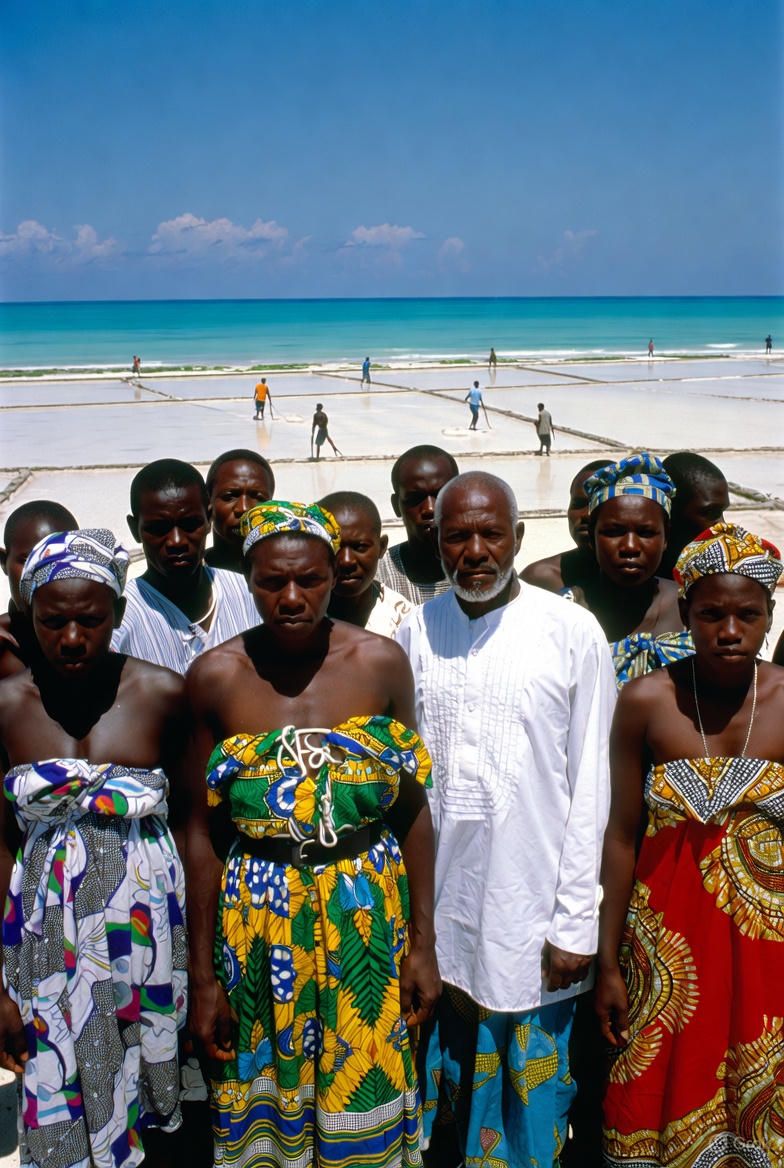
Following the abolition of slavery in the British Empire in 1834, Haitian migration to the Bahamas continued on a very limited scale. Historical accounts describe the flow as small but consistent, driven by opportunities in salt raking, farming, and fishing. Only a few hundred Haitians arrived during this period. There is no evidence supporting claims of thousands of Haitians migrating en masse after emancipation. In contrast, over 10,000 Haitians migrated to Louisiana between 1809 and 1810 due to post-revolution turmoil. These migrants influenced New Orleans culture, shaping Creole traditions that endure today.
This contrast shows a key truth. The Bahamas served as a refuge only for a select few Haitians, often those connected by family ties or immediate necessity. Louisiana, with greater resources and established networks, became the primary destination for Haitians fleeing instability.
African Ethnic Origins: Shared Yet Distinct Legacies of Enslavement
Both Haitian and Bahamian identities are tied deeply to the transatlantic slave trade. In Haiti, then called Saint-Domingue, French planters imported over 800,000 enslaved Africans from the Bight of Benin, the Gold Coast, and the Kingdom of Kongo. Major ethnic groups included the Nago, Fon, Ewe, Mandingo, and Kongolese peoples. Their traditions shaped Haitian culture and spirituality, including the origins of Haitian Vodou.
The Bahamas received far fewer enslaved Africans under British control, around 10,000 to 15,000 by the early 1800s. These Africans came mainly from Senegambia, the Gold Coast, and the Bight of Biafra, with large populations of Akan, Igbo, Yoruba, and Mandingo peoples. Their influence remains visible in Bahamian music, folklore, and community life.
The Bahamas was further shaped by American Loyalists who migrated with their enslaved laborers after the American Revolutionary War. Between 1783 and 1785, around 1,500 to 2,000 Loyalists brought as many as 5,000 enslaved Africans from the Carolinas and Georgia. These enslaved people, many from Gullah-Geechee communities, blended into the Bahamian population, strengthening the African presence on the islands.
Cross-Regional Movements: The Fluidity of Enslaved Lives
Enslaved people were often relocated as part of the Atlantic world’s trade networks. Some enslaved Bahamians attempted to flee south to Haiti during the revolution, inspired by promises of freedom. In 1822, around 100 enslaved people from Exuma seized a vessel to escape to Haiti, joining others who fled to Cuba. These attempts demonstrate courage and the desire for liberation.
At the same time, Haiti saw thousands of enslaved and free people of color flee toward the United States, especially Louisiana, during the revolution. Many settled in New Orleans, strengthening the free Black population and influencing Creole culture. Unlike the small-scale escapes from the Bahamas to Haiti, Haitian migration to Louisiana was large and historically significant.
Contemporary Challenges: Citizenship Delays and Governmental Inertia
Despite these deep historical connections, people of Haitian descent in the Bahamas face ongoing struggles with citizenship. The Bahamas follows a system where citizenship is inherited through Bahamian parents, which leaves many children of Haitian migrants in limbo even when born in the Bahamas. Processing times for citizenship applications often exceed ten years. This affects tens of thousands of people who have lived legally, worked, paid taxes, and contributed to the economy their entire lives.
This creates a form of statelessness for many individuals. Without citizenship, they cannot access passports, voting rights, or full social participation. Human rights advocates call this discriminatory. Estimates suggest between 80,000 and 100,000 people of Haitian descent now live in the Bahamas, making major contributions to construction, hospitality, agriculture, and healthcare, yet many still lack recognition.
Unlike the United States, where anyone born on American soil receives automatic citizenship, the Bahamas continues policies that limit inclusion. This deepens divisions and slows national progress. Many people of Haitian descent feel Bahamian in every way except on paper.
Successive governments have failed to address these issues. Instead of creating unity and fairness, outdated policies continue to exclude those who have already formed part of the national fabric.
The Smuggling of Migrants Bill 2025 is not what the Bahamas needs to correct years of injustice against the Haitian community and those of Haitian descent. This Bill is a whole different kettle of fish. This Bill will only make the Bahamas turn into a Haiti which no intelligent Haitian wants, that’s why they left it.
It’s lawless and only the rich and well connected benefit there. You’re either rich or poor in Haiti, there’s no middle class.
This Bill is treasonous, and those responsible for producing such a document…
Related stories

Biometric Voter Cards Go Local, PAC Digs Into $1.5m Vouchers, and Some PMH Wards Relocate
Late-afternoon Bahamas Islands Briefing for Wednesday, October 14, 2026: Exuma’s Business Outlook is tomorrow;…

PUBLIC MESSAGE TO ALL BAHAMA DRAMA FOLLOWERS
We are taking Bahama Drama to the next level, and we want you to…

Eleuthera Residents Threaten to Stop Paying BPL Bills, Treasure Cay’s $177m Sale Nears Closing, and a “Miracle Baby” Gets Her Wheels
Afternoon Bahamas Islands Briefing for Wednesday, October 14, 2026: Eleuthera residents threaten to withhold…
Join the conversation
No comments yet. Be the first.