
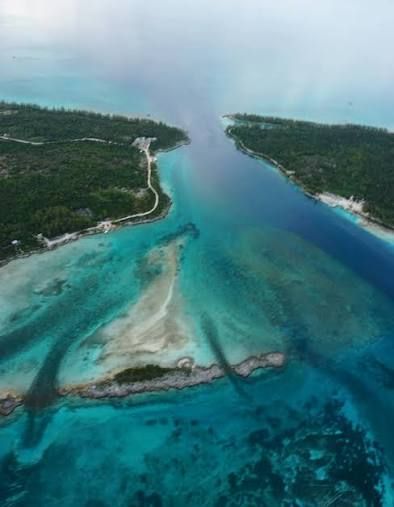
CURRENT ISLAND, ELEUTHERA
CURRENT ISLAND, ELEUTHERA
Researcher ✔️
Michael Elijah Muhammad Clare
The Island Where Time Never Truly Left
There are places in The Bahamas that feel beautiful.
And then there are places that feel ancient.
Current Island, Eleuthera is one of those places.
Small. Quiet. Easily missed by people rushing through maps and modern life.
But beneath its breeze, beneath its limestone, beneath every footstep taken on its soil, lies a story older than memory itself.
This is not just the history of an island.
This is the history of survival.
This is the history of The Bahamas.
BEFORE THE MAPS
Before Columbus. Before Britain. Before Names.
Long before European flags were planted in Caribbean sand, the islands of The Bahamas were already alive with human footsteps.
The first known people to inhabit these islands were the Lucayans, part of the wider Taino world, master navigators, farmers, fishers, and builders of peaceful communities.
They crossed seas in dugout canoes guided by stars, currents, birds, and instinct.
To them, these islands were not discovered.
They were home.
The waters around Eleuthera, including the cays and smaller islands near what we now call Current Island, would have been known routes for fishing, gathering conch, hunting turtles, and moving between settlements.
Imagine dawn breaking over clear water.
Smoke rising from cooking fires.
Children running barefoot through sand paths.
Canoes cutting silently through the sea.
No roads.
No engines.
No borders.
Only sky, ocean, and belonging.
Then the horizon changed forever.
1492
The Sails of Another World
When Christopher Columbus reached the Bahamian archipelago in 1492, he entered a world already inhabited.
What followed across the Caribbean was not progress for everyone.
It was disease.
Displacement.
Forced labor.
Cultural destruction.
The Lucayan population of The Bahamas was devastated within decades, many taken away to work elsewhere in the Spanish empire. Entire communities vanished.
Their voices were nearly erased.
But not entirely.
They remain in the land, in archaeological traces, in memory, and in the truth that Bahamian history did not begin with Europe.
It began long before that.
THE SILENT CENTURIES
After the collapse of Lucayan society, many Bahamian islands became sparsely inhabited for periods of time.
Winds still blew.
Birds still nested.
Reefs still guarded the shore.
And islands like Current Island waited.
Empires passed over maps and oceans.
Spanish influence.
British ambition.
Pirates.
Privateers.
Shipwreckers.
Traders.
Every wave carried rumor of change.
1648 AND THE IDEA OF FREEDOM
When the Eleutheran Adventurers, English religious settlers from Bermuda, arrived in Eleuthera in 1648, they gave the island chain one of the most famous names in Bahamian history.
Eleuthera.
From the Greek word for freedom.
Eleuthera became a symbol as much as a location.
But history is complicated.
Many who spoke of freedom still lived inside a world tied to colonial power and slavery.
That contradiction would shape the centuries ahead.
CURRENT ISLAND EMERGES
Small settlements across Eleuthera and its surrounding cays slowly developed through fishing, farming, salt gathering, seafaring, and family networks.
Current Island’s name itself likely reflects the powerful waters and channels nearby, currents that shaped travel, danger, trade, and daily life.
On islands like this, the sea was road, supermarket, teacher, and judge.
A man could earn a living from the ocean.
Or disappear in it.
A family could survive from cassava, peas, fish, fruit, and determination.
Children learned tides before textbooks.
Storm signs before science.
Respect before comfort.
THE AGE OF SLAVERY
No truthful Bahamian history can skip this chapter.
During the colonial era, African men, women, and children were stolen from their homelands and forced into slavery across the Caribbean, including The Bahamas.
Though the Bahamian plantation economy was smaller than some neighboring colonies, slavery still scarred these islands deeply.
Labor built settlements.
Labor enriched owners.
Labor came through violence.
The lives of enslaved Africans on islands like Eleuthera involved domestic service, agriculture, maritime work, and endless control over movement, family, and future.
Yet even in bondage, people resisted.
They kept names hidden.
They preserved rhythms.
They passed wisdom to children.
They prayed.
They planned.
They endured.
History often records governors and landowners.
But the real builders were the people whose names were rarely written down.
1834
THE CHAINS BREAK
When slavery was abolished in the British Empire in 1834, with apprenticeship systems and delays following in practice, the legal structure changed, but hardship did not vanish overnight.
Freedom arrived with no miracle package.
No wealth transfer.
No easy justice.
No instant equality.
But something more powerful than property changed hands.
Choice.
Families could build for themselves.
Communities could organize around churches, schools, trades, and land.
Across Eleuthera and settlements connected to Current Island, Black Bahamians laid foundations that still stand in spirit today.
They became boatbuilders.
Captains.
Fishers.
Farmers.
Craftsmen.
Teachers.
Mothers and fathers of future generations.
THE SEA PEOPLE
If you want to understand places like Current Island, understand this.
The ocean was never background scenery.
It was life.
Men went to sea in sloops and small craft.
Women managed homes, gardens, commerce, and community strength.
Children grew up hearing weather in the wind.
Boats linked settlements long before modern roads and bridges.
Mail came by vessel.
Goods came by vessel.
News came by vessel.
Love stories crossed by vessel.
And tragedies did too.
A storm offshore could turn a normal day into mourning by nightfall.
That kind of life creates strong people.
FAITH, FAMILY, AND COMMUNITY
Like many Bahamian settlements, identity was not built only by economics.
It was built by community.
Church bells.
Shared meals.
Neighbors helping neighbors.
Funerals attended by everyone.
Stories told on porches.
Respect for elders.
Discipline for youth.
Music on special nights.
Prayer in hard seasons.
This was wealth no bank could measure.
THE 1900s
Modernity Knocks on the Door
The 20th century brought change to The Bahamas.
Engines replaced some sails.
Education expanded.
Migration increased.
Tourism grew.
Nassau modernized.
Politics evolved.
Independence would eventually come to The Bahamas in 1973.
But in many Family Islands, life still moved to older rhythms.
That was not backwardness.
That was continuity.
Places like Current Island carried traditions the fast world often forgets.
Where city life chased clocks, island life still listened to seasons.
Where strangers locked doors, communities still knew each other’s names.
Where modern people bought experiences, island people simply lived them.
AFTER INDEPENDENCE
The post 1973 Bahamas entered a new chapter of self government, national identity, and development.
Yet every nation faces the same question.
How do you modernize without losing yourself?
For smaller communities, that question was personal.
Would young people stay or leave?
Would old trades survive?
Would local culture be remembered?
Would roads, docks, schools, utilities, and opportunities reach every corner equally?
These questions touched settlements across Eleuthera and beyond.
1993
A NEW POLITICAL ERA
In 1993, The Bahamas entered a major political transition with the election of Hubert Ingraham and a new national era focused on economic reform, infrastructure, modernization, and governance change.
For many Bahamians, it felt like the country was stepping into another phase of its story.
And for islands like Current Island, every national shift mattered locally.
Because when government policy changes in Nassau,
A fisherman feels it.
A family feels it.
A student feels it.
A settlement feels it.
That is the truth of island life.
Small places are never separate from big decisions.
WHAT CURRENT ISLAND REALLY IS
Some people see only a small island.
But history sees more.
It sees Lucayan paddles in dawn water.
It sees colonial sails on the horizon.
It sees enslaved hands refusing to surrender their humanity.
It sees freed families building futures from almost nothing.
It sees generations shaped by tide, prayer, discipline, and resilience.
It sees modern Bahamians carrying ancient strength.
Current Island, Eleuthera is not small.
It is concentrated history.
It is one chapter of the Bahamian epic.
It is proof that even the quietest places can hold the loudest stories.
BAHAMA DRAMA FINAL WORD
If you ever stand there at sunset and hear only wind,
Listen harder.
You may be hearing thousands of years speak.
Related stories

Biometric Voter Cards Go Local, PAC Digs Into $1.5m Vouchers, and Some PMH Wards Relocate
Late-afternoon Bahamas Islands Briefing for Wednesday, October 14, 2026: Exuma’s Business Outlook is tomorrow;…

PUBLIC MESSAGE TO ALL BAHAMA DRAMA FOLLOWERS
We are taking Bahama Drama to the next level, and we want you to…

Eleuthera Residents Threaten to Stop Paying BPL Bills, Treasure Cay’s $177m Sale Nears Closing, and a “Miracle Baby” Gets Her Wheels
Afternoon Bahamas Islands Briefing for Wednesday, October 14, 2026: Eleuthera residents threaten to withhold…
Join the conversation
No comments yet. Be the first.