Suck My Dentures
Suck My Dentures
I am a seventy-four-year-old American businessman who spent most of my life building manufacturing companies across the Midwest before eventually selling them and retiring comfortably. My wife and I moved to Nassau, Bahamas, shortly after my retirement. We had been married for nearly five decades. She is seventy-seven now.
From the outside, our life appeared ideal. We lived in a quiet waterfront villa with staff, security, and every luxury money could buy. But age changes people in ways that are difficult to explain unless you have lived long enough to experience it yourself. Routine slowly replaces excitement. Conversations become predictable. Affection becomes habitual instead of passionate. We still cared for each other deeply, but something inside me felt as though it had quietly gone dormant years ago.
Everything changed the year I met Alana.
She was twenty-three years old, Bahamian, confident, intelligent, and impossible to ignore. I first met her near the marina café where I often spent afternoons reading financial journals and pretending I still had business matters to worry about. She worked nearby and eventually began sitting with me during her breaks. What started as harmless conversation evolved into something neither of us openly acknowledged at first.
I knew exactly how it looked.
An aging millionaire spending time with a young island woman nearly fifty years younger than himself is a cliché people immediately judge. Frankly, I judged it myself. I could not understand why she seemed genuinely interested in me. She listened carefully when I spoke. She remembered details. She touched my hand when we talked. She laughed at my stories even when they were not particularly entertaining.
I kept waiting for the request.
Money.
A car.
A condo.
Tuition.
Something.
But the request never came.
Months passed, and our relationship became physical and emotionally intense. Yet my suspicion never completely disappeared. Wealth changes your ability to trust people. After years of dealing with lawsuits, investors, dishonest partners, and opportunists, you begin to question whether anyone truly sees you separate from your money.
One evening, after several glasses of wine, I confronted her directly.
I asked her why she was really with me.
She seemed offended by the question. She told me she enjoyed the way I treated her, the way I listened to her, the way I made her feel calm and protected. She said younger men only wanted excitement and ego, while I gave her emotional attention and stability.
I wanted to believe her.
But I still doubted.
Later that night, while preparing for bed, I removed my dentures in front of her. Age is humiliating in private ways. Dentures, medications, weakened joints, hearing problems — these are the unglamorous realities nobody romanticizes. I remember making a bitter joke about it, asking whether she still found me attractive looking like “an old man without his teeth.”
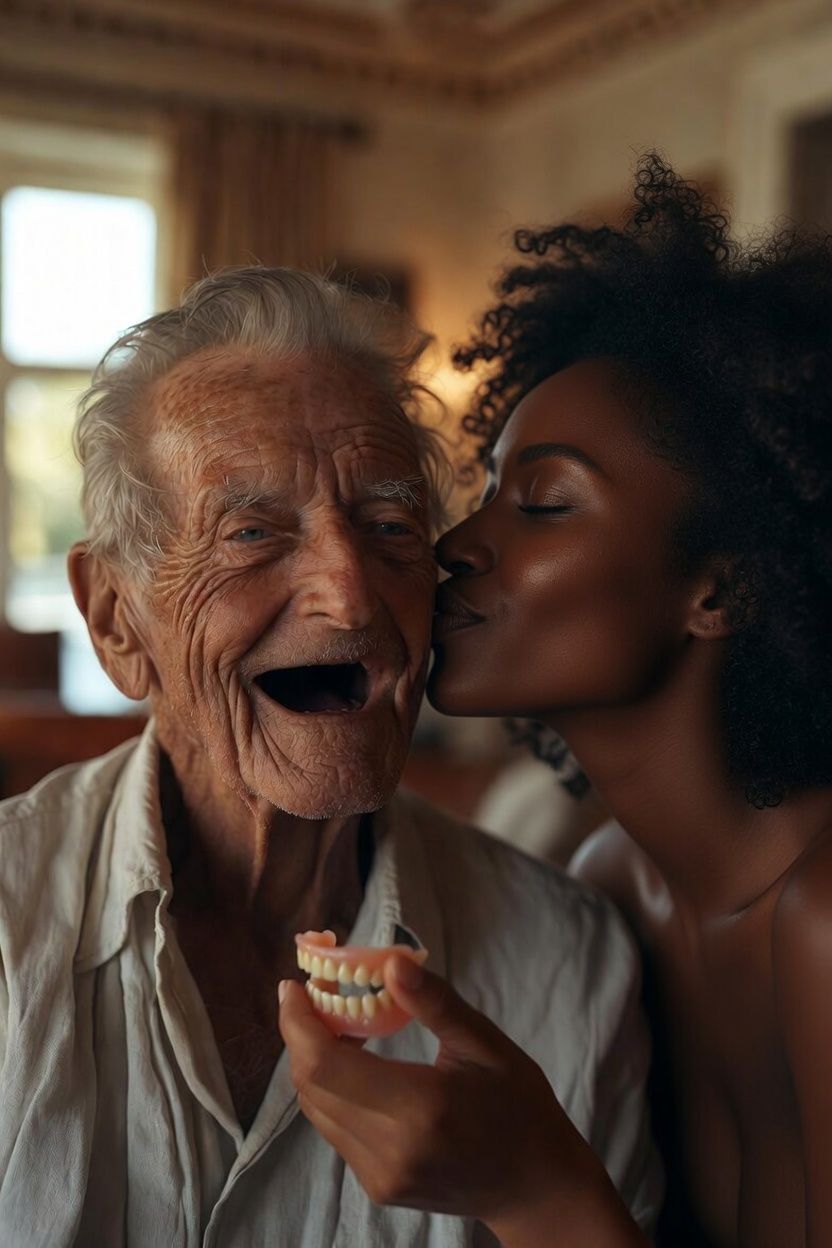
Instead of reacting with disgust, she walked over quietly, took the dentures from my hand, rinsed them carefully at the sink, and smiled at me.
Then she kissed me.
Not mockingly.
Not reluctantly.
Not performatively.
Genuinely.
That moment affected me more deeply than I expected. It was not about the dentures themselves. It was the absence of disgust. The absence of hesitation. For the first time in years, I felt seen as a man instead of merely an aging body slowly deteriorating.
Unfortunately, the moment did not remain private.
My son arrived unexpectedly at the villa that evening after returning from dinner with friends. He walked into the study just as she was helping me clean and reinsert the dentures. The expression on his face shifted instantly from confusion to horror.
He looked at me as though he no longer recognized his own father.
I cannot entirely blame him.
To him, it probably appeared grotesque: a wealthy old man entangled with a woman younger than his own daughter. He demanded explanations. His voice carried anger, embarrassment, even pity.
But what disturbed him most was her composure.
She did not panic.
She did not act ashamed.
She simply remained beside me calmly, almost protectively.
After my son left, the silence inside the house felt unbearable.
For the first time since the affair began, I was forced to confront what this relationship truly represented. Was I experiencing genuine love? Was I chasing youth? Was I terrified of mortality? Or had loneliness simply made me vulnerable to believing something I desperately wanted to be true?
I still do not know the answer.
What I do know is this:
Aging is a lonely process for many men. Society slowly stops seeing you as human in the same way it once did. You become invisible except for your money, your status, or your past accomplishments. When someone young looks at you with warmth instead of obligation, it can feel intoxicating enough to cloud your judgment entirely.
Now I live divided between two realities.
One is the life I built over nearly fifty years with a loyal wife who stood beside me through every hardship imaginable.
The other is a relationship that awakened emotions I believed had permanently disappeared.
And somewhere between guilt, desire, vanity, loneliness, and hope… sits the question that still keeps me awake at night:
Did she truly love me…
or did I simply want to believe she could?
I don’t know what to think!
Bahama Drama performs a Forensic Autopsy of Pinewood’s Election Night
Bahama Drama performs a Forensic Autopsy of Pinewood’s Election Night
Date: May 14, 2026
Time: 1:13PM
By Michael Elijah Muhammad Clare
Pinewood did not simply register another constituency result on election night 2026.
It became a theatre of calculated deception.
A digital slaughterhouse of public trust.
A meticulously engineered experiment in momentum manipulation, perceptual control, mathematical sleight-of-hand, and collective psychological trauma.
For several agonising hours, across Facebook Live streams, WhatsApp broadcast channels, national television broadcasts, and frenzied social-media commentary, thousands of Bahamian citizens stood witness to what they believed was the irreversible collapse of the entrenched political order.
The Coalition of Independents leader, Lincoln Bain, was not merely competitive.
He was surging with devastating force.
Not in rhetoric.
In raw, verifiable numbers.
Polling division after polling division delivered a relentless portrait of a genuine anti-establishment uprising tearing through the decaying foundations of the old guard.
Then, with clinical precision, the atmosphere was altered.
The numbers were reversed.
And Pinewood was transformed, in a matter of minutes, from triumphant celebration into a scene of profound national trauma.
THE PINEWOOD DATA MATRIX
The following forensic reconstruction preserves every reported vote total while exposing the psychological and statistical architecture of what many now regard as a stolen mandate.
Polling Division 1
Lincoln Bain COI: 98
Myles Laroda PLP: 62
FNM Candidate: 45
Leader: Bain +36
Running Margin: Bain +36
Polling Division 2
Lincoln Bain COI: 112
Myles Laroda PLP: 75
FNM Candidate: 38
Leader: Bain +37
Running Margin: Bain +73
Polling Division 3
Lincoln Bain COI: 89
Myles Laroda PLP: 91
FNM Candidate: 52
Leader: Laroda +2
Running Margin: Bain +71
Polling Division 4
Lincoln Bain COI: 105
Myles Laroda PLP: 68
FNM Candidate: 41
Leader: Bain +37
Running Margin: Bain +108
Polling Division 5
Lincoln Bain COI: 120
Myles Laroda PLP: 82
FNM Candidate: 33
Leader: Bain +38
Running Margin: Bain +146
At this precise juncture, social media erupted in justified euphoria.
Five divisions deep, Lincoln Bain had forged what appeared to be an insurmountable anti-establishment tsunami.
The FNM vote was in free-fall.
The PLP apparatus looked mortally wounded.
The Coalition of Independents had ceased to be a protest vehicle and had become, before the eyes of an entire nation, a legitimate governing threat.
For countless citizens glued to live coverage, the psychological verdict was already rendered:
“Lincoln Bain has won Pinewood.”
That conviction was cemented in real time.
Yet elections, we are told, are not decided by early momentum.
They are decided by geography.
And it was at this moment that geography was weaponised.
THE ENGINEERED REVERSAL
Polling Division 6
Lincoln Bain COI: 77
Myles Laroda PLP: 94
FNM Candidate: 60
Leader: Laroda +17
Running Margin: Bain +129
Polling Division 7
Lincoln Bain COI: 65
Myles Laroda PLP: 115
FNM Candidate: 48
Leader: Laroda +50
Running Margin: Bain +79
Polling Division 8
Lincoln Bain COI: 82
Myles Laroda PLP: 128
FNM Candidate: 55
Leader: Laroda +46
Running Margin: Bain +33
Without warning, the pattern inverted with suspicious velocity.
PLP margins ceased to be competitive.
They became mathematically explosive.
Election night fractured into two irreconcilable realities.
Reality One: the Bain faithful who had anchored their hopes to the documented early dominance.
Reality Two: the sudden, late-arriving demographic blocs that materialised only after the lead had been psychologically established.
Then arrived the division that shattered public faith.
THE POLLING DIVISION THAT ENDED THE DREAM
Polling Division 9
Lincoln Bain COI: 58
Myles Laroda PLP: 142
FNM Candidate: 42
Leader: Laroda +84
Running Margin: Laroda +51
This was not a statistical correction.
This was the kill shot.
Not because the contest concluded here, but because the cumulative lead reversed permanently and dramatically.
Independent analysts have since identified Polling Division 9 as the precise instant when Pinewood’s soul was crushed for the COI movement.
Everything preceding it felt like revolution.
Everything that followed felt orchestrated.
Yet the official narrative insists this was merely “demographic reality.”
THE FINAL ASSAULT
Polling Division 10
Lincoln Bain COI: 71
Myles Laroda PLP: 135
FNM Candidate: 39
Leader: Laroda +64
Running Margin: Laroda +115
Polling Division 11
Lincoln Bain COI: 63
Myles Laroda PLP: 122
FNM Candidate: 51
Leader: Laroda +59
Running Margin: Laroda +174
Polling Division 12
Lincoln Bain COI: 55
Myles Laroda PLP: 158
FNM Candidate: 36
Leader: Laroda +103
Running Margin: Laroda +277
Polling Division 13
Lincoln Bain COI: 60
Myles Laroda PLP: 149
FNM Candidate: 44
Leader: Laroda +89
Running Margin: Laroda +366
Polling Division 14
Lincoln Bain COI: 48
Myles Laroda PLP: 165
FNM Candidate: 30
Leader: Laroda +117
Final Running Margin: Laroda +483
By the closing divisions, the race had been surgically inverted.
The very citizens who had celebrated a historic breakthrough hours earlier were forced to watch as wave after wave of PLP-heavy stations erased Lincoln Bain’s lead with almost mechanical efficiency.
To those emotionally and politically invested in the early returns, the reversal did not feel organic.
It felt predetermined.
THE PSYCHOLOGY OF THE STOLEN MANDATE
Human beings are hard-wired for pattern recognition.
When a commanding lead evaporates under circumstances that defy statistical intuition, the mind does not simply accept “demographics.”
It demands answers.
Lincoln Bain’s supporters did not fabricate their anguish.
They observed an authentic, quantifiable advantage.
They internalised that advantage as destiny.
Then an unseen hand altered the battlefield.
That collision between early empirical truth and late-stage mathematical reversal produced not mere disappointment, but a profound national wound.
THE REAL POLITICAL EARTHQUAKE
The most damning revelation is not that Lincoln Bain lost.
It is that he finished ahead of the FNM in one of Nassau’s most strategically vital constituencies, only to have victory surgically removed in the final count.
In that single fact lies the permanent reconfiguration of Bahamian politics.
The Coalition of Independents demonstrated, beyond dispute:
• that anti-establishment sentiment possesses genuine electoral power;
• that disillusioned younger voters are coalescing with terrifying speed;
• that social-media momentum can be converted into physical ballots;
• and that segments of the traditional FNM base are ripe for realignment.
That truth alone threatens the ancient political cartel.
FINAL VERDICT
Did Pinewood deliver a statistically violent reversal?
It did.
Did the early polling divisions establish the unmistakable impression of a Bain victory?
Beyond any reasonable doubt.
Does the scale, timing, and precision of the late reversal suggest simple demographic coincidence?
Far more likely, it points to a calculated intervention.
Pinewood stands exposed not merely as a contest between candidates, but as the site of a deeper rupture: the brutal collision between the people’s recorded will and the machinery of entrenched power.
Lincoln Bain won the emotional and numerical war in the first half of the night.
Yet in the shadows of the final divisions, that mandate was taken from him.
In the court of public conscience, the question will not fade.
Pinewood was not lost.
It was stolen…

But seriously…
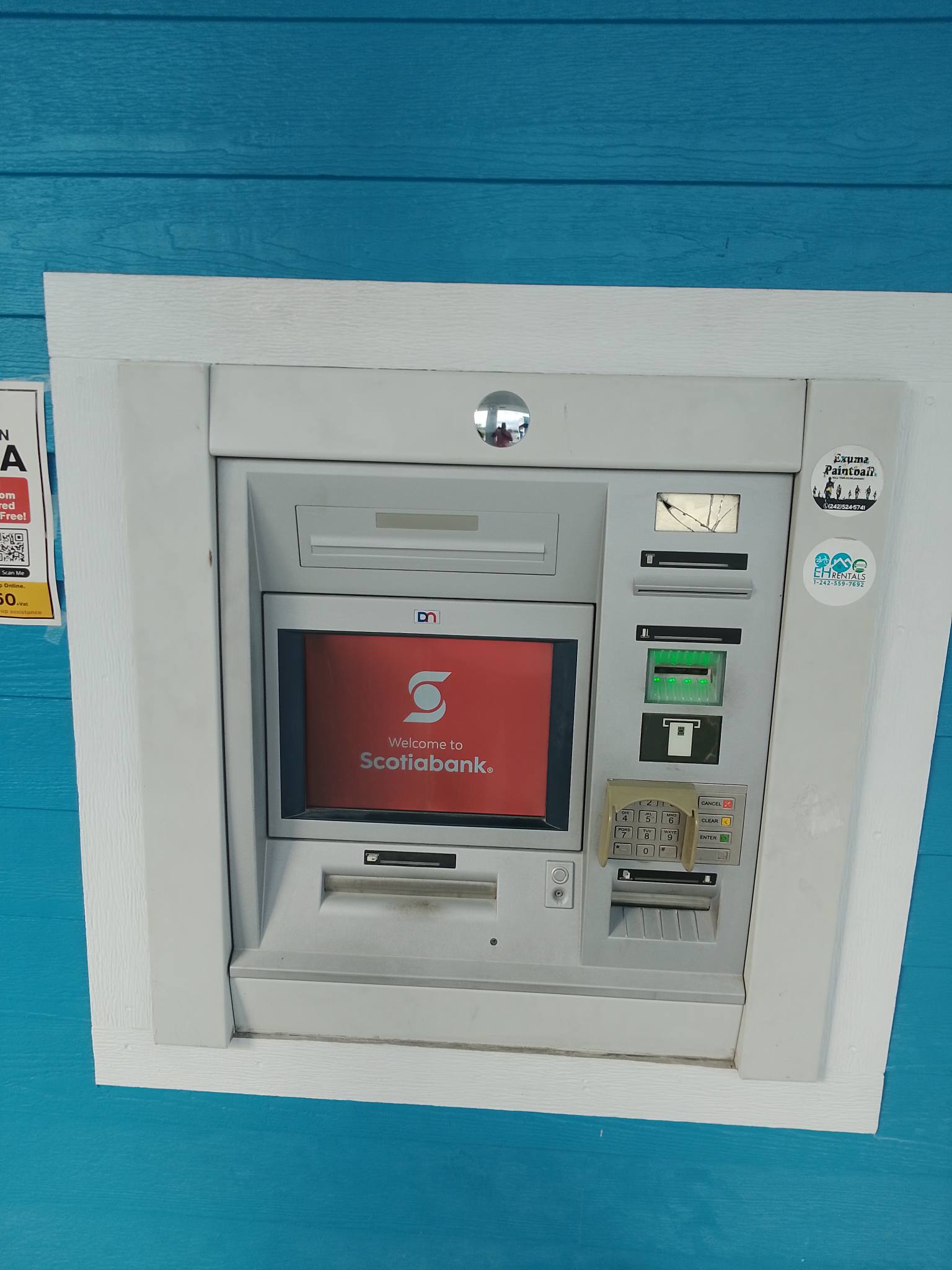
Scotiabank really needs to do better for the people of Exuma.
Scotiabank really needs to do better for the people of Exuma.
ANONYMOUS ✨ 🥶
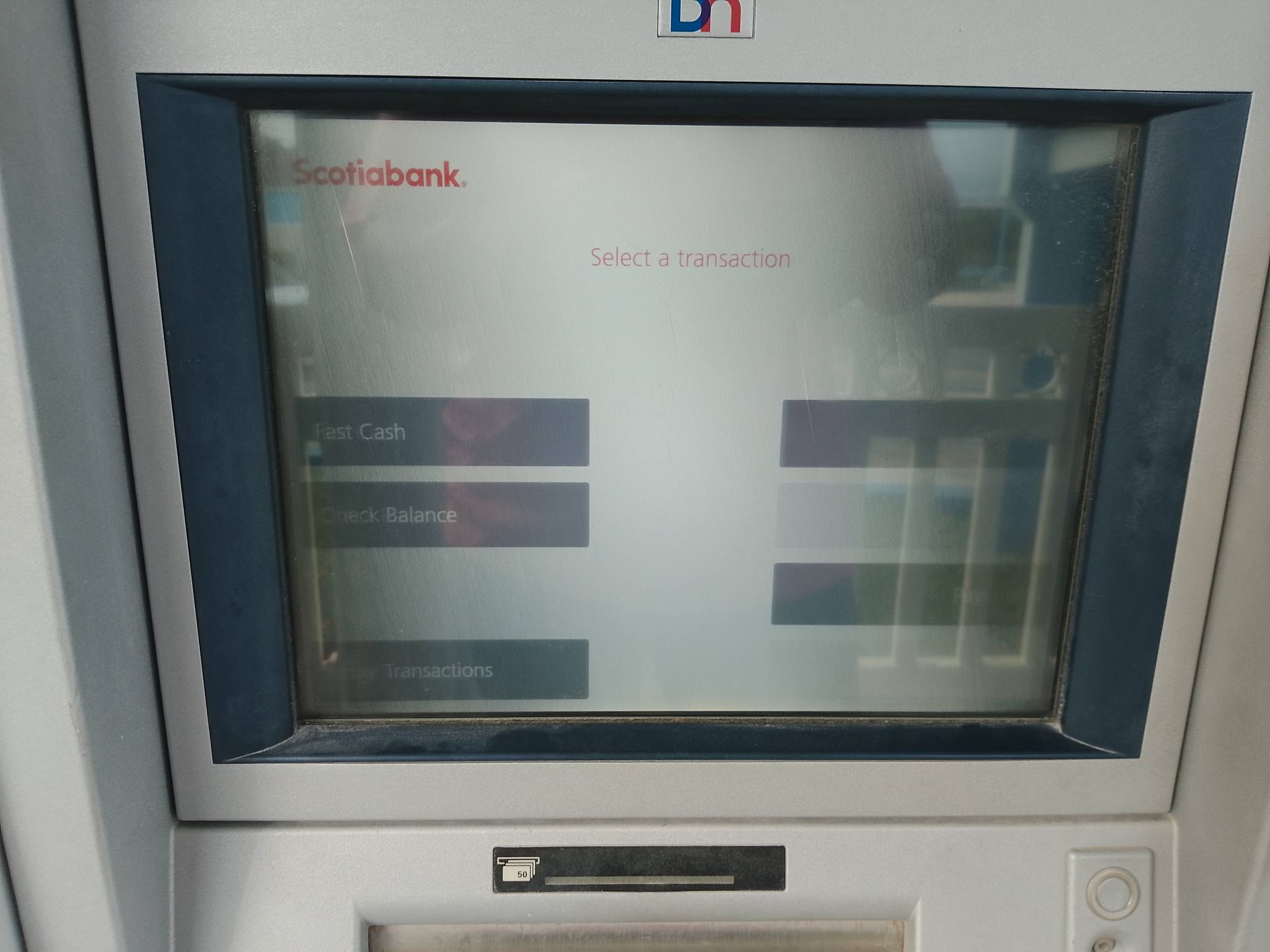
Something is seriously wrong when citizens across Exuma cannot depend on basic ATM deposit machines to work consistently. Day after day, hardworking people walk into town hoping to deposit money from their businesses, jobs, side hustles, or daily sales only to be greeted with the same message over and over again:
“No deposits right now.”
Not once in a while.
Not during a rare outage.
Almost every single day.
And the problem is no longer isolated to just one location.
The Scotiabank ATM in George Town continues having deposit issues.
The Scotiabank ATM at the Marina near Grand Isle Resort reportedly has the same daily problem.
Even the Scotiabank ATM at Exuma International Airport is experiencing the exact same issue with deposits not being accepted.
How is it possible that multiple Scotiabank ATMs across Exuma are repeatedly unable to perform one of the most basic banking functions?
This is not just an inconvenience anymore. This is affecting real people, real livelihoods, and real financial stability on an island where many citizens already struggle with limited banking options and high living costs.
Think about the small business owner who closes late at night and needs to secure cash safely.
Think about the restaurant worker trying to deposit earnings before bills are due.
Think about taxi drivers, fishermen, landscapers, hotel workers, shop owners, and entrepreneurs forced to walk around carrying cash because the machines refuse to function yet again.
Exuma is not some forgotten outpost that deserves second-class banking service.
Citizens here work hard. Tourism money flows through these islands every single day. Millions of dollars move through Exuma constantly from visitors, marinas, restaurants, vacation rentals, airports, luxury resorts, and developments. Yet ordinary people cannot even rely on a deposit ATM to function properly.
What makes this situation even more frustrating is the silence and lack of visible urgency. People are tired of hearing excuses while the problem continues repeatedly without a permanent solution. At some point, administration has to ask serious questions:
Why does this keep happening?
Why are multiple machines across Exuma constantly unable to accept deposits?
Why does the issue appear unresolved for so long?
And why are citizens expected to simply tolerate it?
Banking is not a luxury service anymore. It is an essential service tied directly to survival, security, and daily life.
A broken ATM in Nassau may be annoying because alternatives exist nearby. But in Exuma, options are limited. When multiple machines constantly fail, the impact spreads across the entire community.
What message does this send when the ATMs located in George Town, at the Marina, and even at Exuma International Airport cannot reliably accept deposits? Visitors arrive expecting modern banking infrastructure while citizens living here daily are left frustrated, inconvenienced, and disappointed.
This article is not written out of hatred toward Scotiabank. It is written out of frustration, disappointment, and concern from citizens who simply want reliable service equal to what people receive elsewhere.
Exuma deserves better.
The people of these islands deserve better.
And Scotiabank administration seriously needs to pay attention before public frustration grows even louder.
Page Reply:
Wow that’s really disturbing for a Bank 🏦. I thought Banks were about business and the working models that surround them!
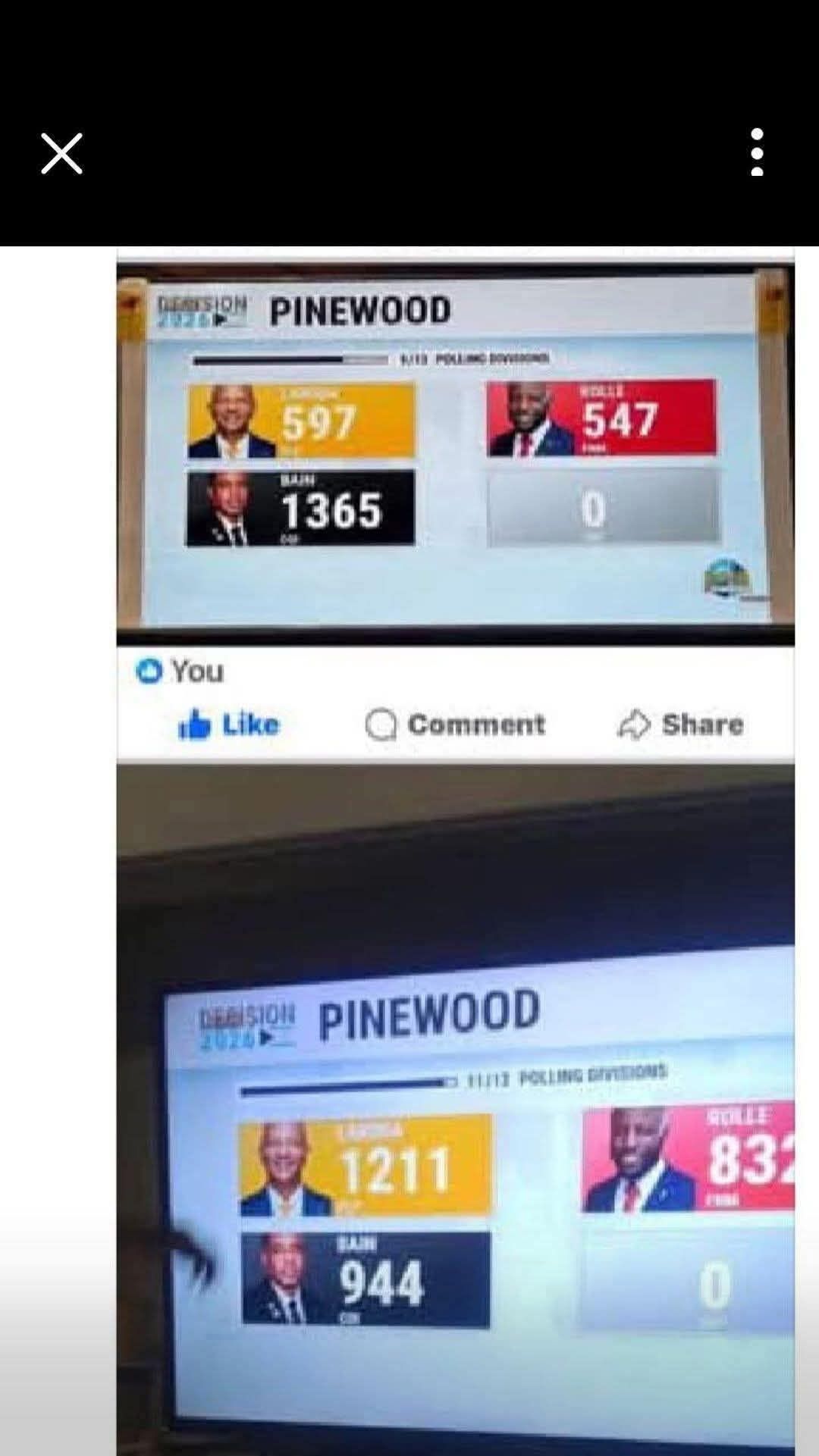
Lincoln Bain won Pinewood everybody saw it.
Lincoln Bain won Pinewood everybody saw it.
In all 12 polling stations Lincoln Bain was cutting movie straight through, and the whole country saw it.
And then all of a sudden with the last polling station PLP candidate received 300 votes.
Something doesn’t look right with that!
And I’m not talking about this picture!
I’m talking about what we all saw on ZNS livestreaming yesterday.
LMAO 🤣😂🤣
LMAO 🤣😂🤣
YOU HAVE TO LIVE IN THE BAHAMAS TO UNDERSTAND THIS VIDEO!!! 😂🤣🤣
Note: Bahama Drama did not create this amazing video and don’t know who did. But what we can say is, bey y’all Bahamian’s don’t play when it comes to being a multitalented people…
The Night Lincoln Bain Broke The Two Party Spell
The Night Lincoln Bain Broke The Two Party Spell
By Michael Elijah Muhammad Clare
For generations, the political story of the Bahamas has been written by two giants.
The PLP.
The FNM.
Election after election, decade after decade, citizens were taught—directly or indirectly—that every vote outside those two structures was a wasted vote. Third parties rose and disappeared like waves against a cliff. Loud for a season. Forgotten the next.
But on the night of May 12, 2026, something happened in Pinewood that sent a shockwave through the political bloodstream of the nation.
Lincoln Bain and the Coalition of Independents did not merely participate in the election.
They disrupted history.
When the numbers finally settled across television screens, social media feeds, radio broadcasts, bars, homes, cars, and street corners across the Bahamas, citizens stared in disbelief.
Lincoln Bain had defeated the FNM in Pinewood.
Not symbolically.
Not emotionally.
Not morally.
Numerically.
The Coalition of Independents, a third party movement that many once mocked, outpolled one of the most powerful political machines in modern Bahamian history inside a major constituency.
And suddenly, the impossible no longer looked impossible.
The Political Earthquake Nobody Expected
Myles Laroda of the PLP retained the seat with 1,446 votes. But it was Lincoln Bain’s 1,132 votes that became the true national headline. The FNM candidate Denarii Rolle fell behind Bain in a result few political analysts predicted publicly before election night.
In one moment, Bain shattered decades of psychological conditioning surrounding Bahamian politics.
Because the deeper story was never just about Pinewood.
It was about fear.
Fear that citizens had carried for decades—that voting outside the PLP or FNM meant political irrelevance.
Lincoln Bain broke that fear.
And whether citizens love him or hate him, history now records his name differently after May 12, 2026.
The Boy From Nassau Who Refused To Stay Quiet
Long before the rallies, the livestreams, the political warfare, and the controversy, Lincoln Bain was simply a young Bahamian boy growing up in Nassau.
Born October 26, 1976, Bain attended E.P. Roberts Primary School and Jordan Prince Williams Baptist School. Those who knew him early often describe someone outspoken, energetic, deeply expressive, and unwilling to remain silent when he believed something was wrong.
That trait would later define his entire political existence.
As a young man, Bain entered the Royal Bahamas Police Force in 1995. For ten years, he served within law enforcement before resigning in 2005. But the structure of policing was never going to contain a personality built for public confrontation and national debate.
After leaving the force, Bain evolved into many things.
Singer.
Media personality.
Entrepreneur.
Author.
Activist.
Political disruptor.
While others entered politics through polished party systems and carefully managed political grooming, Lincoln Bain entered through conflict.
He learned how to survive public criticism.
How to weaponize media attention.
How to connect emotionally with frustrated citizens.
How to build loyalty outside the traditional political machine.
And slowly, year after year, he built something many did not realize was growing underneath the surface.
A movement.
The Rise Of The Outsider
For years, Bain became associated with causes many ordinary citizens quietly discussed at home but felt major parties ignored publicly.
Crown land distribution.
Beach access.
Foreign ownership concerns.
Natural resources.
Government transparency.
Immigration.
Economic inequality.
National sovereignty.
To supporters, Bain became a voice for citizens who felt politically abandoned.
To critics, he became controversial, confrontational, and politically dangerous.
But controversy has always been strange fuel in Bahamian politics.
Sometimes it destroys careers.
Sometimes it creates movements.
Lincoln Bain transformed it into political energy.
When Bain failed to secure an FNM nomination years ago, many assumed his political future had ended before it began. Instead, rejection radicalized his independence. After running under the DNA banner in 2017, Bain eventually helped forge the Coalition of Independents into something larger than a protest platform.
By 2021, COI entered the national arena carrying limited funding, limited structure, and almost no institutional protection.
But they had something harder to measure.
Raw frustration from ordinary people.
And Bain understood something many traditional politicians underestimated.
Social media had changed politics forever.
The Old Political Gatekeepers Were Losing Control
Lincoln Bain mastered direct communication in the digital era.
While traditional political structures relied heavily on legacy media systems, Bain built emotional connection through livestreams, viral clips, direct citizen engagement, street-level activism, and relentless visibility.
Supporters saw authenticity.
Opponents saw political chaos.
But both sides watched.
That mattered.
Because attention is power in modern politics.
And Bain became impossible to ignore.
The Meaning Of Pinewood
The Pinewood result was not simply a constituency battle.
It was psychological warfare against the two-party system itself.
For the first time in modern Bahamian political memory, a third-party candidate had overtaken a major party candidate in a serious electoral contest inside a major constituency.
That changes political calculations forever.
Future third-party candidates across the Bahamas will now campaign differently because of what happened in Pinewood.
Future frustrated voters will now think differently because of what happened in Pinewood.
Future major parties will now strategize differently because of what happened in Pinewood.
Because Lincoln Bain proved something dangerous to the establishment:
A third-party movement can survive ridicule long enough to become electorally relevant.
And once citizens psychologically believe that, the political landscape begins changing beneath everyone’s feet.
The Bigger Historical Question
Did Lincoln Bain win Pinewood?
No.
But history is filled with moments where losing changed a nation more than winning.
Because some campaigns are not remembered for the seat they captured.
They are remembered for the wall they cracked.
And on May 12, 2026, Lincoln Bain cracked a political wall many believed could never break in the Bahamas.
Whether the Coalition of Independents eventually rises higher or fades with time remains unknown.
But this much is now undeniable:
Lincoln Bain forced the Bahamas into a new political conversation.
Not tomorrow.
Not someday.
Now.
And that may ultimately become his greatest political achievement of all.