
BREAKING NEWS!
BREAKING NEWS! 😭
The passing of Rev. Jesse Louis Jackson Sr., Hon. Dr., Civil Rights Leader, was born on October 8, 1941, in Greenville, South Carolina.” have moved on to glory!
By: Michael Elijah Muhammad Clare
Jesse Jackson and the Civil Rights Legacy
A Record of History, Service, and Influence
Jesse Louis Jackson Sr. was born on October 8, 1941, in Greenville, South Carolina. He grew up in the segregated American South during a time when racial discrimination was enforced by law and custom. These early experiences shaped his commitment to justice, equality, and civil rights.
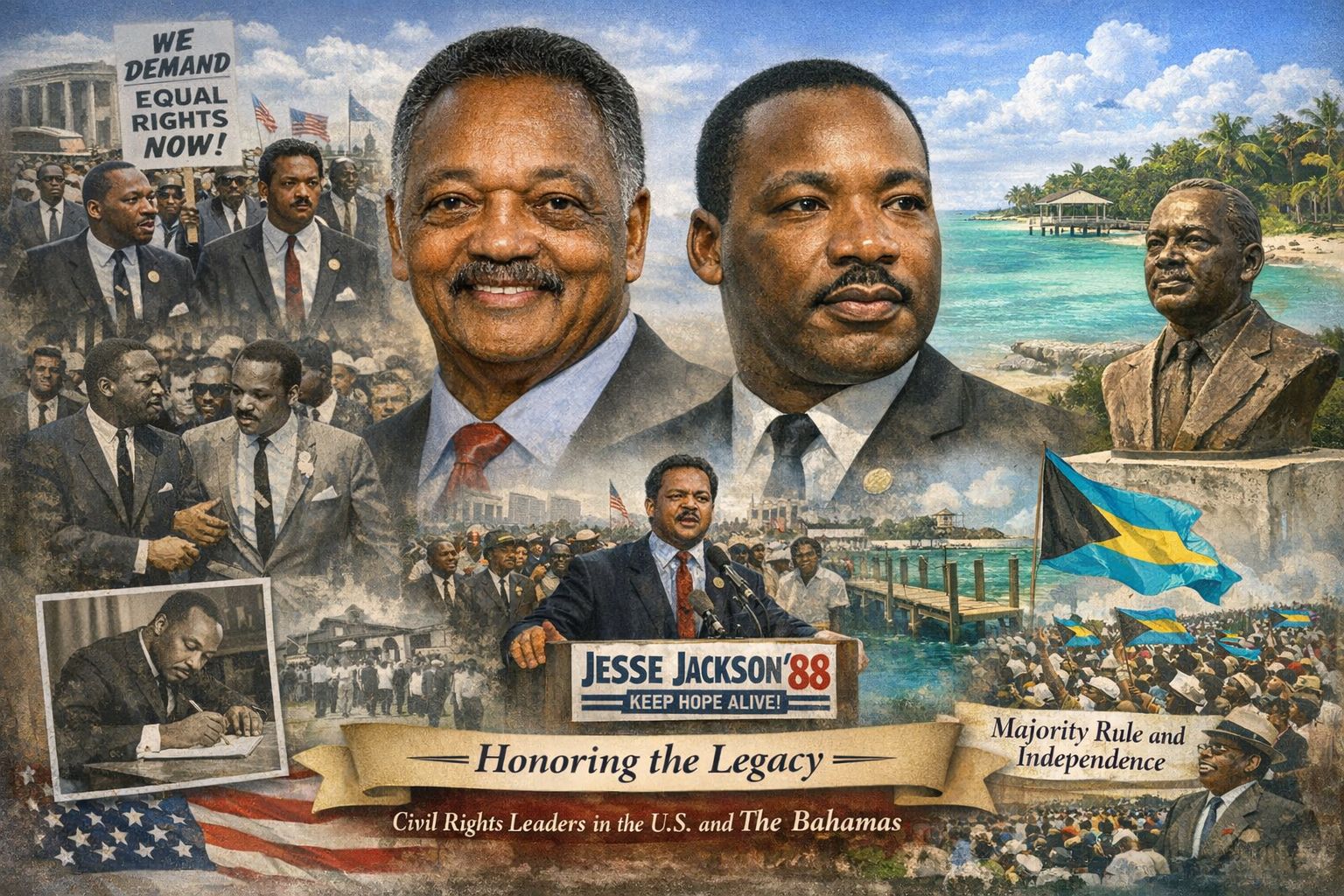
In the early 1960s, Jackson became involved in the Civil Rights Movement. He joined the Southern Christian Leadership Conference (SCLC) and worked closely with Dr. Martin Luther King Jr. Dr. King recognized Jackson’s leadership ability and appointed him to lead Operation Breadbasket, a program focused on improving economic opportunities for Black communities.
Jackson participated in major civil rights campaigns, including marches, boycotts, and voter registration drives. He was present in Memphis, Tennessee, in April 1968, when Dr. King was assassinated. After King’s death, Jackson continued the work of the movement and became one of its most visible leaders.
In 1971, Jackson founded Operation PUSH (People United to Save Humanity), which focused on education, jobs, and economic empowerment. In 1987, Operation PUSH merged with the Rainbow Coalition to form the Rainbow PUSH Coalition.
The Rainbow Coalition was originally created to unite different marginalized and underserved communities. Its main focus was on racial justice, economic opportunity, voting rights, workers’ rights, education, and fair treatment for Black Americans, poor communities, minorities, and working families. The word “rainbow” represented unity among different races, cultures, religions, and social classes.
The Rainbow Coalition was not created to start or lead the LGBTQ movement. It was born out of the civil rights struggle and economic justice movement. In later years, LGBTQ organizations became part of the coalition as one of many groups seeking protection from discrimination. This inclusion came as part of a broader human rights approach and was not the original purpose of the organization.
Jackson entered national politics by running for the Democratic Party’s presidential nomination in 1984 and 1988. In 1988, he finished second in the primary race, winning several states and millions of votes. His campaigns expanded Black political participation and helped open doors for future leaders.
Throughout his career, Jackson also worked in international diplomacy. He helped negotiate the release of prisoners and hostages in countries such as Syria, Iraq, and Cuba. His efforts earned him recognition as both a civil rights leader and a global advocate for peace.
In 2000, Jackson received the Presidential Medal of Freedom, the highest civilian honor in the United States, for his lifetime of service.
In later years, Jackson faced health challenges, including a Parkinson’s disease diagnosis in 2017. Despite this, he remained active in public life and continued to speak on issues of justice and equality.
Connection to Dr. Martin Luther King Jr. and The Bahamas
Dr. Martin Luther King Jr. visited The Bahamas, especially Bimini, during the 1960s. He spent time there working on speeches and reflecting on his mission. In 1964, he prepared parts of his Nobel Peace Prize address while in Bimini. He returned again shortly before his death in 1968.
These visits created a lasting connection between the American civil rights movement and The Bahamas. Memorials and historical markers in Bimini recognize Dr. King’s presence and influence.
During the same period, Bahamians were struggling for political equality, majority rule, and independence under British colonial rule. These efforts led to majority rule in 1967 and independence in 1973. The fight for equal rights in The Bahamas reflected the same values of dignity, justice, and opportunity that guided King and Jackson in the United States.
Meaning for The Bahamas
The work of Dr. Martin Luther King Jr. and Jesse Jackson represents a global struggle for human rights. Their leadership inspired movements beyond American borders and encouraged Caribbean nations, including The Bahamas, to continue pursuing fairness and self-determination.
Their message of nonviolence, civic participation, and economic empowerment remains relevant to Bahamians today. It reminds citizens that progress comes through organization, education, and peaceful action.
Record of Legacy
Jesse Jackson’s life reflects more than six decades of service to civil rights, democracy, and social justice. His partnership with Dr. Martin Luther King Jr., his leadership after 1968, his political campaigns, and his international work form a permanent part of modern history.
The Rainbow Coalition remains a symbol of unity among different communities seeking fairness and opportunity. Its foundation was rooted in civil rights and economic justice, not in promoting any specific lifestyle.
Together, the legacies of King and Jackson continue to influence the United States, The Bahamas, and the wider world in the ongoing pursuit of equality and human dignity.
End of Article
Rest in peace 🕊️
Related stories

Biometric Voter Cards Go Local, PAC Digs Into $1.5m Vouchers, and Some PMH Wards Relocate
Late-afternoon Bahamas Islands Briefing for Wednesday, October 14, 2026: Exuma’s Business Outlook is tomorrow;…

PUBLIC MESSAGE TO ALL BAHAMA DRAMA FOLLOWERS
We are taking Bahama Drama to the next level, and we want you to…

Eleuthera Residents Threaten to Stop Paying BPL Bills, Treasure Cay’s $177m Sale Nears Closing, and a “Miracle Baby” Gets Her Wheels
Afternoon Bahamas Islands Briefing for Wednesday, October 14, 2026: Eleuthera residents threaten to withhold…
Join the conversation
No comments yet. Be the first.